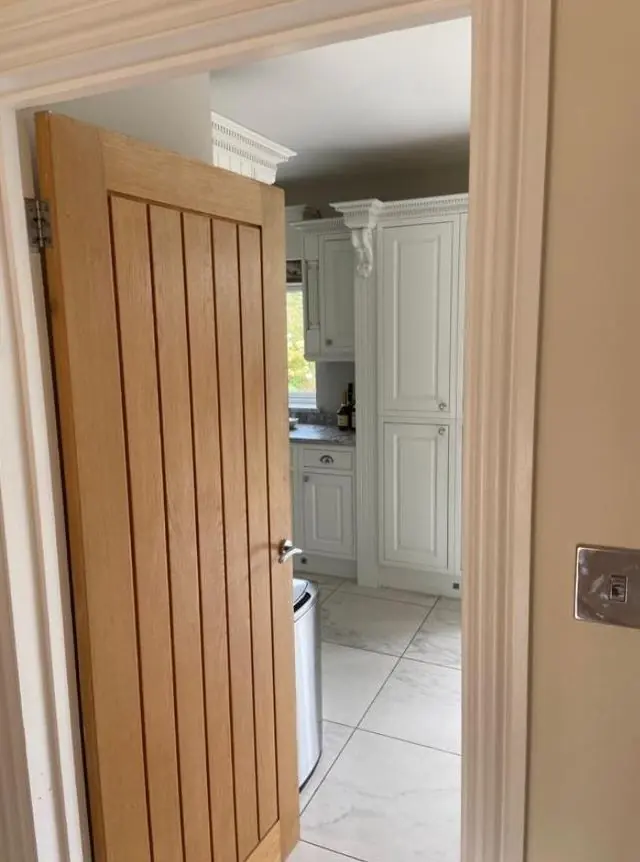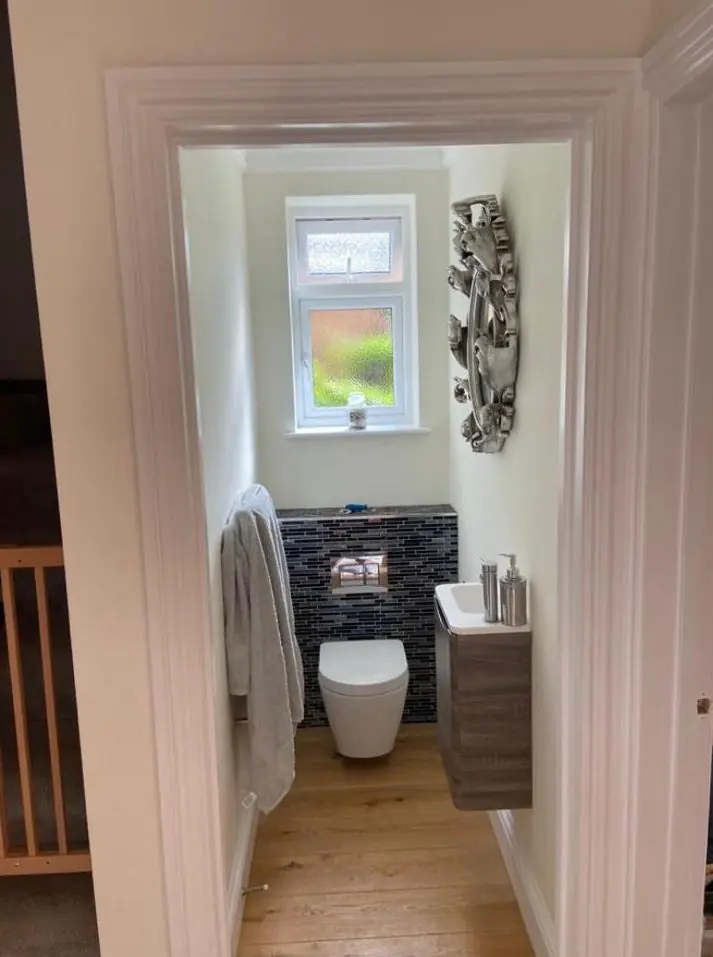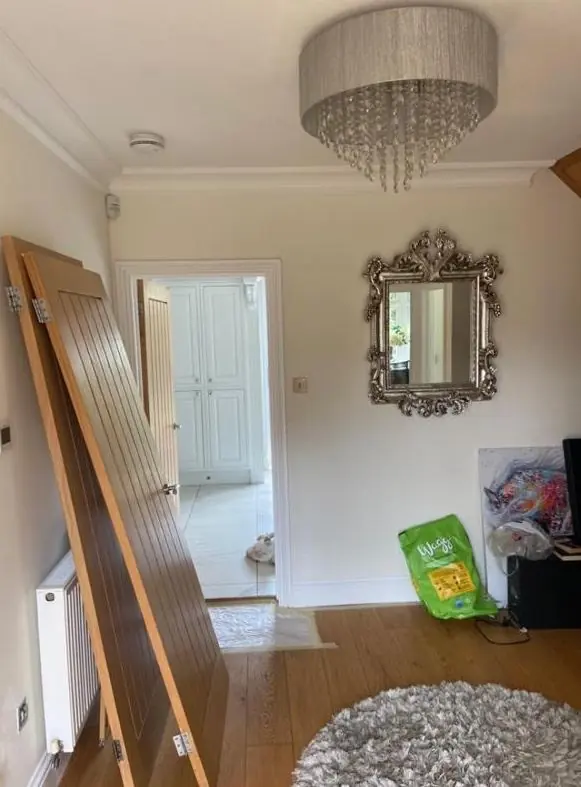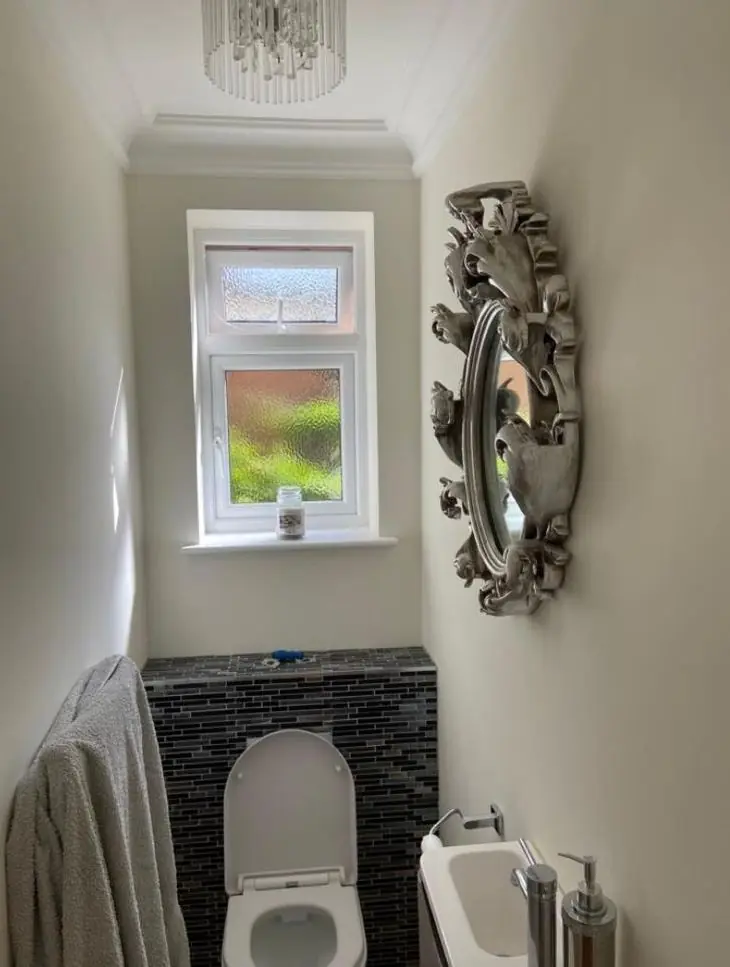
Dean paints internal and external doors, skirtings, architraves, frames and window joinery in Stoke Bruerne, the canal village about 6.6 miles south of Northampton town centre. Old timber in the stone cottages is repainted like for like with oil- or linseed-compatible paint, while the modern houses on Wentworth Way take standard woodwork systems.
Plank doors, transom lights and cottage skirtings
The conservation area appraisal picks out plank and panel timber front doors, some with transom lights above, as part of the village’s character. Most of the limestone cottages around the green on Bridge Road, along Mill Lane and on Chapel Lane still have their timber casements, sitting on timber lintels with stone or timber cills.
Inside the 17th- and 18th-century cottages you tend to find ledged plank doors and simple skirtings fixed to solid stone walls that were never built straight. Gaps open up behind those skirtings as the walls move with the seasons, and there are often many layers of old paint on them. Rookery House and the bigger farmhouses have more formal joinery, including larger sashes. The 16-light sash at Rookery House has a lot of glazing bars, and each one needs slow, careful cutting-in.
The general method we use for primers, filling and topcoats is on the main door and skirting painting page. This page covers what is particular to Stoke Bruerne.
Why the appraisal cares about your front door
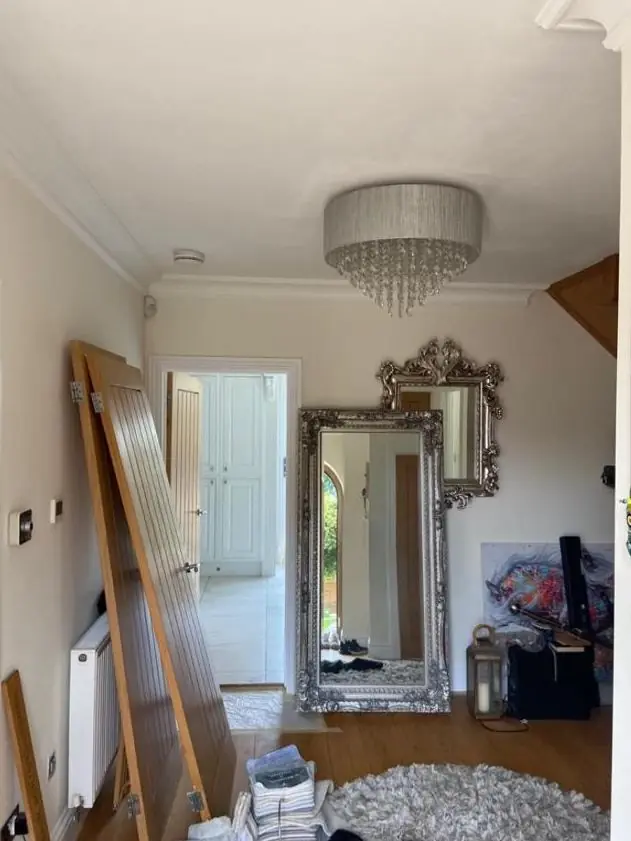
The 2016 appraisal for the Stoke Bruerne Conservation Area names replacement of traditional windows and doors as one of the main threats to the village. It also proposes considering Article 4 directions on significant buildings, though none is confirmed. If your old door or casement is sound enough to keep, repainting it properly is the choice that fits the appraisal.
In practice that means:
- splicing in or filling rot in cills and the bottom rails of doors before painting, so they don’t get written off for replacement;
- using oil-based or linseed-compatible paint on old softwood that has had oil paint for generations, not a hard modern acrylic that can crack over it;
- keeping glazing putty sound on transom lights and casements, because rain gets in where putty has failed;
- repainting in a similar colour on the 12 listed buildings in the conservation area unless the council has agreed a change.
Listed building consent may be needed if you want to strip historic paint layers back to bare wood or change a front door colour on a listed house. We would ask you to check with West Northamptonshire Council before that kind of work. A like-for-like repaint is normally routine.
Damp air, shade and slow-drying timber
Exterior doors and frames along the towpath by the top lock get damp air off the canal for much of the year. Elsewhere, the trees along Rookery Lane, the walled gardens of Bruerne House and the hedges across the conservation area keep plenty of joinery in shade. North-facing and tree-shaded doors pick up algae and dry more slowly after rain.
So before we prime, we wash those doors down and let the timber dry. We pick dry spells for the top coats. Microporous or oil finishes let damp in the timber escape instead of blistering the paint. Inside, the same thinking applies to back doors and lobby doors in cottages with solid walls. The timber there can hold more moisture than you would expect, and gloss laid on wet wood fails early.
Getting to the door on Mill Lane and Chapel Lane
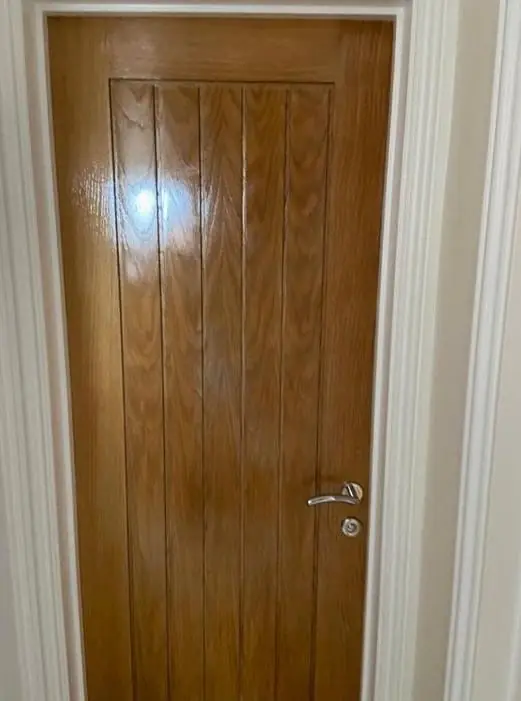
Mill Lane and Chapel Lane are narrow cul-de-sacs, and the bread oven at 5 Mill Lane juts out into the road. There are double yellow lines on the village lanes, and small plots on the Lanes have no rear access. When we paint a front door, the van can’t always stop outside. We plan where to park before the job, often using the pay-and-display car park by the Canal Museum, and carry tools and dust sheets in by hand.
We usually take an outside door off its hinges only when it needs proper rubbing down on every edge. Even then we hang a temporary board so the house stays secure. In summer the lanes are busy with visitors, so exterior doors and casements are easier to do in spring or autumn. Inside work on skirtings and internal doors can go ahead in any month.
For a wider look at the village and the other work we cover there, see our Stoke Bruerne area page. For how costs are worked out, see the painter and decorator cost guide.
Last updated by Dean, DH Painter & Decorator.