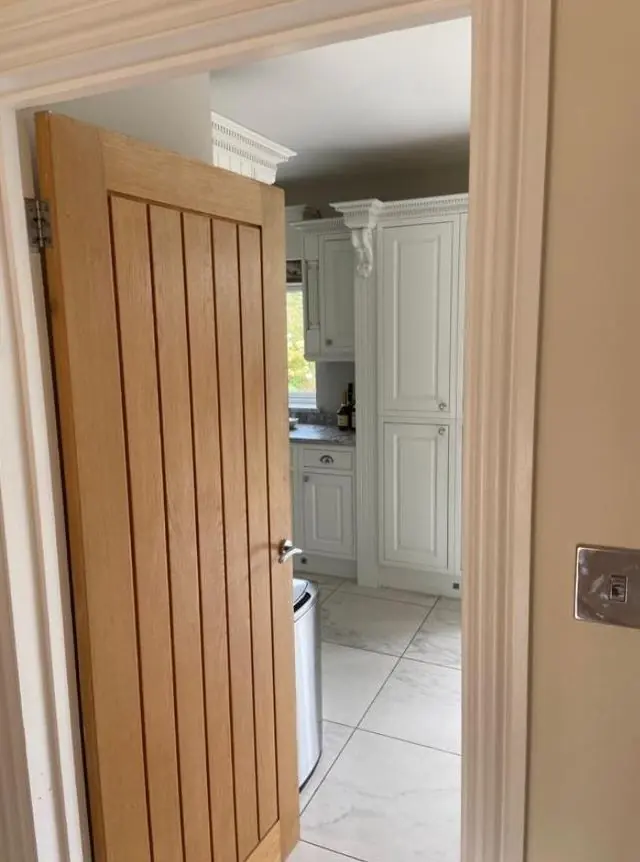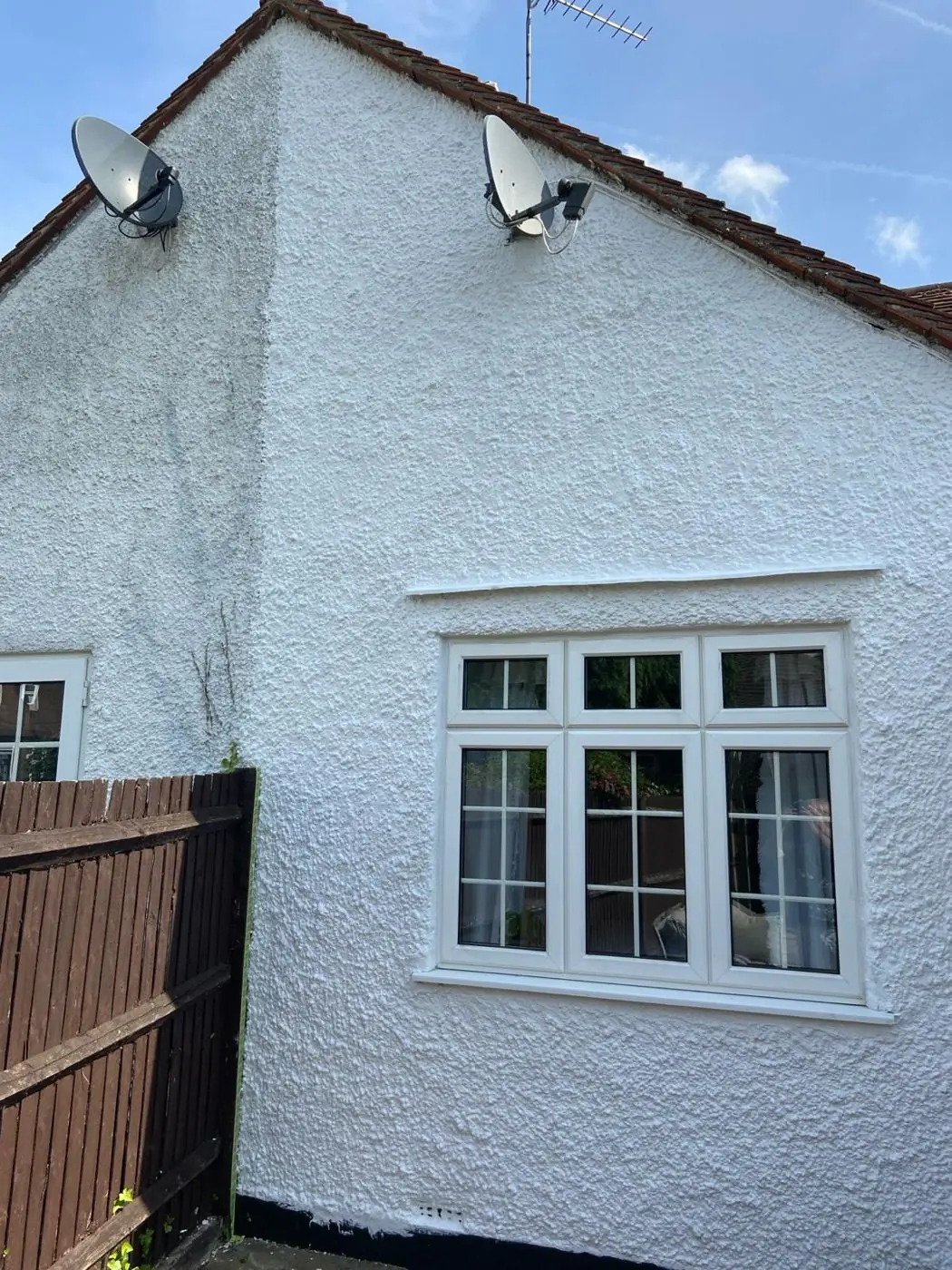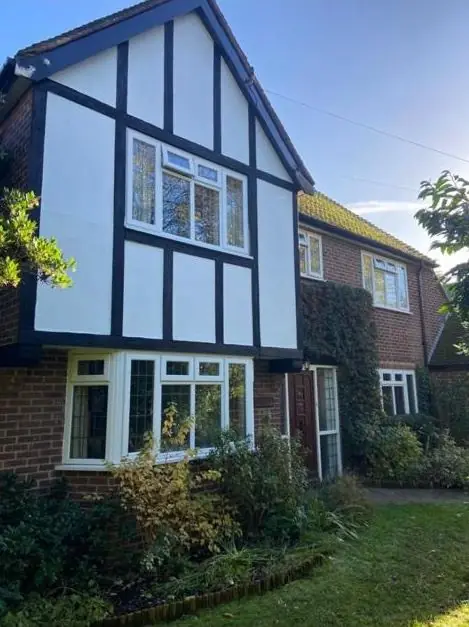
DH Painter & Decorator covers Roade, a village of around 2,300 people in the NN7 postcode area about 5.4 miles south of Northampton town centre. Dean, who has over 30 years in the trade, decorates inside and out, using breathable materials on the old stone houses and durable systems on the newer homes.
A village split by a road and a railway
Roade sits on the A508 between Northampton and Milton Keynes, about 2 miles south of M1 junction 15. The road divides the village. To the east is an older part with a small stone conservation core around the High Street, Church End and Hartwell Road. To the west, most of the housing is 20th-century, set out in residential closes and ways. Through the middle runs the West Coast Main Line, in Roade Cutting, dug for Robert Stephenson’s London and Birmingham Railway and opened in 1838. It is up to 65 ft deep and is crossed by two road bridges and four footbridges.
For a painter and decorator, those dividing lines matter. The houses on each side of the A508 are built differently, age differently and need different paints. The 2001 census recorded 962 dwellings, and most of the western half of the village is 20th-century housing, while the stone conservation area holds 12 of the parish’s 23 listed buildings and the decisions that come with them.
The limestone cottages of High Street and Memorial Green
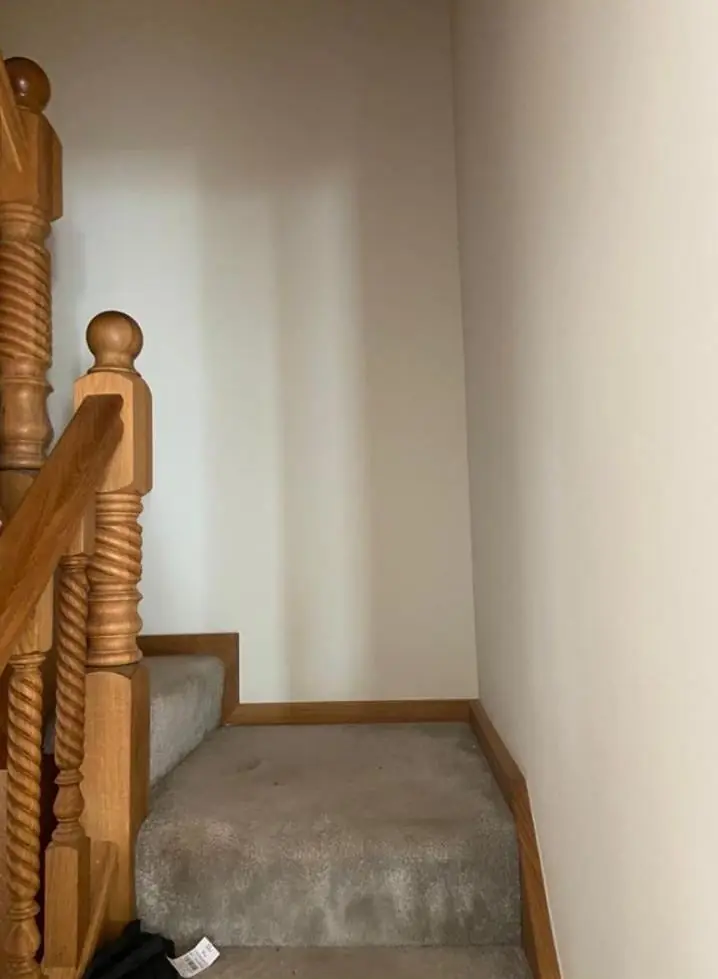
Roade’s oldest houses are late 17th and early 18th-century cottages of coursed limestone rubble, with brick end stacks, timber casements and sashes under wooden lintels, and roofs of thatch or later plain tile. Many began as pairs or rows of labourers’ cottages that were later knocked together. 28 High Street is a thatched pair with eyebrow dormers, 14 Memorial Green is another listed cottage, and The Old Forge at 9 to 13 High Street is a late 17th-century row where part of the stonework has been painted.
Outside, the rule on these cottages is to leave bare limestone unpainted. Where stone has already been painted, it should be recoated only with a breathable mineral paint or limewash, never a plastic masonry paint, which traps moisture in the wall. The wooden lintels over the windows are exposed timber, so we check them for rot and seal them when the windows are painted. Thatch brings its own care: low eaves and eyebrow dormers mean ladders must be placed and sheeted so they do not damage the straw, and we never use a naked flame to strip paint near it.
Inside, walls are often lime plaster, which wants breathable emulsion, and chamfered spine beams and bressumers should be cleaned and left or treated rather than glossed. Rooms are low, walls are uneven and window reveals are deep, so interior painting here is slower, more careful work than in a modern house.
Georgian houses and Arts and Crafts brick on Hartwell Road
Hartwell Road has a run of more formal houses. 1 Hartwell Road is a mid-18th-century limestone house with ironstone dressings and quoins and 12- and 16-pane sashes under stone keyblocks. Pear Tree House carries a 1717 datestone in ironstone, 16- and 20-pane sashes and a timber trellis porch. Further along, Tylecote House was built in 1894 to 1896 by Edward Swinfen Harris for the local GP, in red brick with tile-hung upper floors and timber mullion and transom windows with leaded lights.
These houses carry far more external joinery than a modern house: multi-pane sashes, panelled doors with overlights, porches and hood moulds. Multi-pane sashes need slow cutting-in, sound putty and a quality oil-based or waterborne trim paint, applied by brush rather than sprayed. The ironstone has to be masked and kept clean, because paint on ironstone traps moisture and is very hard to remove. At Tylecote House, leaded lights and mullions are painted by hand with care around the lead cames. Our woodwork and door painting page covers the joinery side in more depth.
Working within the conservation area
Roade Conservation Area covers about 7.2 hectares and contains 12 listed buildings, including the Grade II* Church of St Mary the Virgin on Church End, whose fabric goes back to the 12th and 13th centuries. Roade Baptist Church, built partly in 1736 to 1737 and heightened in 1802, keeps its 12- and 18-pane hornless sashes. We found no published appraisal or Article 4 direction, so general conservation area controls apply. Listed buildings are stricter: some colour changes on frontages and stripping historic finishes can need listed building consent. On a listed house, like-for-like redecoration is the safe default, and we will point out anything that might need consent before work starts.
The 20th-century houses west of the A508
Most of the western half of the village is 20th-century housing on closes and ways such as Bailey Brooks Close, Hyde Close, Manor Close and Wallwin Close. The work here is the everyday kind: fascias and soffits, front doors, fences, and emulsion throughout. It is mostly about preparation and choosing finishes that last. Extensions and loft conversions to these houses often bring new plaster that needs a mist coat before decorating.
Roade is surrounded by open farmland, and the village’s slightly exposed setting means fences, gates and south and west-facing walls weather faster than in a sheltered town street. Microporous stains and regular maintenance coats suit garden timber here, and render on modern houses takes a standard masonry system. Our exterior painting service covers this work, and our guide to timing outdoor painting explains which months suit it.
Frontages, shops and getting about
Houses facing the A508, which runs through the village as Northampton Road and Stratford Road, collect traffic dirt on walls and windows, so we wash and degrease before painting. Through traffic also means care with ladders and parking on those frontages. Some of the old cottages on High Street sit in rows with entrances at the back, which affects how we bring in sheets and steps. Getting between the two halves of the village means crossing the railway on one of the bridges.
Roade’s businesses are village-scale: the post office, newsagent, The Roade House Cafe and The Cock Inn on High Street, the shops at The Ridings, Roade Pharmacy on South View, and converted farm-building units at Blisworth Hill Barns and West Lodge Farm on the edge of the parish. Because these are the only local outlets for many residents, we plan any work on them around opening hours. We cover Roade from our Northampton base, about 5.4 miles to the north, and nearby villages including Blisworth, Hartwell, Stoke Bruerne and Collingtree.
Last updated by Dean, DH Painter & Decorator.