Dean decorates rental properties in Rothersthorpe for landlords and letting agents, from his base about 3.4 miles north-east of the village in Northampton. Lets here fall into two groups: traditional or listed stone cottages, and 20th-century infill and estate houses. Each needs a different approach.
Two very different kinds of rental property
We have found no published figures on the rental market in Rothersthorpe, so we won’t guess at one. What we do know is the housing. Any property let in the village falls into one of two groups, and the decorating differs between them:
- Traditional houses in the conservation core: 17th- and 18th-century ironstone cottages and farmhouses on Church Street and North Street, plus 19th-century red brick cottages towards the eastern end of Church Street. Some are listed.
- 20th-century infill and small estates: the houses along Banbury Lane, Kislingbury Road and the estate roads off North Street, with gypsum-plastered walls and standard joinery.
Turning round an ironstone cottage let
Solid ironstone walls and lime plaster need to breathe. If a previous turnaround used a cheap vinyl emulsion over lime, you often see the result at the next check-out: flaking low on the walls, damp marks behind furniture and mould in corners. Tenants sometimes report these as damp, when the cause is partly the paint. We use breathable paints on those walls so the problem doesn’t come back after every tenancy.
Other points that come up on cottage lets:
- Uneven walls and old joinery mean we touch up and fill only real defects. We don’t try to make the walls look new-build flat, which adds cost and doesn’t last.
- Old paint layers on the joinery may contain lead, so we test before sanding anything in a property your tenants will live in.
- The 19th-century red brick cottages have solid brick walls, and their plaster may be lime, gypsum or a patchwork of both, so we test it before choosing a paint. Their sash windows and doors are the parts most likely to need attention between lets.
- Outside, the appraisal says windows here are traditionally painted white, some with black frames. Stained timber is described as non-traditional, so a painted finish is the safer choice when the windows are due.
- If the house is listed, ask the council before changing any external colour or finish, even at a changeover.
Quick changeovers on the newer houses
The 20th-century infill and estate houses on Banbury Lane, Kislingbury Road and off North Street are simpler, because they have gypsum plaster and no breathability question. A changeover there is mostly walls, ceilings and the mass-produced internal doors the appraisal mentions, in a wipeable matt and a hard-wearing satin. These houses are set back from the road, so a driveway usually gives the van somewhere to stand, which makes a short turnaround between tenancies easier to fit in. If the tenant has left the house in good order, we’ll tell you which rooms need a full repaint and which only need touching up. The general changeover checklist is on the main service page linked below.
Keys, access and timing
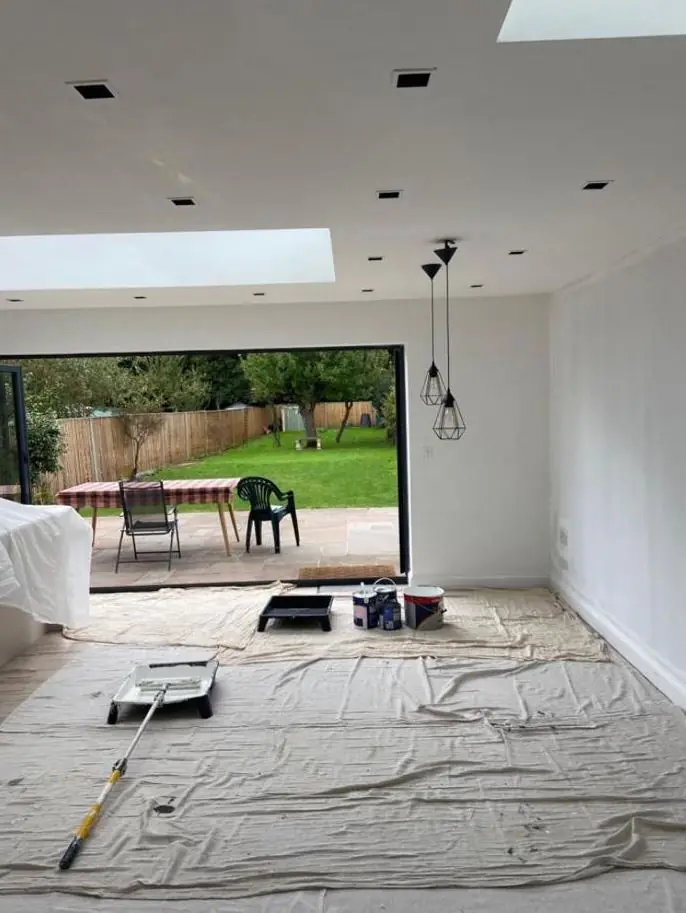
Rothersthorpe is reached only by local roads: Banbury Lane, and the minor roads from Kislingbury and Milton Malsor. Church Street and North Street meander, with older houses right on the road edge. If you or your agent let us know where to park, or arrange a driveway space on the newer roads, the work goes faster. We can collect and return keys through your letting agent in Northampton, send photos at the end of the job, and agree dates around the check-out and the next move-in.
More on finishes and what a changeover includes is on our landlord and letting agent decorating page. Our Rothersthorpe page covers the village’s property types, and the cost guide explains what affects the price.
Last updated by Dean, DH Painter & Decorator.