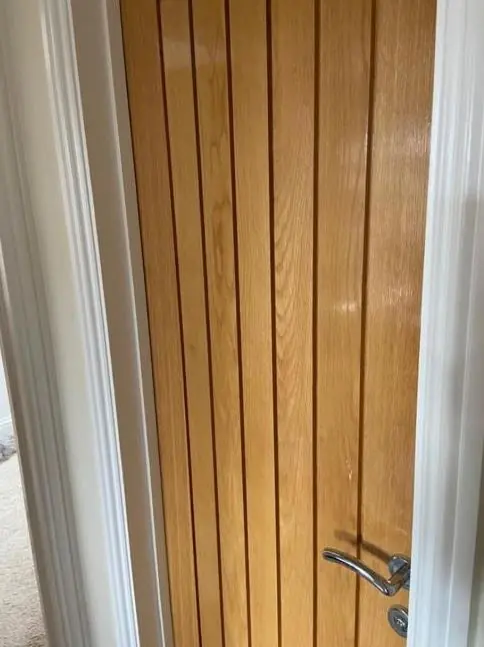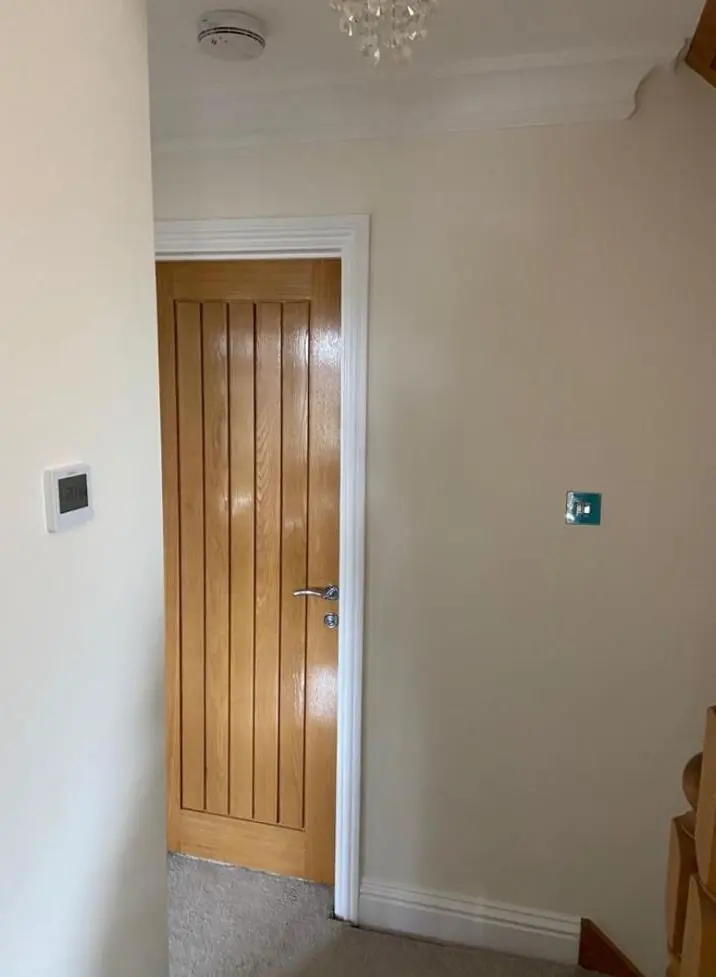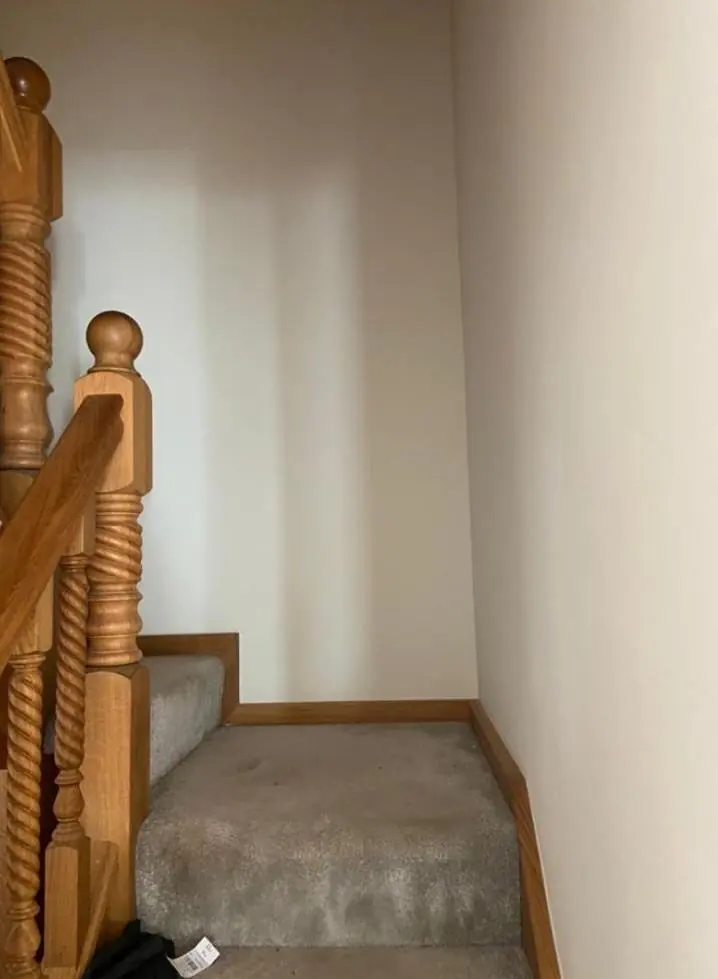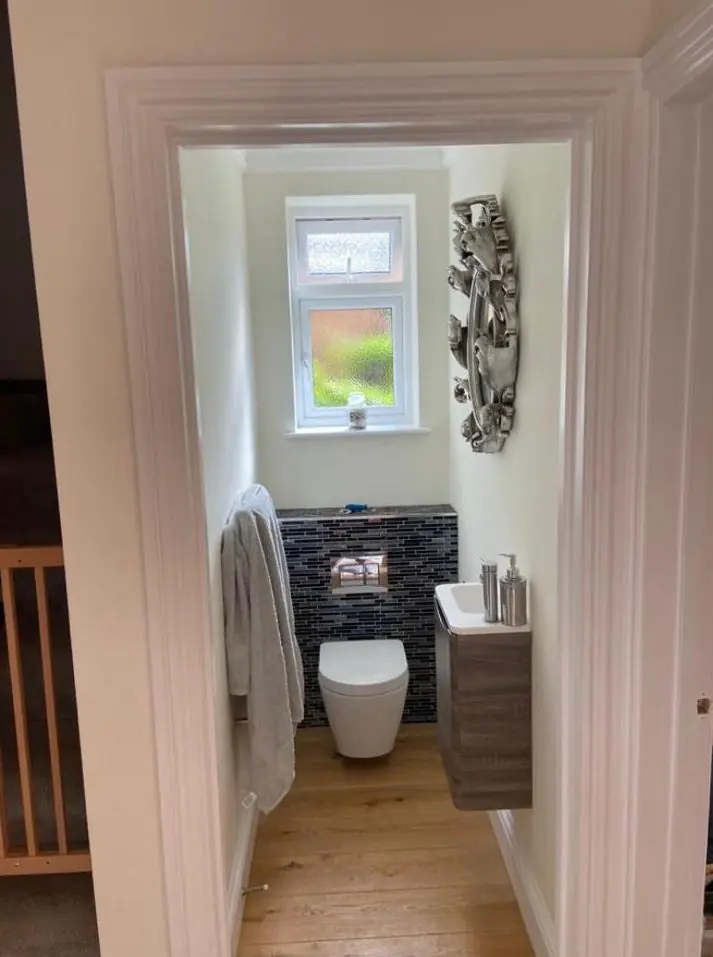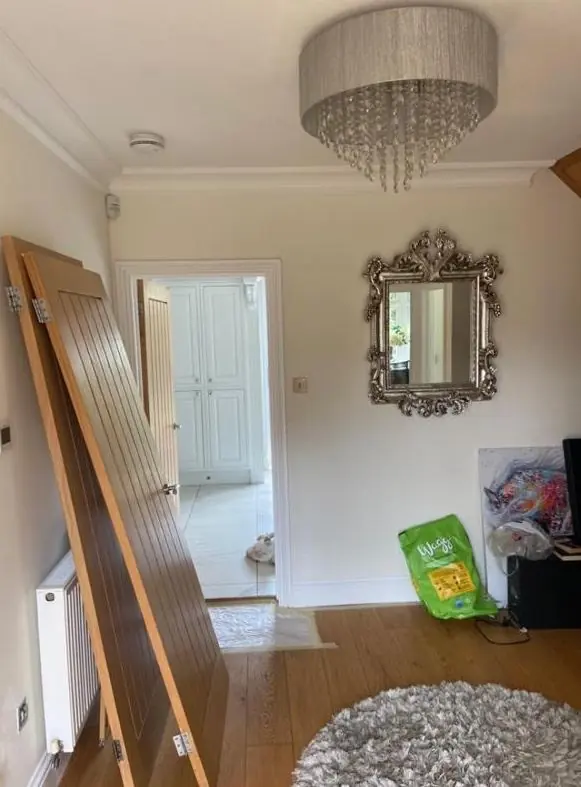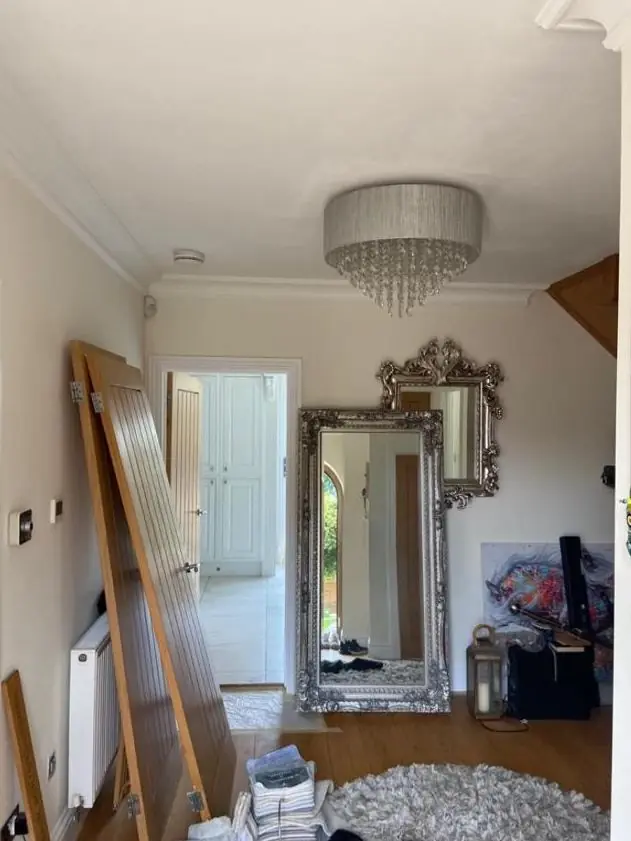
Dean paints internal and external doors, skirtings, architraves and other joinery in Rothersthorpe, a village about 3.4 miles south-west of Northampton town centre. The work runs from original woodwork in 17th- and 18th-century ironstone cottages and farmhouses to the factory-made doors in the village's 20th-century houses.
From plank doors to six-panel Georgian doors
The conservation area appraisal for Rothersthorpe describes a wide spread of door types. The early farmhouses on Church Street and North Street have plank doors hung on heavy ironwork. The few formal Georgian houses, such as Church Farmhouse at 33 Church Street and Manor Farm, have panelled doors, including a six-panel door with a fanlight. Panelled Victorian doors appear too, from the century when red brick cottages went up on the eastern part of Church Street. Each type is prepared and painted differently.
- Plank doors: the boards move with the seasons, so the joints between them open and close. We do not caulk or fill those joints. Doing so cracks within a year and looks wrong on a door that is meant to show its boards.
- Strap hinges, latches and studs: we take traditional ironwork off where it comes away safely, or mask it closely, and treat rust before any paint goes near it.
- Panelled doors: we paint mouldings and panels first, then the rails and stiles in grain order. On a fanlight door the glazing bars get a fine brush and a straight line onto the glass.
The appraisal points out that painted white joinery, sometimes with black frames, is the established look in the village. Hand-painted period colours suit a traditional front door well.
Uneven cottage joinery: why we don’t fill it flat
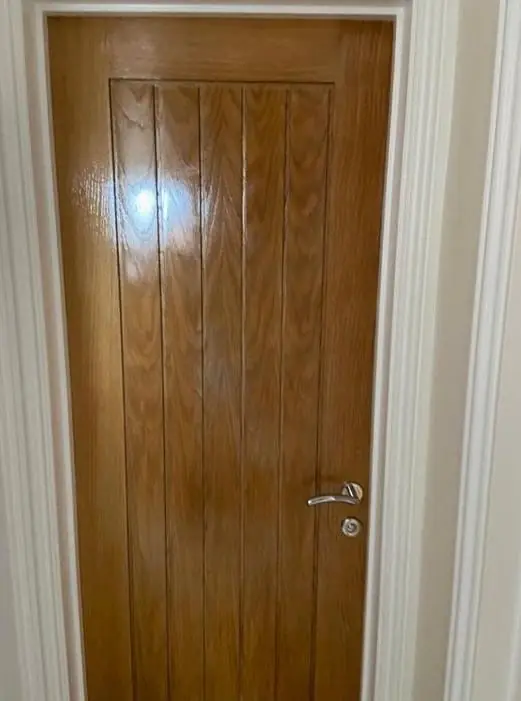
Most of the historic houses here are narrow-depth buildings with solid ironstone walls, and the skirtings and architraves often follow walls that have never been straight. On original joinery that age, the aim is a sound, clean finish that keeps the character of the wood. We are not trying to make it look like new MDF.
In practice that means:
- we wash and key the old paint and fill only the real defects, such as splits, open nail holes and dents, leaving the natural undulation of hand-worked timber;
- where a skirting meets an uneven lime-plastered wall, we use a flexible filler or caulk sparingly so the line follows the wall instead of fighting it;
- we test old paint layers before sanding, because joinery in a house of this age can carry lead paint. Lead-painted surfaces are wet-abraded or chemically stripped, never dry-sanded.
Heat guns are off the table at The Manor and The Poplars, both of which are thatched, and we prefer chemical strippers in any old timber building anyway.
Woodwork in listed houses
Rothersthorpe has ten listed buildings. Among the houses are the Grade II Manor House at 1 North Street, Poplars House, Church Farmhouse, Studleigh Cottage at 20 Church Street and 26a Church Street. Repainting existing joinery in the same type of finish is generally treated as maintenance. Stripping original doors, changing an external door colour or changing the finish system on a listed house can need listed building consent from West Northamptonshire Council. If you own one of these houses, check before the work is booked. We can talk through the options at the quote so you know what to ask.
On historic timber we lean towards linseed-based or microporous systems for outside doors and frames, so moisture can escape and the paint doesn’t blister on the weather side.
Newer houses off Kislingbury Road and Banbury Lane
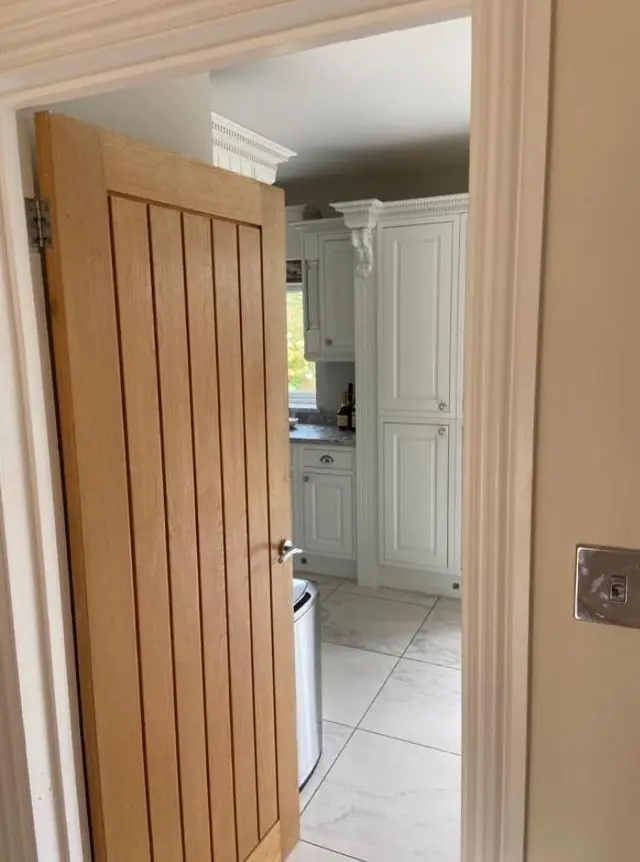
Outside the conservation core, the infill along Church Street and North Street and the estates off North Street, Banbury Lane and Kislingbury Road are 20th-century houses. The appraisal notes their mass-produced doors. That is ordinary woodwork painting: degrease, key, fill, caulk the skirting gaps, then an undercoat and a satinwood or gloss top coat. Yellowed oil-based gloss on skirtings and stair spindles can be brought back to a crisp white with a water-based finish that stays white.
For the full step-by-step on woodwork preparation, see our door and skirting painting page. For other work in the village, see our Rothersthorpe area page. For budgeting, read the decorating cost guide.
Last updated by Dean, DH Painter & Decorator.