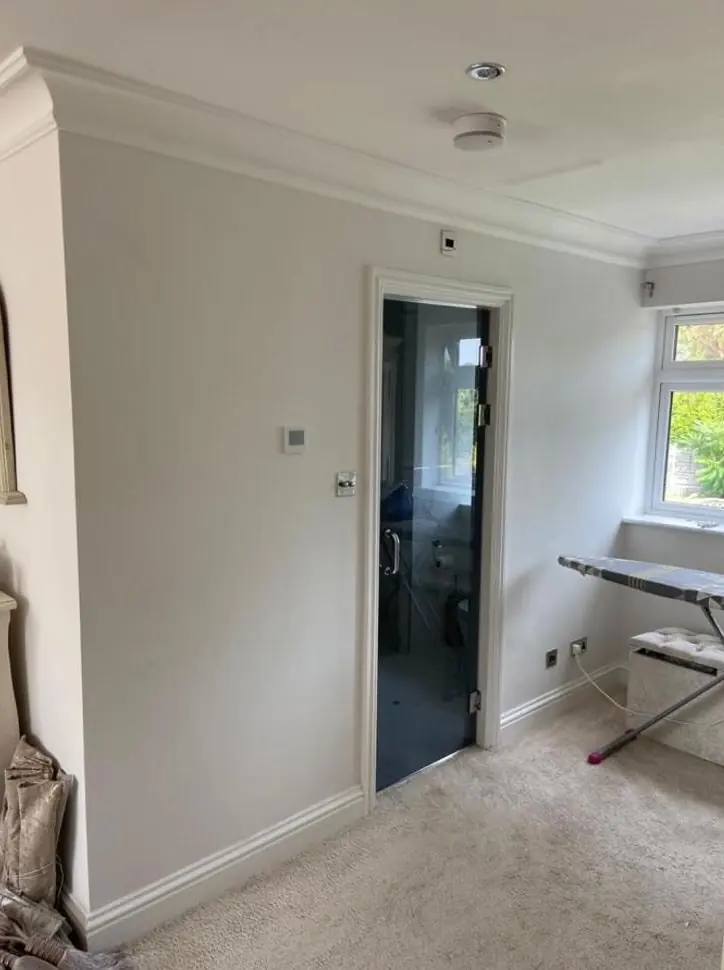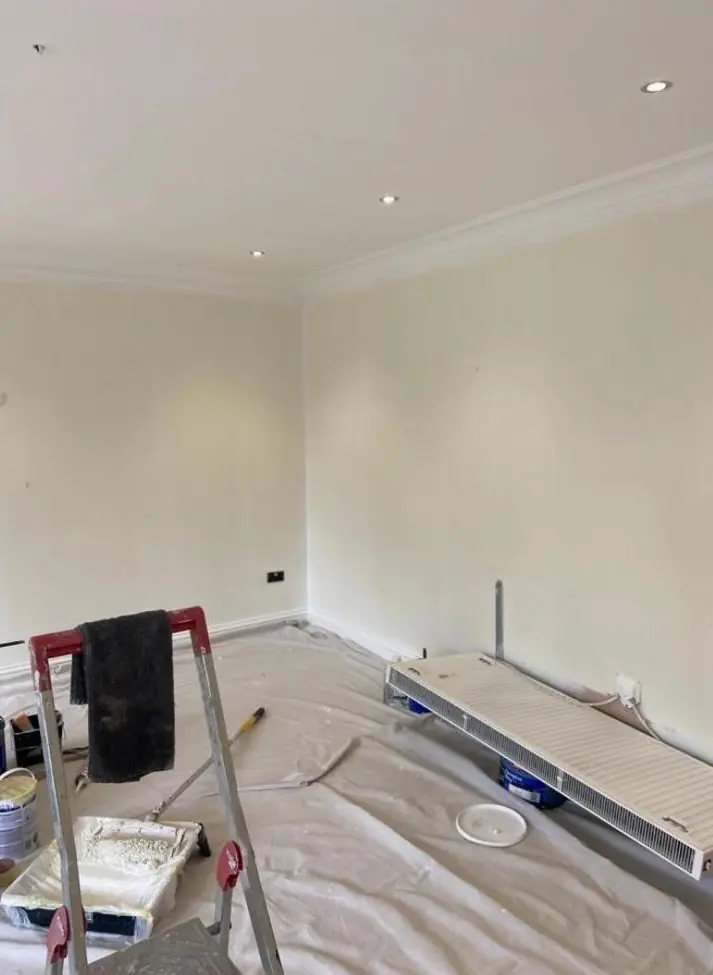
Dean gives colour and finish advice to Rothersthorpe homeowners as part of a decorating job, in the village about 3.4 miles south-west of Northampton. Outside, that means working with the ironstone, limestone banding and red brick of the conservation area; inside the old farmhouses, it means choosing among breathable paints.
Start with the stone, not the colour card
In Rothersthorpe the walls have already chosen half the palette. The old houses on Church Street and North Street are coursed squared ironstone, a warm brown-orange stone, and on The Manor and 26a Church Street it is banded with paler limestone. The 19th-century cottages, mostly on the eastern part of Church Street, are red brick laid in English and Flemish bond under slate. Any paint colour on doors, windows or gates is seen against those materials, so we hold samples up against the actual stone or brick, at the time of day you look at the house most, before you commit.
Ironstone tends to make cool greys look blue and slightly dead, while warmer off-whites, soft greens and deep traditional colours sit comfortably against it. Red brick is more forgiving of crisp white, and dark colours on brick cottages read as smart rather than heavy.
White or black joinery, and why stain stands out
The 2013 conservation area appraisal notes that most windows in the village are painted white, some with black frames, and calls stained timber windows a non-traditional finish. That gives a clear lead for anyone in the conservation area: an opaque painted finish in white or a near-white, with black as the established alternative, will look at home. A bright modern colour on sashes is not banned for unlisted houses, because there is no Article 4 direction here, but the management plan proposes considering one to protect windows and doors, so a restrained choice is the safer long-term bet.
- Windows: white or off-white paint; black frames where the house already has them.
- Front doors: more freedom, especially on panelled Georgian and Victorian doors, where a deep green, red or blue suits the period.
- Plank doors with ironwork: a single strong colour, with the ironwork kept black.
Listed buildings need a different conversation
Around ten buildings in the parish are listed, among them Manor House on North Street, Poplars House, Church Farmhouse and Studleigh Cottage. On a listed building, a change of external colour or finish may need listed building consent, so the advice there is to agree the colour with West Northamptonshire Council before any paint is bought. Replacing like with like is usually the straightforward route.
Indoors: breathable paints and deep, single-aspect rooms
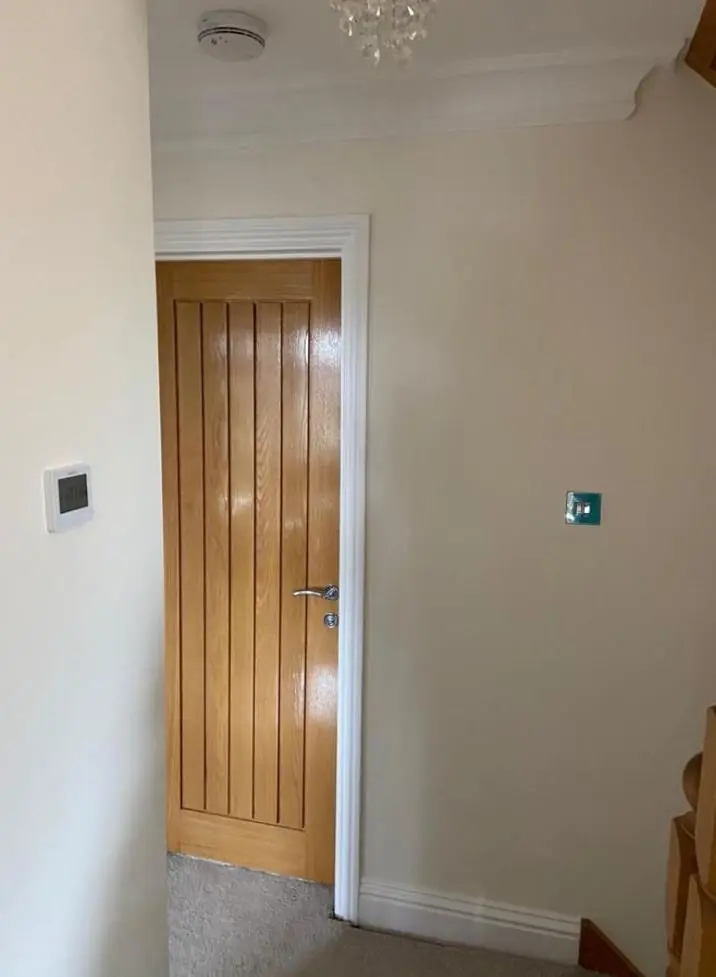
Inside the ironstone farmhouses, the paint itself narrows the choice. Lime-plastered walls need breathable finishes such as mineral paints, clay paints or distemper, and those ranges generally offer softer, chalkier colours than a standard trade emulsion, with a flat finish that changes with the light. Where stone mullions with leaded lights survive, less light reaches the back of the room, so a colour that looks soft on the card can read noticeably darker on the far wall. We paint sample patches on the wall opposite the window and on the window wall before you decide.
The newer homes on Banbury Lane, Kislingbury Road and off North Street have no such limits, so the full range of trade colours is open. Front rooms under the protected Church Street chestnuts near Manor Farm are shaded through the summer, which suits warmer, lighter shades. Our general approach to light and undertone is set out on the main colour and finish advice page, and you can see the rest of what we do in the village on our Rothersthorpe page.
Last updated by Dean, DH Painter & Decorator.