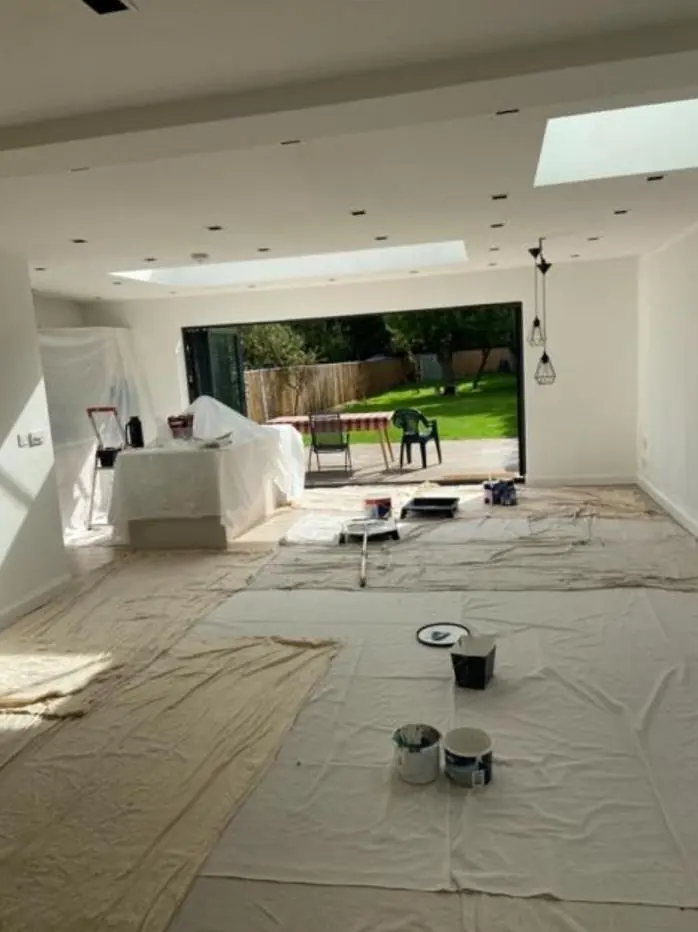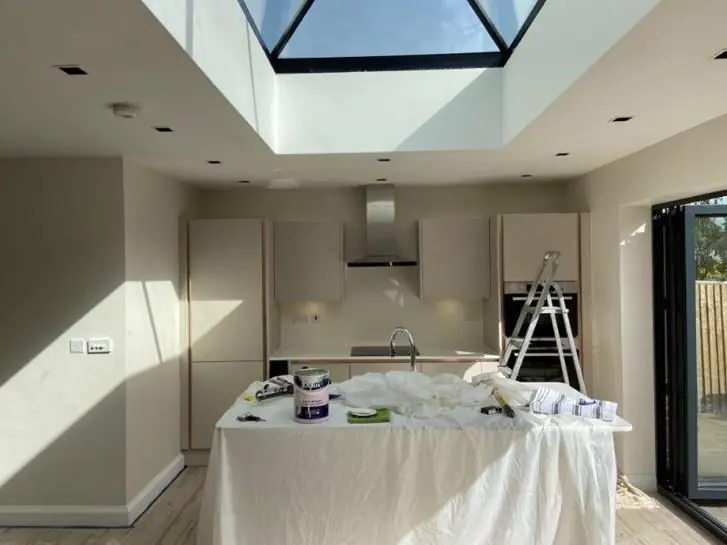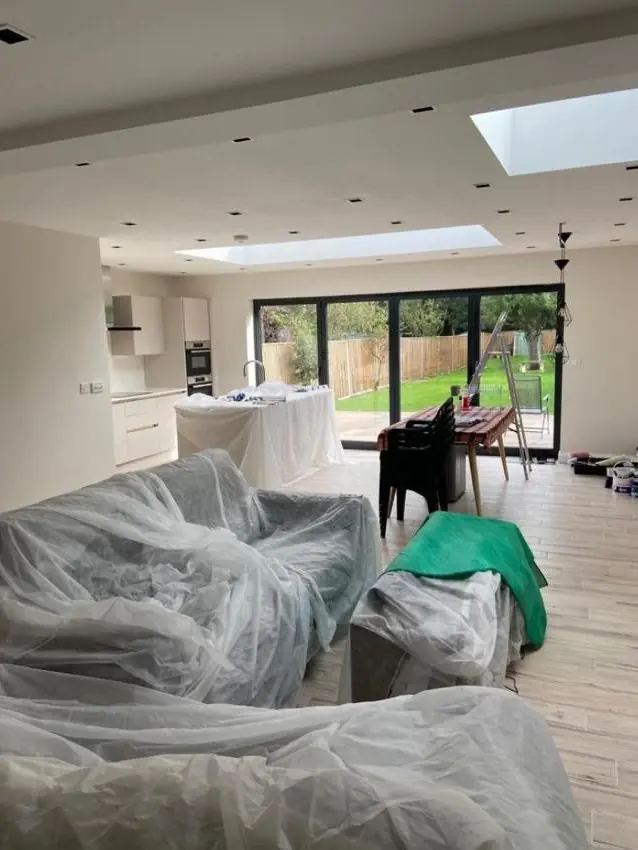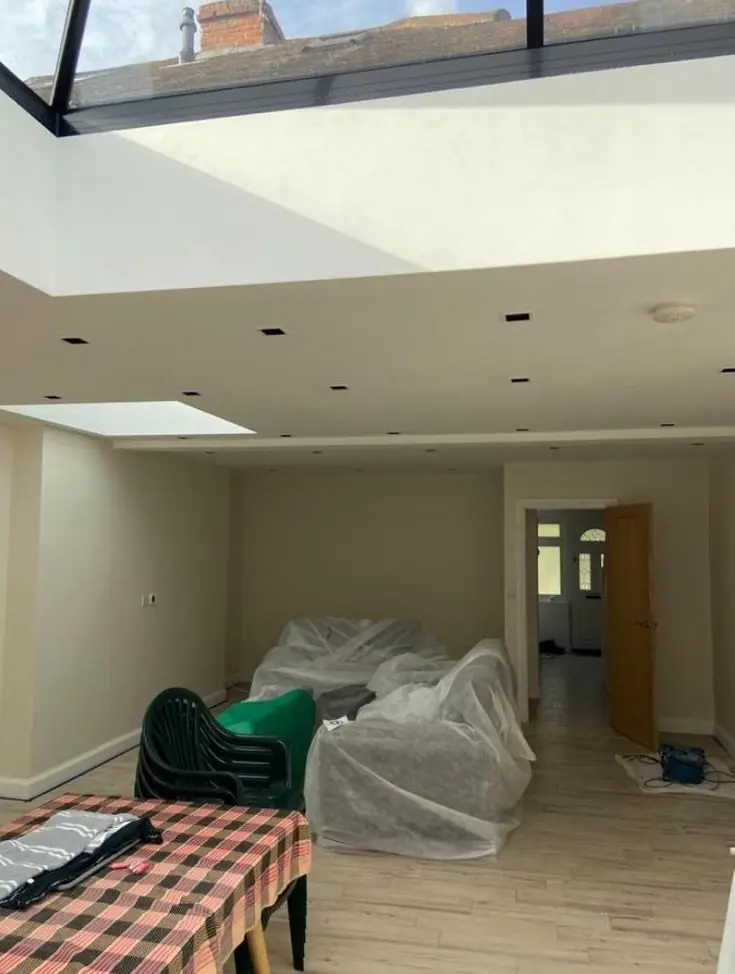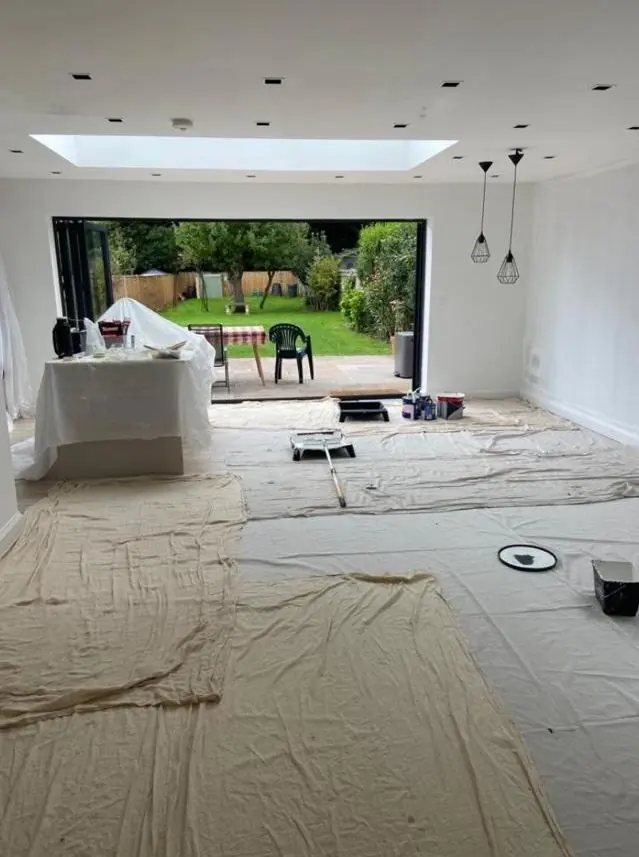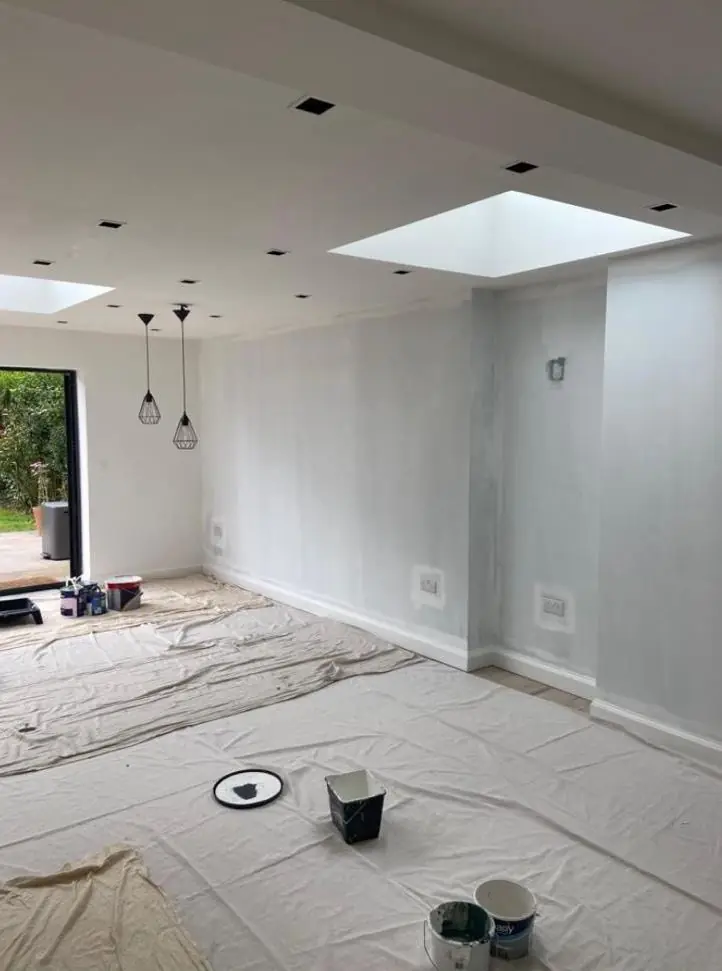
Dean paints new plaster in Rothersthorpe, a village about 3.4 miles south-west of Northampton town centre, after the plasterer or builder has finished. In this village that often means extensions to old ironstone houses and converted farm buildings, where new gypsum and old lime plaster meet in one room.
Where fresh plaster turns up in the village
New plaster in Rothersthorpe usually comes from one of three kinds of work:
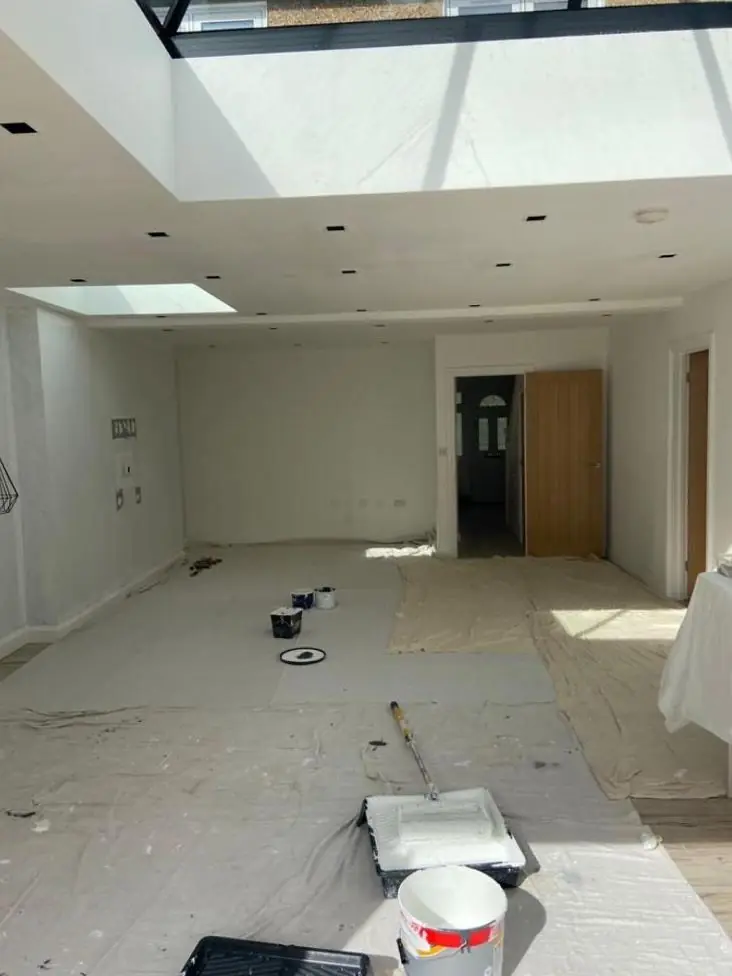
- Extensions to the 20th-century houses on Banbury Lane, Kislingbury Road and the estate roads off North Street. These are gypsum skim on board or blockwork, and they follow the standard mist-coat sequence.
- Converted farm buildings. The appraisal notes that some of the village’s farm buildings have been converted to other uses, and the St John’s Farm redevelopment is listed among the newer housing. A conversion can mix brand-new plaster with old stone walls inside one room.
- Repairs and re-skims in older cottages on Church Street and North Street, where a damaged section is patched next to original lime plaster.
The second and third kinds need more thought than the first.
When gypsum meets lime in an ironstone wall
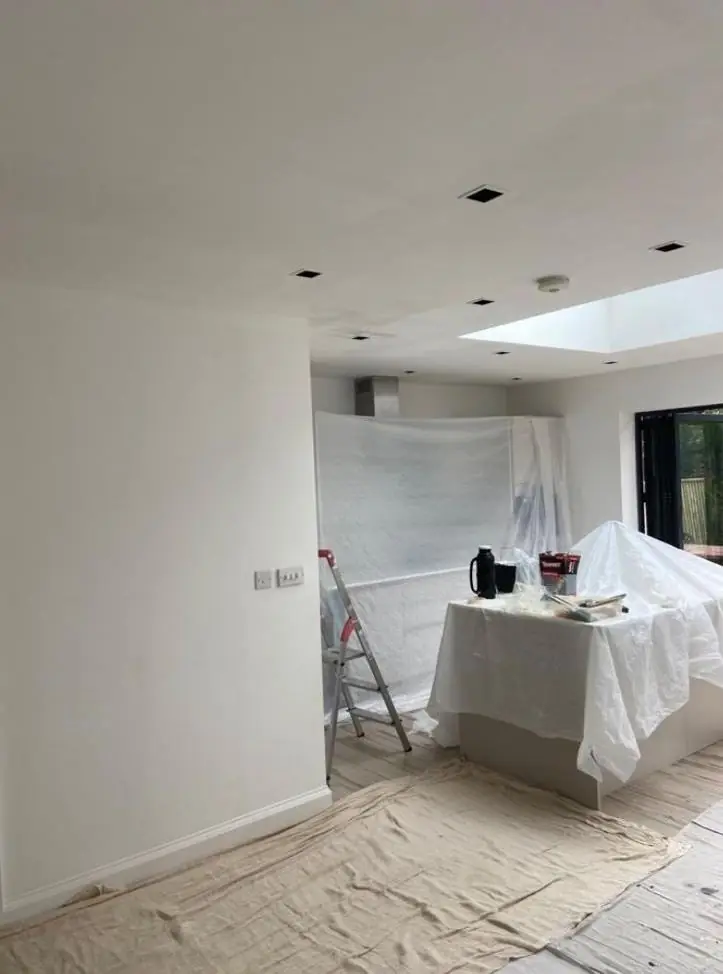
The historic buildings here stand on coursed squared ironstone laid in lime, and many of them are lime-plastered inside. Lime walls let moisture move in and out. Gypsum skim and modern emulsions are much less permeable. When the two share a wall, the wrong paint can trap damp at the old side of the joint, and the paint starts to bubble or powder along that line.
So we paint the whole wall in one system that breathes, rather than a mist-coated vinyl on the new half and something else on the old. A breathable mineral or clay-based paint, or a contract matt thinned for the mist coat and followed by a breathable top coat, keeps the wall consistent. The joint itself gets a flexible filler and an extra look after the first coat, because that is where hairline cracks show.
| Surface | First coat | Watch for |
|---|---|---|
| New gypsum skim (extension) | Thinned contract matt as a mist coat | Damp patches; wait until it is evenly pale |
| Old lime plaster | Breathable mineral or clay paint | Loose, powdery areas to consolidate first |
| New-to-old joint | Same breathable system both sides | Hairline cracks along the junction |
Drying time in thick-walled conversions
Gypsum skim on a modern blockwork extension usually dries in a few weeks in reasonable conditions. Plaster laid onto old stone in a converted outbuilding can take noticeably longer, because the wall behind it holds more moisture. We check every wall before painting, including window reveals and corners, which dry last. If a conversion isn’t ready, we tell you and come back rather than seal the damp in. In a converted farm building, the wall facing the weather on the village’s exposed eastern side is often the slowest to dry, so that is where we take readings first. Our mist coat guide explains what to look for.
Listed houses and the conservation area
Ten buildings in the village are listed, including the Grade II Manor House, Poplars House and Church Farmhouse, and the conservation area covers most of Church Street, parts of North Street and The Berry. Plastering work inside a listed building, especially replacing lime with gypsum, can need listed building consent, and the council may expect lime to be used. That decision belongs with your builder and West Northamptonshire Council before the plasterer starts. We then match the paint to whatever goes on the walls.
For what’s included in a typical extension job, see our new plaster and extension painting page. The Rothersthorpe area page covers the village’s other property types.
Last updated by Dean, DH Painter & Decorator.