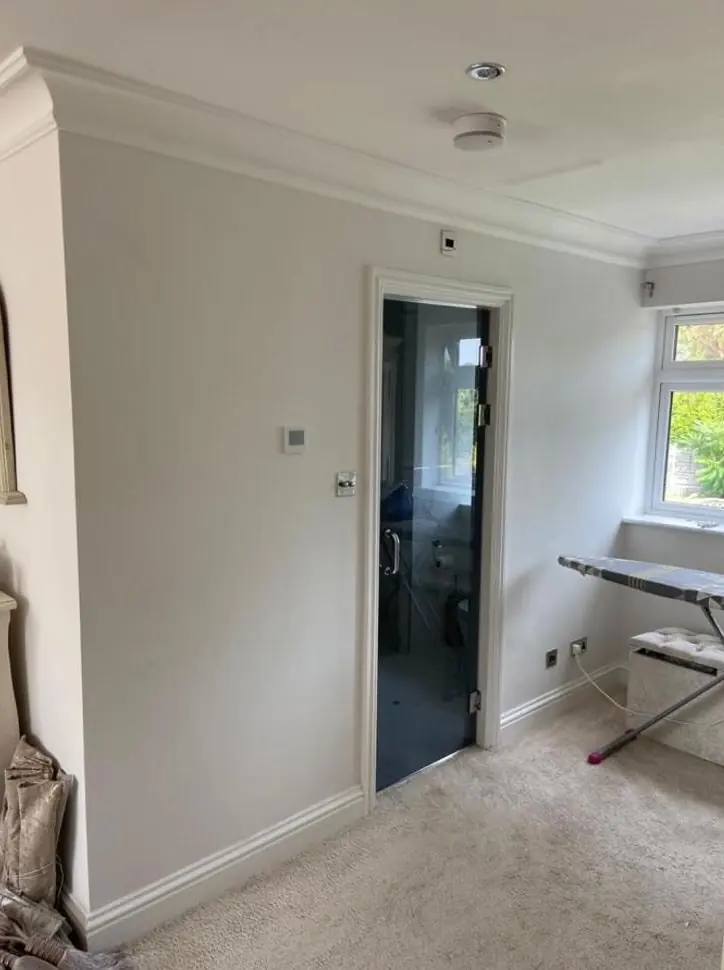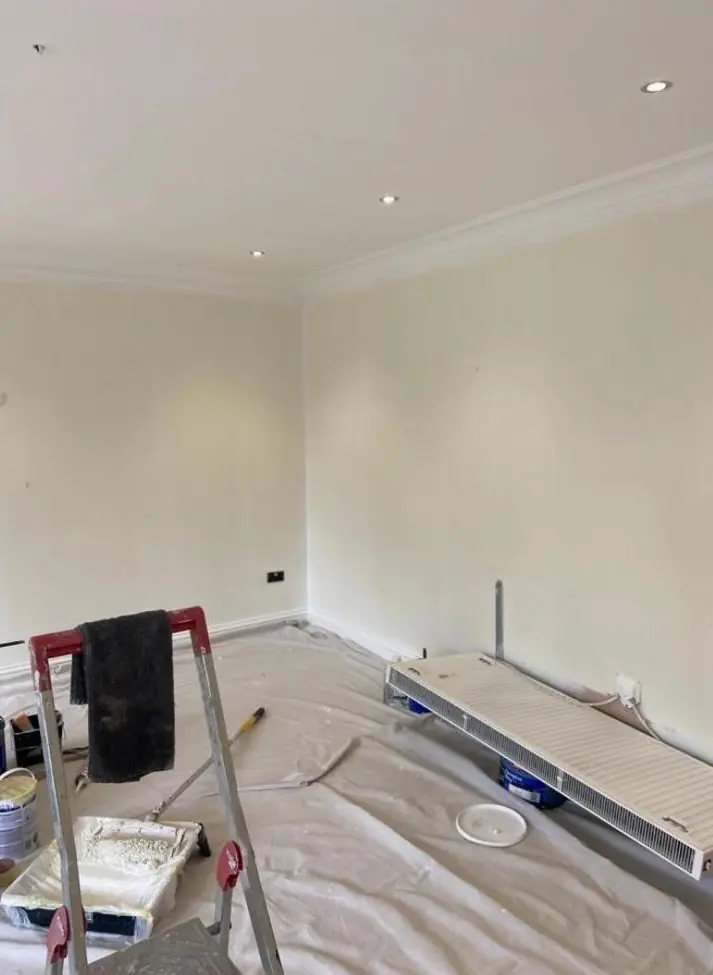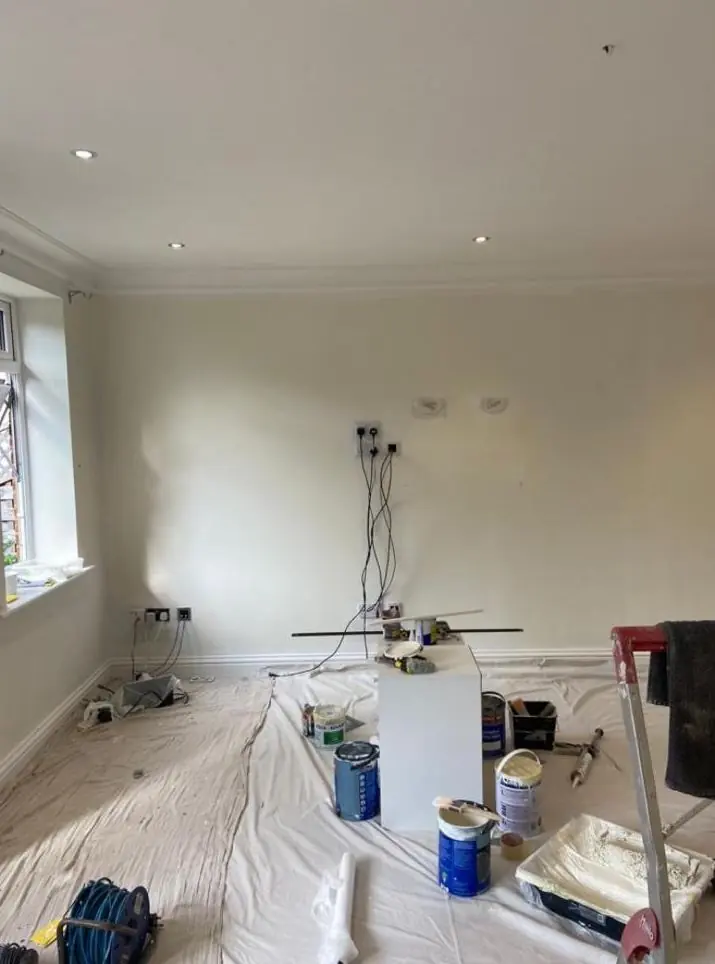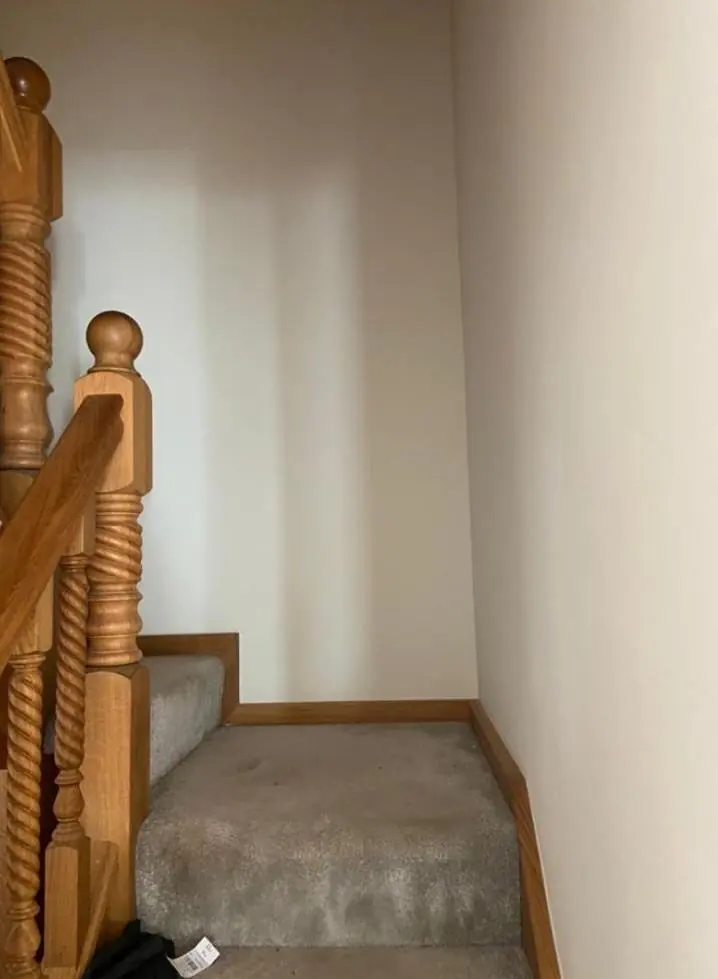
DH Painter & Decorator applies decorative and traditional finishes in Rothersthorpe, a village about 3.4 miles south-west of Northampton. In the listed ironstone farmhouses that usually means breathable limewash, distemper and hand-painted period joinery; in the modern houses it means feature walls and painted panelling.
Limewash and distemper in the ironstone farmhouses
The larger farmhouses in Rothersthorpe, Georgian houses such as Manor Farm and Church Farm among them, date from a time before plastic paints existed. Their lime-plastered walls were finished in limewash or distemper, and those finishes still suit them, both for the look and because they let solid ironstone walls dry out. Limewash goes on in several thin coats and dries to a soft, slightly uneven surface that changes with the light through the day. It can be tinted with pigments, which gives a gentle colourwash effect rather than the flat block of a modern emulsion.
Limewash only bonds to a mineral surface, so it cannot go straight over an existing modern paint. Where an old wall has been covered in vinyl emulsion, the choice is either to remove it, which is slow, or to use a mineral paint that gives a similar look over the existing coat. Dean will test the wall and explain the trade-off honestly before quoting.
Picking out period joinery and ironwork
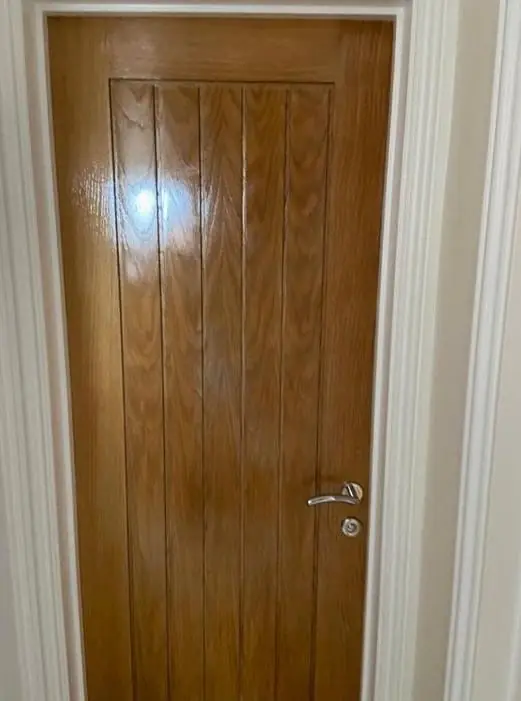
Rothersthorpe has a wide range of old doors, from plank doors with heavy ironwork on early farmhouses to panelled Georgian and Victorian doors, including a six-panel door with a fanlight on one of the Georgian houses. That joinery rewards hand work:
- Panel mouldings picked out in a second shade or sheen, so the panels read clearly from across a hall.
- Plank doors painted in one strong colour, with hinges, latches and studs kept black and cleanly cut in.
- Fanlight glazing bars painted by brush with the glass carefully masked.
Old joinery is not filled flat. Dents and the soft wear of centuries are part of its character, and the aim is a clean, durable finish that still looks old.
No heat guns in a thatched house
The Manor and The Poplars are thatched, and anyone preparing old paint in or around a thatched building has to rule out heat-gun stripping entirely. Removing layers from a door or panelling in a house like that is done with chemical strippers and hand scraping instead. It takes longer, and it is priced in from the start rather than discovered halfway. Old paint layers in houses of this age can also contain lead, so dry sanding is avoided and dust is kept to a minimum. Our cost guide explains how this kind of slower work affects a quote.
Panelling and feature walls in the newer houses
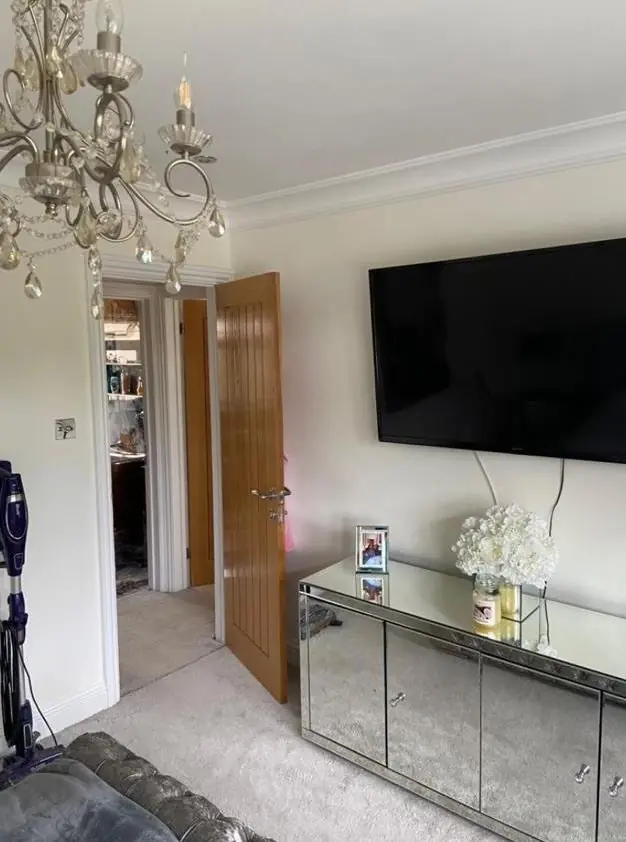
Away from the conservation area core, the 20th-century homes on Kislingbury Road, Banbury Lane and the estate roads off North Street suit a different set of finishes. Painted wall panelling in a hall or dining room, a two-tone split wall in a bedroom, or a deep colour on a single chimney breast all work well on the flat gypsum plaster these houses have. Joints and pins in new panelling are filled and sanded so they disappear under the paint. Our full range, from faux effects to feature walls, is on the main decorative finishes page.
When a listed interior is involved
About ten buildings in the parish are listed. Covering limewashed walls with a modern finish, or stripping historic paint from original joinery, can alter the character of a listed interior, so it is worth asking West Northamptonshire Council first. Reinstating limewash on a wall that once had it is rarely a problem. More on the village’s buildings is on our Rothersthorpe page.
Last updated by Dean, DH Painter & Decorator.