DH Painter & Decorator hangs wallpaper in Rothersthorpe, about 3.4 miles south-west of Northampton. In the 17th- and 18th-century ironstone cottages that usually means lining uneven lime-plastered walls first, while houses on Kislingbury Road and Banbury Lane are mostly feature-wall jobs on flat plaster.
Why a plumb line matters more than the corner here
The historic core of Rothersthorpe, along Church Street and North Street, is mostly vernacular farmhouses and small cottages from the 17th and 18th centuries. Their walls are coursed ironstone with lime plaster inside, and after three or four hundred years very little in them is square. Corners lean, window reveals taper and ceilings are rarely level. If the first length of paper follows the corner, every length after it inherits the lean, and a stripe or a large repeat drifts visibly across the wall by the time it reaches the window.
So in these rooms the first drop is set from a plumb line, and the pattern is centred on whatever the eye lands on first, usually a chimney breast or the space between two windows. Any compromise is pushed into the least-seen corner, often behind the door. On a narrow-depth cottage room, where you are never far from any wall, getting that decision right matters more than it does in a large modern lounge.
Lining old lime walls first
Lime plaster that has been patched over the years carries hollows, ridges and old repair edges that show straight through a thin paper. A layer of lining paper, hung horizontally so its joints never line up with the finishing paper, evens out much of that and gives the top paper a consistent surface to grip. On walls that are soft or dusty, the plaster is consolidated first so the paste has something sound to hold.
The choice of paper also matters on solid stone walls. Heavy vinyls stop moisture leaving the wall, which on lime can lead to mould behind the paper or seams lifting. Traditional paper-based and many non-woven papers suit these walls better, and we will tell you before you order if a design you like is likely to cause trouble in an old cottage.
Stripping paper without bringing the plaster with it
Old layers of paper in a historic house can be holding up tired plaster as much as decorating it. Steam is used sparingly and in short passes, because soaking lime plaster can soften it and loosen it from the stone. Where a section comes away, it is pointed out to you rather than papered over. In listed houses, which in Rothersthorpe include Poplars House, The Manor and Studleigh Cottage, losing original plaster can have consent implications, so careful removal is part of the job, not an extra.
Feature walls in the 20th-century houses
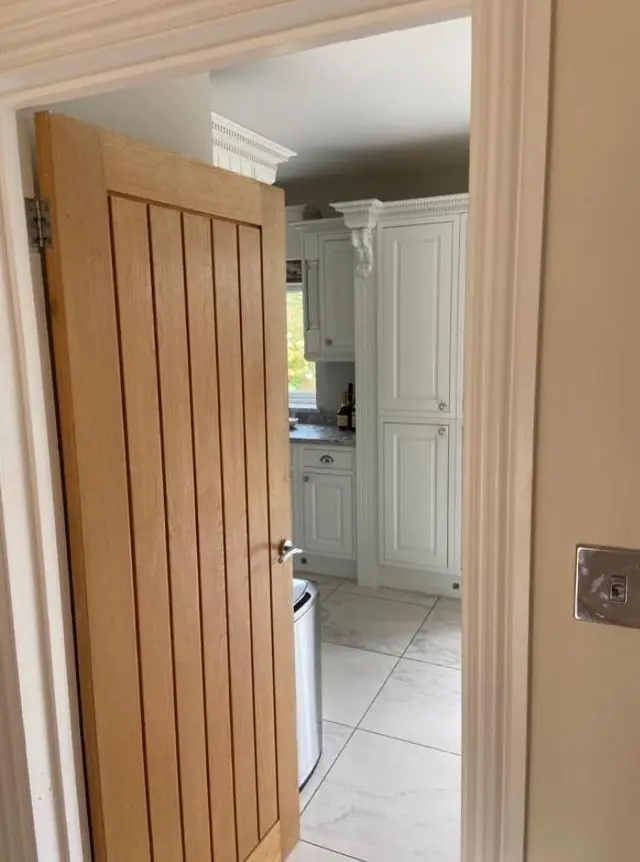
Homes set back from the road on Kislingbury Road, Banbury Lane and the estate roads off North Street are very different. Gypsum plaster and plasterboard give a flat, true surface, so a single feature wall behind a bed or around a fireplace is quick to set out. New plasterboard and fresh skim are sealed first so that the paper can be removed later without tearing the board face. Full details of how we prepare, paste and match patterns are on the main wallpaper hanging page.
Pattern scale for low, narrow cottage rooms
Most of the old houses are two storey with modest room heights, so a pattern with a large drop can be cut off at the ceiling after a single repeat. Smaller repeats and simple stripes usually sit better in these rooms, and a busy pattern on all four walls of a front-to-back cottage room can feel close. For the bigger Georgian rooms and the three-storey farmhouses, a bolder paper has space to work. For painting and other services in the village, see our Rothersthorpe page.
Last updated by Dean, DH Painter & Decorator.