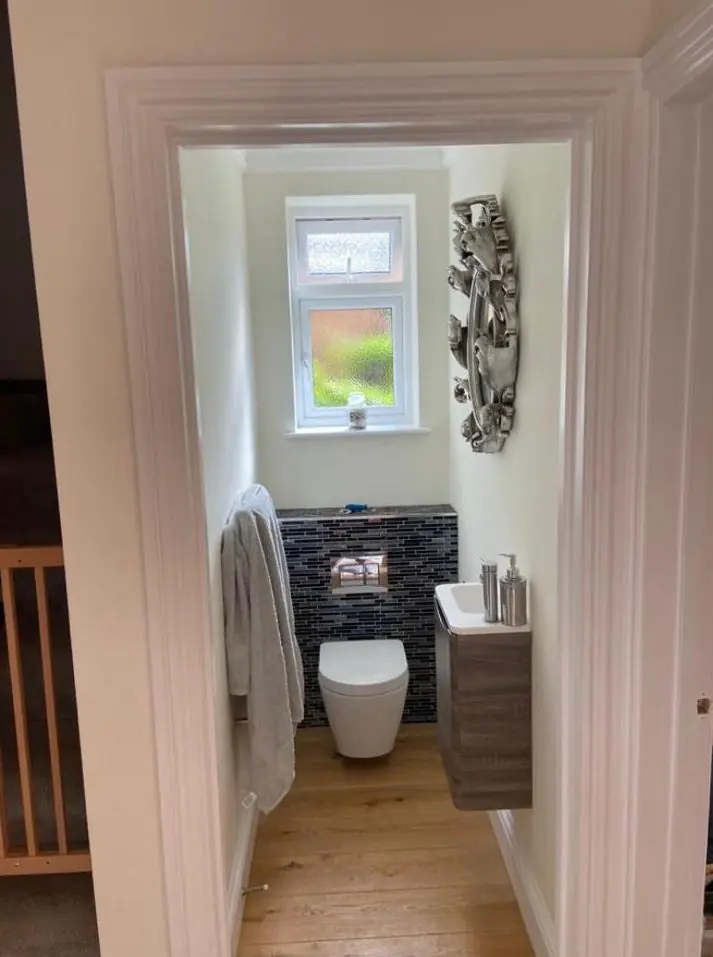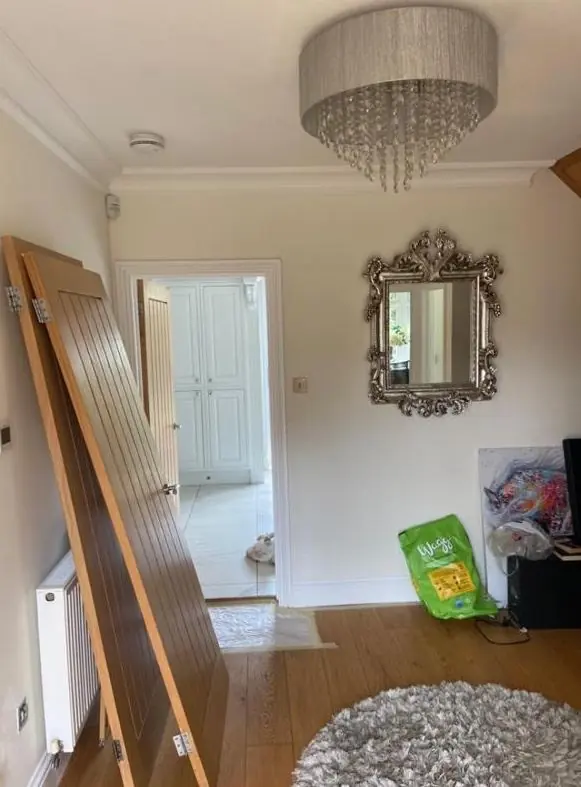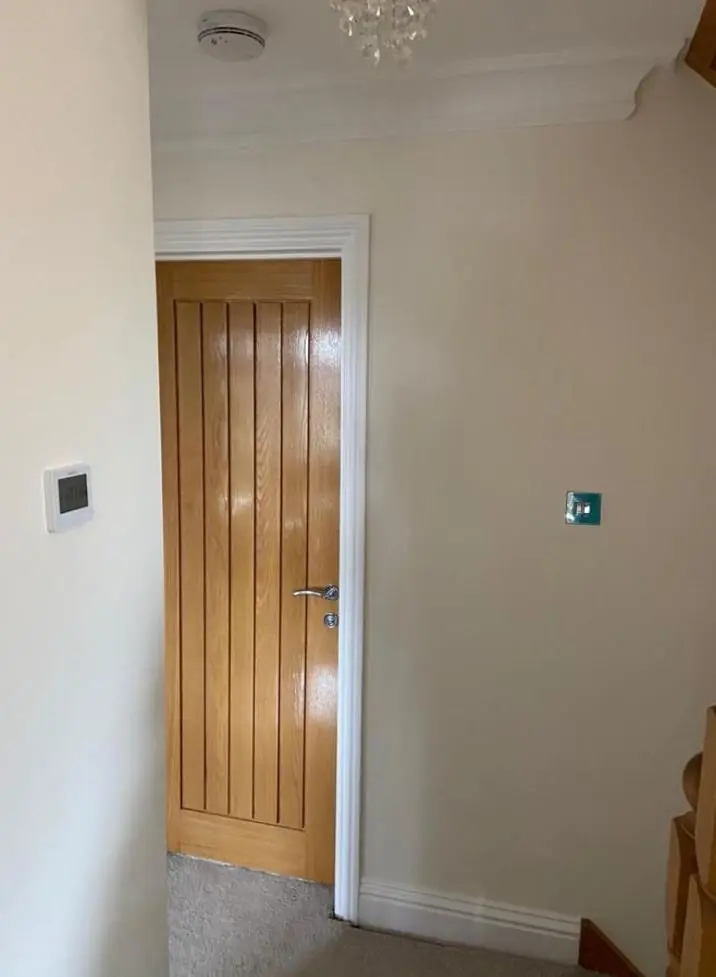
Dean decorates hallways, stairs and landings in Rothersthorpe, about 3.4 miles south-west of Northampton town centre. Old cottages and farmhouses in the village have tight or tall stairwells, and the newer houses off Banbury Lane and Kislingbury Road have conventional ones.
Steep, winding stairs in narrow-depth cottages
The 17th- and 18th-century cottages and farmhouses along Church Street and North Street are, as the conservation area appraisal puts it, buildings of narrow depth. A narrow plan leaves little room for a staircase, so many rise steeply or wind round a corner between solid ironstone walls. That shapes the whole job:
- A winder has no flat half-landing to stand a platform on, so we use a combination ladder with independently adjustable legs, set on two treads and footed against the wall.
- Low ceilings at the head of a cottage stair can leave just enough room to cut in by hand. We plan the order so we never have to stand on a freshly painted tread.
- The stair often stays the only route to the bedrooms, so we work one side at a time and leave a clear, dry path up and down at the end of each day.
Staging a tall farmhouse stairwell
The appraisal records mostly two-storey buildings with a couple of three-storey ones among the larger farmhouses. Where a stairwell rises through two or three floors, the top of the wall and the landing ceiling are well out of reach from the stairs. For those, we span staging boards between properly set-up ladders or trestles, or build a small tower on the landing. We work out the setup when we come to quote, after seeing the turn of the stair and how much floor the landing gives us.
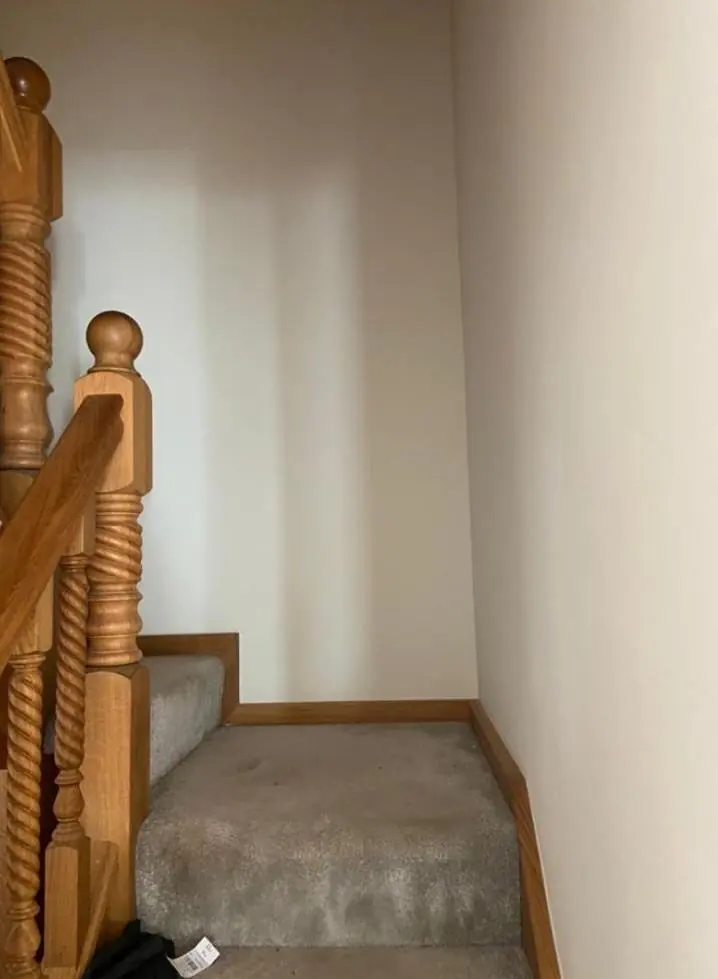
The same visit tells us how much protection the stair needs. Where an old stair keeps original timber treads and a polished handrail, they are covered and taped with care, since a dropped scraper on an original tread does damage you can’t sand out.
Lime plaster, banisters and breathable paint
Solid ironstone walls in the older houses are often finished in lime plaster, which needs to dry out through its surface. A modern vinyl emulsion on a stairwell wall like that can trap moisture, and the result is the flaking and powdering you often see on the lower part of an old stair wall. We use breathable mineral or clay-based paints there instead. Where a hallway has already been coated in vinyl paint, we check how well it is holding before choosing what goes over it.
Old stair walls also tend to have patched areas from past repairs, sometimes in gypsum. We sound the wall by tapping before we start, so any loose plaster is found and dealt with before paint goes on, not after. A hallway still has to cope with hands, coats and bags. On lime walls that means choosing a breathable paint that can still be wiped. On the handrail, newels and spindles, a hard-wearing satin or eggshell takes the knocks.
In any of the ten listed buildings, including the Grade II Manor House, Poplars House and Church Farmhouse, the staircase and its joinery can be part of what makes the house special. Stripping old balusters or changing the finish system may need listed building consent. Repainting like-for-like generally does not, but it is worth asking the council if you’re unsure.
Newer homes on Banbury Lane and the North Street estate roads
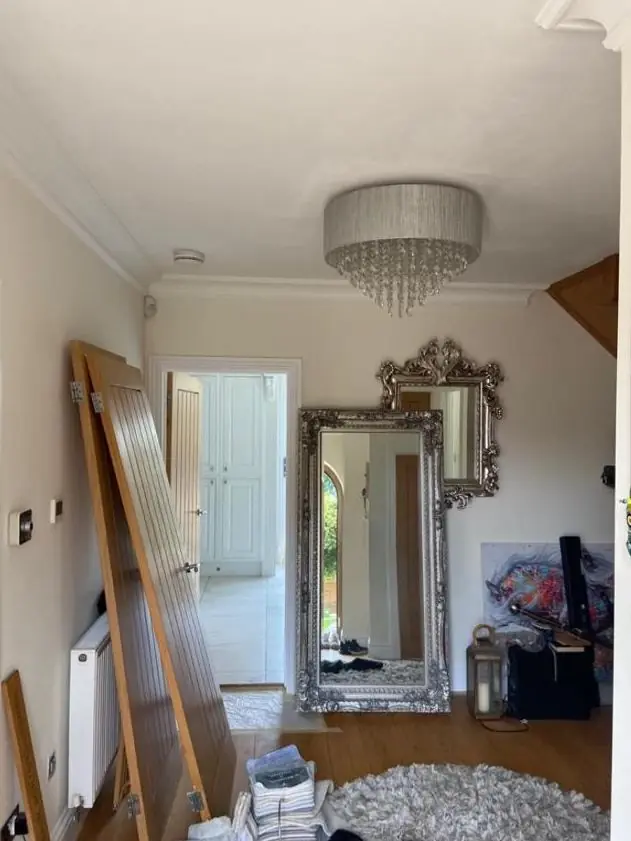
The 20th-century infill and small estates along Banbury Lane, Kislingbury Road and the roads off North Street have the familiar straight flight or dog-leg stair on gypsum plaster. Durable matt on the walls, satinwood on the spindles and strings, and an adjustable stair platform over the drop usually do the job in a couple of days, depending on size and condition.
The hallway, stairs and landing decorating page covers finishes and access in more depth. Our Rothersthorpe page covers the village as a whole.
Last updated by Dean, DH Painter & Decorator.