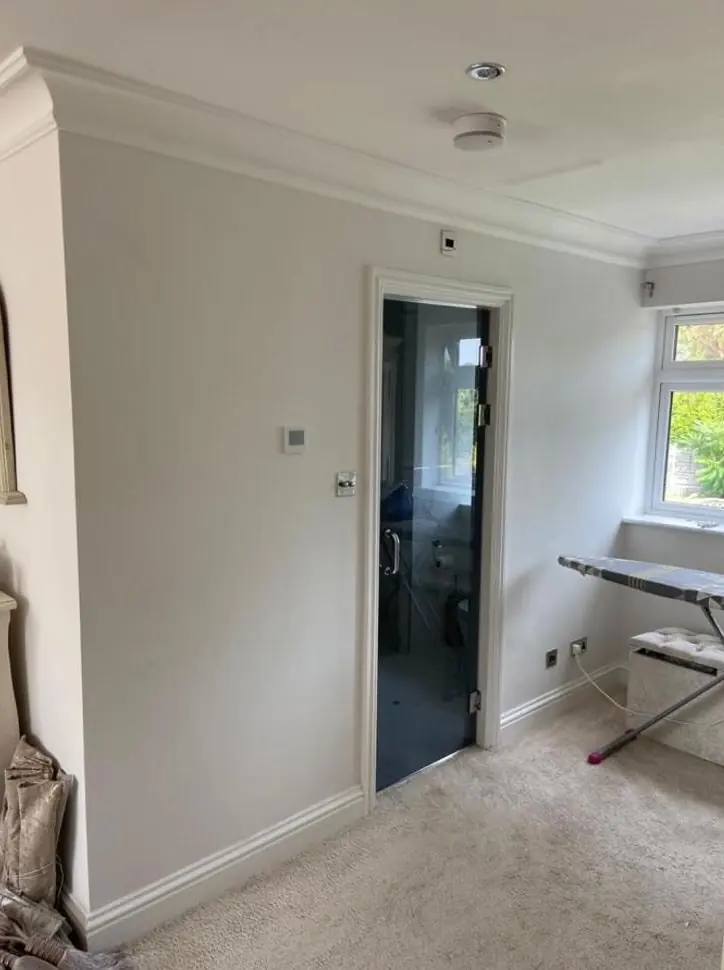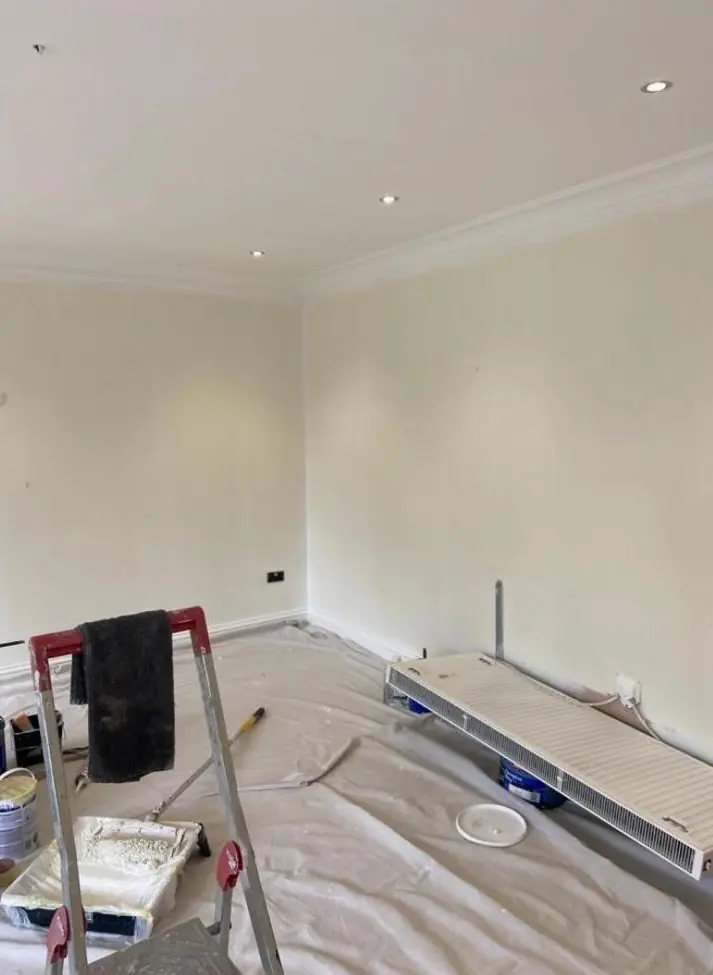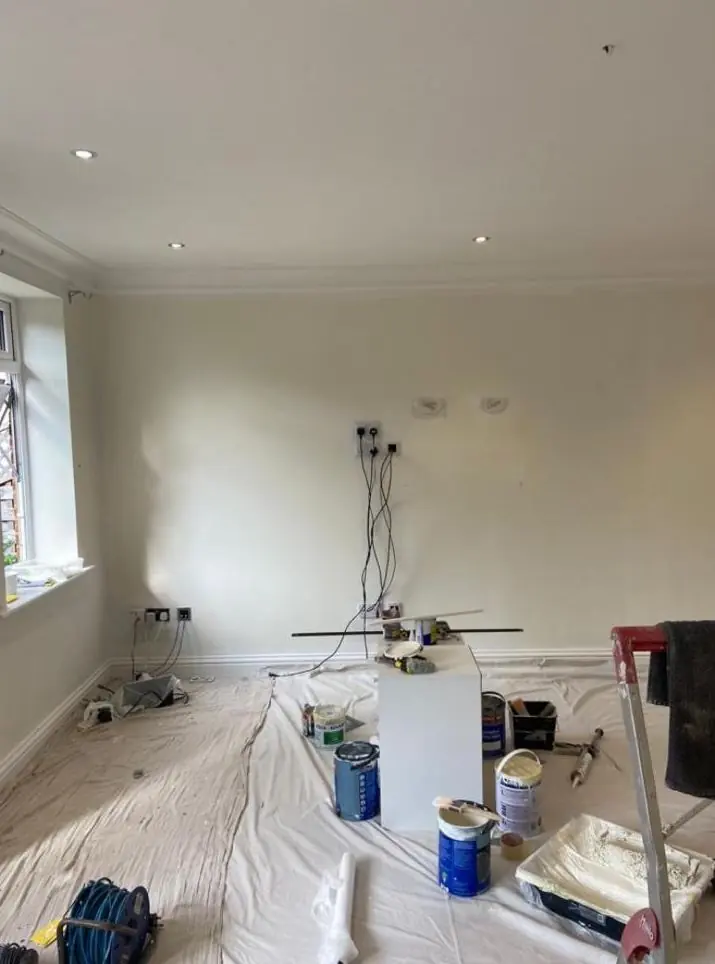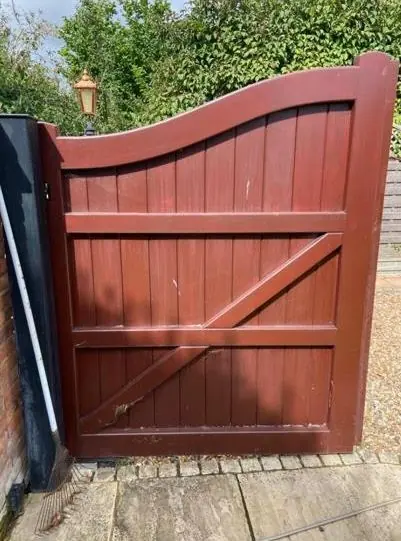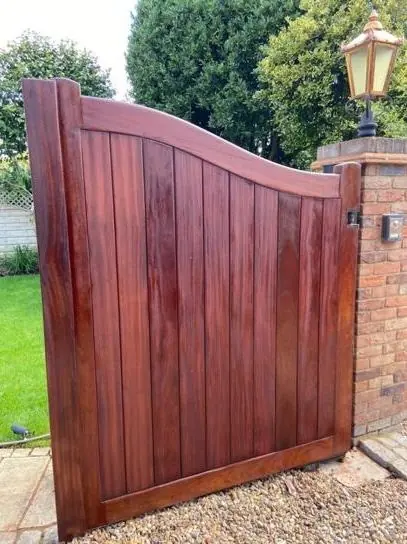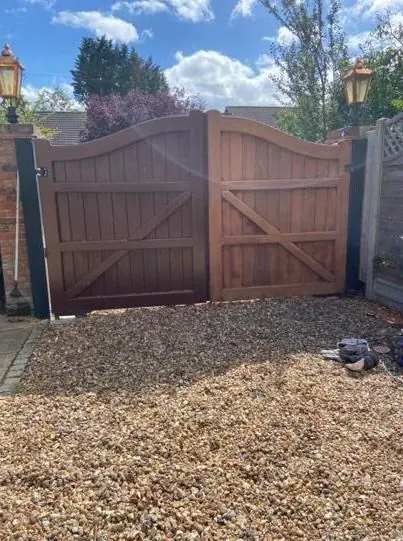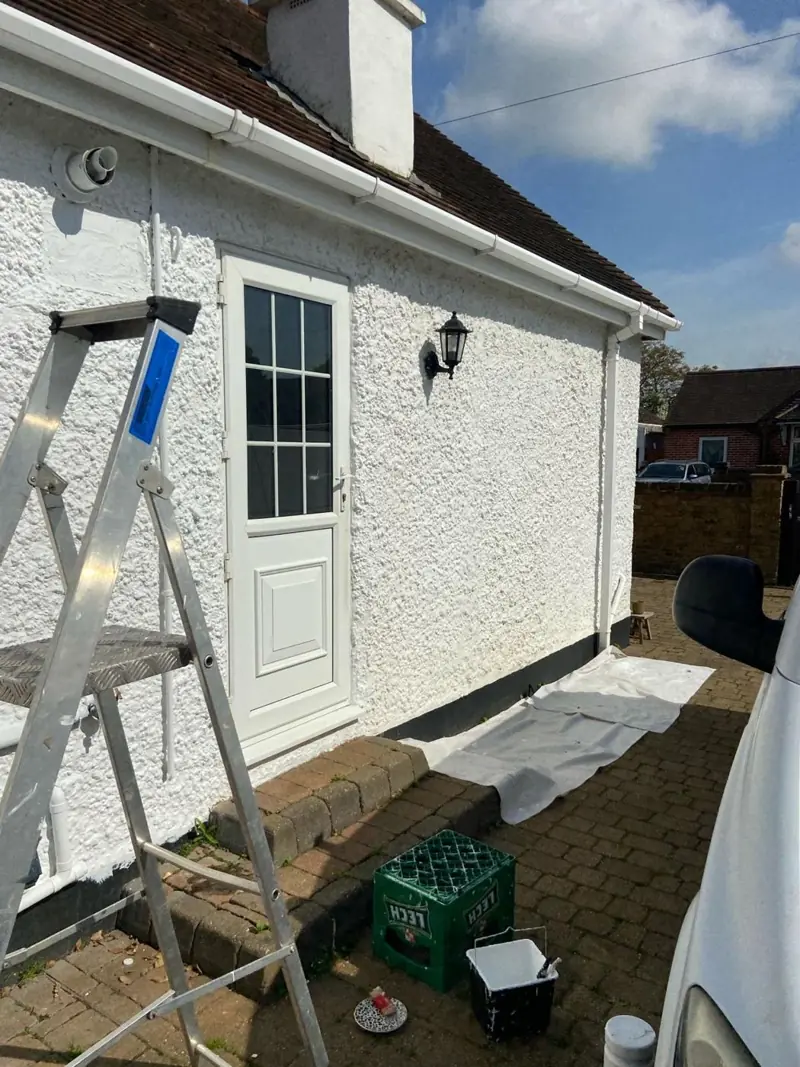
DH Painter & Decorator covers Rothersthorpe, a village in NN7 about 3.4 miles south-west of Northampton town centre. Dean paints and decorates its 17th- and 18th-century ironstone houses with breathable systems suited to the conservation area, as well as the red brick cottages and modern homes on Banbury Lane and Kislingbury Road.
A village of ironstone, red brick and newer streets
Rothersthorpe is a small village and civil parish in the NN7 postcode, about 3.4 miles south-west of Northampton town centre. It had around 470 residents at the 2011 census. The M1, the West Coast Main Line and the Northampton Arm of the Grand Union Canal all cross the parish, yet the village itself is reached only by local roads: Banbury Lane, the old drovers’ road, and the minor roads from Kislingbury and Milton Malsor. We cover Rothersthorpe from our Northampton base, coming out along Banbury Lane.
For a painter and decorator, the village is really three places in one. The historic core along Church Street and North Street, either side of The Berry, is made up of 17th- and 18th-century ironstone farmhouses and cottages. Scattered among them, and especially on the eastern part of Church Street, are 19th-century red brick cottages and community buildings. Around that core, on Banbury Lane, Kislingbury Road and the estate roads off North Street, are 20th-century infill houses and small estates, plus later development such as the St John’s Farm redevelopment. Each needs a different approach to paint.
The ironstone farmhouses and cottages
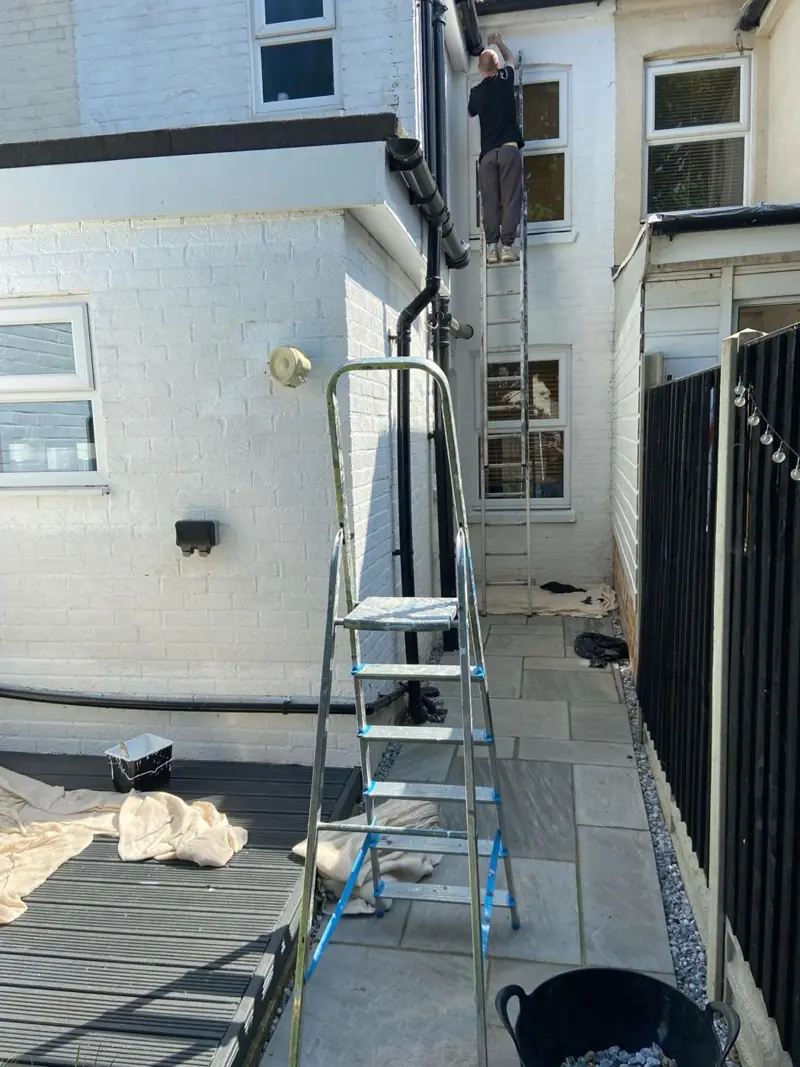
Most of Rothersthorpe’s historic houses date from the 17th and 18th centuries. They are built from coursed squared ironstone, the local stone that sits in the Marlstone Rock and Northampton Sand over the village’s clay. Some, including The Manor and 26a Church Street, have bands of paler limestone through the ironstone. Many still have stone mullion windows with moulded hoods and leaded lights. The Manor and The Poplars are thatched, and other roofs show former thatch in their steep pitches, stone gable copings and kneelers. Most of these houses are two storey, a couple are three, and nearly all are narrow in depth.
Several rules follow from that:
- Leave bare stone bare. Ironstone is meant to be seen, and the conservation area appraisal says painted and rendered buildings are not characteristic of the village. We advise against painting stone that has never been painted.
- Use breathable systems. Where a stone or rendered wall is already painted, it is recoated with a breathable mineral or lime-compatible paint rather than acrylic masonry paint, which traps moisture in solid walls.
- Do not paint mullions or leadwork. On stone mullion windows, painting is limited to the timber or metal casements inside them, with careful masking around the leaded lights.
- Keep heat away from thatch. Heat-gun paint removal is ruled out on and near thatched buildings, so old paint there is removed by chemical and hand methods.
Inside, these houses often have lime plaster on solid walls, which also needs breathable paints. Our interior painting page explains how we prepare rooms; in these houses the first step is finding out whether the walls carry lime, old distemper or a later plastic paint.
Georgian houses and period joinery
A few houses in Rothersthorpe are formally designed Georgian buildings, among them Manor Farm, Church Farmhouse at 33 Church Street, and Danesfield. They have timber sash windows, and one has a traditional six-panel door with a fanlight. Doors across the village range from plank doors with heavy ironwork on the early farmhouses to panelled Georgian and Victorian doors.
Old sashes and casements need careful preparation: checking putty, treating any soft timber and using a microporous or linseed-based paint system that copes with timber movement. Original doors and their ironwork suit hand-painted, period-appropriate colours. Old joinery is cleaned and keyed rather than filled flat, so it keeps its age. More detail is on our doors, skirtings and woodwork page.
The conservation area and listed buildings
The Rothersthorpe Conservation Area was designated in December 1976 and amended in June 2013. It covers about 8.3 hectares, taking in most of Church Street, parts of North Street, The Berry and the land between, from Castle Farm in the east to The Chequers in the west. There is no Article 4 direction at present, but the 2013 management plan proposes considering one to protect windows, doors and other positive features, and it discourages uPVC and concrete tiles.
The appraisal notes that most windows in the village are painted white, some with black frames, and calls stained timber windows a non-traditional finish. So in the conservation area we paint timber windows in an opaque finish rather than staining them. Our colour and finish advice can help you choose shades that sit with ironstone, limestone banding and red brick.
About ten buildings in the parish are listed, including the Grade II* Church of St Peter and St Paul, Manor House at 1 North Street and its 17th-century dovecote, The Manor, Poplars House, Church Farmhouse, Studleigh Cottage and 26a Church Street. Changes to the external colour or finish of a listed building may need listed building consent from West Northamptonshire Council, and these buildings call for traditional, breathable materials. If your home is listed, it is worth speaking to the council before booking any change of colour.
Red brick cottages of the 19th century
After the common fields were enclosed in 1810, new homes in the village were built mainly in red brick and slate. These cottages, laid in English and Flemish bond, are found particularly on the eastern part of Church Street. The brick is generally left as facing brick, so painting work on them is mostly sash windows, doors, bargeboards and gutters. Stone and brick boundary walls in the village, some with red and blue brick coping, should be repointed in lime mortar under the management plan and never coated in masonry paint.
The modern houses on Banbury Lane and Kislingbury Road
The 20th-century houses set back from the road along Banbury Lane, Kislingbury Road and the estate roads off North Street are outside the conservation area core and are ordinary decorating jobs. They take standard emulsion inside, gloss or satin on woodwork, and masonry paint on any rendered walls. Fascias, soffits and fences here are the usual modern exterior work, and new extensions need a mist coat on fresh plaster before decorating. Exterior work on these homes is covered on our exterior painting page.
Weather, trees and getting a van in
The village stands on raised ground that falls gently away in all directions, just beyond the upper edge of the Nene floodplain. The rural eastern side, with its hedges, verges and gardens running out to open country, is the most exposed, so paint on gables and joinery facing that way needs regular inspection. Mature trees stand in the churchyard and around Danesfield, Castle Farm and the eastern end of North Street, and a group Tree Preservation Order covers the chestnuts along Church Street near Manor Farm. Shade and leaf litter slow drying on nearby joinery, and because tree work is controlled, ladders and towers sometimes have to work around branches.
Church Street and North Street meander, many older buildings stand right on the road edge, and the plots near the church and around The Berry are narrow and restricted. That means we plan where to park and how to position ladders or access towers before the job starts, with care for passing traffic where work is close to the road. For outdoor work, timing matters too, and our guide to the time of year for exterior painting explains why. For costs, see our painter and decorator cost guide, and call Dean on 07539 779 036 for a free quote.
Last updated by Dean, DH Painter & Decorator.