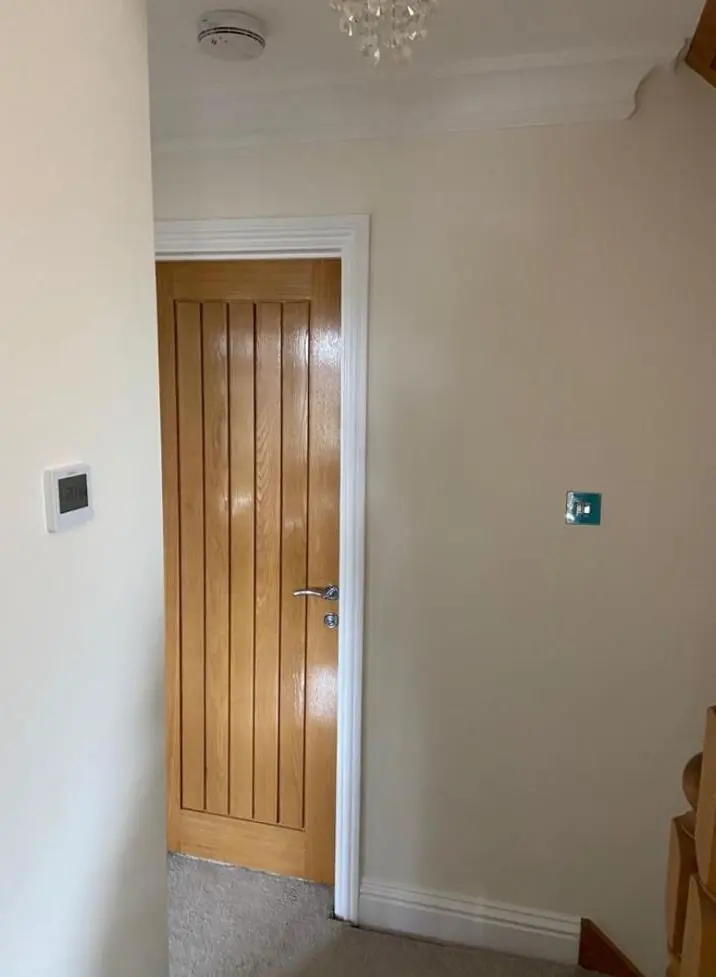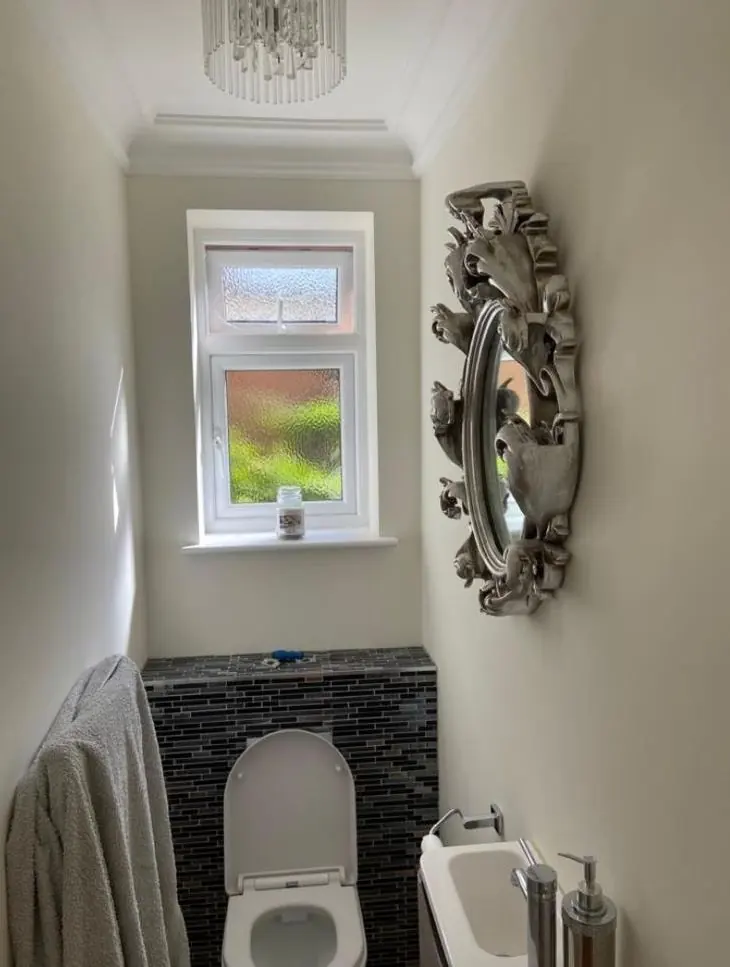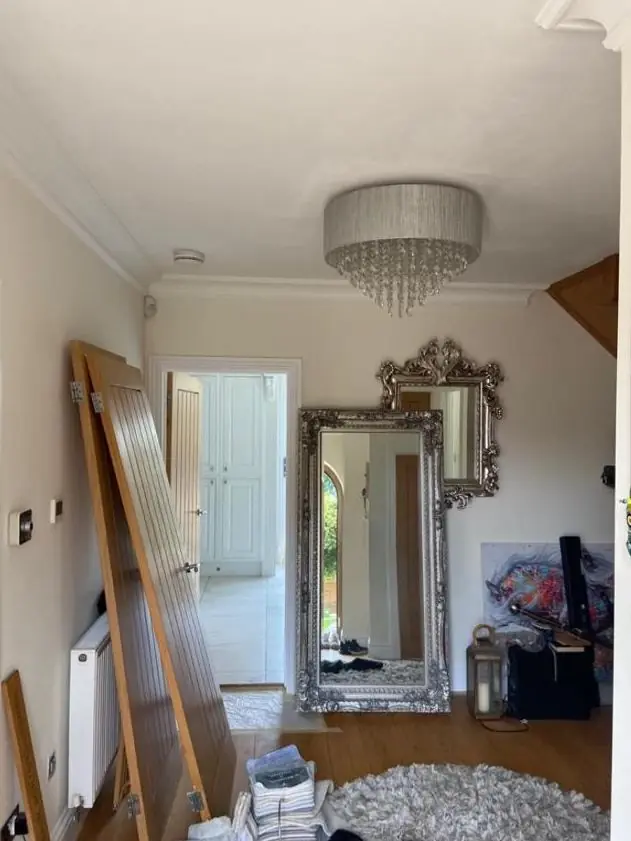
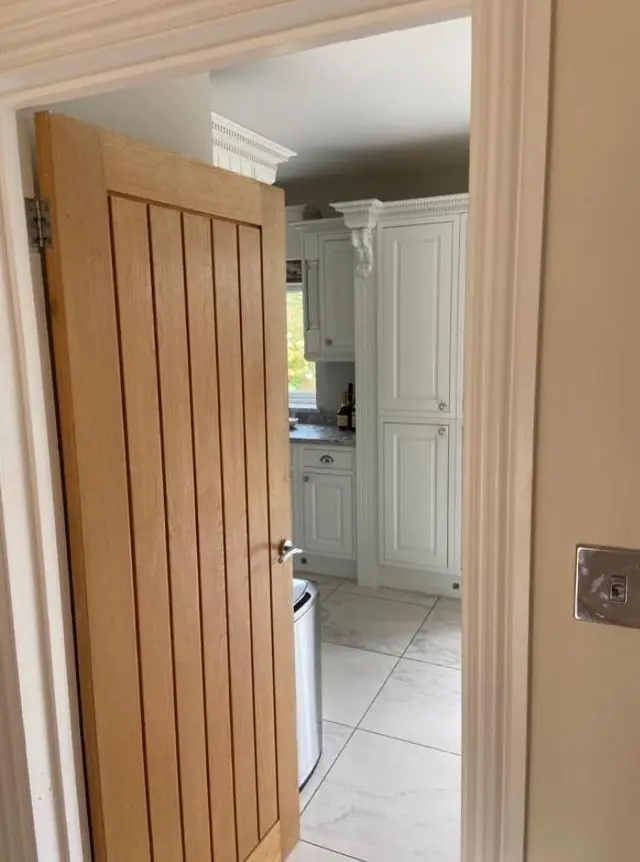
DH Painter and Decorator decorates hallways, staircases and landings in Nether Heyford and Upper Heyford, 6 miles west of Northampton. Dean plans each job around the house type, from steep attic stairs in stone cottages to open stairwells in the detached homes built since the 1960s.
Cottage staircases around Church Street and The Green
The oldest houses in Nether Heyford are two-storey cottages, many with an attic storey, built in coursed ironstone or limestone from the late 17th century onwards. Inside, the stairs are usually narrow and steep, often boxed in between walls, and the walls themselves are far from flat. Church Street itself is a compact, enclosed street with buildings close together, and the interiors tend to follow suit.
In a staircase like that, there is little room to set up a platform, and a standard stair ladder may not have anywhere level to stand. We use short adjustable steps and boards sized for the space, and take extra time cutting in where an uneven wall meets the ceiling at an odd angle. Old walls here may be lime plastered over stone, so we check before choosing a paint. A breathable emulsion lets moisture move through the wall; a vinyl finish over damp-prone stone tends to blister on the landing first, where warm air collects.
Some of these properties are listed. Like-for-like redecoration of plain walls is normally fine, but if your hallway has original panelling, a period stair or decorative features, ask the council before changing them.
Open stairwells in the 1960s to 1990s houses
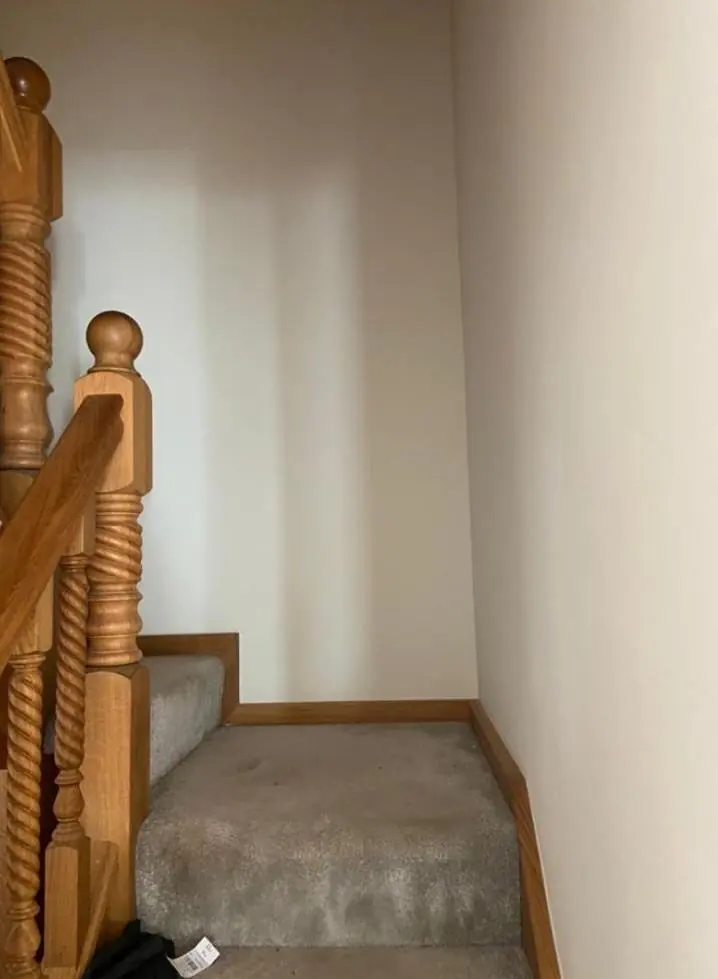
The village grew from 235 houses in 1964 to 582 by 1991, and a large share of that growth was detached three-bedroom homes on the Wilsons Estate, around Brook Farm and Watery Lane, and on the Heyford Brook side at Winston Close, Ridgeway Furlong and Roberts Field. These usually have a straight or quarter-turn staircase with a full-height wall above it, a landing balustrade and several doors opening off the landing.
That tall wall is the reason most people call someone in. We reach it from a stair platform or staging boards set across the treads, so the stairs stay usable for the household while we work. In houses this age, the spindles and handrail are often still in their original finish, and a stair job is a good moment to bring them, the doors and the skirtings up to the same standard. How we sequence a hallway, with ceiling first and woodwork last, is covered on our hallway, stairs and landing decorating page.
Hallways that take muddy boots and damp air
The Heyfords sit beside the Nene floodplain, with the Nene Way and Midshires Way footpaths and the canal towpath close by. Hallways in a village like this take walking boots, dogs and bikes, so the lower walls need a scrubbable finish. A durable matt or eggshell on the walls up to dado height, with satin on the woodwork, copes with wiping down far better than a standard emulsion.
The northern half of Nether Heyford lies on the flat valley floor, and the geology produces springs. In ground-floor hallways near the brooks, cold outside walls can show condensation and mould in winter. We treat any mould and let walls dry before painting, then use a mould-resistant paint where it is needed.
Getting ladders and boards into the house
Stair platforms and long boards are bulky. Unloading them at the wrong moment near The Green would block the school run, since Bliss School has nowhere for parents to park, so we bring the kit in mid-morning or mid-afternoon. Many houses are reached along snickets rather than by road, and some cottages, such as 17 The Green, have their main door at the back. We look at the route in when we price the job. More about the village is on our page for The Heyfords, and our guide to choosing a decorator lists what to ask before booking.
Last updated by Dean, DH Painter & Decorator.