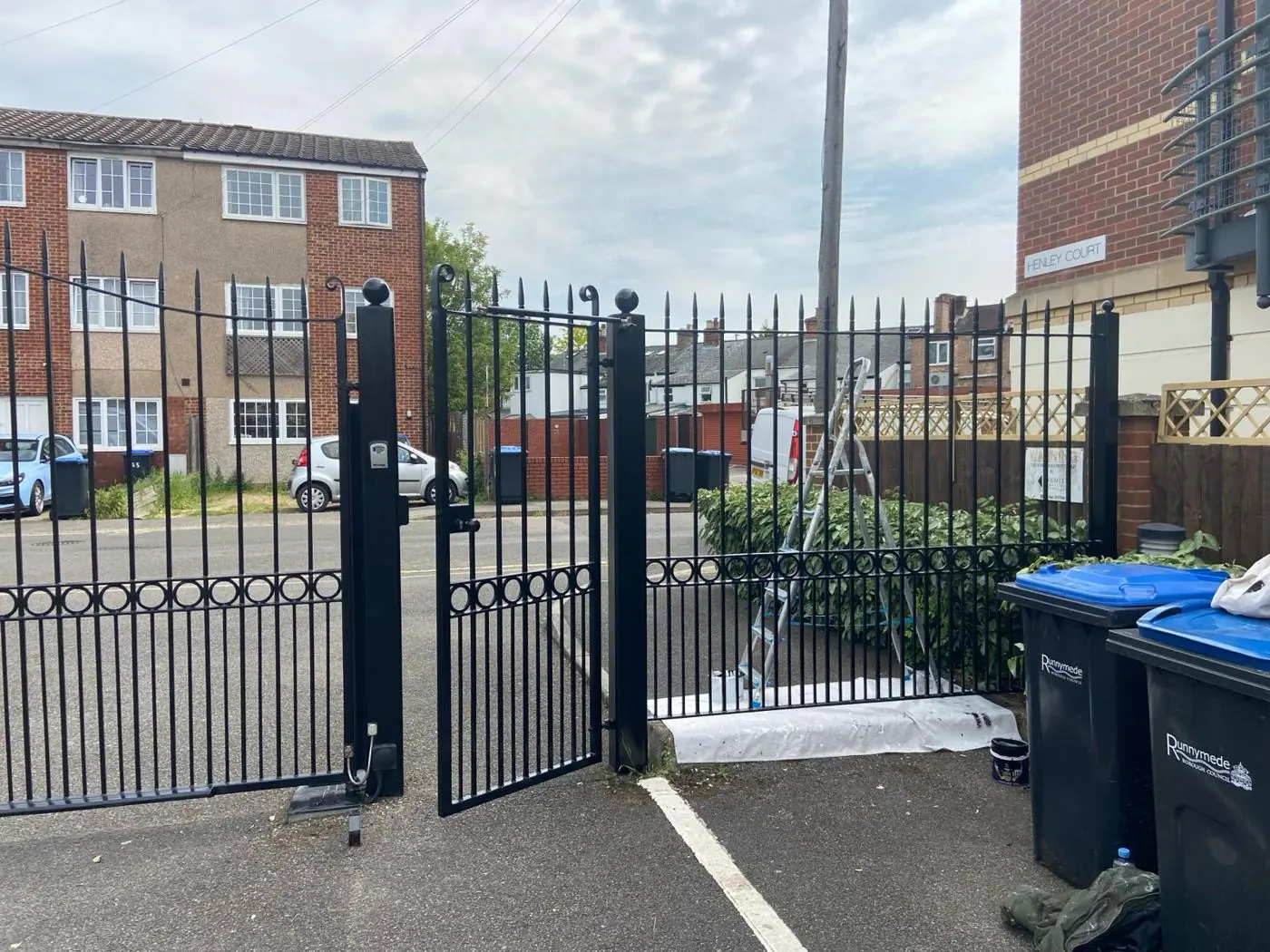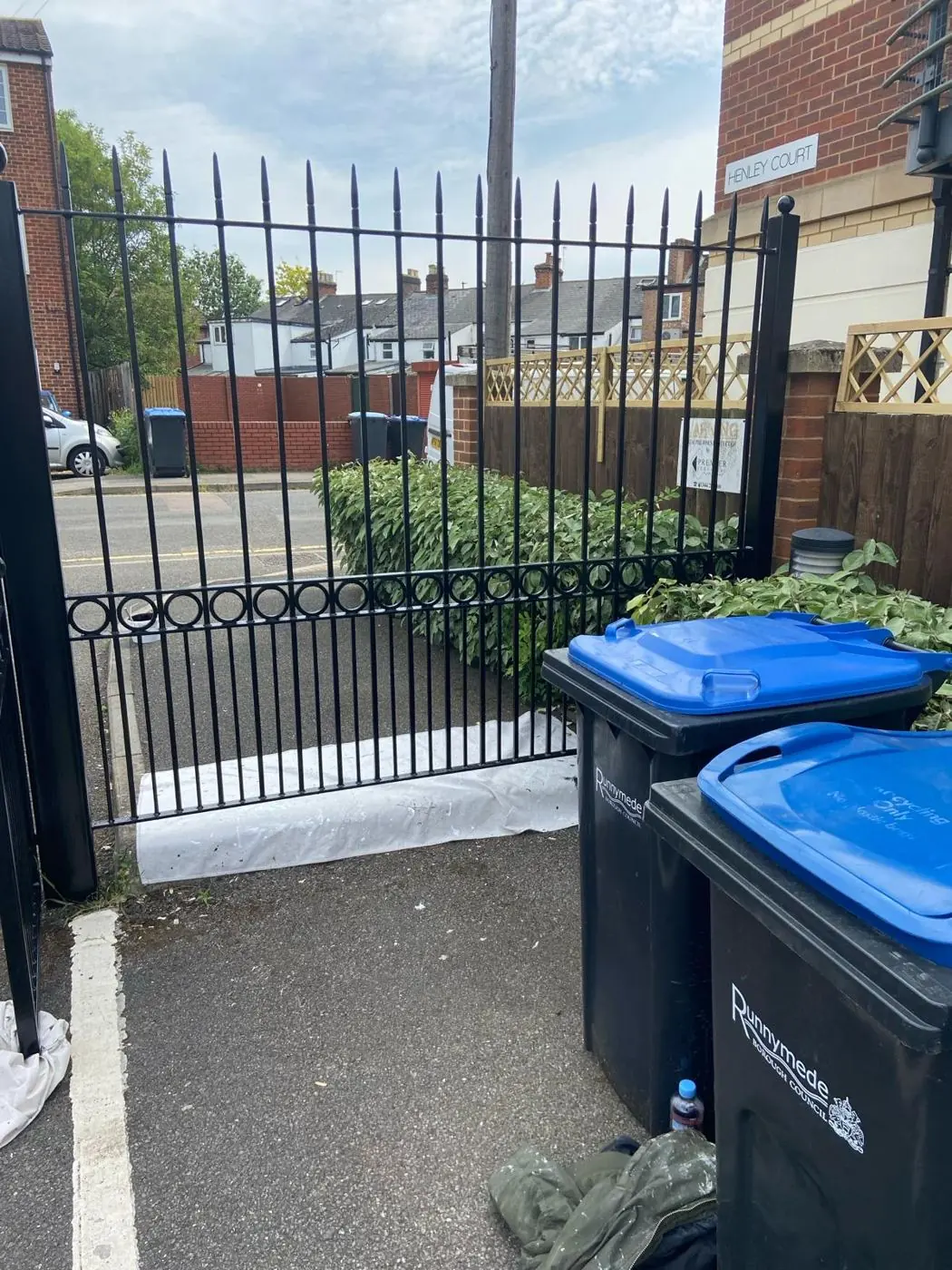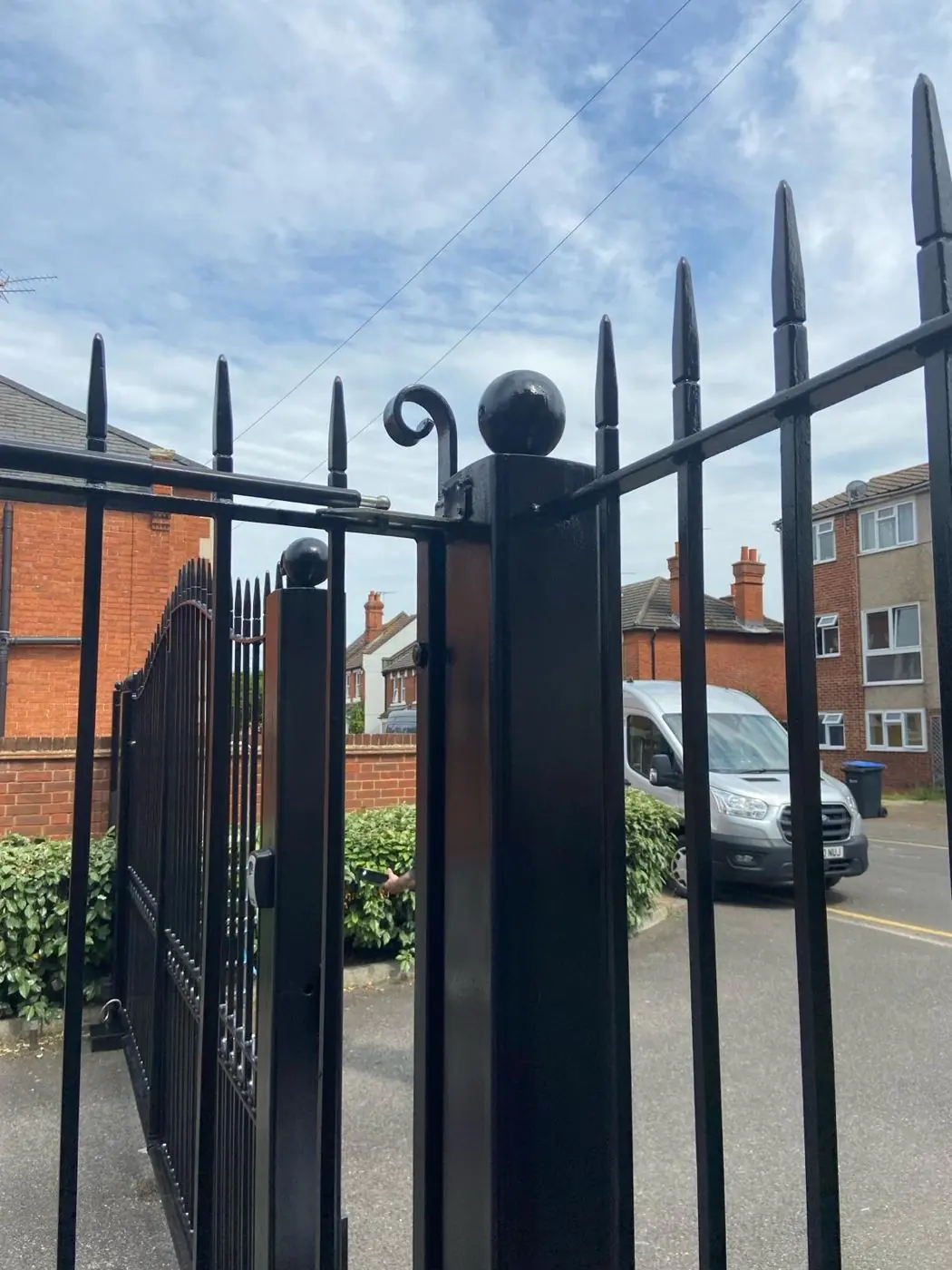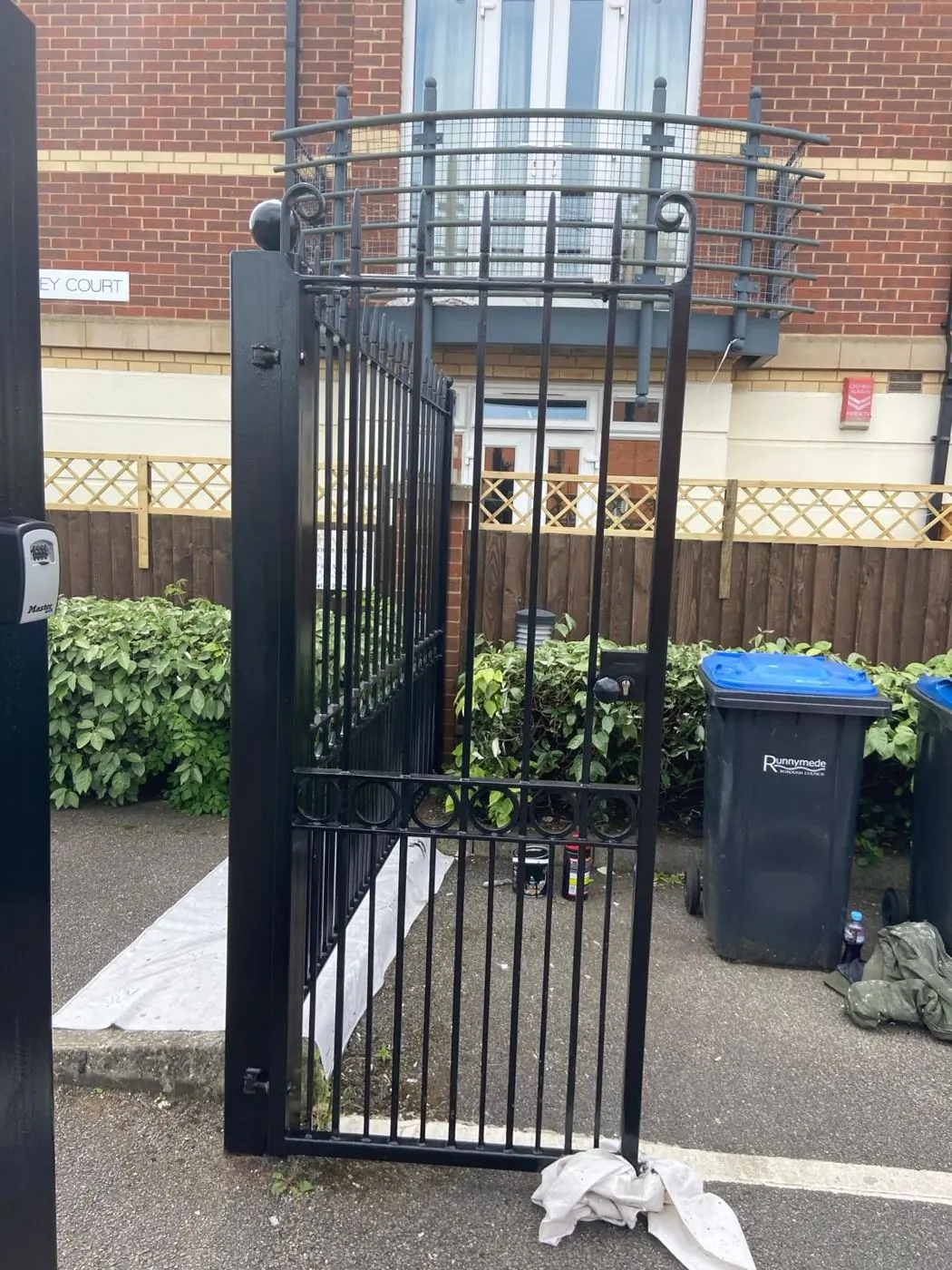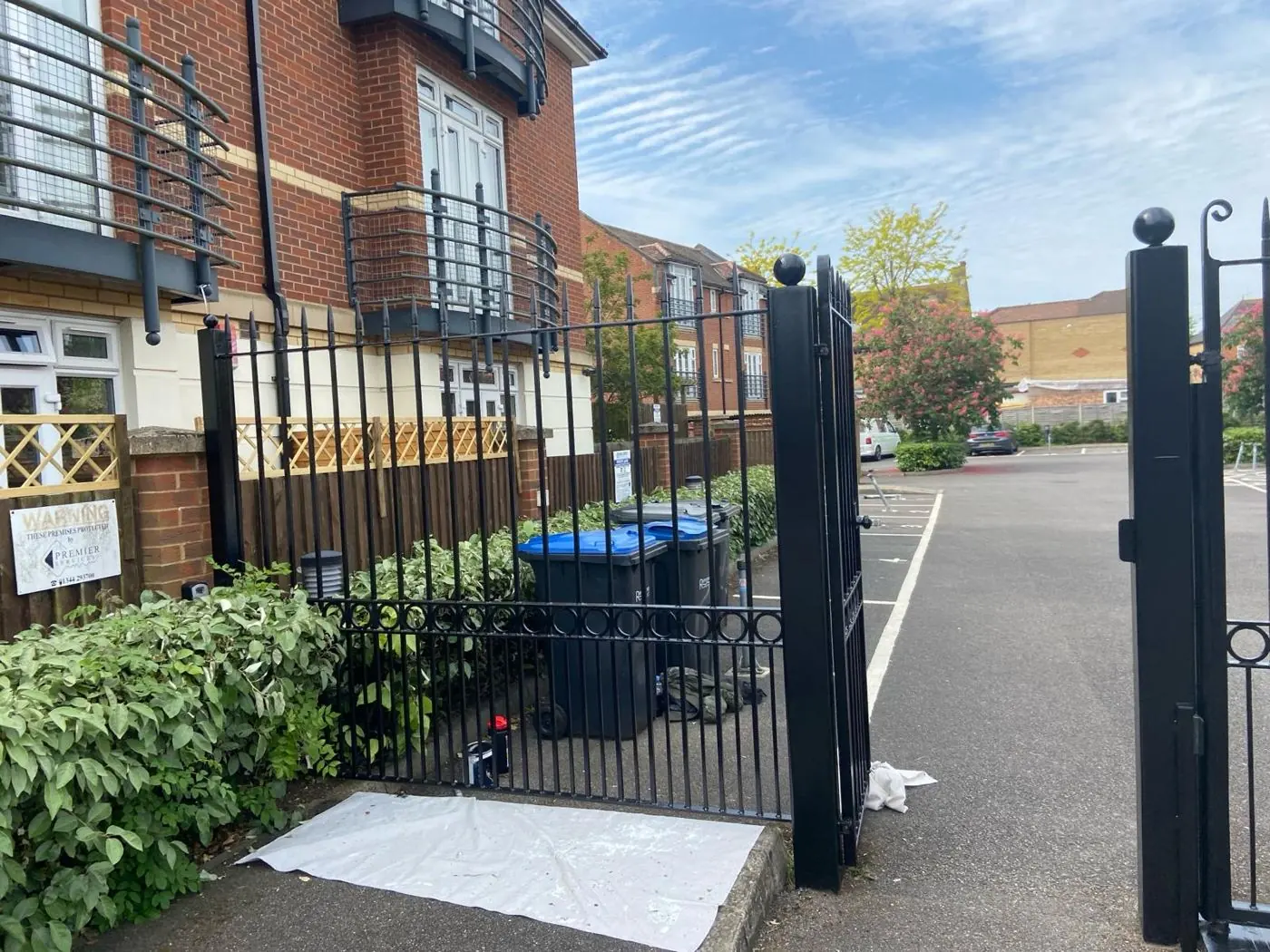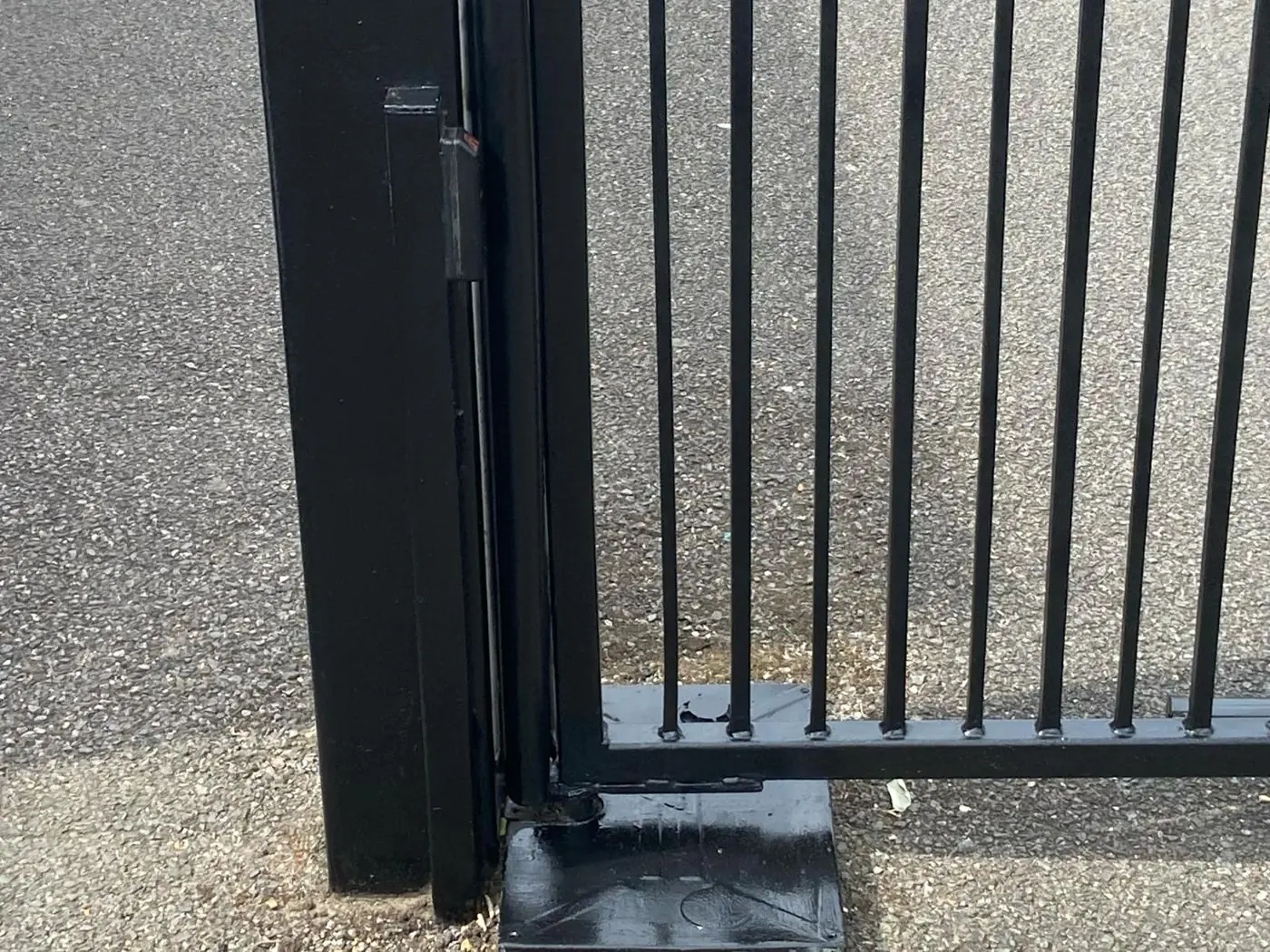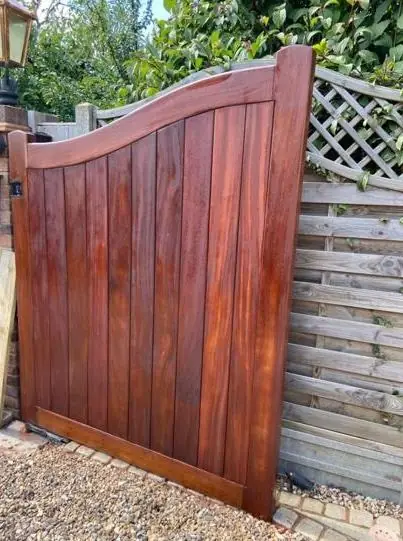
We stain and paint timber fences, posts and gates for homes in Nether Heyford and Upper Heyford, about 6 miles west of Northampton. Most requests come from the detached estate houses with large front and back gardens, and the right stain depends on whether the fence backs onto a brook or open fields.
Big gardens, long fence runs
The estate housing that more than doubled Nether Heyford between the 1960s and early 1990s was built with space around it. Nearly half the village’s homes were detached in 2011, many with a front garden, a side gate and a long back boundary. That adds up to a lot of lap panel, feather-edge board and post per house, and it is why fence work here is often a full day or more rather than an hour or two on one panel. We stain the faces, the tops and the bottom edges, and treat gravel boards and post heads, which are where water sits.
What stain to use, how many coats, and whether a fence is better painted than stained are covered in detail on our main fence and gate staining page. On this page we focus on how Heyford gardens differ.
Gardens along Heyford Brook
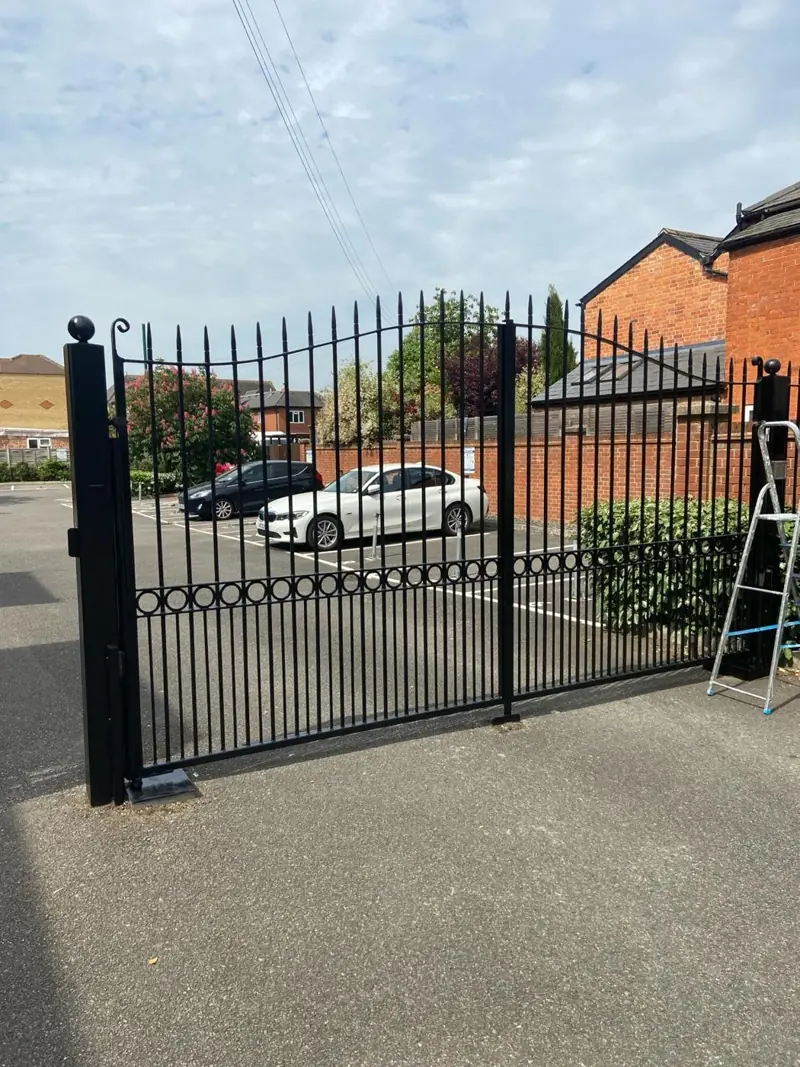
Heyford Brook, also known as The Luddle, is culverted through parts of the village and runs along the backs of gardens in Winston Close, Ridgeway Furlong and Roberts Field. The geology produces a lot of springs, and the northern half of the village is flat valley floor beside the Nene floodplain. Fences in those gardens stay wet at the base for much of the year, grow green algae on the shady side and grey quickly where the bottom board touches damp soil.
For these boundaries we:
- clean off algae and moss with a biocidal wash and let the timber dry for several days before coating;
- check post bases and gravel boards for rot, since that is where brook-side fences fail first;
- choose a water-repellent, mould-resistant stain and pay extra attention to end grain and the lowest board;
- schedule the work for a dry spell, because stain applied to wet timber sits on the surface and peels.
Field-edge fences on the rising ground
The southern half of Nether Heyford climbs towards a ridge at about 155 metres with long views over farmland. Fences on that side face the opposite problem from the brook gardens: full sun and wind with nothing in the way. Stain fades and the timber surface dries and splits. A pigmented stain with UV protection lasts longer here than a clear or lightly tinted one, and we usually suggest a slightly shorter maintenance cycle on any boundary facing open country.
Gates in the older part of the village
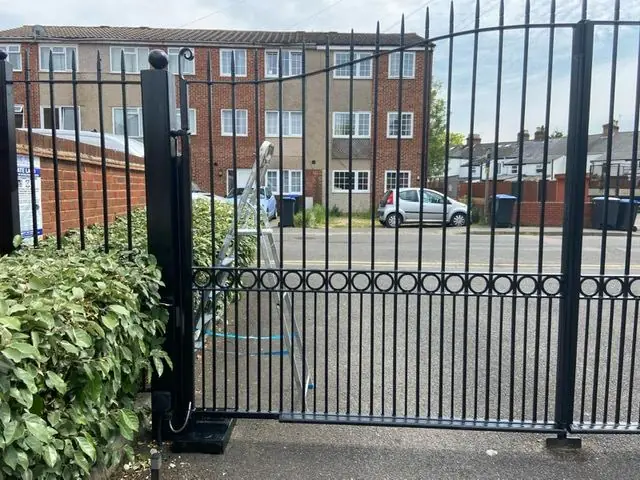
Church Street is compact, with buildings and walls close together, so a gate in the old core is more likely to be a narrow pedestrian gate than a wide drive gate. On these we ease off the ironmongery where we can, stain or paint the hidden edges, then refit. Where a gate sits in the conservation area, a quiet colour that sits with the ironstone and limestone is the sensible choice. Some cottages are reached from the rear along a snicket, so a back gate may be the main entrance and needs to stay usable while it dries; we plan the coats around that.
Getting materials to the back fence
Many Heyford houses are linked by footpaths and snickets rather than roads, and on the estates the side passage is often the only way to the back garden. We carry tins and sheets through by hand, protect lawns and borders, and avoid parking outside the school at drop-off and pick-up when the roads round The Green are busiest. Our seasonal guide to outside painting explains why late spring to early autumn suits stain work, and there is more on the villages on our Heyfords area page.
Last updated by Dean, DH Painter & Decorator.