DH Painter & Decorator covers The Heyfords, the neighbouring villages of Nether Heyford and Upper Heyford in the NN7 postcode, about 6 miles west of Northampton town centre. Dean, with over 30 years in the trade, paints and decorates the area's listed stone cottages, period houses and later estate homes, inside and out.
Two villages either side of the Nene
The Heyfords are two neighbouring villages in the Nene valley, west of Northampton. Nether Heyford is the larger, a compact village of around 700 homes built round The Green, described as the largest village green in the county. Upper Heyford is a small hamlet about half a mile to the north, close to junction 16 of the M1, with the River Nene floodplain and Heyford Mill between the two. The Grand Union Canal runs through Nether Heyford, and the A5, A45 and West Coast Main Line are all nearby. We cover both villages from our Northampton base, about 6 miles away, and the painting work here is shaped by an unusual mix of buildings and ground.
The old core: ironstone, limestone, cob and thatch
The historic heart of Nether Heyford is around The Green, Church Street and Furnace Lane. Its late 17th and 18th century cottages and houses are two storeys, or two storeys with an attic, built of coursed squared ironstone, coursed limestone, or ironstone banded with limestone. Some are thatched, others roofed in slate or plain tile, and windows are usually timber casements under wood or stone lintels. A few walls were painted long ago, and 1 Furnace Lane, a listed painted ironstone cottage under thatch, is thought to be partly cob. On The Green, the listed cob wall around the orchard at Heyford Cottage still has a straw-thatched top on an ironstone and limestone base.
For a decorator, these buildings set clear rules. Soft stone, lime and cob have to breathe, so where they are already painted they need mineral or limewash-type finishes rather than acrylic masonry paint, which traps moisture and lets the wall fail behind it. Indoors, lime plaster on solid walls wants breathable paints too. Timber casements and sashes need microporous or oil-based coatings with careful putty and joint repairs, and on thatched cottages no heat guns or flame go near the eaves when old paint is stripped. Our exterior painting service sets out how outside work is prepared.
Larger houses and Victorian buildings
Several bigger houses sit among the cottages. The Manor House off Church Street, rebuilt in the early 18th century from the stone of an earlier manor, is three storeys and an attic in ironstone ashlar, with 12-pane sashes and nine stone steps with a wrought-iron balustrade. White Hall at Stowehill, by the A5, is coursed limestone with ironstone quoins and sashes. Heyford Lodge on Church Lane was built in 1850 as a rectory by Raphael Brandon, in coursed ironstone with limestone dressings, and the Bliss Charity School and its 1879 School House on the north side of The Green have stone mullion windows, plain-tile roofs and plank doors with ornamental hinges. At Upper Heyford, Home Farmhouse has leaded casements, which need careful cutting in and masking rather than scraping. Later 19th and early 20th century brick houses, some in Flemish bond with patterned diaper brickwork, add another surface that should be cleaned and left unpainted rather than coated.
Conservation areas and listed buildings
The Nether Heyford Conservation Area covers about 8.1 hectares around The Green, Church Street and Furnace Lane, with 20 listed buildings, including the Grade II* Church of St Peter and St Paul. The canal corridor is part of the Grand Union Canal Conservation Area. Within the conservation area some exterior alterations need consent, and listed buildings need listed building consent for changes such as painting bare stone or changing colours. Before we quote work that would alter how a listed house looks, we suggest checking with West Northamptonshire Council. The Nether Heyford Neighbourhood Plan also says that painted, rendered and pebbledashed fronts around The Green do not reflect the village’s character, so on those houses like-for-like recoating is the safer route, and new render should not be added to stone. The render and masonry painting page explains how existing render and pebbledash are repaired and primed.
The estates that doubled the village
Nether Heyford more than doubled in the second half of the 20th century, from 235 houses in 1964 to 582 in 1991. The whole Wilsons Estate was built in this period, along with redevelopment around Brook Farm and Watery Lane in the 1960s and later closes such as Winston Close, Ridgeway Furlong and Roberts Field, where low-cost housing went up in 1993. In 2011, 46% of homes were detached, and most have three bedrooms. Bliss Close followed in 2012, and four 2-bedroom housing association homes were built at Hillside Crescent in 2019.
On these houses the work is more routine but no less useful. Original timber fascias, soffits and joinery, where they survive, are now 30 to 60 years old and often need rot repair before painting. Inside, decades of different owners mean layers of old gloss, textured ceilings and woodchip to deal with, while newer homes and extensions bring fresh plaster that needs a mist coat. For walls and ceilings, see our interior painting service.
Floodplain, brooks and the canal
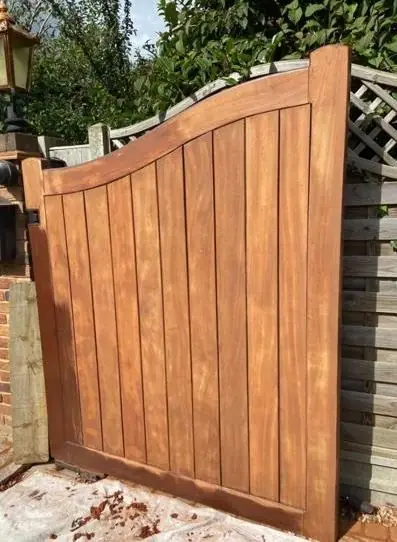
The northern half of Nether Heyford sits on the flat Nene valley floor at about 74 metres. The floodplain floods once or twice a year, though rarely reaching houses, and the local geology produces numerous springs. Heyford Brook, also called The Luddle, Hoarstone Brook and a third brook are culverted through the village, and Heyford Brook runs along the backs of gardens in Winston Close, Ridgeway Furlong and Roberts Field. In 1939 the canal burst its banks at Weedon and flooded Church Street, and a culvert was put through the village centre in 1987 to reduce flooding. For decorating, that means homes near the brooks and the valley floor can suffer condensation and damp, so mould-resistant finishes and proper drying time matter, and canal-side damp speeds up rust on gates and railings. The southern half of the village rises towards a ridge of about 155 metres, with open views and more exposure to the weather.
Shops, pub and workplaces
Commercial painting here is small in scale. The village has a small central retail area where four roads meet at The Green, with a general store and post office, a butcher and a hairdresser, plus the Foresters Arms, the remaining pub since the Old Sun Inn closed in 2023. There are factory units on the old brickworks site in the Furnace Lane area, built in 1965, and canal businesses including High House Wharf boatyard and marinas. Most local businesses employ fewer than 10 people, so jobs tend to be single premises, fitted around opening hours.
Access and parking
Parking around the shops and The Green is a known problem, and Bliss School has no on-site parking, so the roads are congested at drop-off and pick-up. We schedule vans and deliveries outside those times. Church Street is compact and enclosed, many houses are linked by footpath snickets rather than roads, and some older buildings, such as 17 The Green, have their entrance at the rear, so ladders and materials are often carried through alleys and gardens. Village roads are also used as a peak-time short cut between the A5 and the M1, which we bear in mind when setting up ladders at the front. If you are comparing decorators, our guide to choosing a painter and decorator lists what to ask.
Last updated by Dean, DH Painter & Decorator.