DH Painter & Decorator provides decorative paint finishes in Nether Heyford and Upper Heyford, around 6 miles west of Northampton. Dean works with heritage colours and traditional paints in period and listed rooms, and adds feature walls, colour-drenching and painted panelling to the village's 1960s to 1990s houses.
Three centuries of interiors in one parish
Decorative painting in The Heyfords covers a wider spread of buildings than most villages of its size. The Manor House off Church Street, put up around 1740 partly from the stone of an older manor, is the grandest of them, with tall sash windows lighting its principal rooms. Heyford Lodge on Church Lane was built in 1850 by Raphael Brandon as a rectory in the Gothic style, and the Bliss Charity School House on The Green is dated 1879. Around them sit 17th and 18th century cottages, some thatched, and beyond those the large estates of the 1960s to the early 1990s. Each calls for a different kind of decorative work, and in the period rooms the right answer is usually restraint.
Traditional finishes in the older houses
In Georgian and earlier rooms, decorative work mostly means doing traditional things carefully: a heritage palette that matches the age of the house, panelled doors and shutters picked out in a related tone, sash boxes and architraves in an oil-based eggshell, and walls in a flat finish such as distemper or a mineral paint where the plaster is lime. In stone cottages with uneven walls, limewash built up in thin coats gives a soft, slightly varied colour that suits the building far better than a modern effect. Victorian Gothic interiors can carry stronger colour, with the emphasis on joinery such as plank doors and on keeping original ironmongery clean of paint.
Before work starts in a listed room
Twenty listed buildings stand in the Nether Heyford Conservation Area, and Upper Heyford has its own, including Dovecote Farmhouse, Hill Farmhouse and Home Farmhouse. Listing covers interiors as well as exteriors. Like-for-like redecoration is normally fine, but stripping old paint layers from historic joinery, graining or marbling over original timber, or painting stone or woodwork that has never been painted can need listed building consent from West Northamptonshire Council. Before we price decorative work in a listed room, we ask what the listing covers and whether you have spoken to the council. A small paint scrape in a hidden spot can show earlier colour layers, which sometimes guides the new scheme.
Feature walls and colour-drenching in the later homes
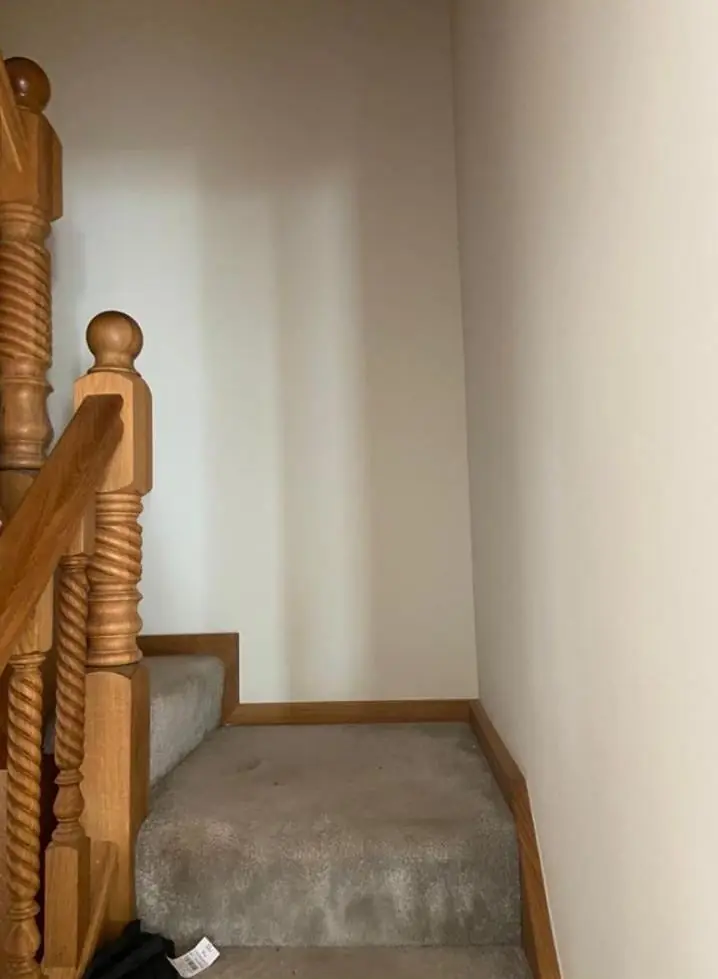
Most houses in the village date from the 1960s to the early 1990s, and in 2011 around 46% of homes were detached. These rooms offer more freedom. Typical requests include a two-tone wall split at dado height in a hall, a colour-drenched snug where walls, woodwork and ceiling share one shade, a painted arch or panel behind a bed, and new MDF panelling painted so that pins and joints disappear. Square gypsum walls take crisp lines and sharper effects well. With 23% of households including a home worker, a considered feature wall behind a desk that appears on video calls is a reasonable request too.
Damp walls and thatched eaves
Two local conditions shape how finishes go on. Homes on the low valley floor and those backing onto Heyford Brook can carry more moisture in their walls, and glazes or decorative coatings laid over a damp wall cloud and lift, so moisture is checked first. In thatched cottages such as 1 Furnace Lane, no heat gun or flame is used anywhere near the eaves when old paint has to come off; chemical or hand stripping is used instead. Access around The Green is tight at school times, so longer decorative jobs are planned with start times that avoid the school run.
Examples of effects and detailing are on our decorative finishes page. For the wider picture of the village’s buildings, see our Heyfords area page, and for budgeting, the painter and decorator cost guide.
Last updated by Dean, DH Painter & Decorator.