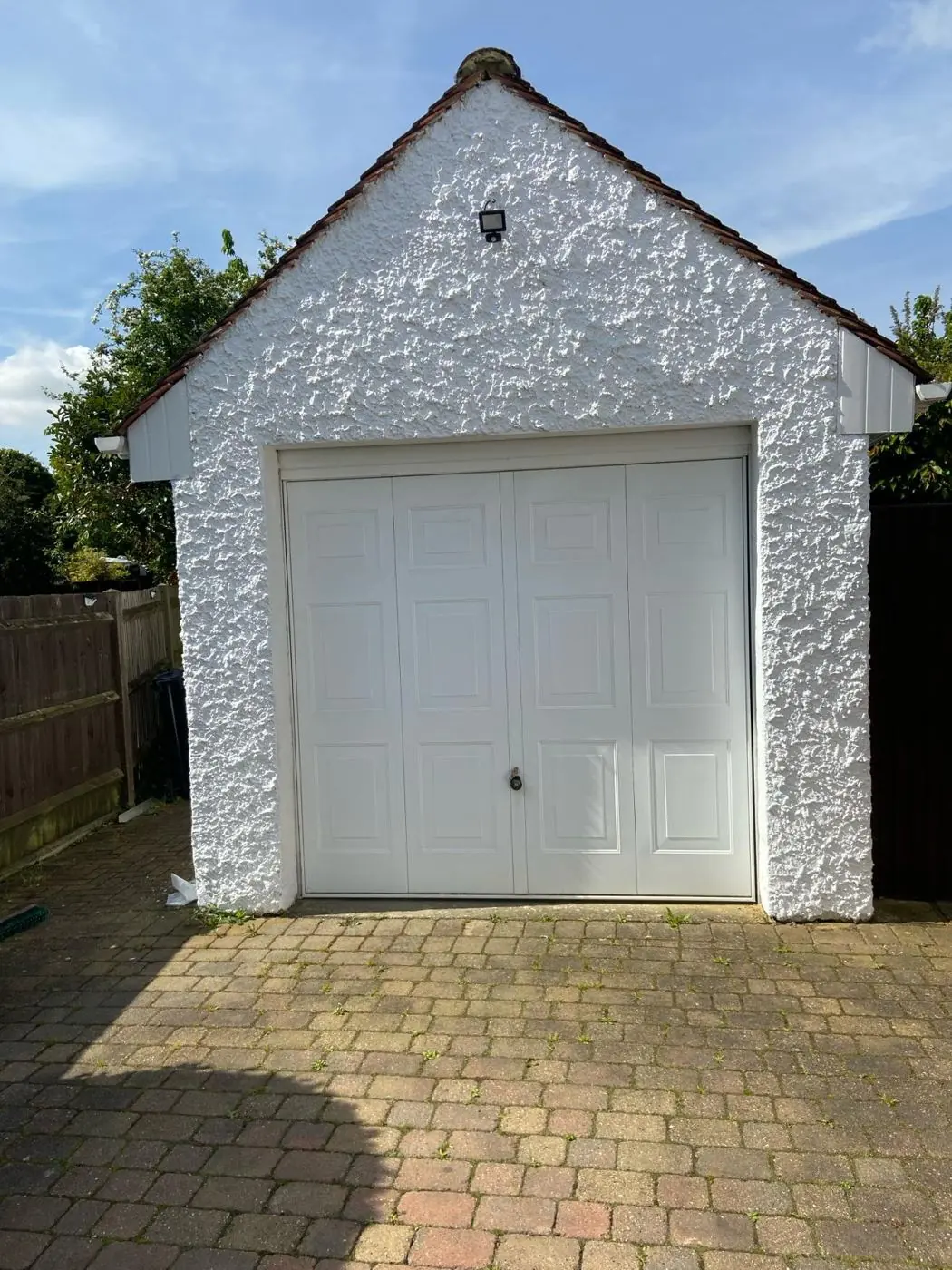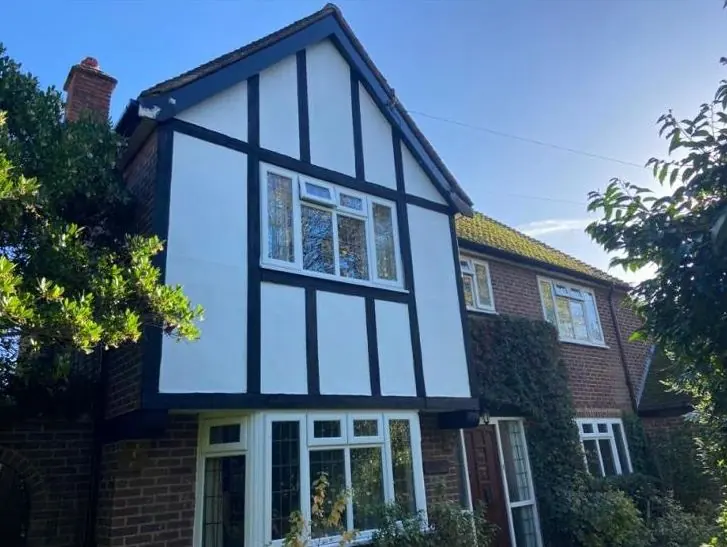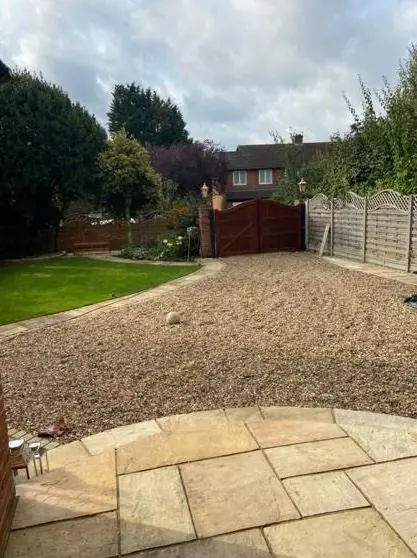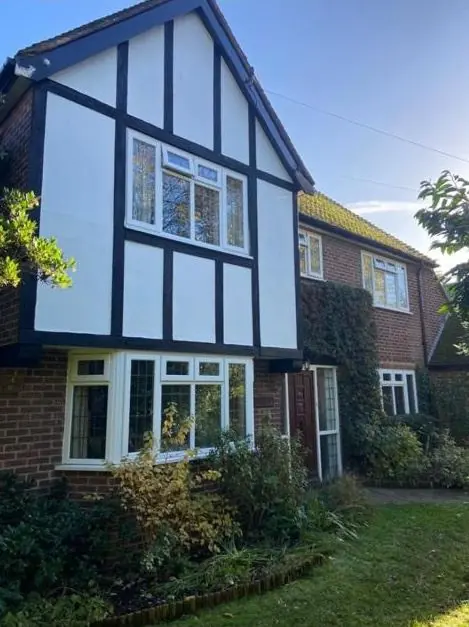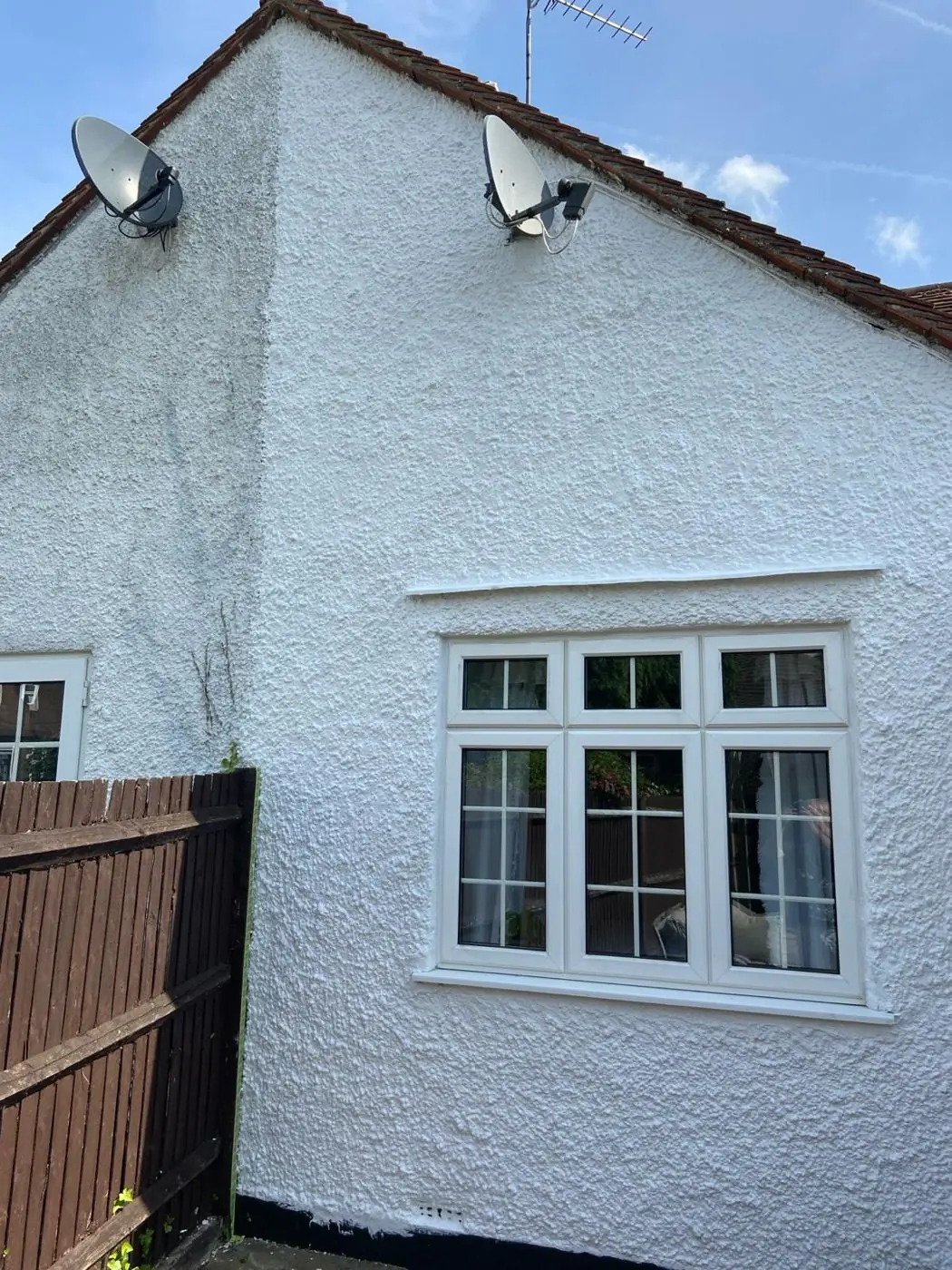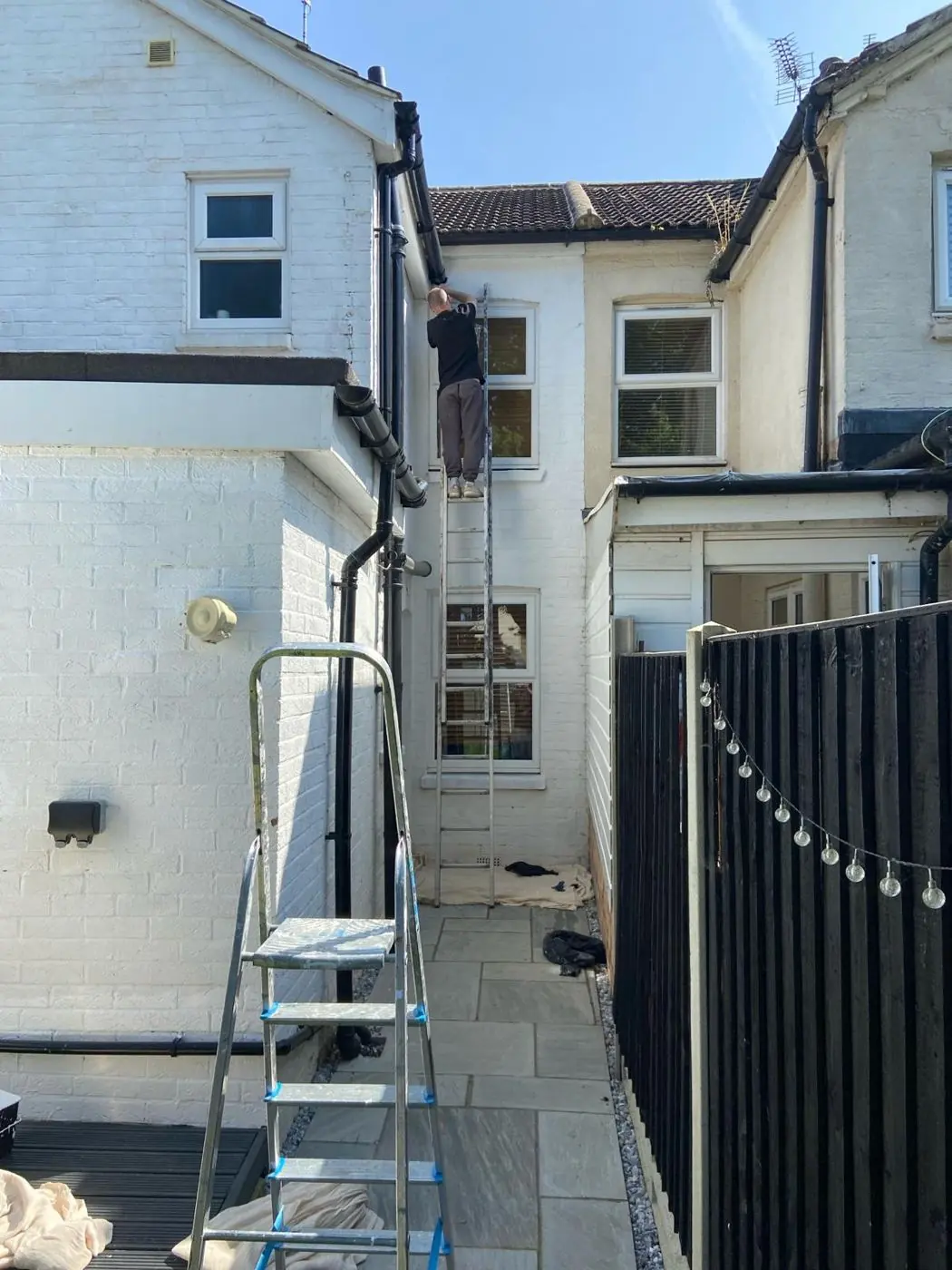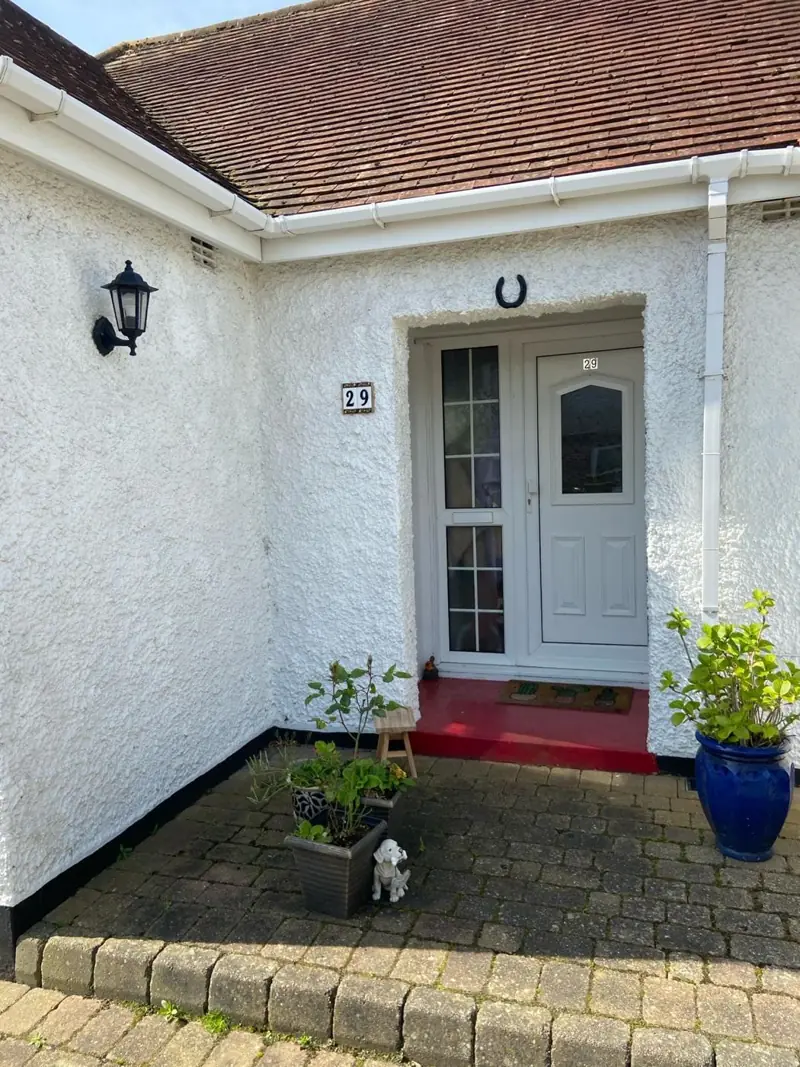
DH Painter & Decorator paints house exteriors in Nether Heyford and Upper Heyford, the NN7 villages about 6 miles west of Northampton town centre. Dean quotes after a visit, because a listed cottage on Church Street and a detached house on the Wilsons Estate need very different materials.
Two villages, two very different outside jobs
Nether Heyford grew from 235 houses in 1964 to around 700 today, so most homes here were built in the last sixty years. The Wilsons Estate, the Brook Farm and Watery Lane redevelopment, Winston Close, Ridgeway Furlong and Roberts Field are mostly three-bedroom houses, and in 2011 almost half of the village’s homes were detached. On those, an exterior repaint is mainly joinery: windows, doors, bargeboards and the roofline, with walls only where there is render to recoat.
The older core is another matter. Around The Green, Church Street and Furnace Lane sit cottages from the late 1600s and 1700s in coursed ironstone, limestone, or the two banded together, some with thatch and a few with cob. Upper Heyford, half a mile north across the Nene floodplain, adds a cluster of listed farmhouses, including Home Farmhouse with its leaded casements. Our general approach to outside work is set out on the exterior painting service page; this page is about what changes in the Heyfords.
Painted stone, cob and thatch in the conservation area
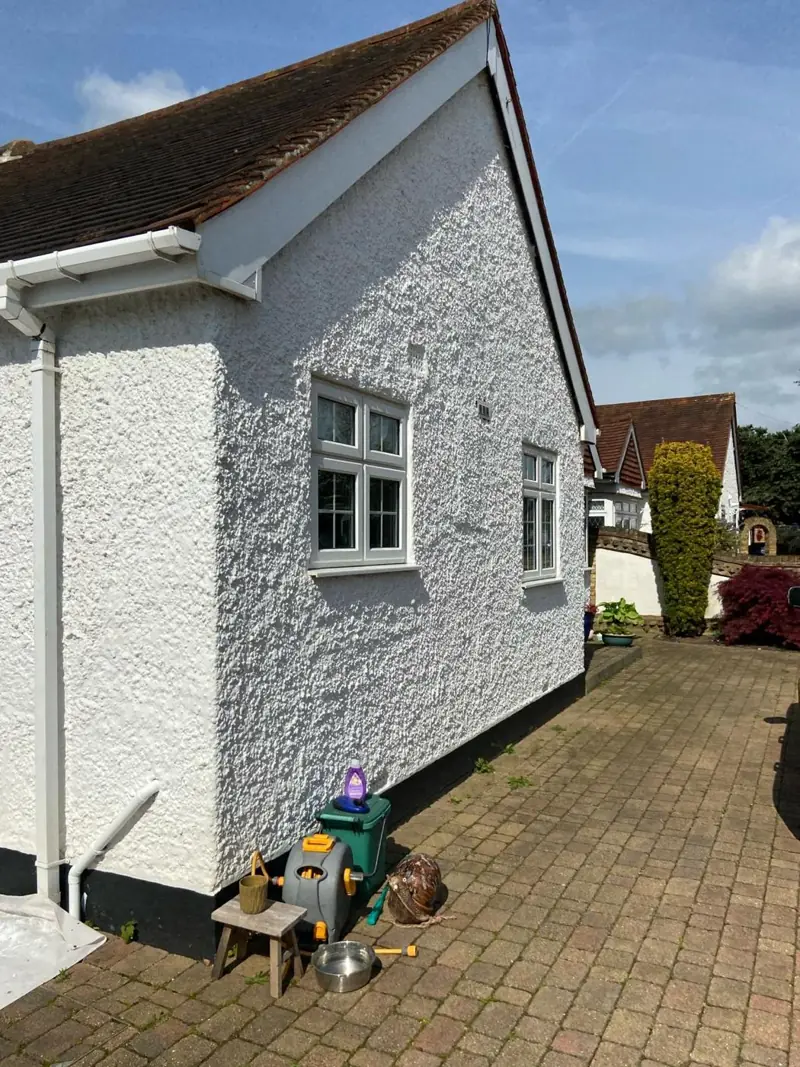
Within the conservation boundary, 20 buildings carry listed status. 1 Furnace Lane is a good example of why care matters: painted coursed ironstone, probably part cob, under a thatched roof. A wall like that has to keep drying outwards. Seal it with an ordinary acrylic masonry paint and moisture builds up behind the film until the paint blisters or the cob softens. Where stone or cob is already painted, we recoat with a vapour-open mineral or limewash-type finish rather than a plastic one.
Thatch also changes how we strip timber. There is no blowlamp or heat gun anywhere near the eaves of a thatched cottage; old paint on casements and lintels comes off by scraping and careful hand sanding instead.
Two planning points we raise before quoting:
- On a listed building, painting bare stone or changing the colour can need listed building consent from West Northamptonshire Council. We check that before pricing anything that alters the look.
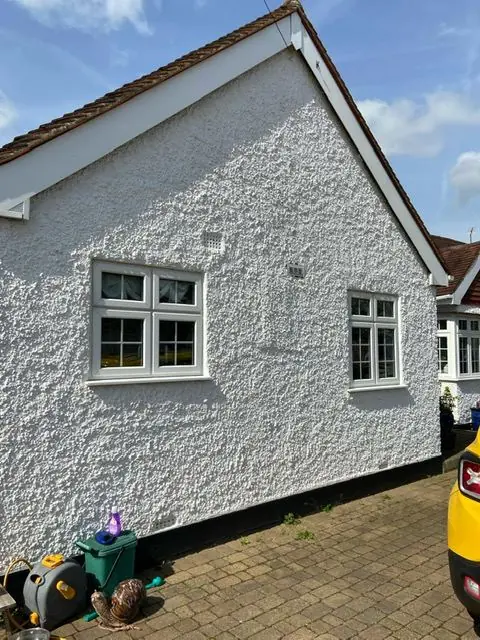
- The village’s neighbourhood plan treats painted, rendered and pebbledashed fronts near The Green as a departure from its stone character. Keeping what is already there in good order, like for like, is the safe route. Painting stone that has never been painted is not.
Sashes, casements and plank doors
The larger period houses carry the most joinery. The Manor House has 12-pane sashes, and 22 Church Street and White Hall at Stowehill also have sashes. The cottages have timber casements, many under wooden lintels that take the drip off the window head. On these we cut out failed putty, fill open joints and use oil-based or microporous joinery paint that moves with the timber. Leaded lights, as at Home Farmhouse, are masked and cut in by hand, and the lead cames are never scraped.
Damp ground on the valley floor
Roughly the northern half of the village is low, level ground beside the Nene, around 74 metres up, and the river spills onto its floodplain once or twice in most years, even if water seldom gets near the houses. Heyford Brook runs along the backs of gardens in Winston Close, Ridgeway Furlong and Roberts Field, and springs are common. Walls and sills on that side of the village dry slowly after wet weather, so we take moisture readings before coating and allow more drying time between coats than on the higher ground to the south. For timing, see our guide to which months suit outdoor painting.
Vans, school runs and snickets
Parking around the shops and The Green is already tight, and Bliss School has no parking of its own, so the roads fill at drop-off and pick-up. We arrive and unload outside those times. Church Street is compact and enclosed, with walls and buildings close together, which limits where a ladder can stand. Some cottages, 17 The Green among them, are entered from the rear, and many houses are linked by footpath snickets rather than roads, so ladders and tins may have to be carried through on foot. We look at the route on the survey visit so there are no surprises on the day. More about the villages themselves is on our Heyfords area page.
Last updated by Dean, DH Painter & Decorator.