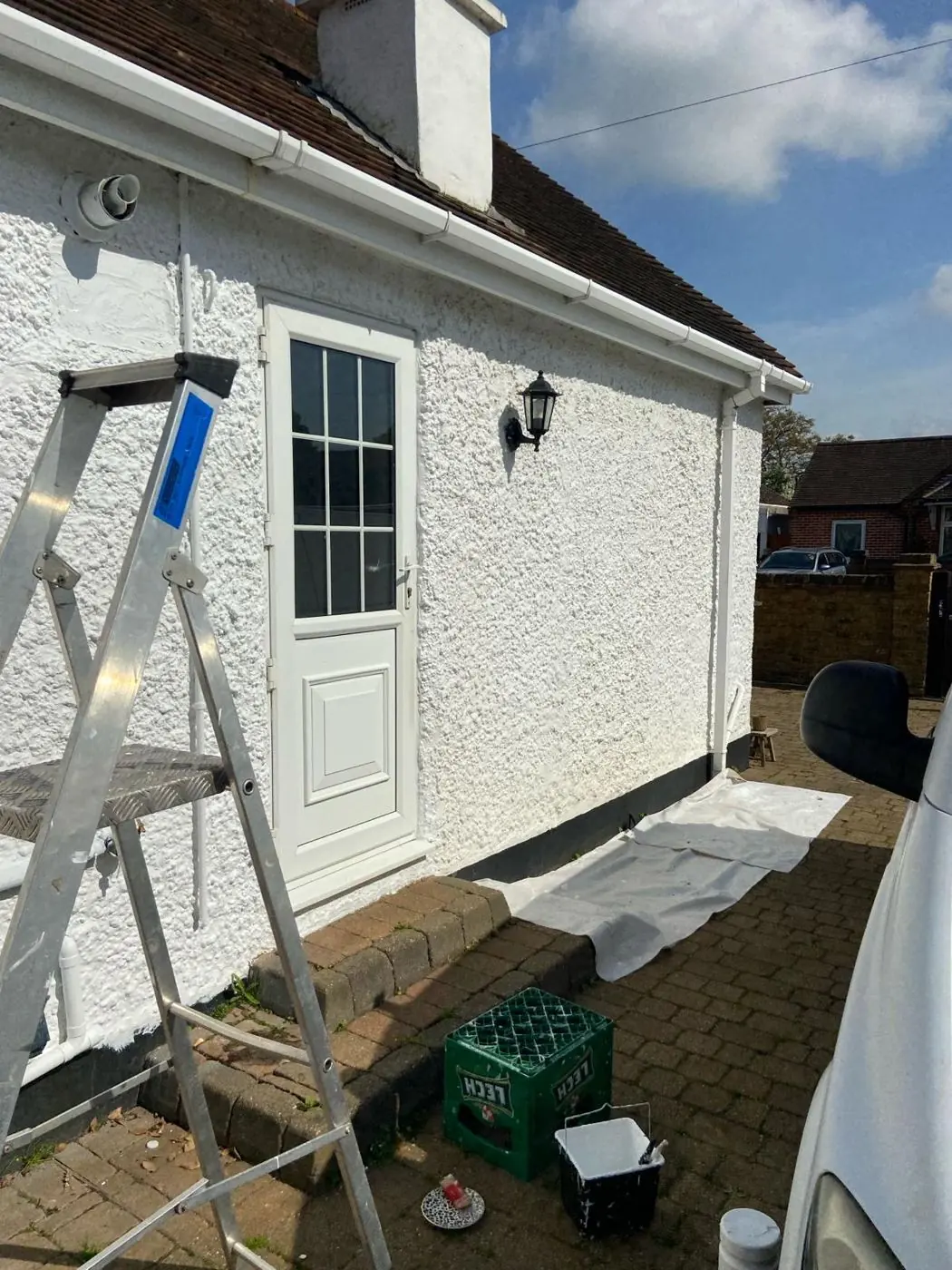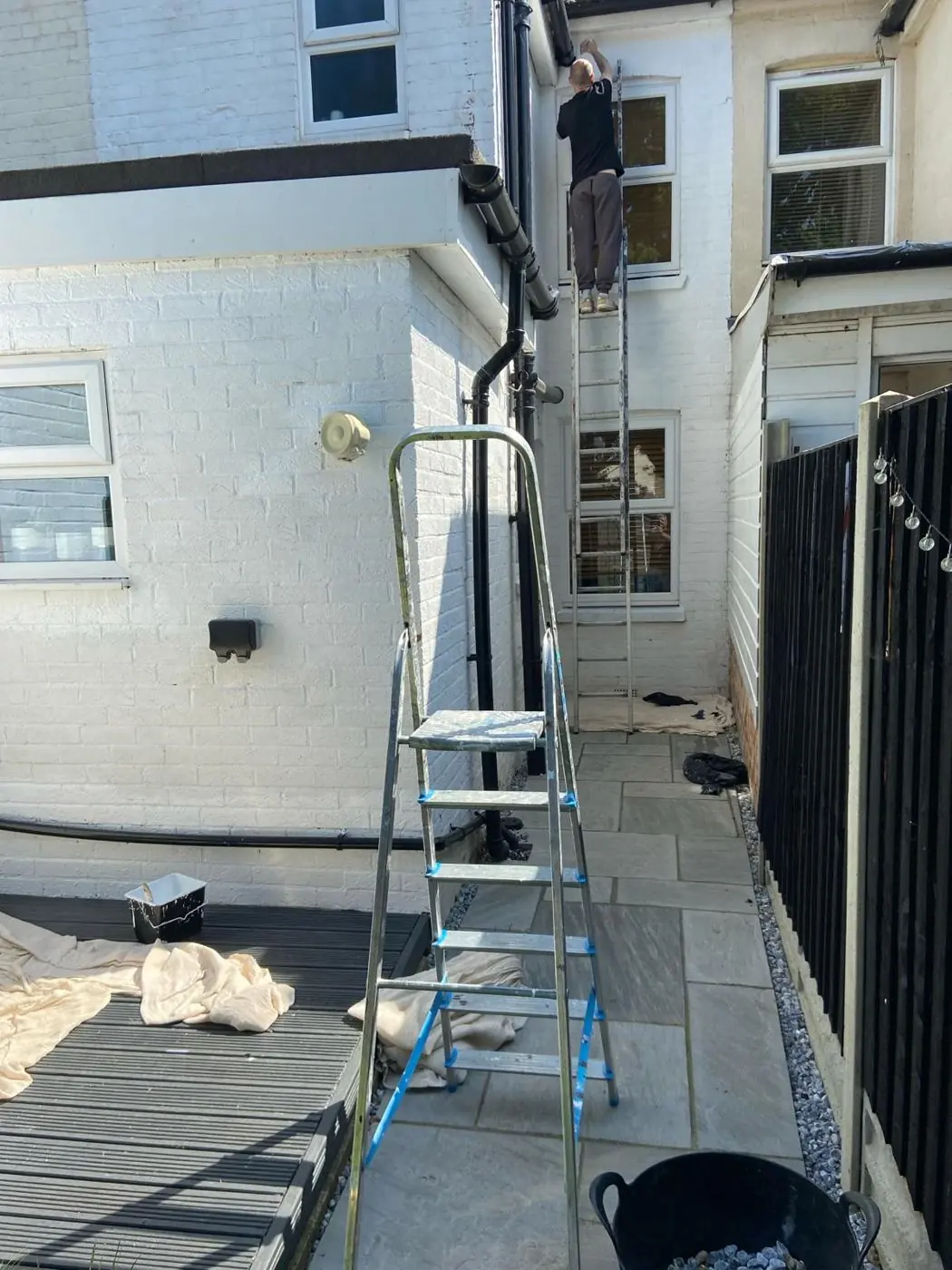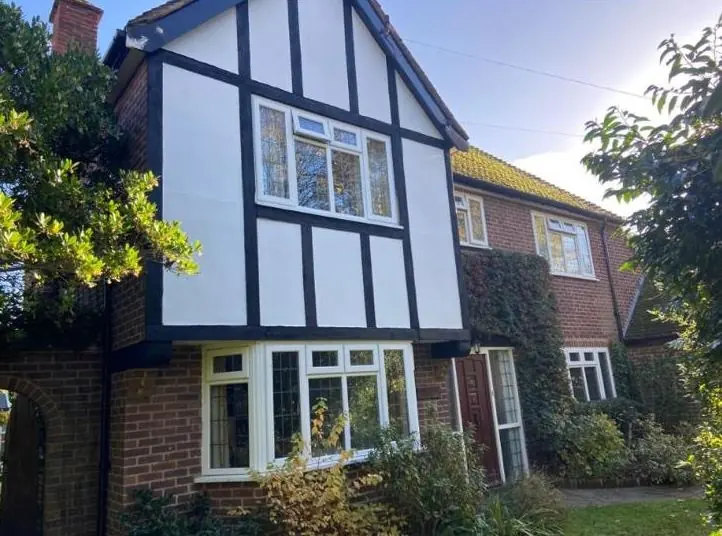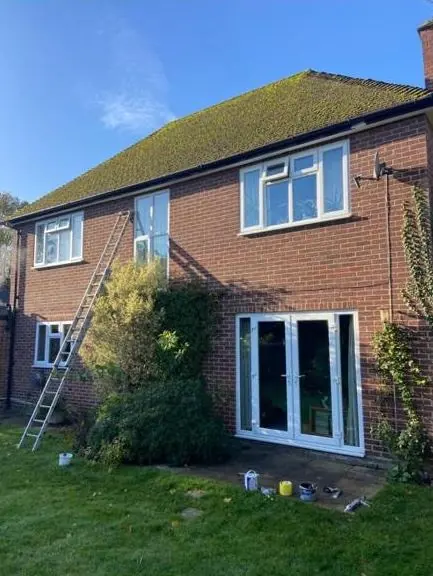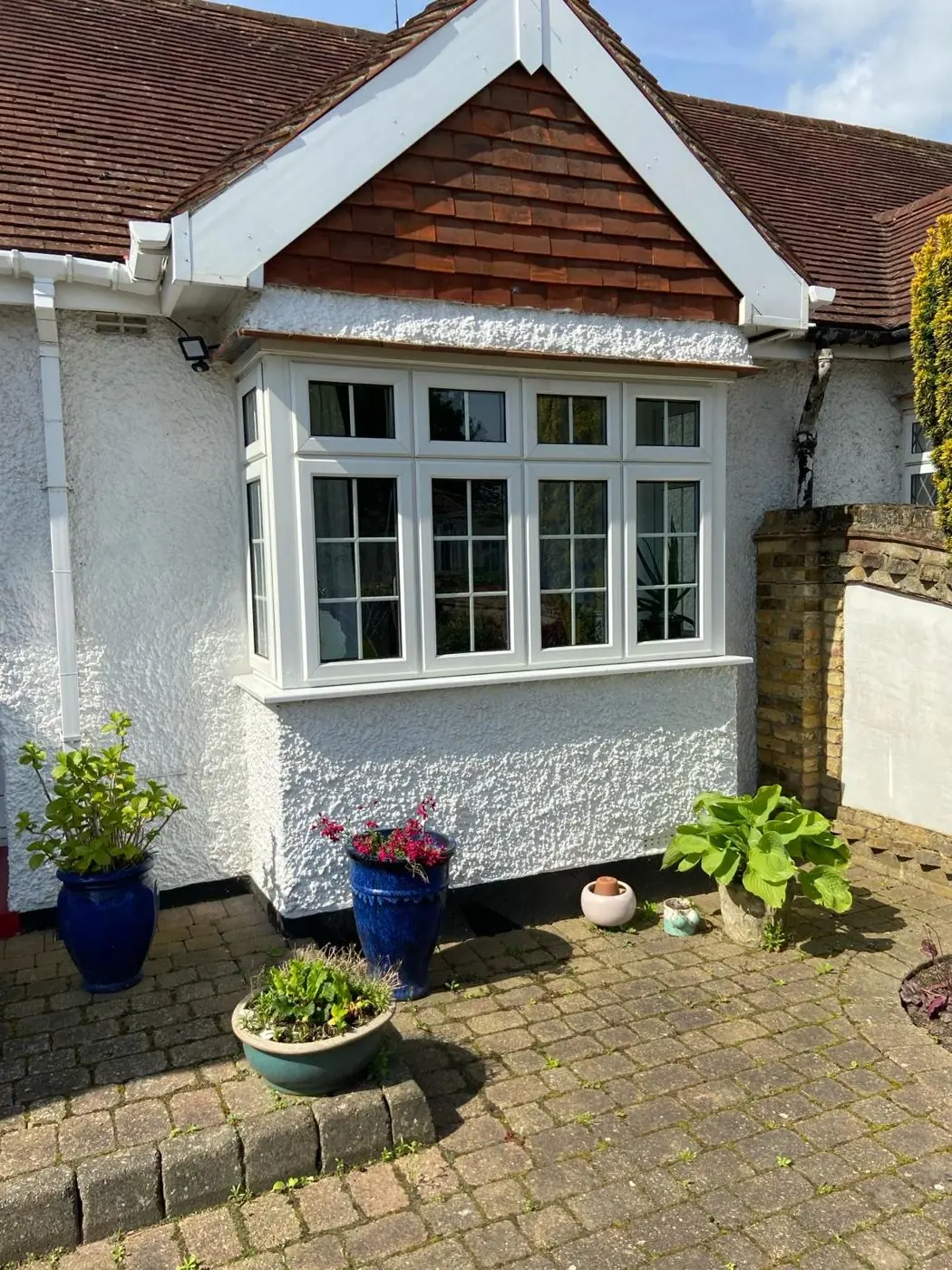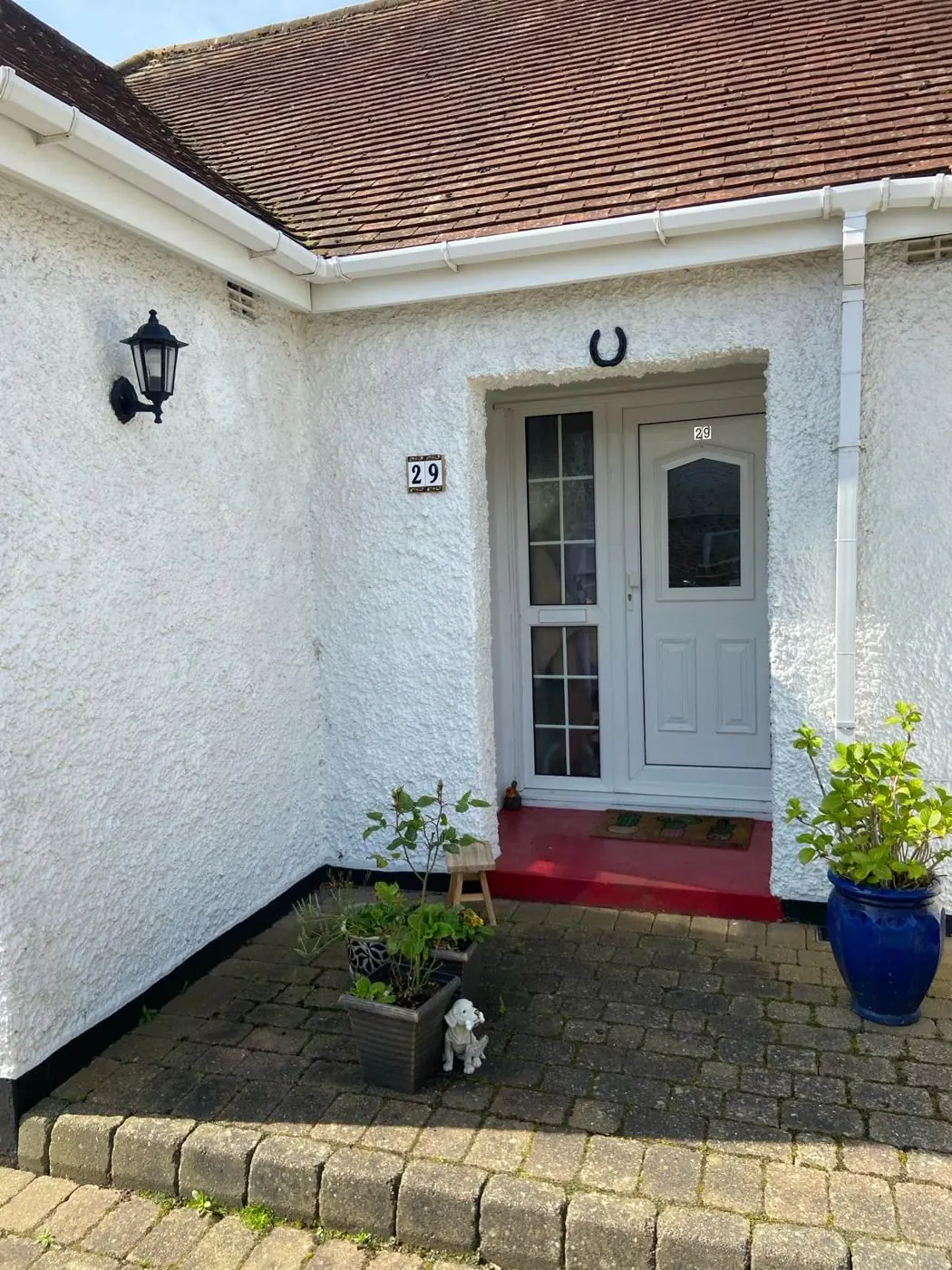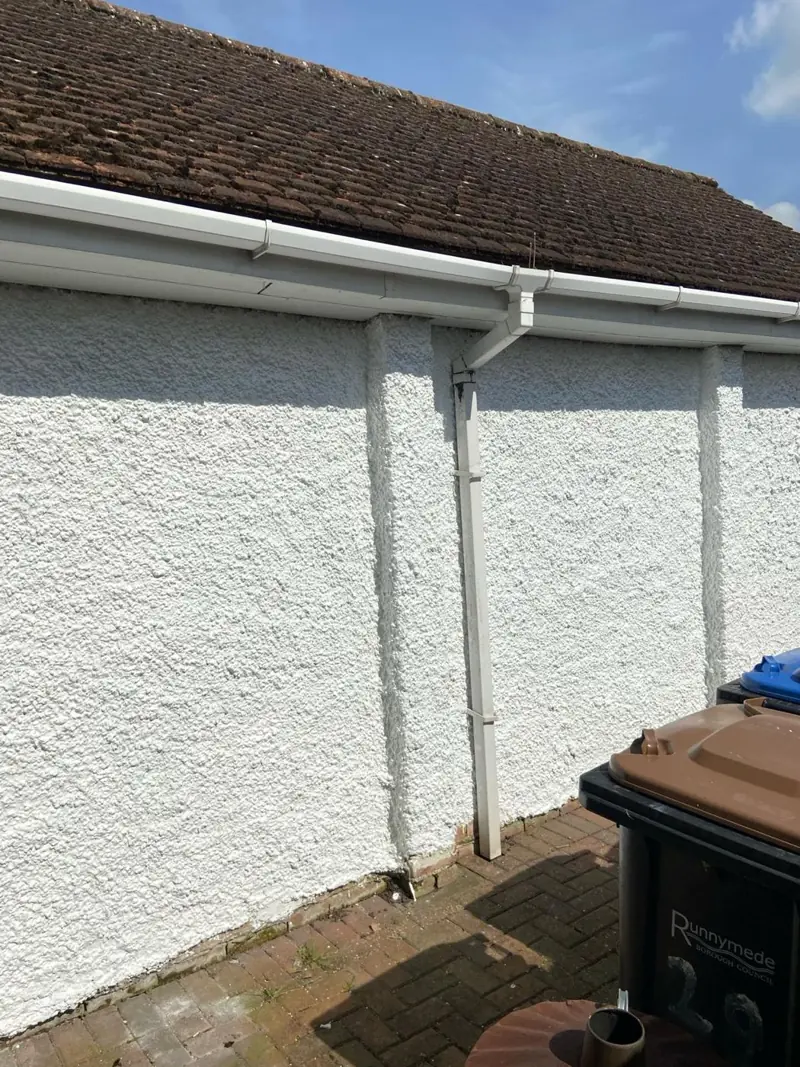
Dean paints and repairs timber fascias, soffits and bargeboards across Nether Heyford and Upper Heyford, about 6 miles west of Northampton. Most of the work here is on estate houses built between the mid-1960s and early 1990s, where the original roofline timber is now old enough to need attention.
Estate rooflines that have reached their age
More than half of Nether Heyford was built in a thirty-year burst. Between 1964 and 1991 the village went from 235 houses to 582, through the Wilsons Estate, the redevelopment around Brook Farm and Watery Lane, and later Winston Close, Ridgeway Furlong and Roberts Field. Where those houses still have their original timber fascias and soffits, the boards are now somewhere between 30 and 60 years old. That is the age when paint has been renewed several times, joints have opened and the bottom edge of the fascia, where water collects behind the gutter, starts to go soft.
A typical job starts with a probe along every board. Soft spots get cut out and spliced or filled with a resin repair, depending on how deep the rot goes. Then the old paint is scraped and sanded, bare timber is primed, and two finish coats go on. Gutters and downpipes are usually painted at the same time so the roofline matches. The full sequence is on our main fascia and soffit painting page.
Detached houses and gable ends
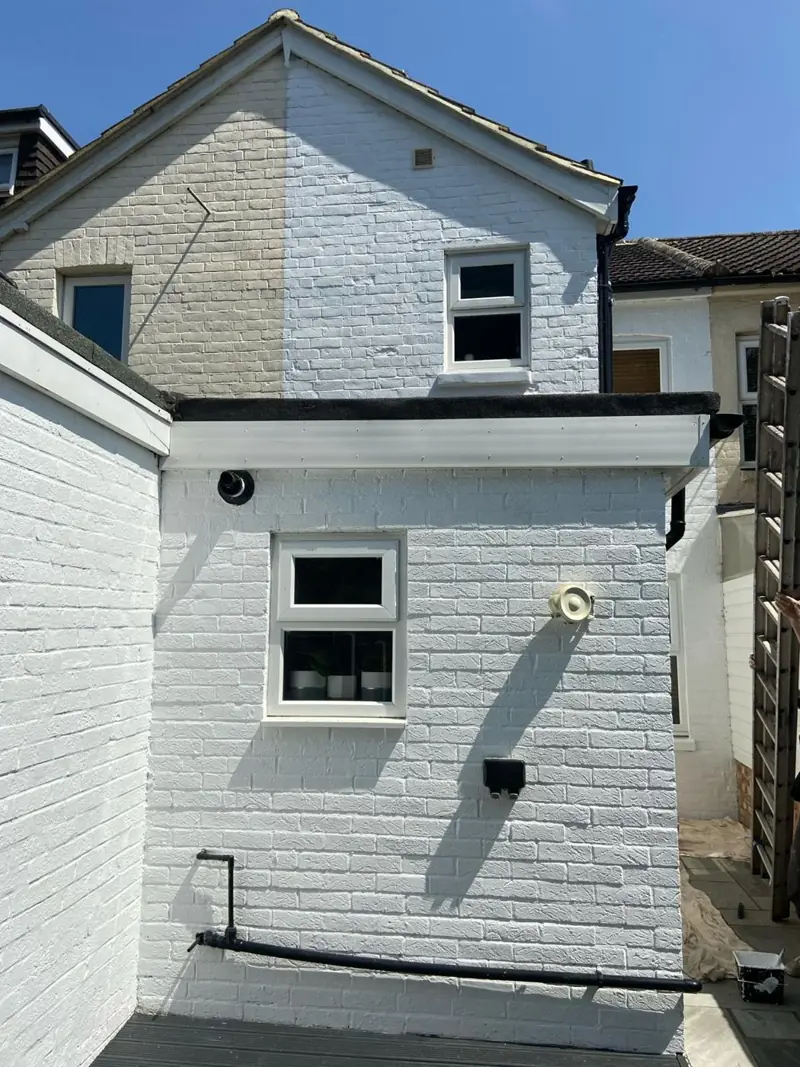
In 2011, 46 per cent of Heyford homes were detached. A detached house has a roofline on all four sides and often two full gable ends with bargeboards, so there is more board per house than on a terrace or semi. Gable bargeboards also catch the weather twice: rain on the face and sun along the top edge. If one side of your roof faces south up towards the ridge, expect the paint there to chalk and crack sooner than on the sheltered side.
Ladder work on these houses is usually straightforward from a driveway. Where a side passage is narrow, or the back garden is reached only along a snicket, we bring ladders in on foot and plan which elevation is done on which day.
Thatched eaves on the older cottages
A few cottages in the conservation area, such as 1 Furnace Lane, are thatched, which means there is no fascia board at all at the eaves. The joinery work there is on the bargeboards and gable timber where they exist, and on the windows and lintels just below the thatch. No heat gun or flame goes anywhere near that roof. Paint comes off by scraper and hand sanding, dust sheets are kept clear of the straw, and ladders are footed so they do not bear on the thatch edge.
Slate and plain tile roofs on other old cottages often have simple timber eaves boards that were never meant to carry a modern gutter. If a gutter bracket has split the board, we will point it out and suggest a joiner repair before painting.
Damp boards on the valley floor
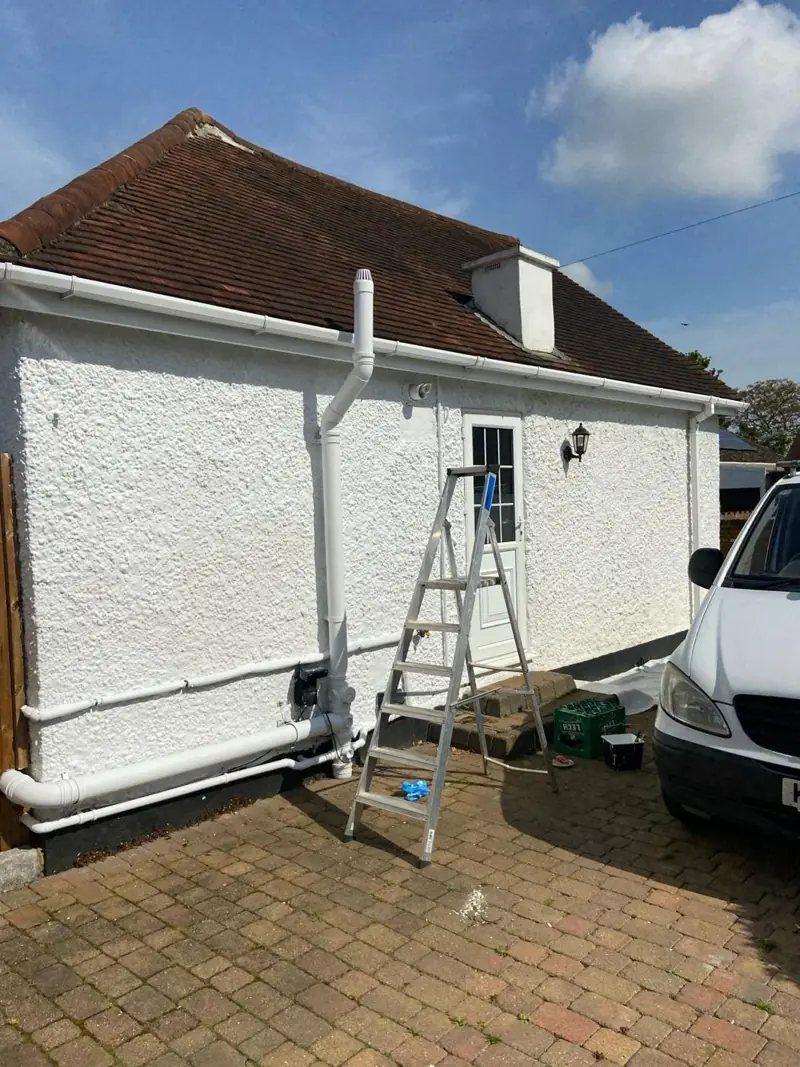
Houses on the lower, northern half of the village sit near the Nene floodplain and the culverted brooks, and the gardens of Winston Close, Ridgeway Furlong and Roberts Field end at Heyford Brook. Soffits there stay damp for longer on still autumn mornings and are prone to black mould spotting. We wash them with a fungicidal cleaner, let them dry and use a mould-resistant exterior finish. A board that reads wet on the moisture meter is not painted that day.
Prices depend on the length of roofline, repairs and access, so we quote after a visit. Our painter and decorator cost guide explains what affects the figure, and the Heyfords area page covers the rest of the village.
Last updated by Dean, DH Painter & Decorator.