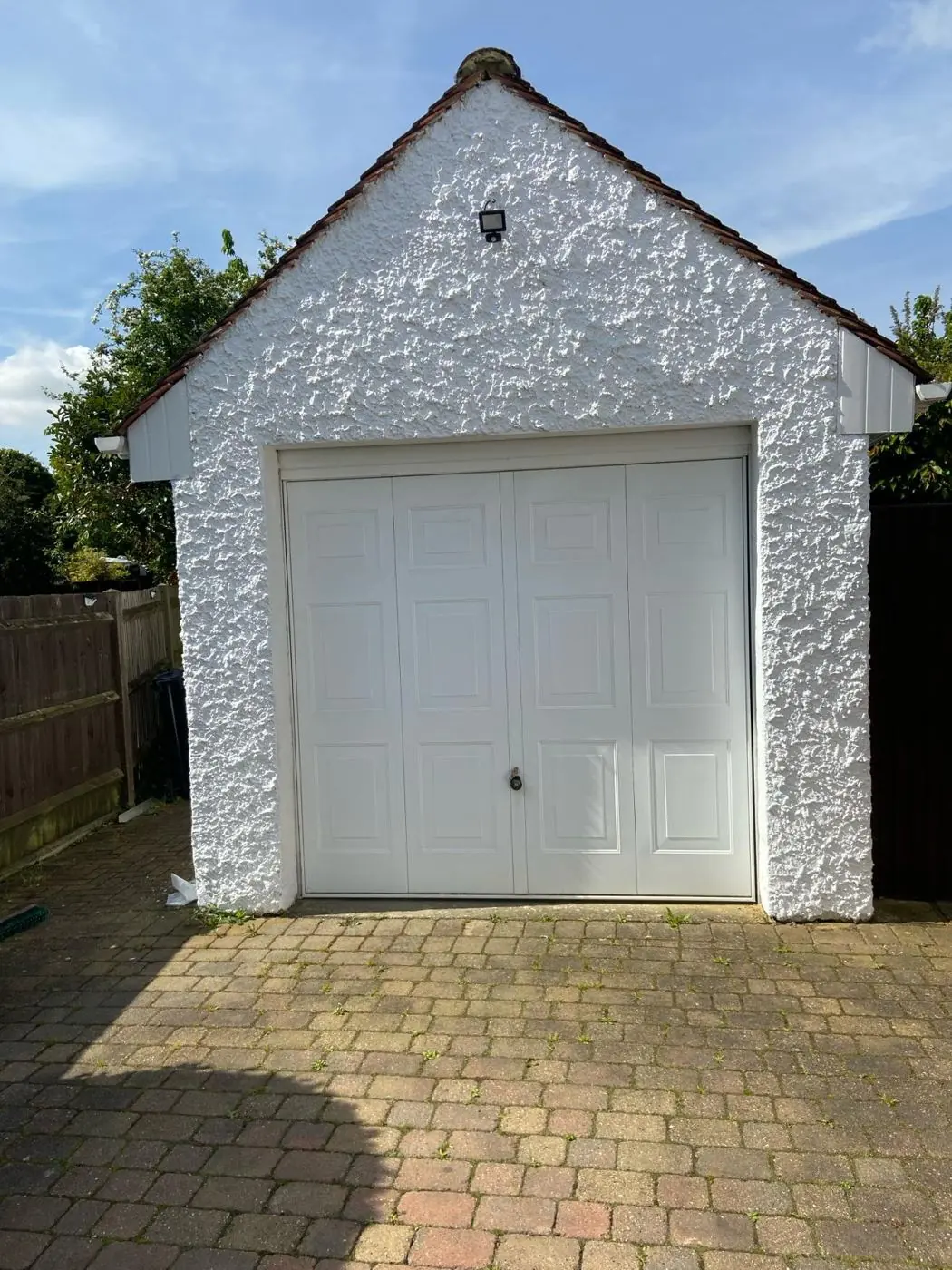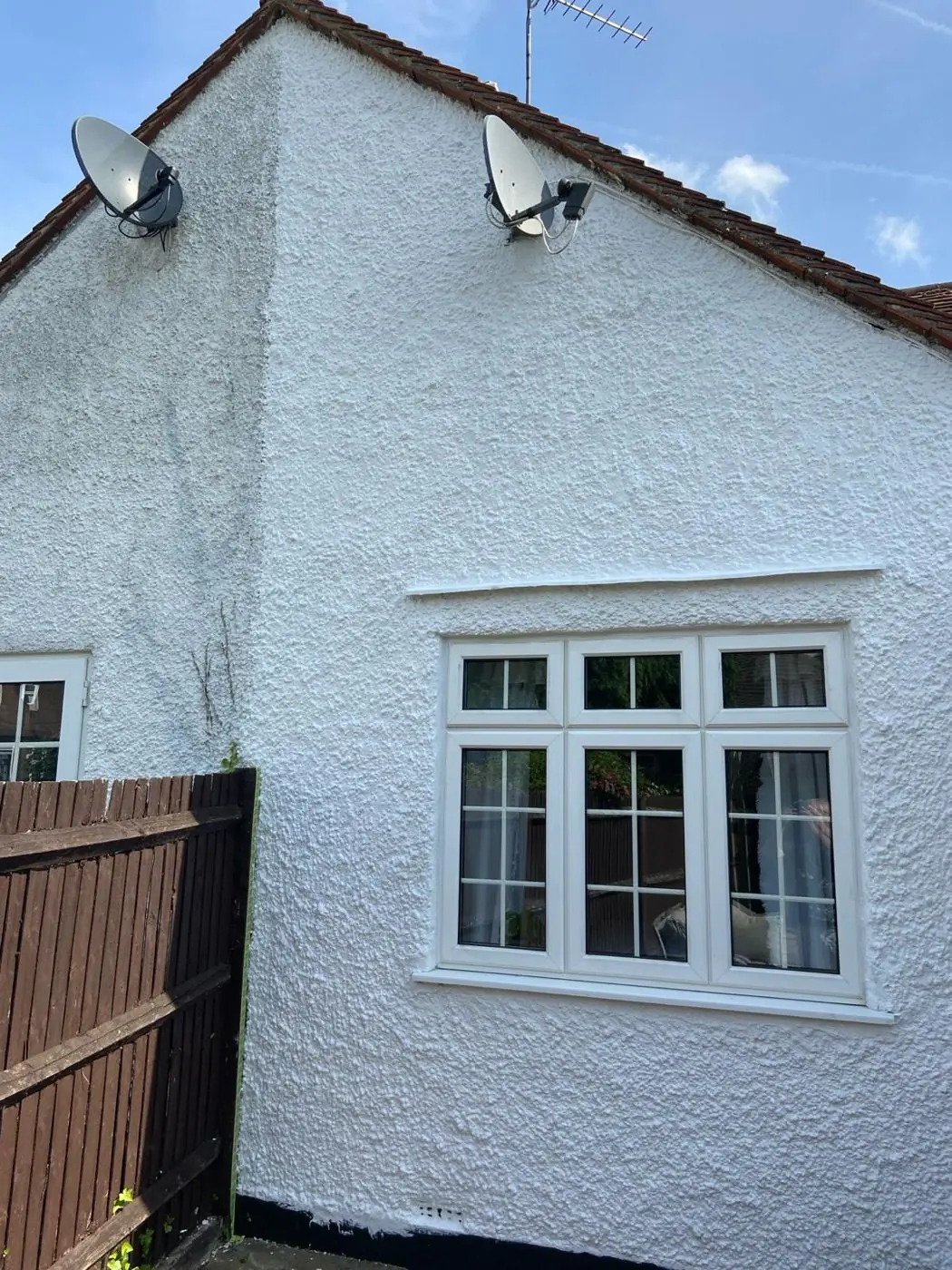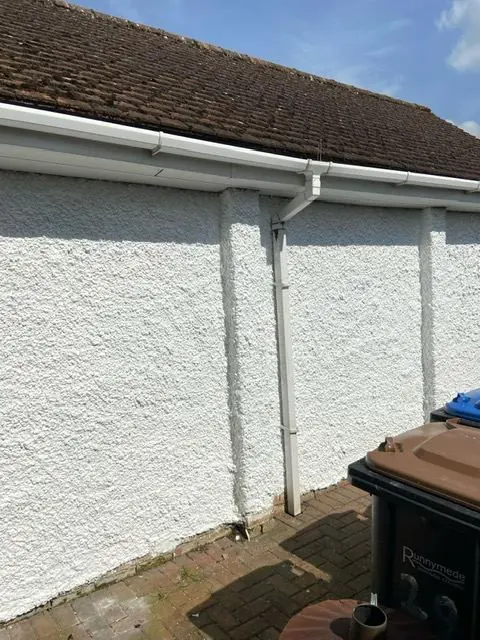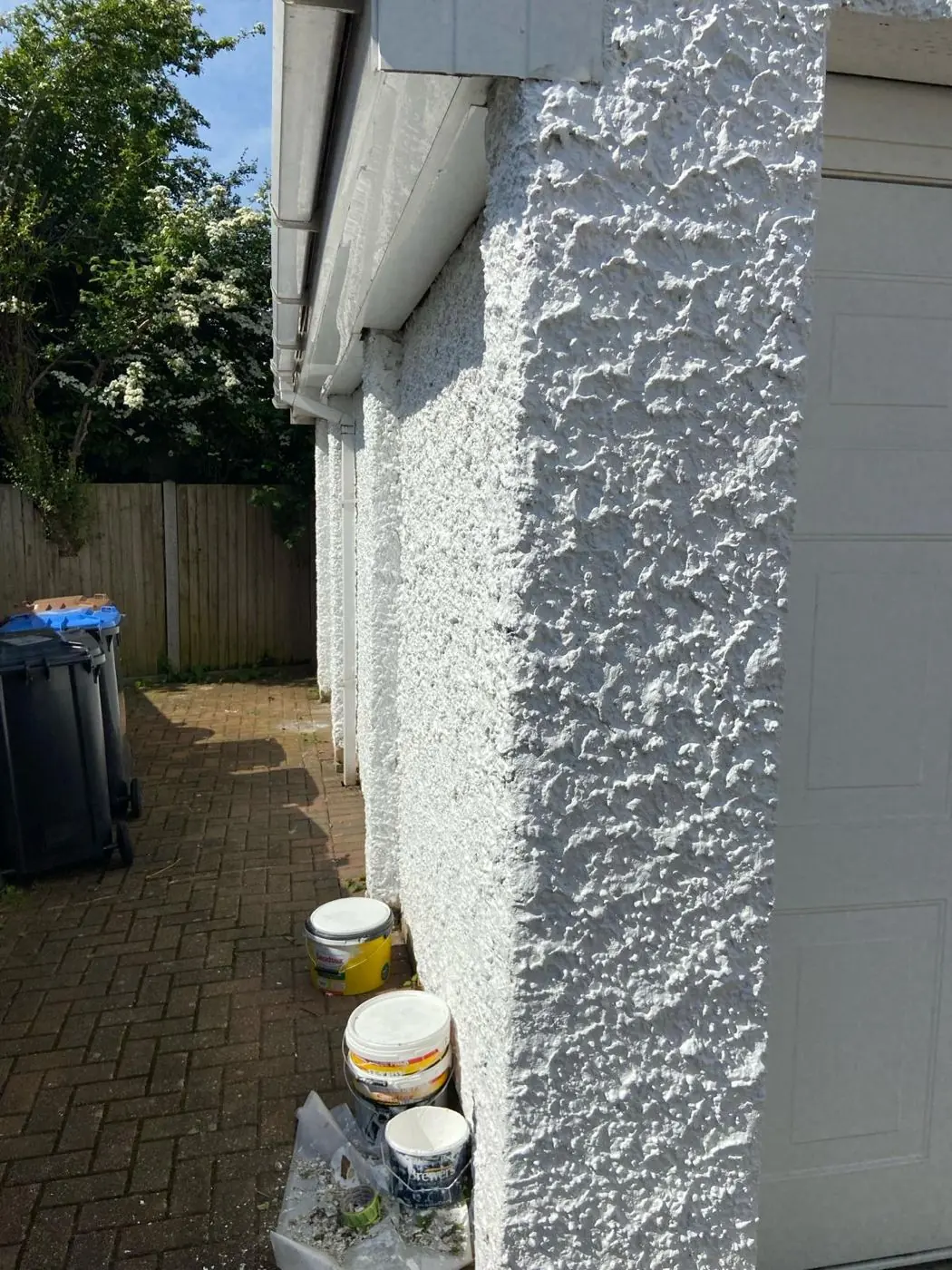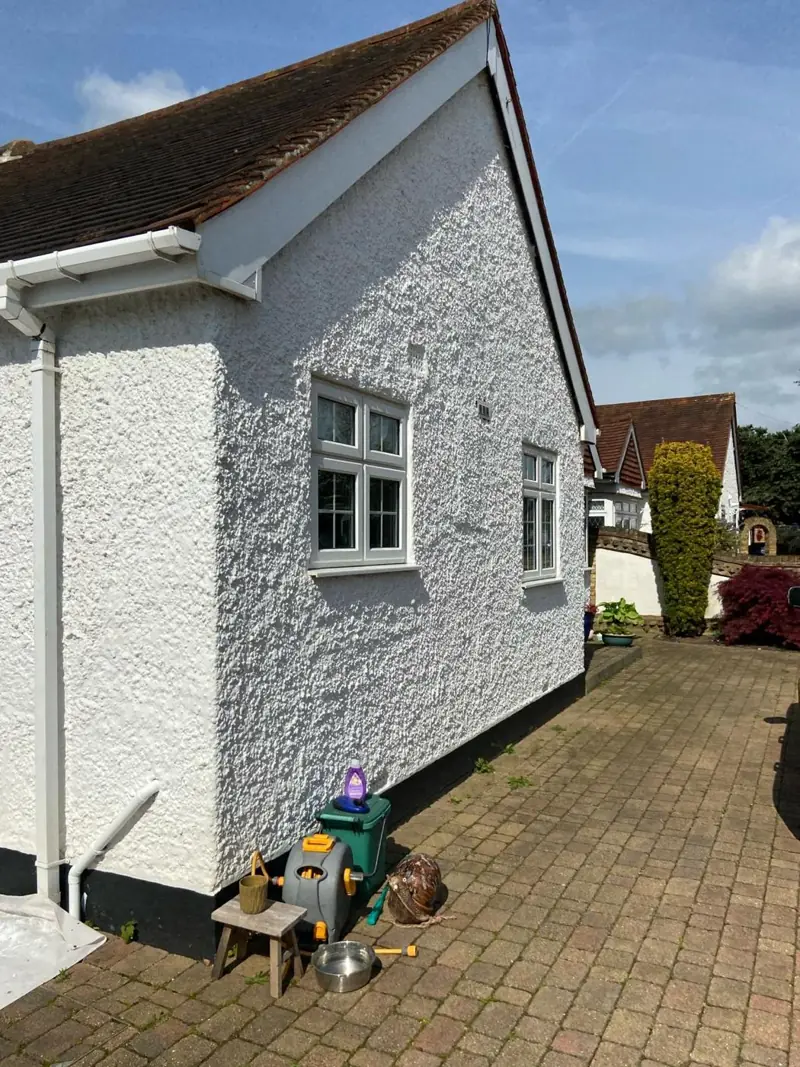
We repair and repaint rendered, pebbledashed and already-painted masonry in Nether Heyford and Upper Heyford, about 6 miles west of Northampton. Dean looks at what the coating sits on first, because in the Heyfords the wall under the paint can be ironstone, limestone or cob rather than brick.
What is under the paint matters more here than usual
On most post-war houses, render sits on brick or block and an ordinary masonry paint system is fine. In the old part of Nether Heyford the wall underneath may be coursed ironstone, limestone, ironstone banded with limestone, or cob. Some of these walls were painted or pebbledashed decades ago, particularly around The Green. Before anything is quoted we tap the render for hollow patches, look at where it stops near the ground, and work out what the wall behind it is made of. That decides the whole specification.
| Wall you have | What we would do |
|---|---|
| Bare ironstone or limestone | Leave it unpainted. Coating natural stone here changes the look and, on a listed building, can need consent. |
| Ironstone or cob that is already painted | Stay with a mineral paint or limewash-type coating that lets water vapour escape. |
| Pebbledash or render on an older house | Repair cracks and blown patches, stabilise chalky areas, prime, then a breathable masonry coating. |
| Render on a 1960s-90s estate house | Clean off algae, fill and prime, then two coats of masonry paint. |
Painted fronts around The Green: recoat, do not extend
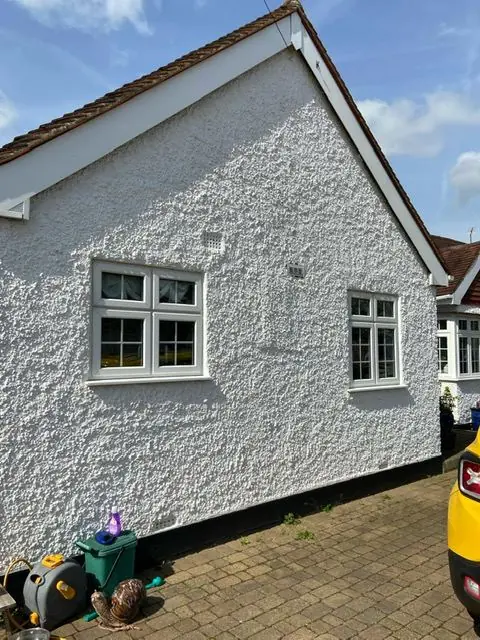
The Nether Heyford Neighbourhood Plan says that painted, rendered and pebbledashed fronts around The Green do not reflect the general character of the village, which is mainly natural ironstone and limestone. We take that as a practical guide. If your front is already rendered or painted, keeping it sound and recoating it in a similar colour is the sensible job. Adding new render over stone, or painting a wall that has never been painted, is something we would advise against, and inside the 8.1 hectare conservation area some exterior alterations need permission anyway. On a listed house, ask West Northamptonshire Council before any change of colour.
Cob and soft stone need to breathe
Cob is earth and straw, and it survives only if water can leave it as easily as it gets in. The village has listed examples: 1 Furnace Lane is painted ironstone that is probably partly cob, and the 18th-century cob wall round the orchard at Heyford Cottage on The Green is listed in its own right, capped with straw thatch on an ironstone and limestone base. A modern acrylic masonry paint on walls like these holds moisture in. The surface may look fine for a year or two, then it bubbles, the cob softens and lumps of the face come away with the paint. Soft ironstone behaves in a similar way, with the face spalling behind a sealed coating. So on old walls we stick to mineral paints or limewash-type finishes and accept that they weather and need renewing more often.
Our guide to painting render and roughcast covers the general preparation. The main render and masonry painting page explains how a standard job runs.
Pebbledash repairs before a brush goes near it
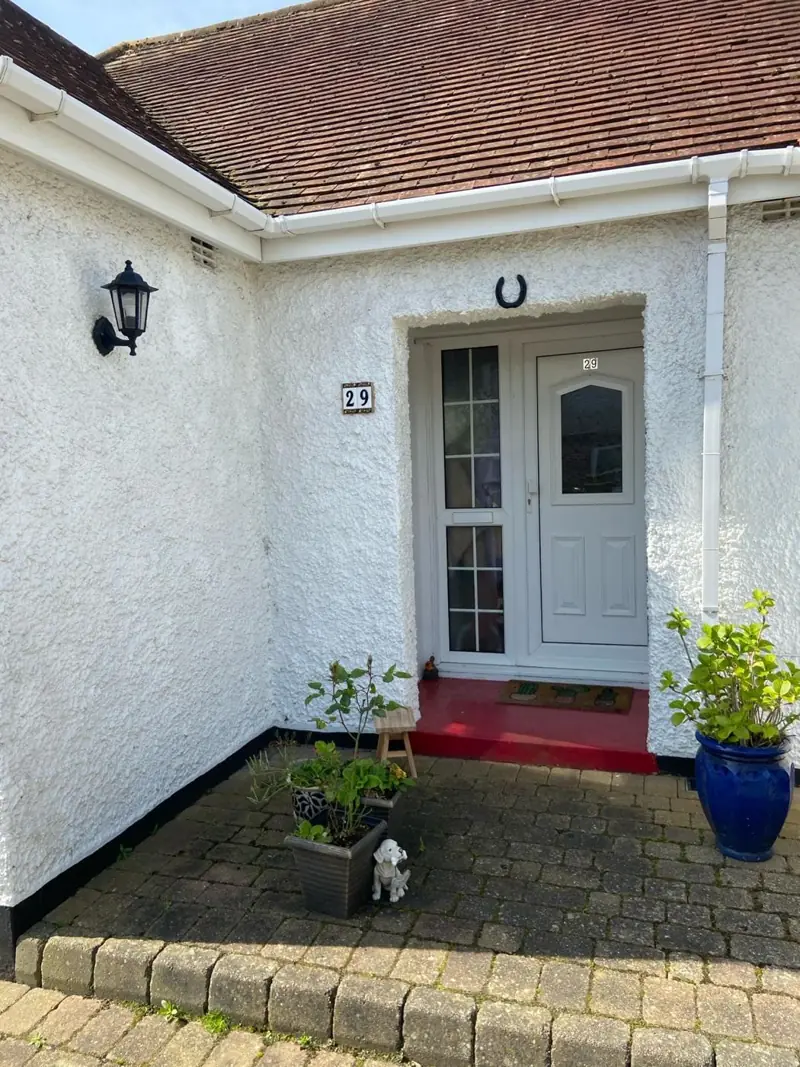
Older pebbledash may have been patched over the years with mixes that do not match. Before coating we rake out and fill cracks, cut back and re-dash any hollow areas, and treat green growth on north faces and on walls by the brooks, where the springs and the low valley-floor ground keep the base of the wall damp. A stabilising primer goes on anywhere the old paint is powdery, otherwise the new coat lifts with it. If a section of render has failed badly, we will tell you that it needs a plasterer first rather than painting over the problem.
Scaffold and access on the older streets
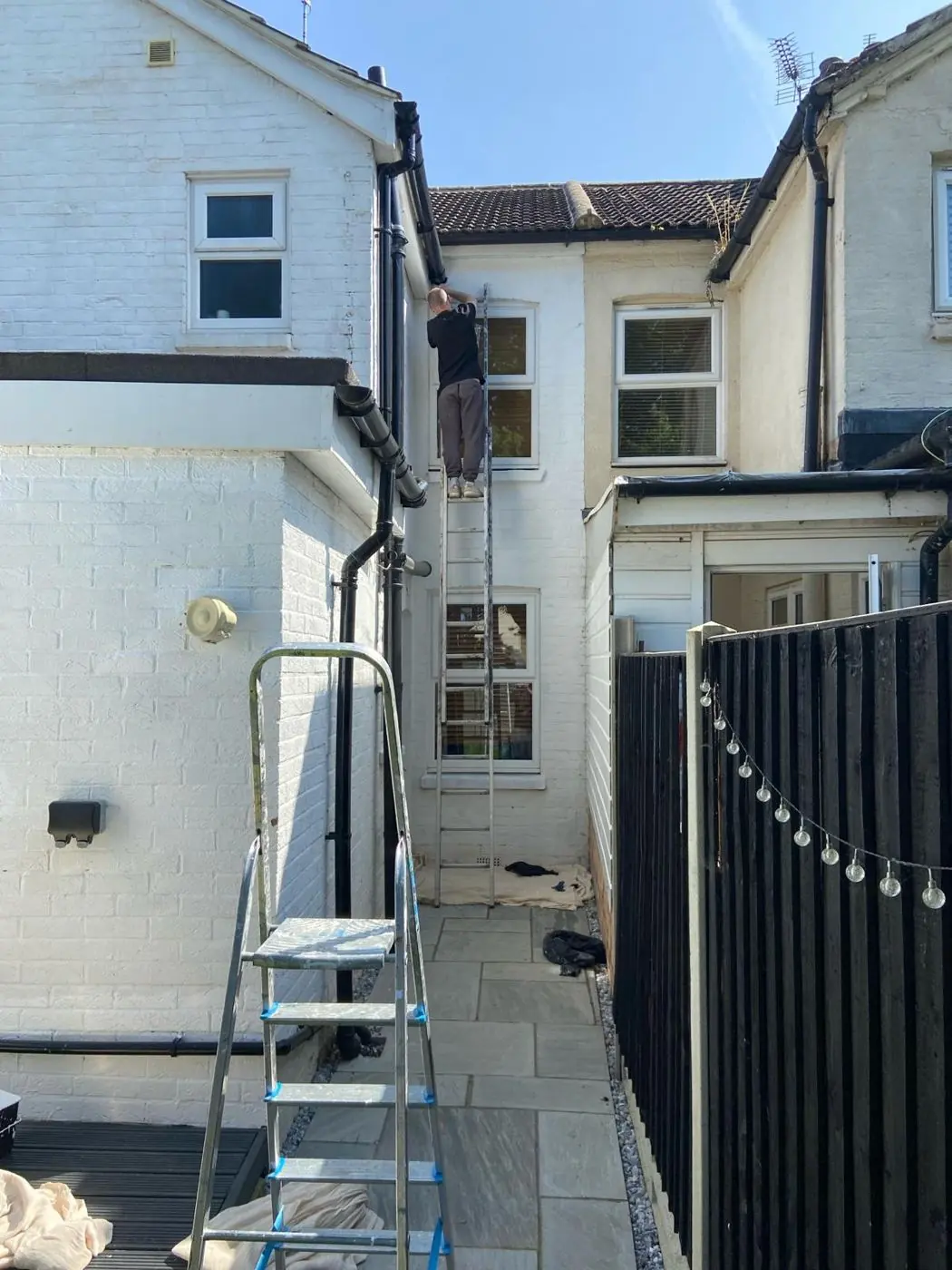
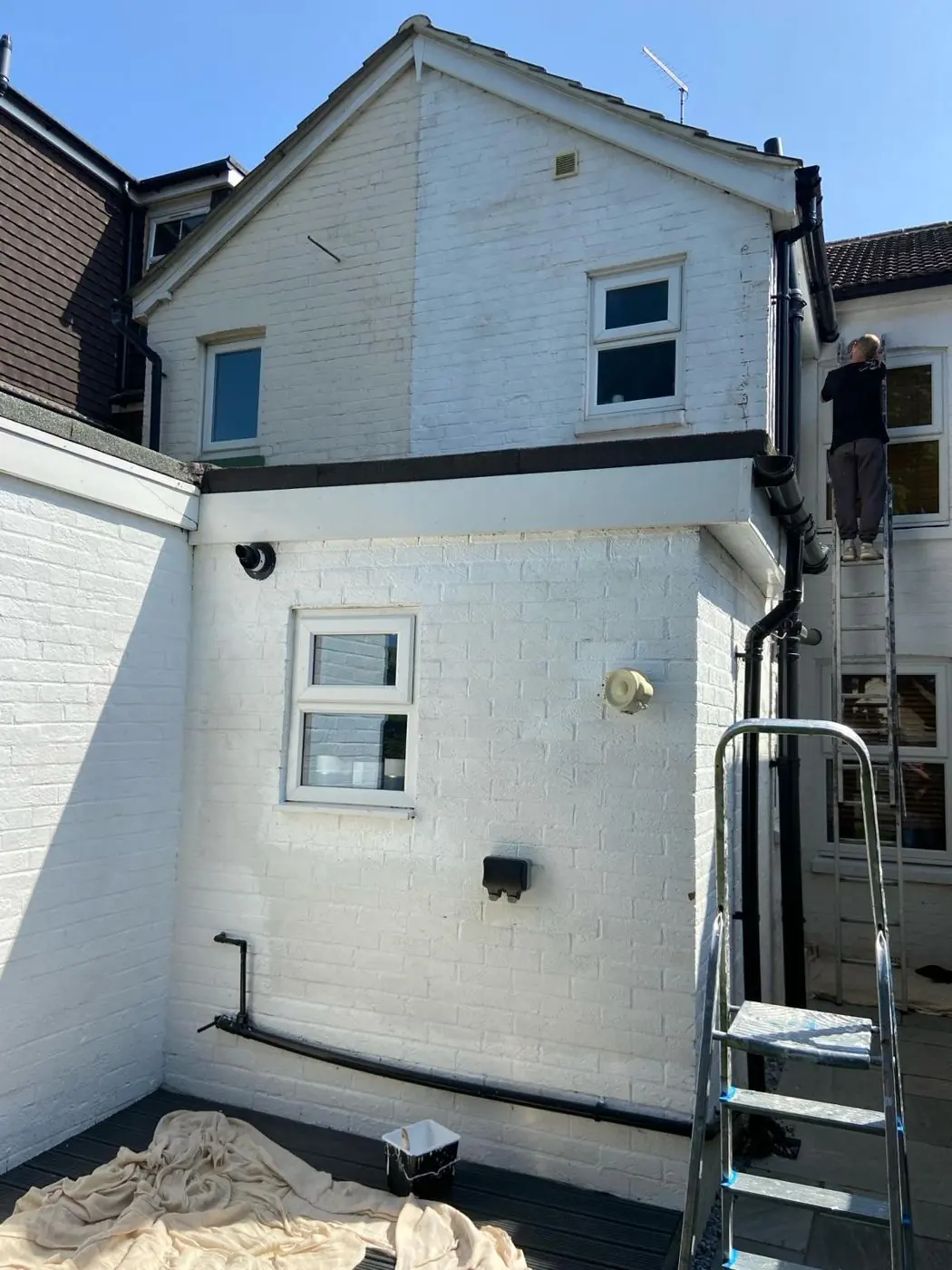
Church Street is tight, with buildings and walls close together, and some cottages near The Green have their entrance at the back, reached along a snicket. On a full elevation that can mean a small tower rather than a ladder, carried in on foot. We plan deliveries outside the Bliss School drop-off and pick-up, when parking round The Green is at its worst. You can read more about the villages on our Heyfords page.
Last updated by Dean, DH Painter & Decorator.