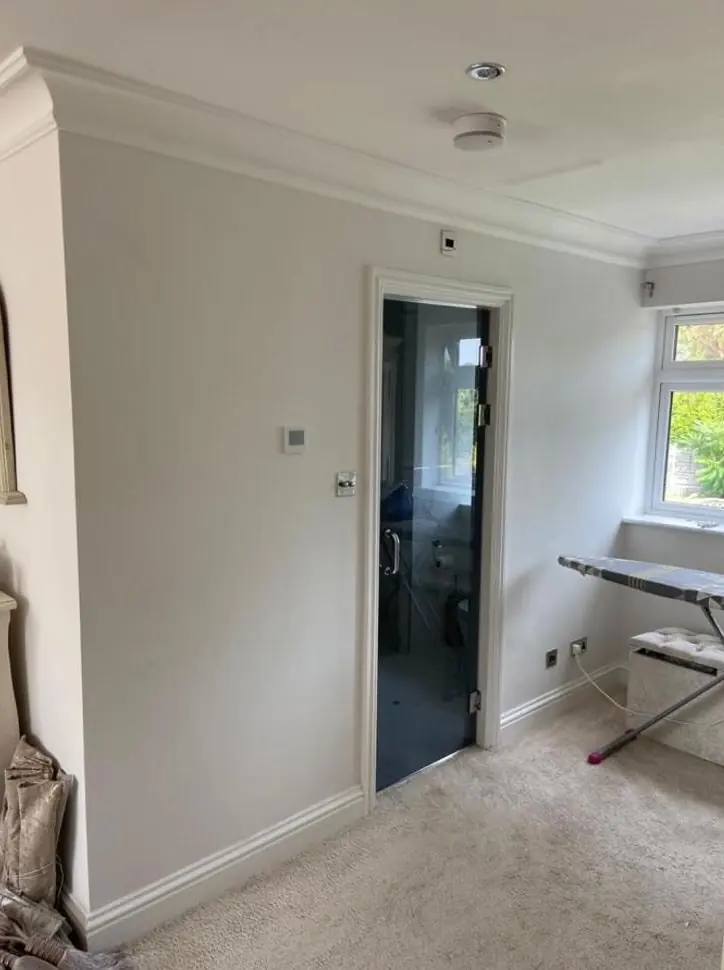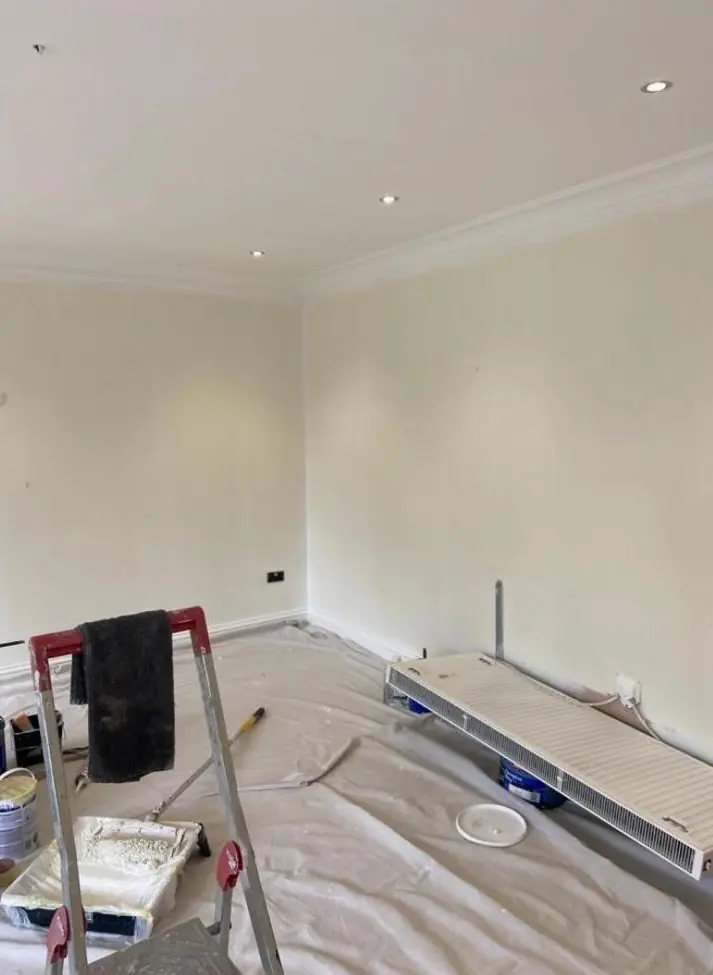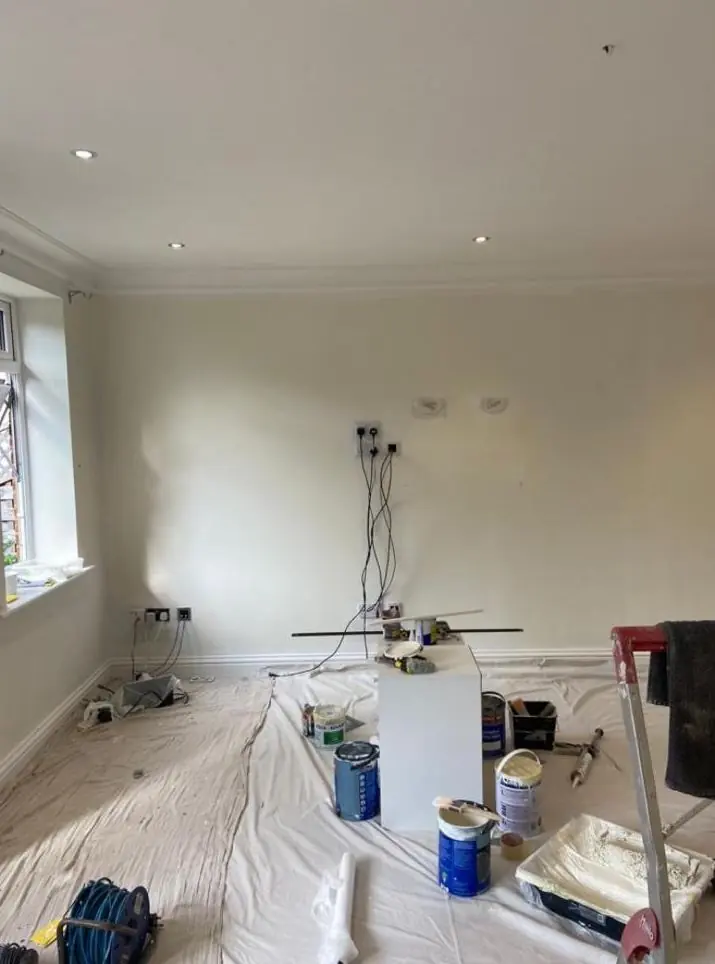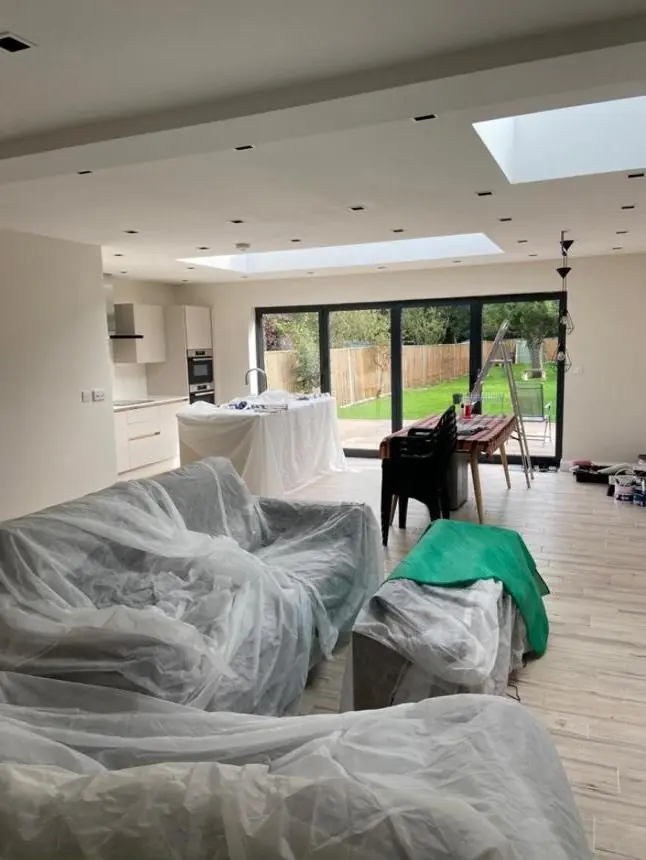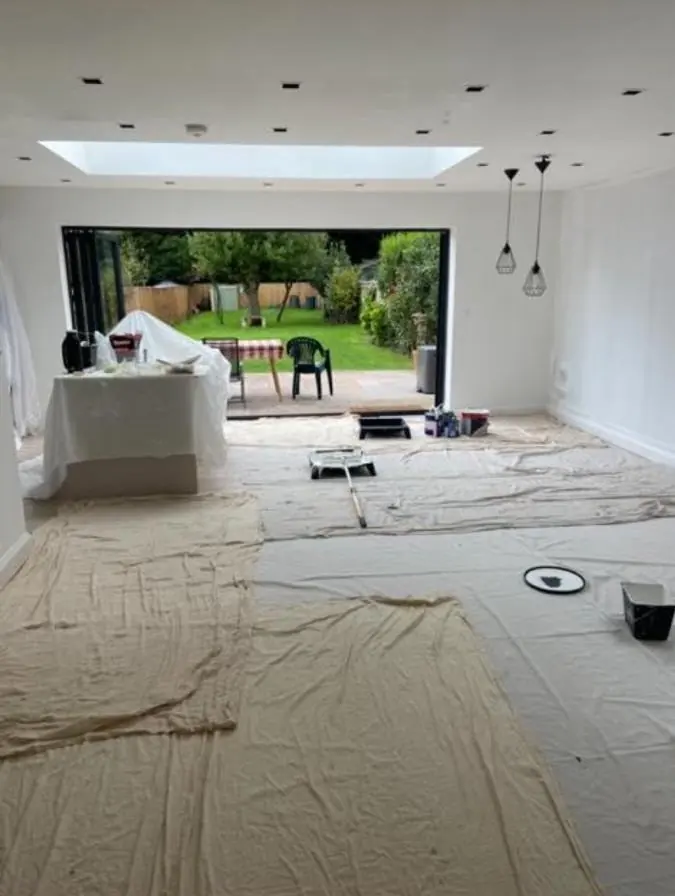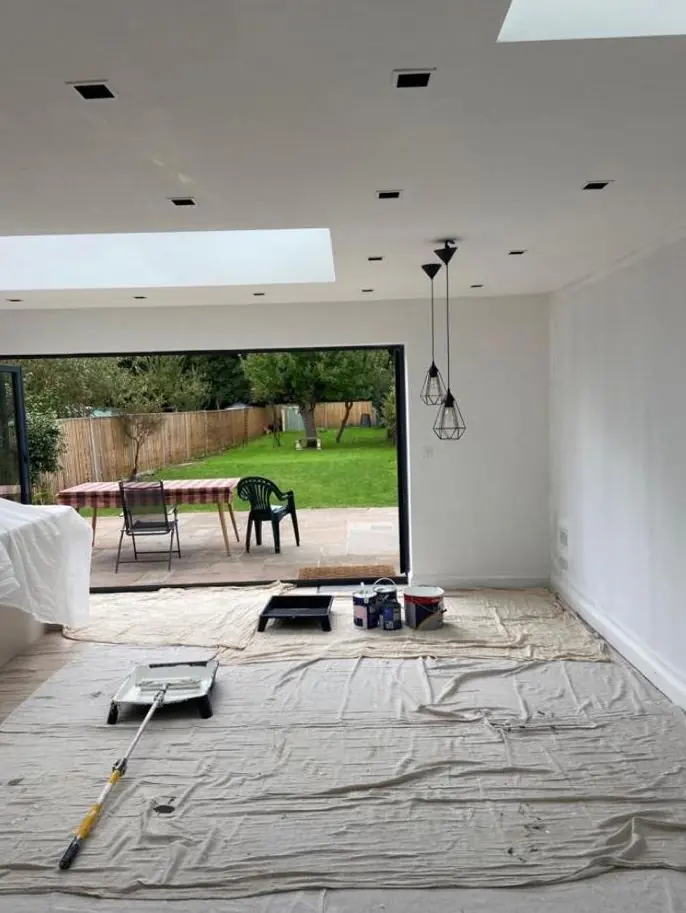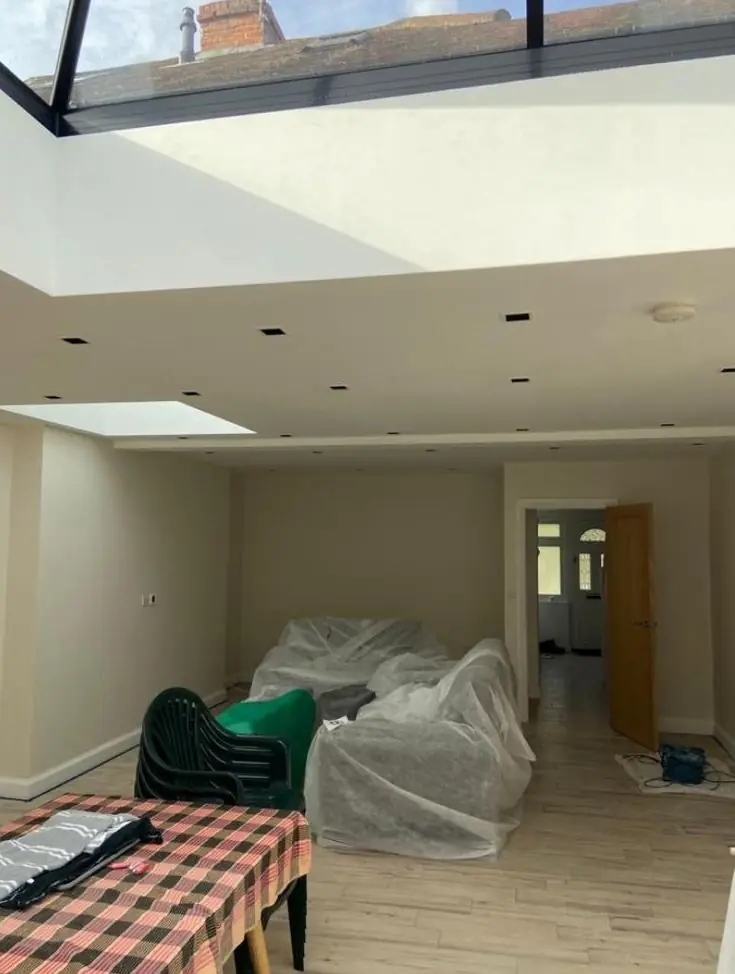
We paint new plaster, re-skims and extensions in Nether Heyford and Upper Heyford, 6 miles west of Northampton town centre. Most of this work comes from extensions to the 1960s to 1990s houses, while additions to the old stone cottages need breathable finishes that suit the original walls.
Where fresh plaster appears in the Heyfords
About half of Nether Heyford’s homes went up between the mid 1960s and early 1990s, when the village grew from 235 houses to 582. The neighbourhood plan records that most are three-bedroom and that 46% were detached in 2011. Those houses are now old enough for kitchen extensions, garage conversions, knocked-through ground floors and full re-skims of tired artex or cracked plaster. Each of those leaves bare plaster that needs sealing before it can be decorated.
The newer builds at Bliss Close, from 2012, and Hillside Crescent, from 2019, can also need a re-skim after settlement cracks or a change of layout. Then there are the historic cottages, where any new plaster meets walls that are centuries old.
Mist coats on post-1960 extensions
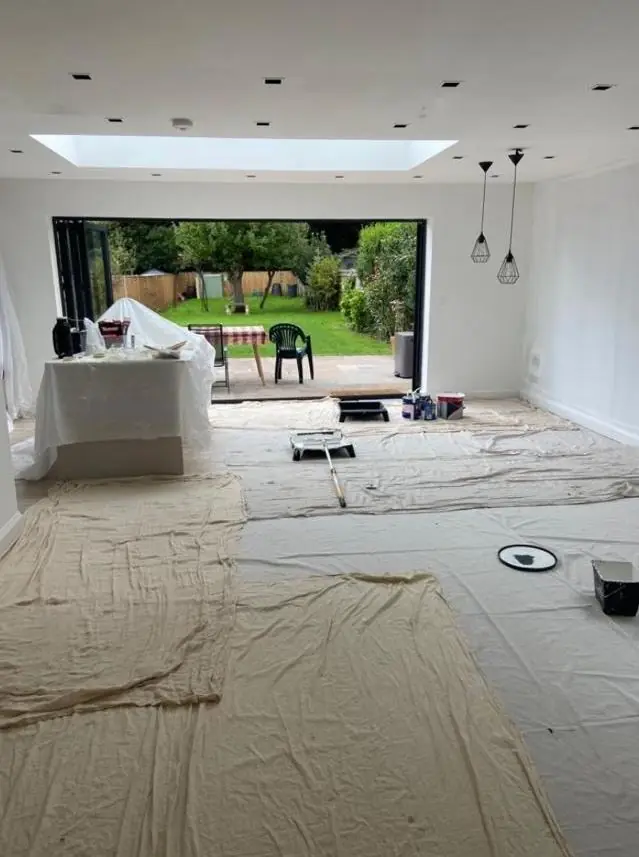
On a block or stud extension to a Wilsons Estate or Roberts Field house, the process is the familiar one. The plaster has to dry out fully, which shows as an even pale colour with no dark patches in corners, reveals or behind radiators. We then put on a thinned breathable emulsion as a mist coat, fill and sand whatever it shows up, and follow with two finish coats. Vinyl or wipeable paints come later, once the plaster below is sealed and dry. We explain mist coats in more detail in our guide to painting new plaster.
The bit that takes care is the join between old and new. Where an extension opens into a house built forty or fifty years ago, the existing walls usually have several coats of paint and the new plaster has none, so the same colour can look different on each side of the opening. We prime and coat the new walls so the finish matches across the join, and we decorate both rooms together where that is the only way to get an even result. Our main new plaster and extension painting page lists everything included in a typical extension job.
Additions to stone and cob cottages
The historic core around The Green, Church Street and Furnace Lane is built in coursed ironstone and limestone, with some cob. 1 Furnace Lane, for example, is painted ironstone and probably partly cob. Walls like these need to breathe. When an older cottage is extended or partly re-plastered, the new work should be finished with paints that let moisture pass, and the original walls should not be sealed with modern vinyl to make them match the extension.
Many of these buildings are listed or within the 8.1 hectare conservation area. Alterations to a listed building can need consent from West Northamptonshire Council, and it is worth checking that the plaster specification suits the building before decorating starts. If an old wall has been patched with gypsum next to lime, we will point out where the two meet, because they take paint differently.
Drying time on the valley floor
The northern half of Nether Heyford is on the flat floor of the Nene valley at about 74 metres, and the springs, culverted brooks and floodplain mean the ground stays damp for much of the year. A new extension on that side of the village, particularly near Heyford Brook behind Winston Close, Ridgeway Furlong and Roberts Field, can take longer to dry in winter than one on the higher ground to the south. We would rather wait a week for the plaster to dry than paint over moisture that later shows as blistering. Heating the room gently and keeping a window open helps.
See our area page for The Heyfords for the other work we cover in the village.
Last updated by Dean, DH Painter & Decorator.