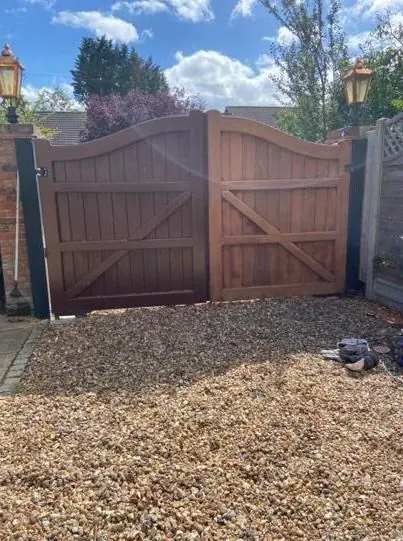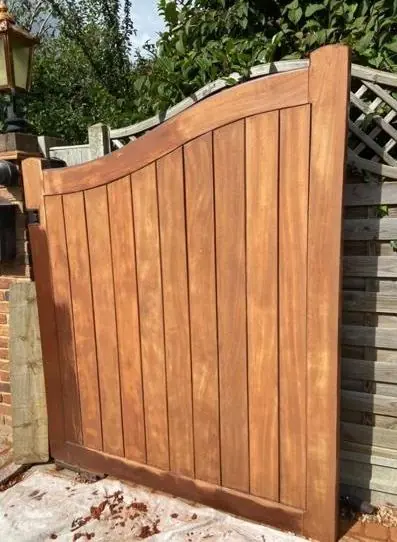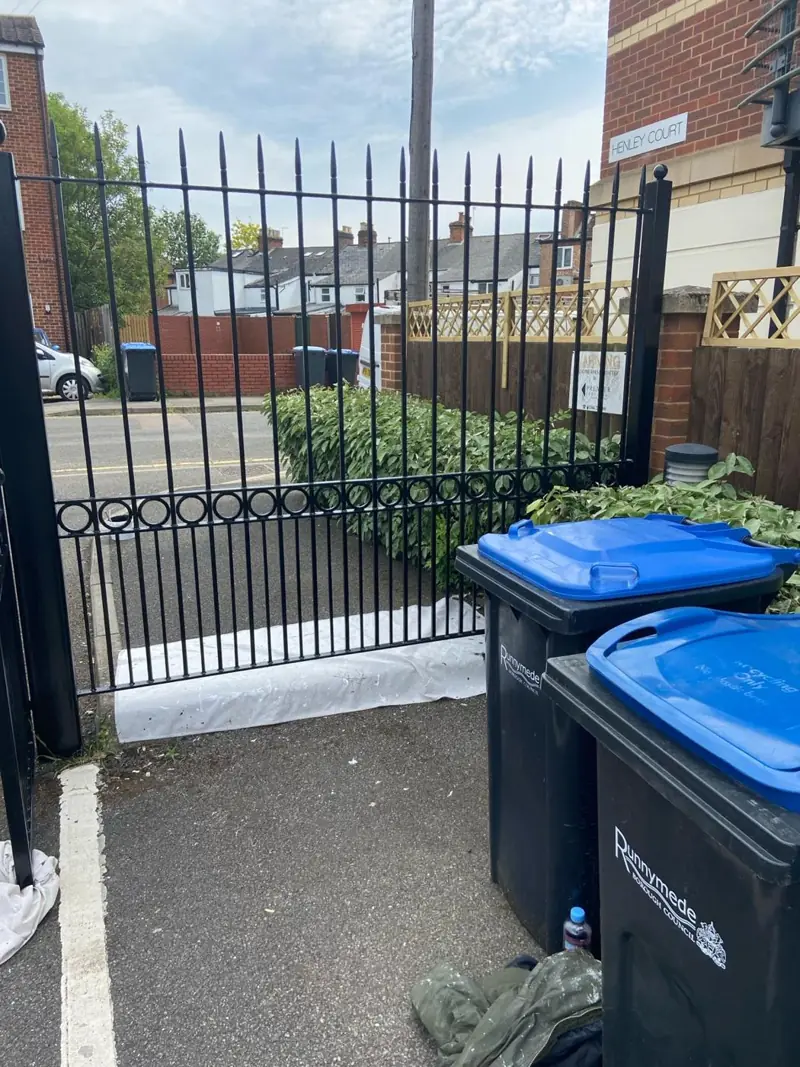
DH Painter & Decorator stains and paints garden fences and timber gates in Moulton Leys, the NN3 estate around 3.3 miles north-east of Northampton town centre. Most fences here are shared between gardens on the closes, so Dean helps you sort out sides and colour with neighbours first.
One fence, three or four neighbours
Moulton Leys is laid out as closes and courts branching off Manning Road and Underbank Lane. On that kind of layout, back gardens meet at odd angles, and a single garden can share fence lines with three or four other houses. That makes fence staining here as much about agreement as about timber.
The face of a boundary fence that looks into a neighbour’s garden belongs to their view, and we only stain it with their permission. Before quoting, it helps to know:
- Which fence runs you are responsible for, and which are your neighbours’
- Whether the neighbour wants their side done at the same time, and in what colour
- Whether we can reach their side through their garden or need to work from yours
Where two households split a job, we can quote each side separately so nobody is paying for the other’s half.
Choosing a colour on a close
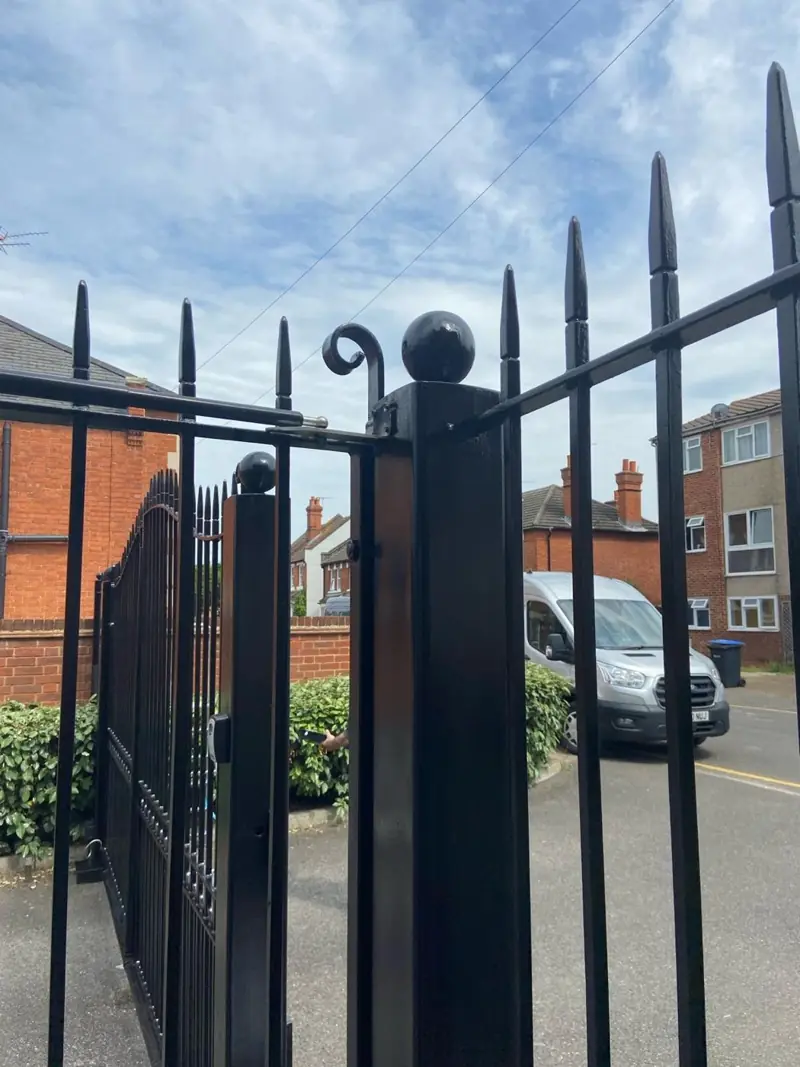
There is no conservation area over Moulton Leys, so nothing stops you choosing a dark grey, sage or black stain. On a small court, though, a fence that shows over the front boundary or down a side path is seen by everyone. Darker stains also show the uneven patches of an older weathered fence less, which suits mixed runs where some panels have been replaced and others have not. Paler, translucent stains let the grain show but highlight the difference between new and old panels.
Wind and timing on open ground
The estate sits on the high, open northern rim of Northampton beside Moulton Park, with farmland beyond. Two things follow for fence work. Wind dries stain on the surface before it soaks into the boards, so brushwork has to keep a wet edge and we avoid gusty days. And spray-style application is out of the question with neighbours’ cars, windows and washing a few metres away, so everything is brushed in by hand, worked into the overlaps of lap panels and the edges of feather-edge boards.
We need a dry spell before and after: rain on fresh stain marks it, and boards that are damp inside will not take it evenly. Late spring to early autumn is usually the window.
Plants matter too. Back gardens on the closes are often compact, with borders running right along the fence line. We tie back climbers, lay sheets over beds and lift pots away from the base before starting, then put everything back once the stain is dry enough not to transfer onto leaves.
Side gates and access from the front
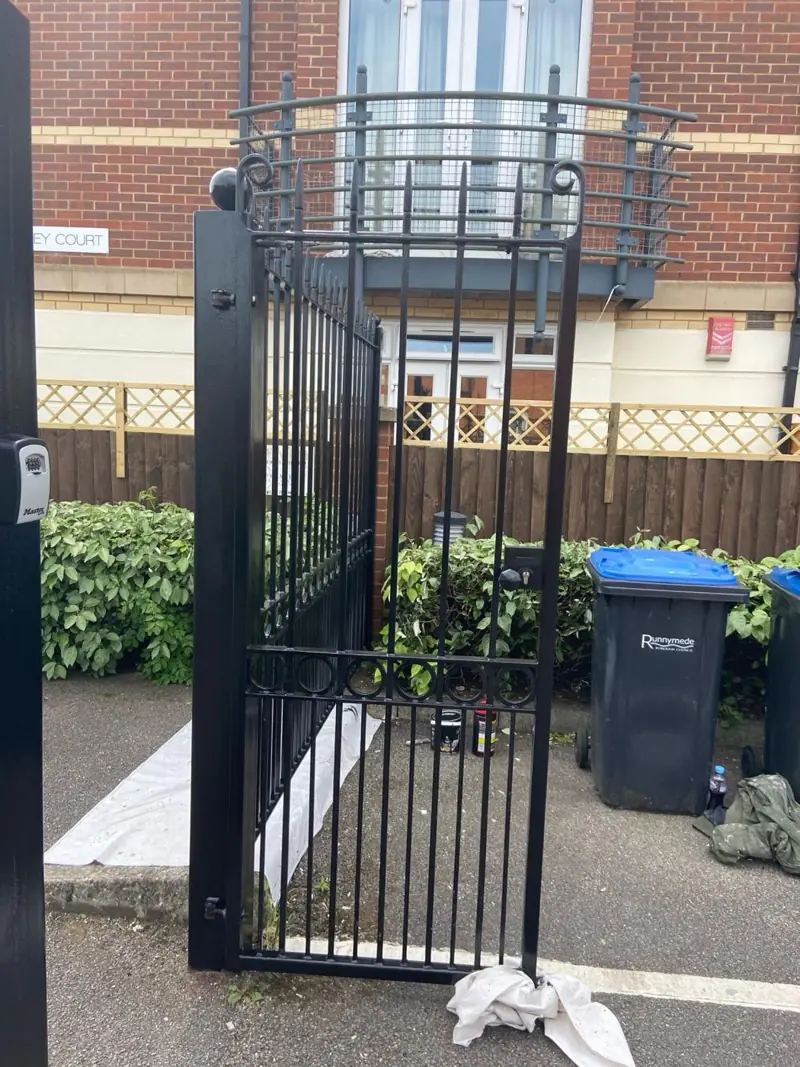
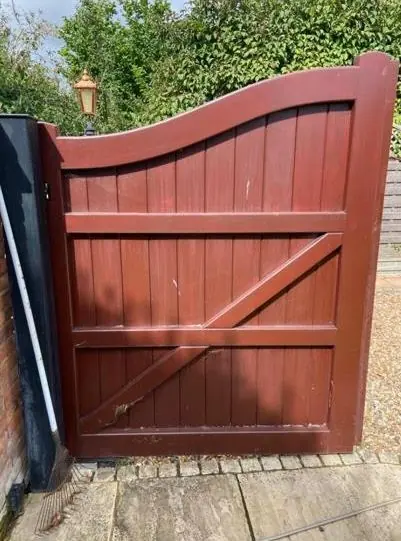
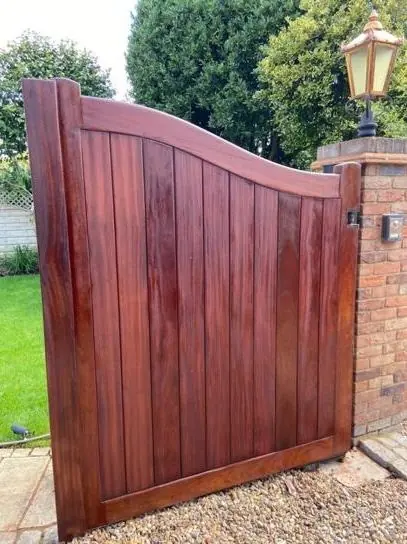
With many homes in cul-de-sacs and drives close together, the timber side gate is often the only way into the back garden. If the gate itself is being stained, we do it at the end of the day or in sections so you are not shut out while it dries, and we prop it open with care so wet stain does not touch the fence beside it.
New pressure-treated panels put up after a storm usually need time to dry out before staining; we will tell you if yours are ready.
More on fences and the estate
The prep steps, the choice between stain and fence paint, and how we deal with hardwood gates are explained on our main fence and gate staining page. For other work around the houses here, see our Moulton Leys area page.
Last updated by Dean, DH Painter & Decorator.