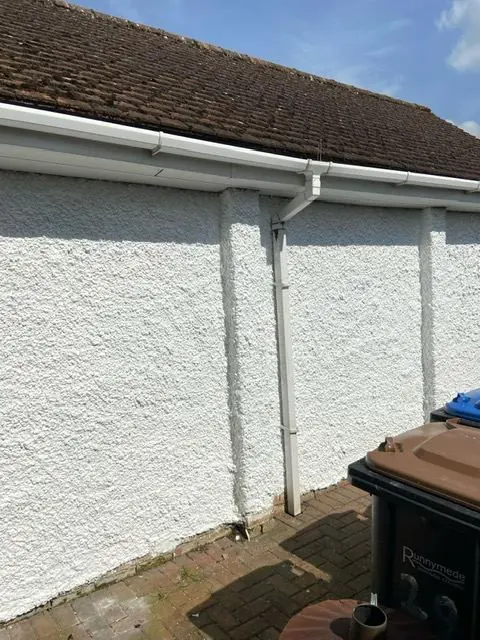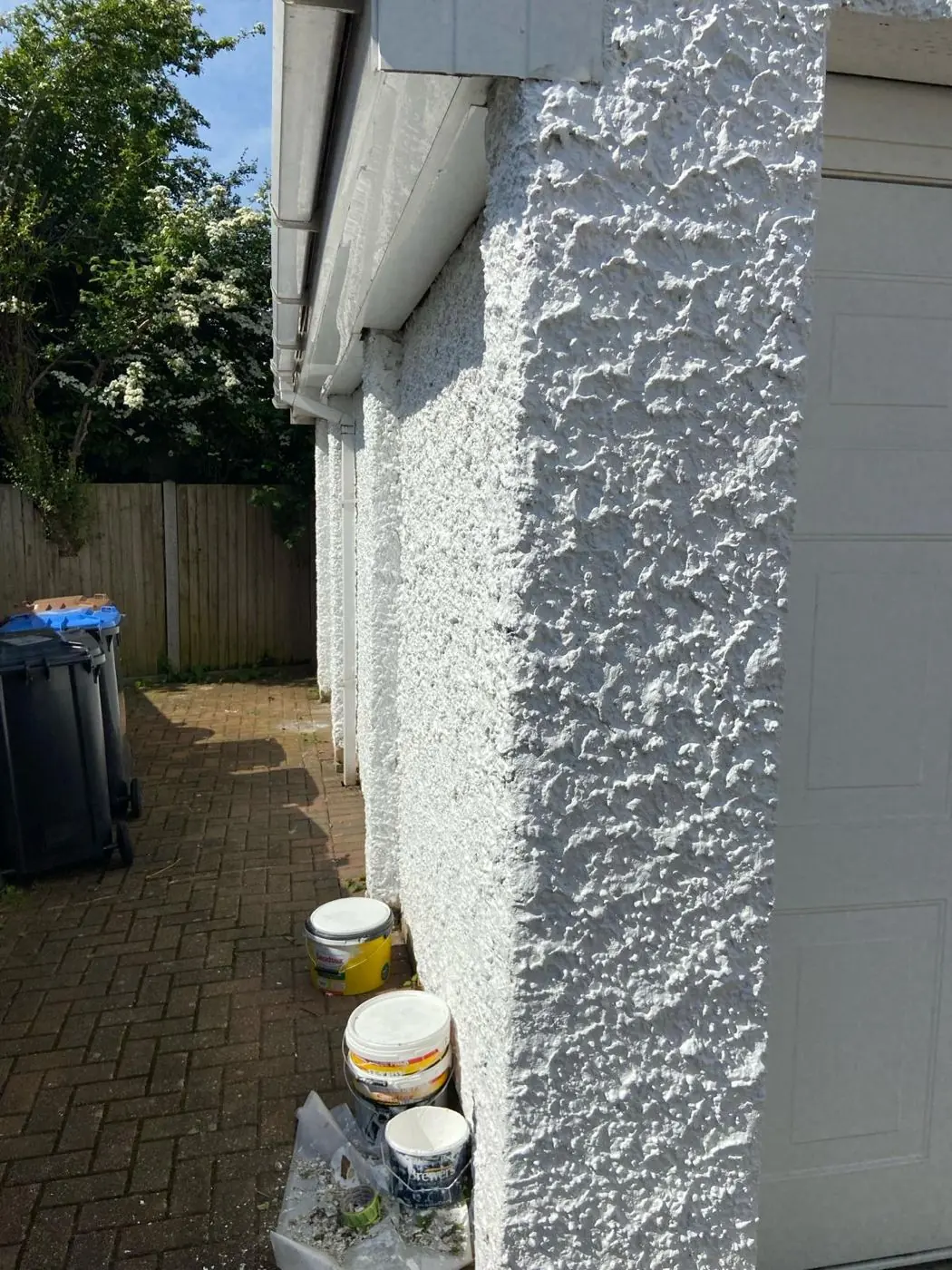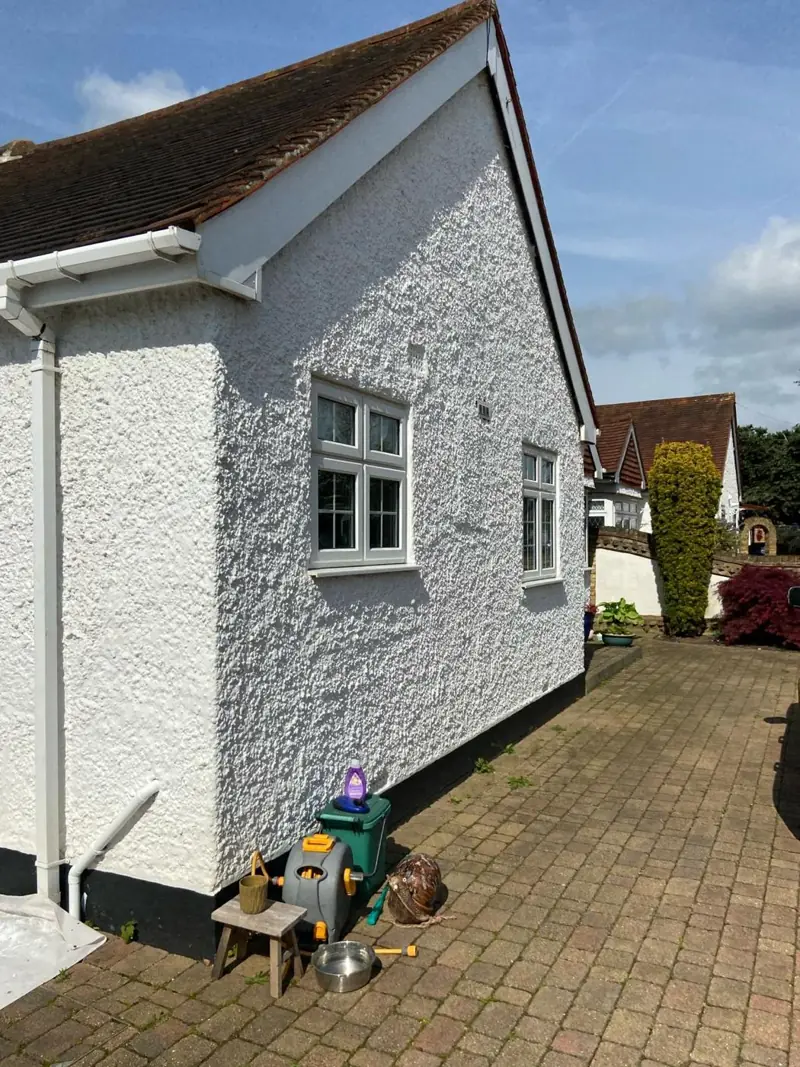
Dean paints render and masonry in Moulton Leys, the NN3 estate around 3.3 miles north-east of central Northampton. Most work here is rendered panels on modern estate homes; the one historic building, Moulton Lodge, is listed stone that should not be painted with plastic masonry coatings.
Which walls on the estate are actually render?
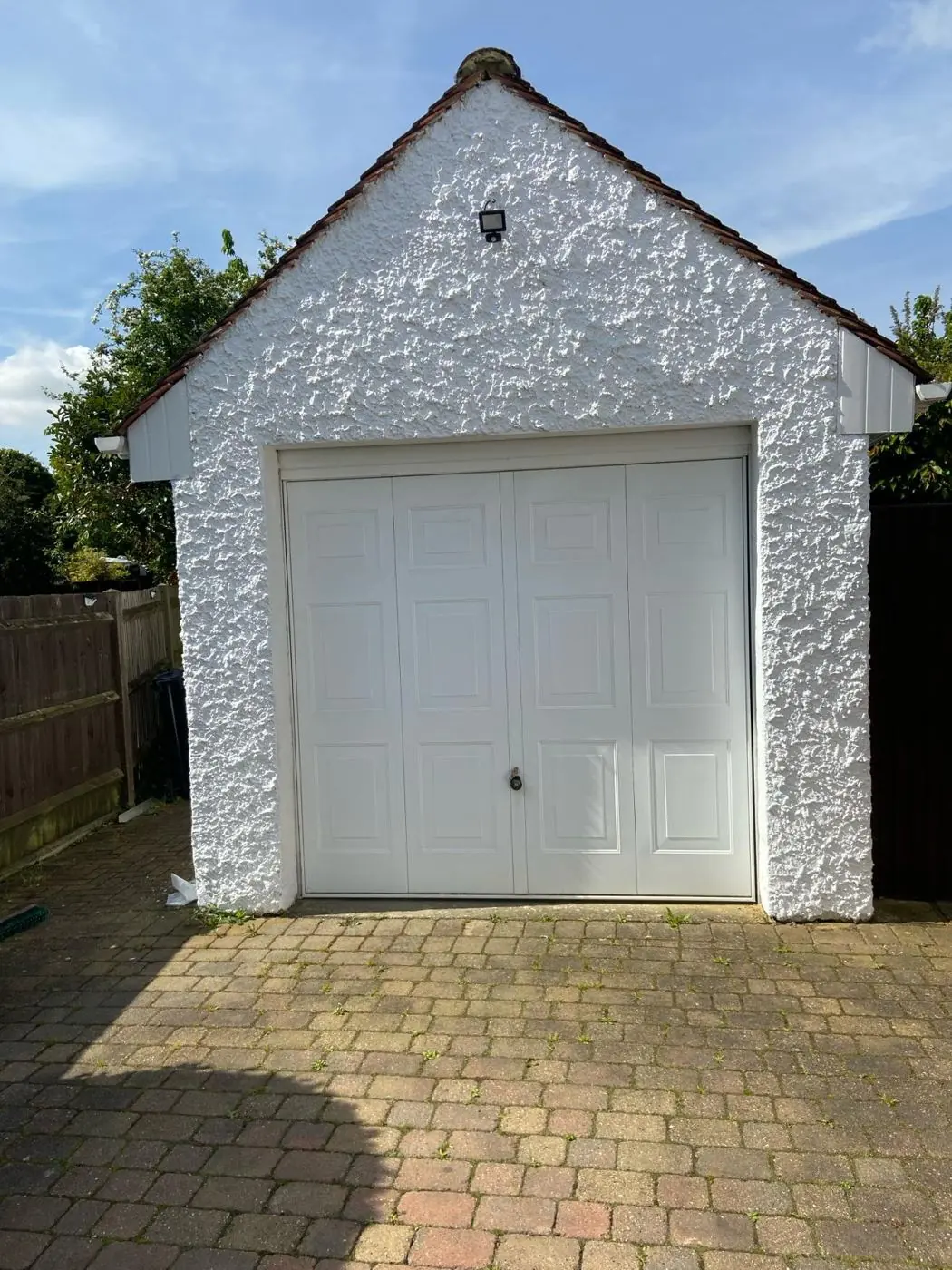
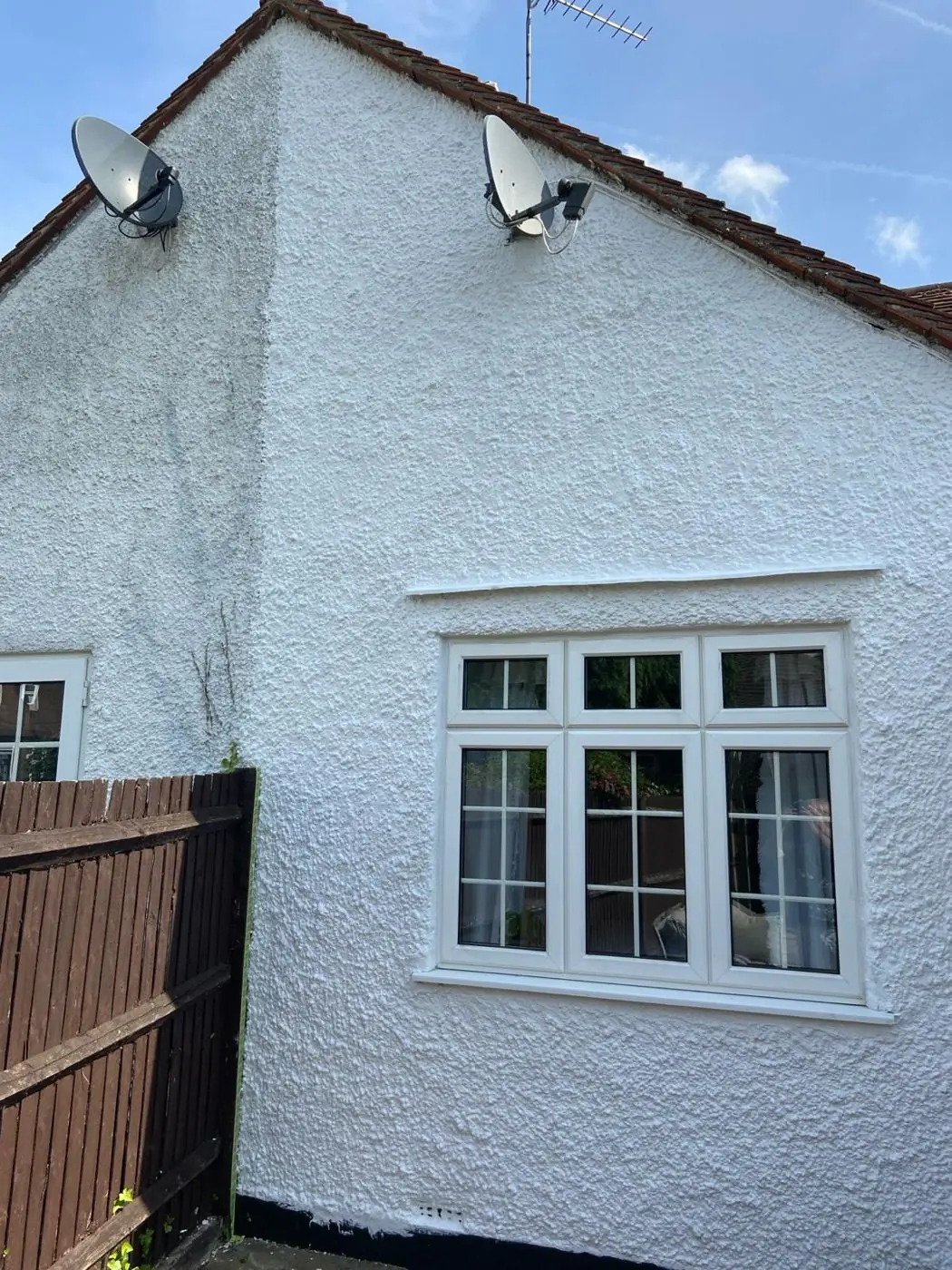
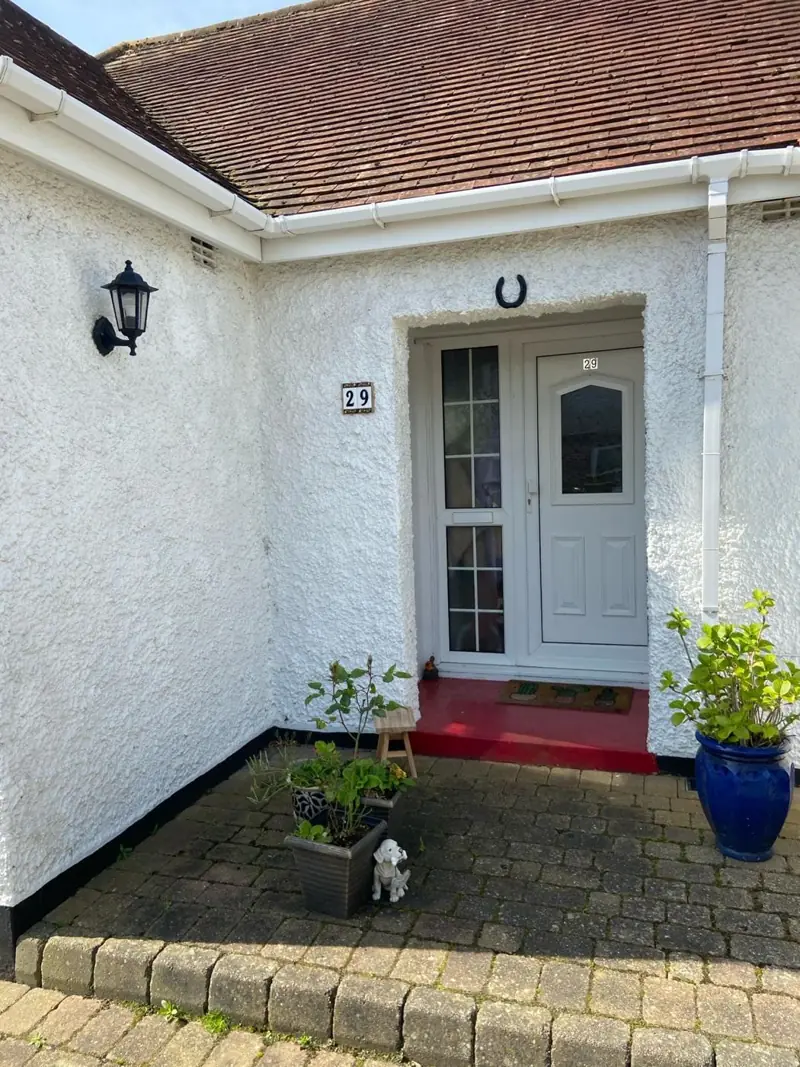
No source we have consulted records what the Moulton Leys estate houses are built from, and we will not guess at it on this page. On modern estate housing generally, render tends to appear as panels rather than whole elevations: a strip between ground and first-floor windows, a rendered gable, a porch surround or a garage front. Before quoting, Dean walks round the house and taps the render to find out what is there, whether it is smooth sand and cement, a textured finish or a coloured through-render that has never been painted.
That last point matters. A coloured render that was designed to be left unpainted can be cleaned instead, and once it is painted it will need repainting for the rest of its life. We will tell you if cleaning would do the job.
Wind-driven rain and panels on the northern edge
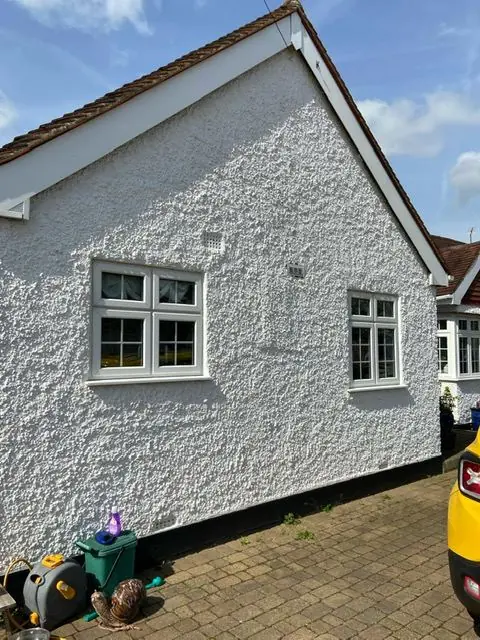
Moulton Leys borders Moulton Park, about 130 metres up and among the highest ground in Northampton. Rendered panels on the exposed faces of houses here take rain sideways, and water that gets behind the paint through a crack or a failed sill joint shows up as blistering or a dark tide line. Our prep on these panels concentrates on the junctions: where render meets a window frame, a sill, a meter box or the brick below. Those edges get raked out, filled with an exterior filler and primed where needed before two coats of breathable masonry paint.
The step-by-step process for algae, chalking and cracks is on our main render and masonry painting page, and our guide to painting render and roughcast covers product choice in more detail.
Moulton Lodge: listed stone that should stay unsealed
The one historic building recorded within Moulton Leys is Moulton Lodge on Moulton Way, a house of the 17th or 18th century, built in squared stone rubble with stone-coped side gables and an arched recessed porch. It has been listed Grade II since January 1976.
| Building | Wall material | What that means for paint |
|---|---|---|
| Moulton Lodge, Moulton Way | Squared stone rubble (listed) | Listed building consent needed for works; no plastic masonry paint on the stone |
| Estate homes on the closes | Not recorded; surveyed on site | Rendered panels take breathable masonry paint; no heritage consent required |
Old rubble stone needs to let moisture escape. Sealing it with a plastic-based masonry coating traps damp in the wall and can push the stone face off over time. If you are responsible for the Lodge, we can talk through what consent and which materials would be appropriate before anything is agreed.
Masonry on the school, care home and fire station
The estate’s non-residential buildings are Kings Meadow School, a nursery, Leys Residential Home, an education centre on Quarry Park Close and Moulton Fire Station on Moulton Way. Any masonry work on those sites happens around people who cannot simply leave. We would plan it in phases, keep scaffold or ladder zones fenced off, choose low-odour products where windows are open nearby, and fit school work to holidays where possible.
No consent needed for the houses
Because no conservation area covers Moulton Leys, repainting the render on an estate house, even in a new colour, does not need heritage consent. Moulton village to the north is a different matter. More on the estate is on our Moulton Leys page.
Last updated by Dean, DH Painter & Decorator.