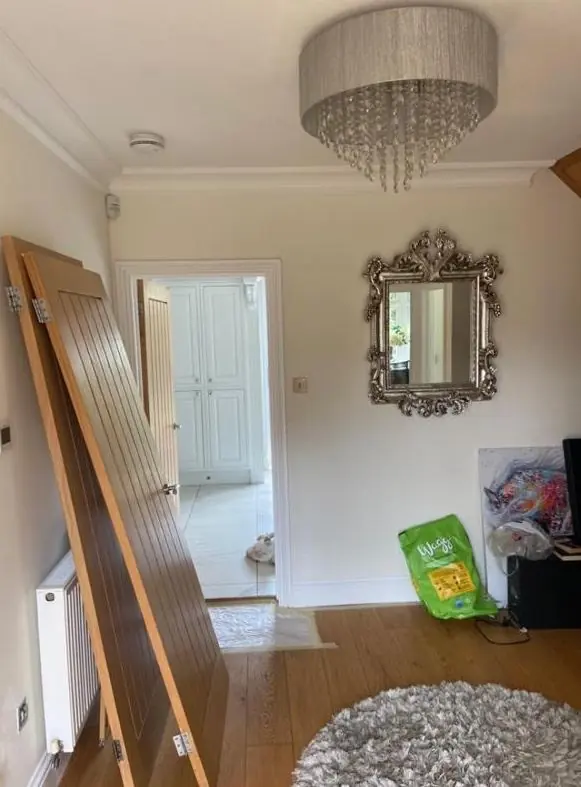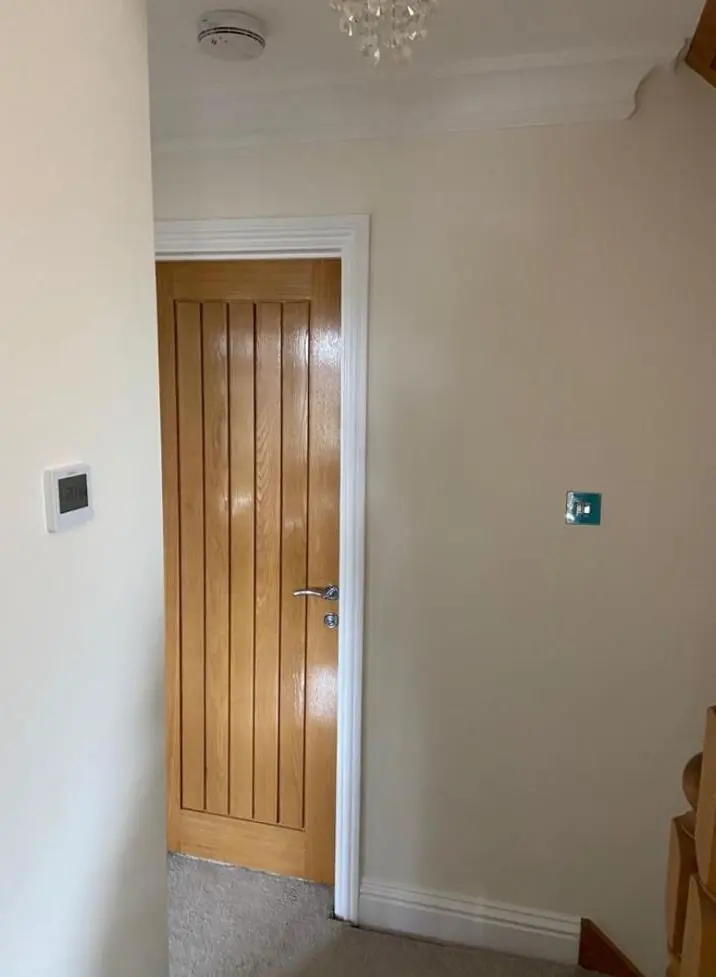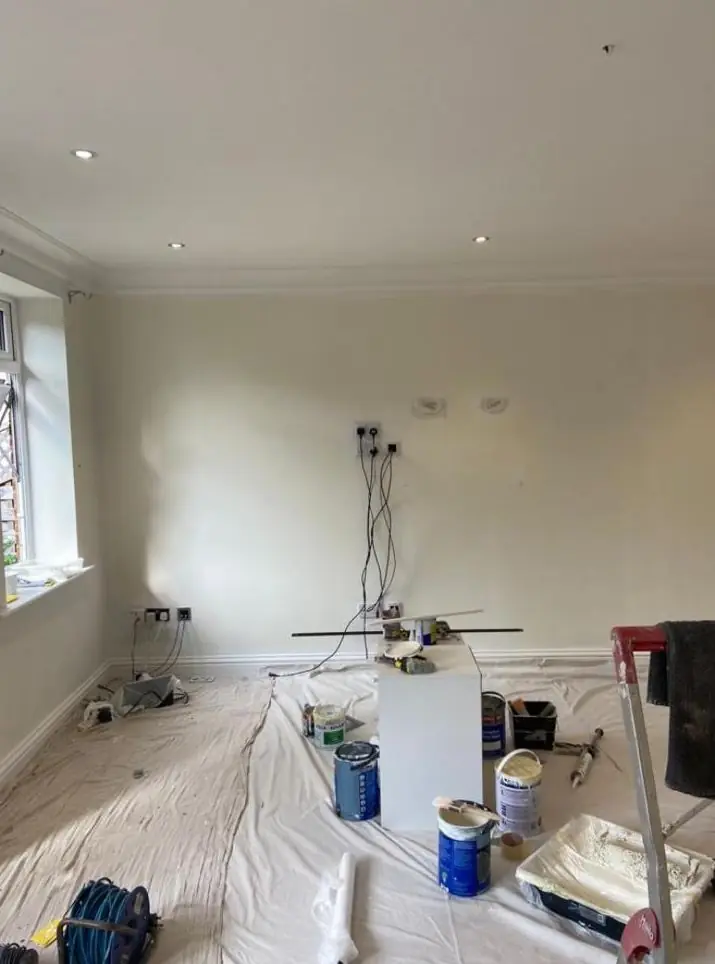
We hang wallpaper in homes across Moulton Leys, on Northampton's northern edge in NN3, around 3.3 miles from the town centre. The estate's flat plasterboard walls suit paper well, provided the board is sealed first and any settlement cracks are filled.
Why paper behaves well on these walls
Older houses with lath-and-plaster walls fight a paperhanger at every corner: walls lean, corners wander out of true and a pattern drifts off the vertical by the time it reaches the far side of the room. Modern houses on the estate’s courts are a different proposition. Their plaster and plasterboard walls are flat and their corners close to square, so a pattern can be matched along a full wall without visible creep, and lining paper is often unnecessary on board that is sound.
That makes the estate a good place for bold, large-repeat designs and for geometric papers that show every error on a crooked wall. The full process, from stripping to trimming the last length, is covered on our main wallpaper hanging service page.
The catch with bare plasterboard
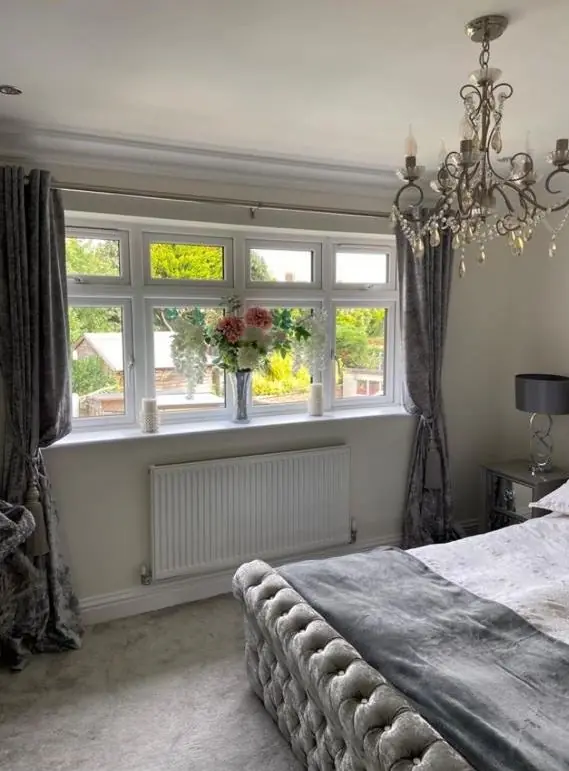
Paste applied straight onto unsealed plasterboard grips the paper face of the board itself. It hangs well, but years later, when someone tries to strip it, the board’s facing tears away with the paper and the wall needs skimming before anything else can go up. On these houses we seal the wall with a suitable primer or size before the first drop goes on, so the paper can come off cleanly when tastes change.
The second thing to check is the line of every taped joint. Where the house has settled and a hairline crack has opened along a joint, paper hung over it will eventually split along the same line. Those cracks are opened out, filled with a flexible filler and sanded before papering starts.
Choosing the wall in a room with no fireplace to frame
Period houses hand you an obvious feature wall in the chimney breast. Many modern rooms have nothing of the sort, so the choice comes down to where the eye lands. In practice that usually means:
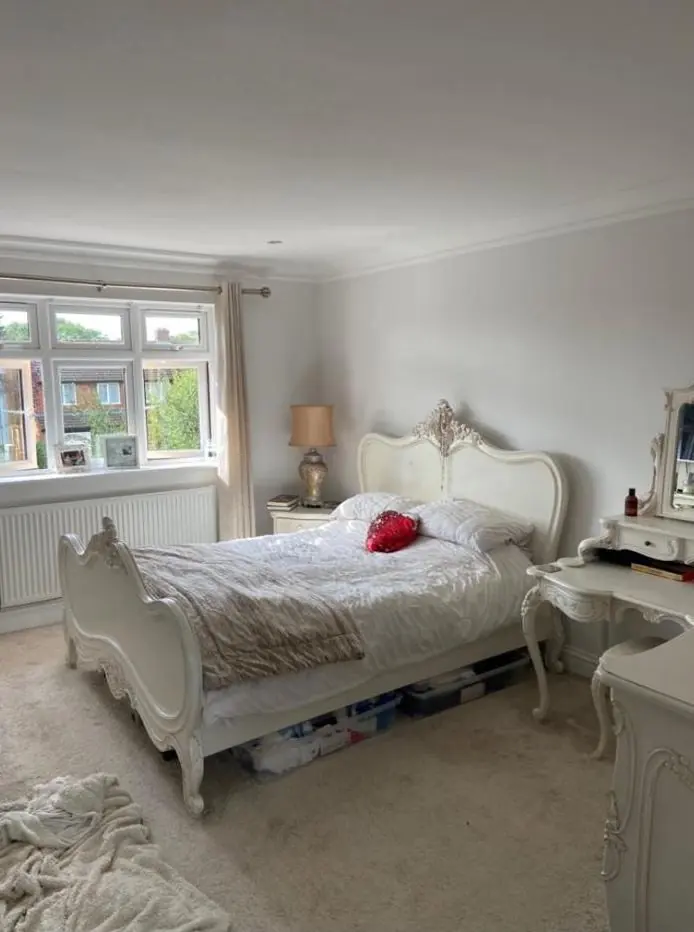
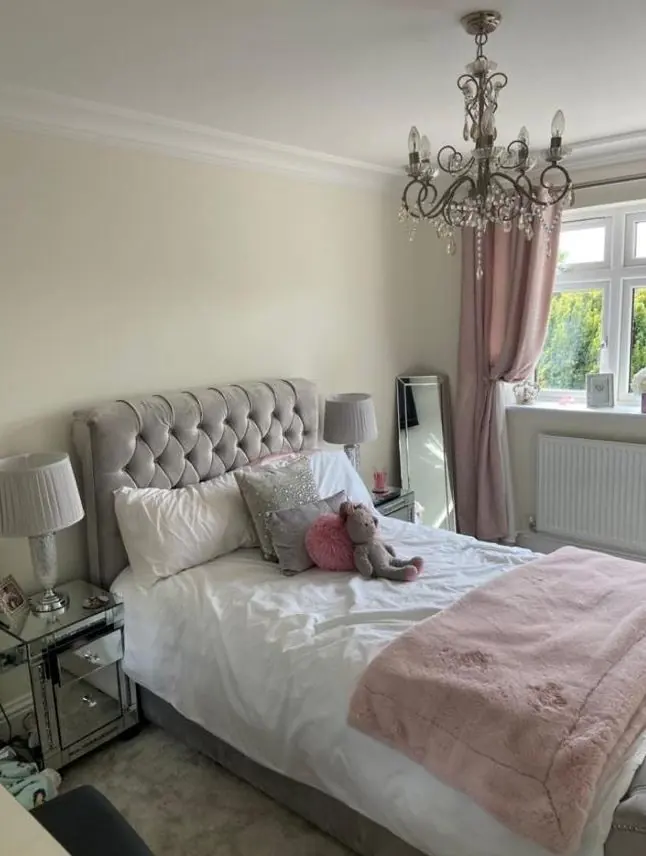
- the wall behind the head of the bed in a bedroom;
- the wall you face when you walk into a lounge, rather than the one behind you;
- the end wall of a dining area in an open-plan ground floor, which gives the space a defined edge;
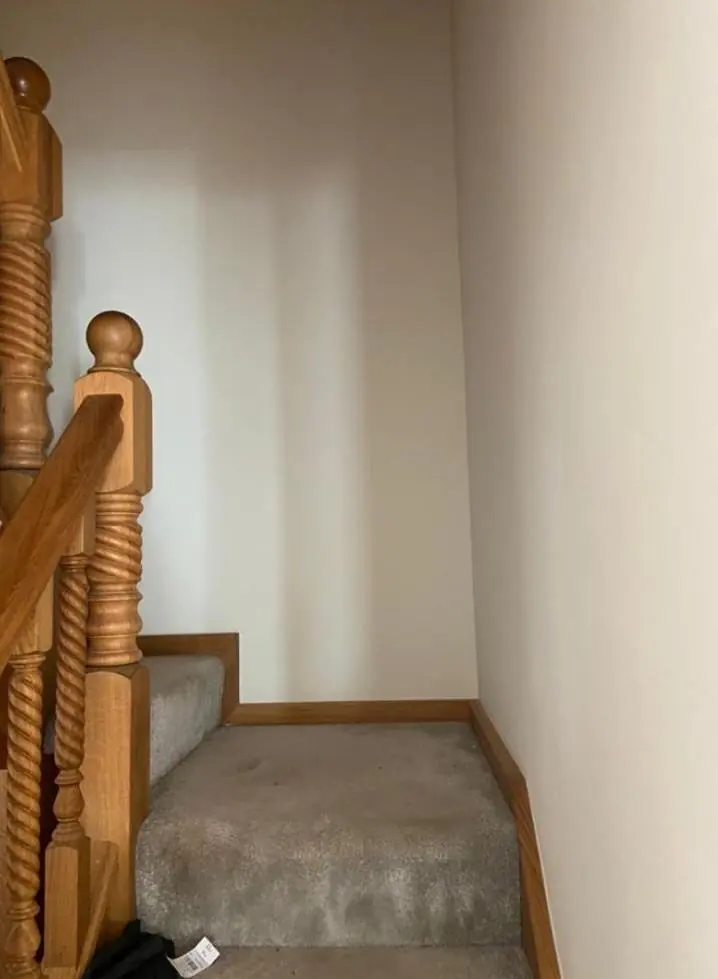
- a stairwell wall, where a full-height drop gives a pattern room to show.
Stairwells take the most planning. Long drops above a straight flight need a stable platform across the stairs, and the pattern has to be set out from a true vertical so it reads level from the hall below. If you are weighing up which paint colour should sit alongside a patterned wall, Dean can help with that on the same visit, and our colour and finish advice page explains how.
Kitchens, bathrooms and busy households
In kitchens and bathrooms we steer towards vinyl or washable non-woven papers that cope with steam and splashes. In hallways where bikes, school bags and pushchairs brush the walls every day, a scrubbable paper or a painted lower section with paper above holds up far better than a delicate print. Paste-the-wall non-woven papers are also worth considering anywhere you might redecorate within a few years, as most strip off dry in whole sheets.
Getting started
Paper choice drives the quantity, so it helps to have a design in mind before Dean measures up. He will check the walls, count the drops against the pattern repeat and give you a written quote. Bring your samples or a link to the paper. Other work we take on locally is summarised on our page for Moulton Leys.
Last updated by Dean, DH Painter & Decorator.