Dean carries out decorative and period finishes in Bugbrooke, about 5.1 miles west of Northampton. In this village that mostly means traditional finishes on panelling, shutters and joinery in the larger period houses, and knowing when an old wall needs limewash instead of modern paint.
Panelling, shutters and joinery in the bigger period houses
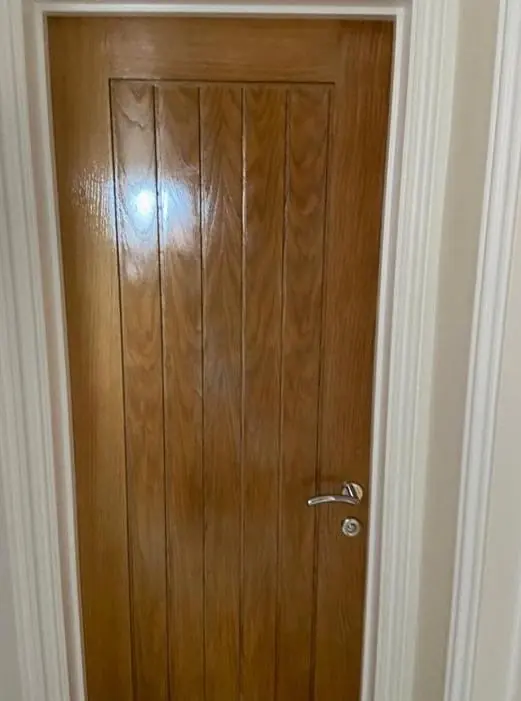
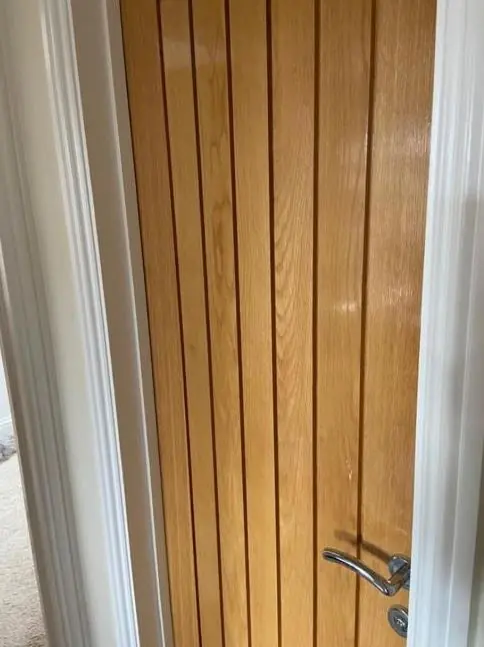
Bugbrooke’s decorative work is mostly about period interiors, not modern feature walls. New Creation Hall, the former rectory built in yellow brick in 1815, has 12-pane sashes with shutters, deep bracketed eaves, a stone Doric porch and a stone staircase with iron balusters. The Manor House, a 17th-century farmhouse remodelled in Tudor style in 1881, has leaded stone-mullioned windows. Rooms of these dates usually call for joinery picked out in a traditional way: panel mouldings in a slightly different tone from the field of the panel, shutters painted to match the window joinery, and a sheen chosen to suit the period.
Picking out needs restraint. Two closely related colours, or one colour in two sheens, often suits a Georgian room better than strong contrasts. Mouldings and beads clogged with decades of paint come up crisper when the build-up is eased out by hand first, a slow job that makes a big difference. Our decorative finishes service page describes the other effects and techniques we use.
Limewash, the finish cob and old render need
Bugbrooke has a rare surface: the 18th-century cob wall attached to The Homestead, about 1.5 metres high and 44 metres long, with a pantile coping. Cob is built from earth, and modern masonry paint is the wrong finish for it. Seal it and moisture gets trapped inside, and the wall can soften and fail. Cob needs limewash or nothing at all. The same thinking applies to old render over stone and brick, such as the rendered fronts of 3 and 5 Church Lane and the rendered plinth of the Dower House, which need breathable mineral or lime-compatible finishes.
Limewash goes on in several thin coats, dries lighter than it looks when wet, and gives the soft, chalky surface you see on old walls. It needs reapplying more often than modern paint. If you own a cob or lime-rendered wall, talk to us before buying any paint. We’ll tell you honestly whether the job suits us or is better passed to a lime specialist, and on a listed building whether consent may be needed first.
Beams, chamfers and cottage detail
In the 17th and 18th century ironstone cottages along High Street, West End and Church Lane, the decorative interest is quieter. Chamfered spine beams, timber lintels and plank doors carry the character, and the decorative choice is often what to leave alone. A beam that has been limewashed in the past can be refreshed in the same finish, and one that has been left bare should usually stay bare. Painting old timber with modern gloss is difficult to undo.
Modern homes in the village
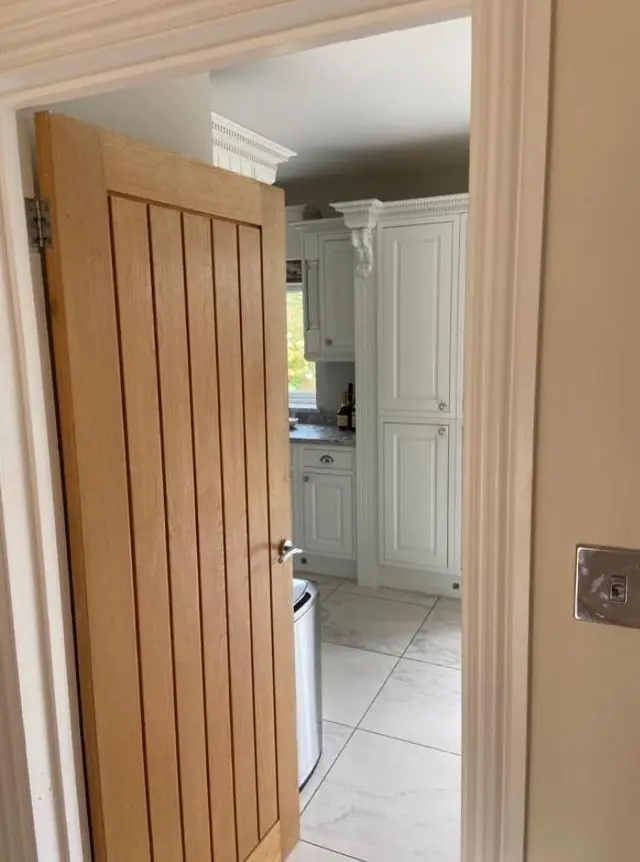
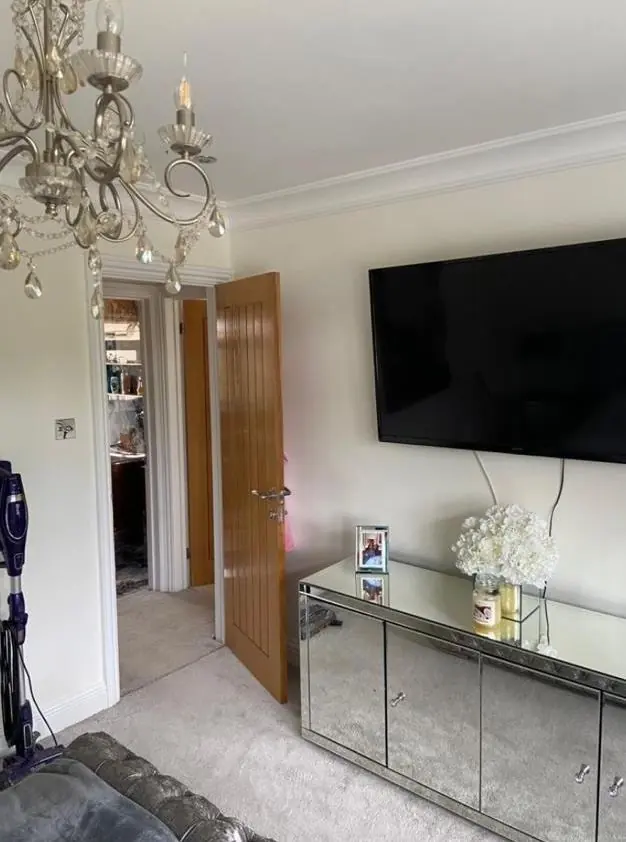
Later houses outside the historic core, on streets such as Levitts Road and Meadway, are where conventional decorative finishes fit: a painted panelled wall in a hallway, a two-tone split on a stair wall, or a chimney breast picked out in a deeper colour. They are built of modern materials, so modern paints are fine there.
| Surface | Suitable finish | Avoid |
|---|---|---|
| Cob garden wall | Limewash, or left bare | Any modern masonry paint |
| Old render on stone or brick | Breathable mineral or lime-compatible paint | Plastic masonry coatings |
| Georgian shutters and panelling | Traditional picking out in close tones | Harsh high-gloss contrasts |
| Bare ironstone fronts | Nothing; leave unpainted | Paint of any kind |
For how we cover the village, see the Bugbrooke area page.
Last updated by Dean, DH Painter & Decorator.