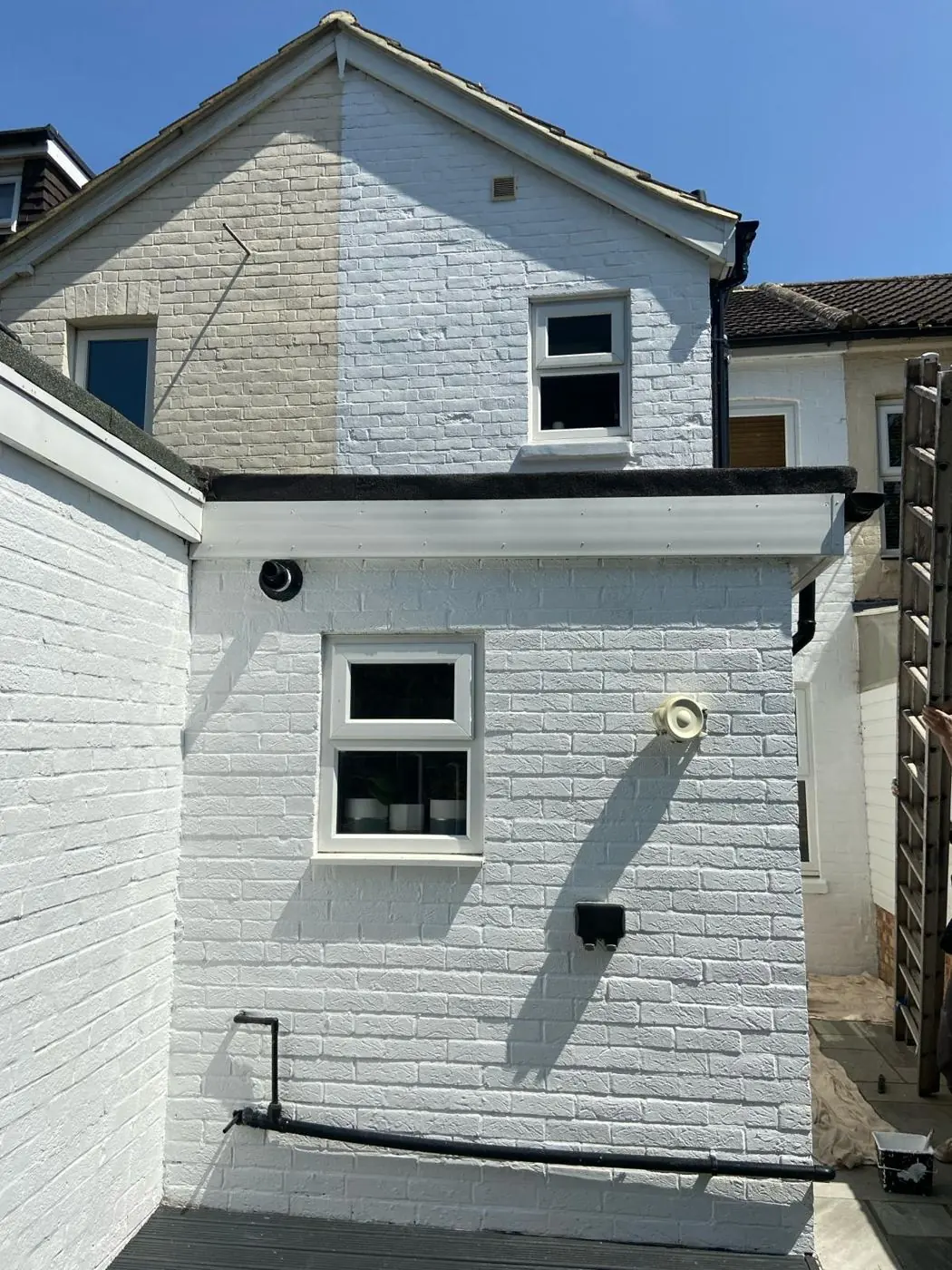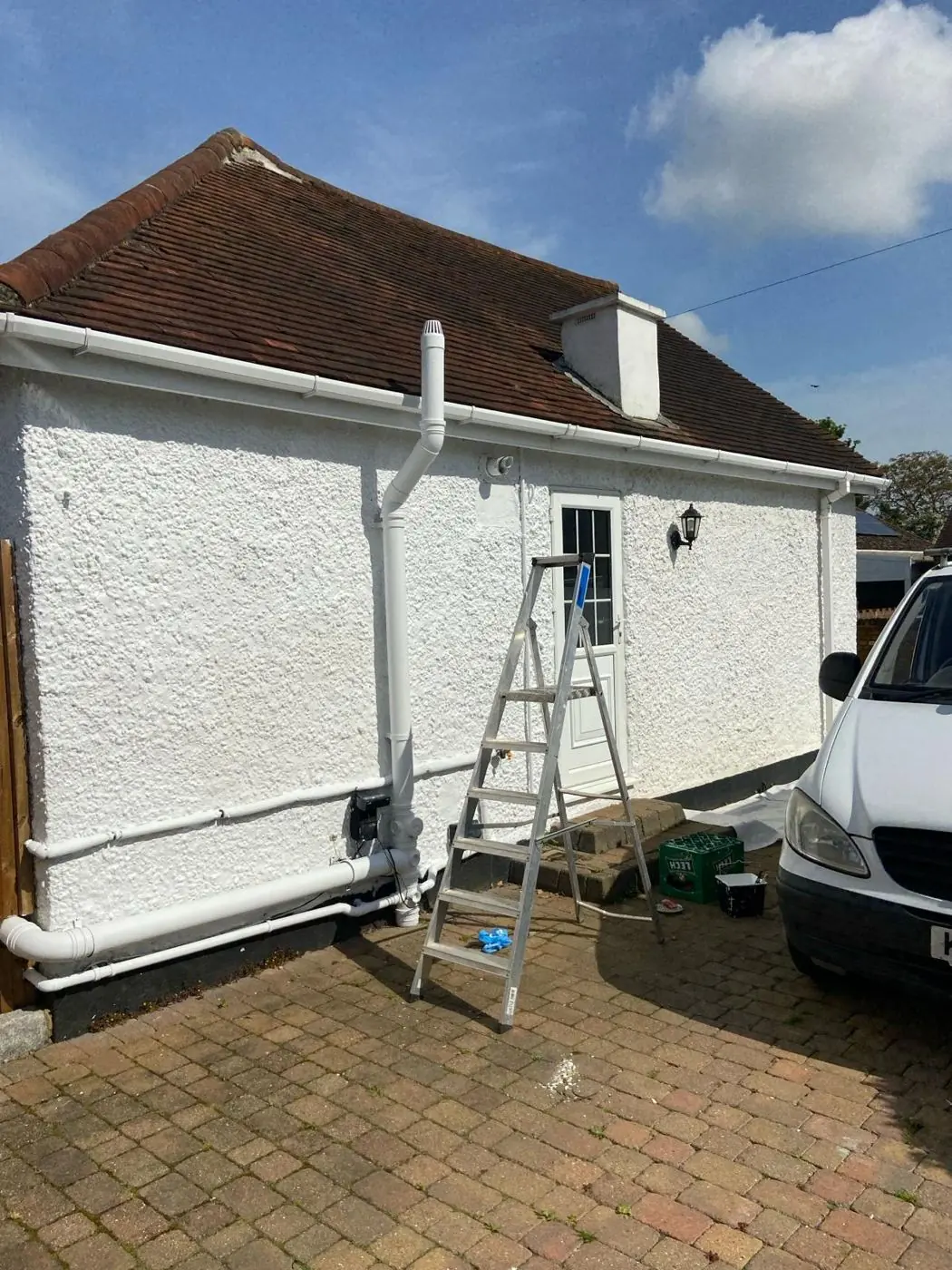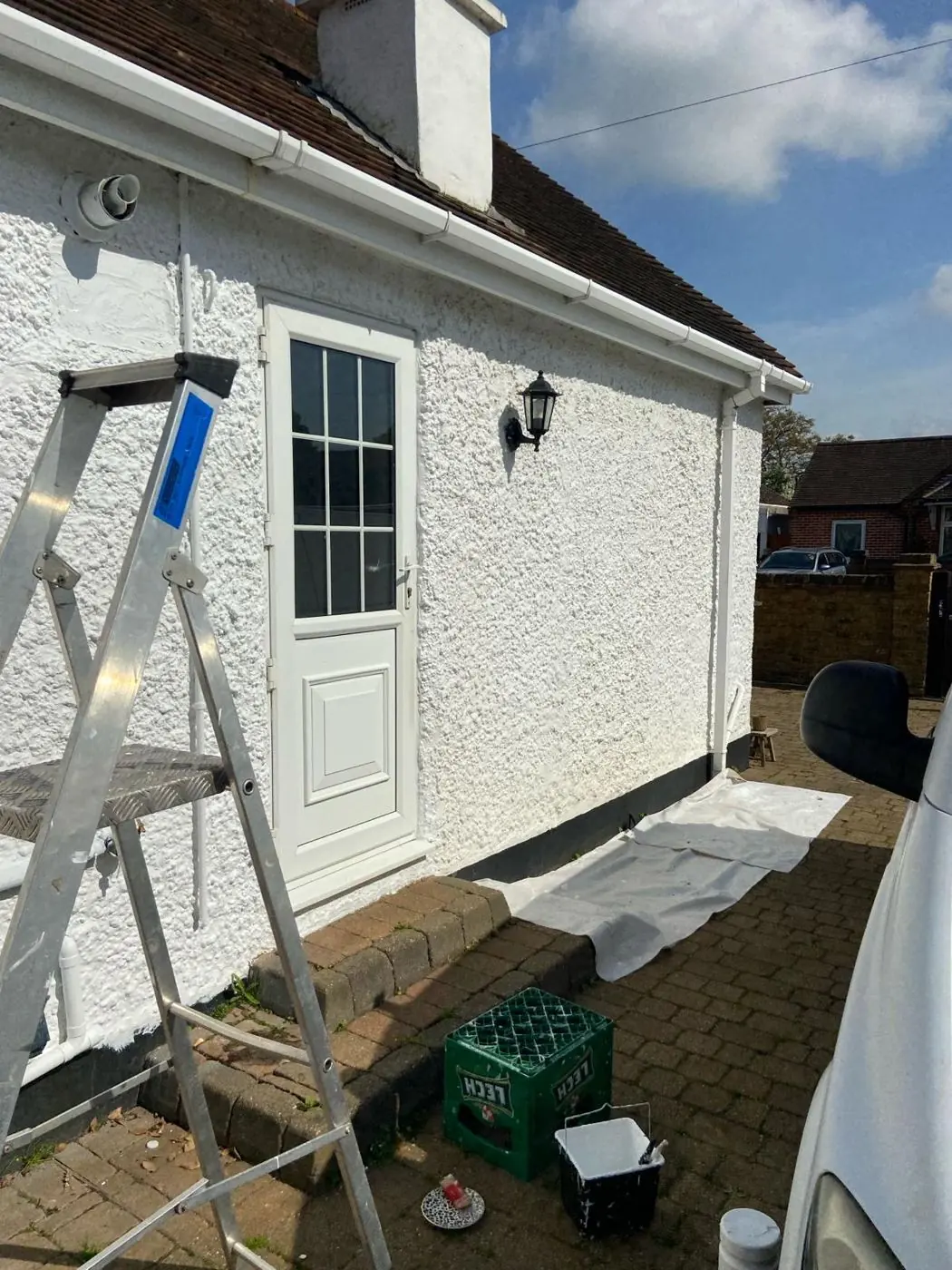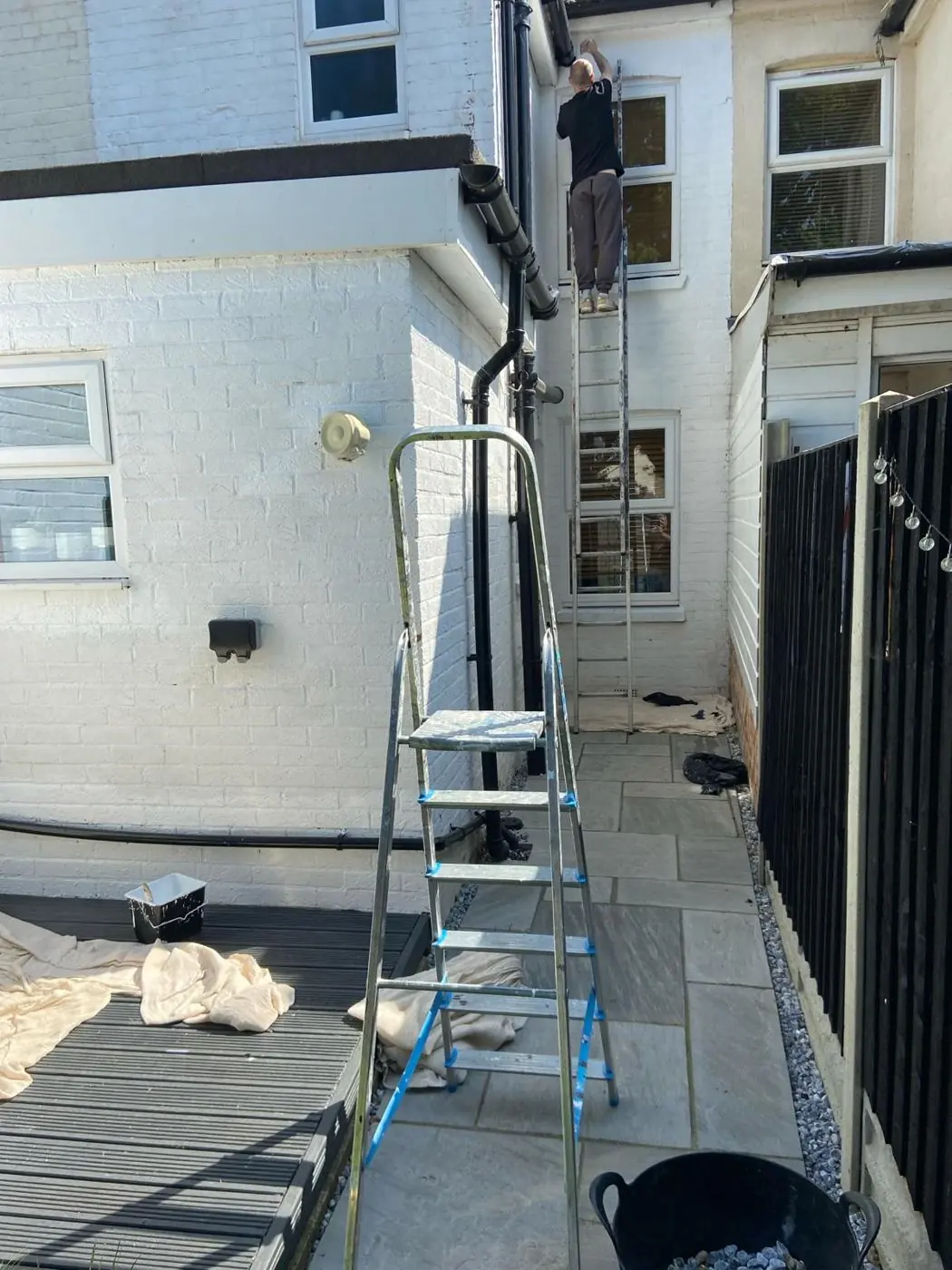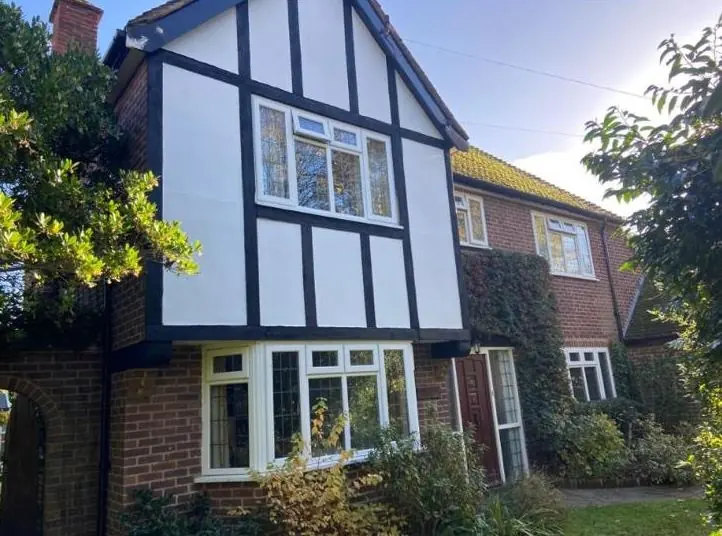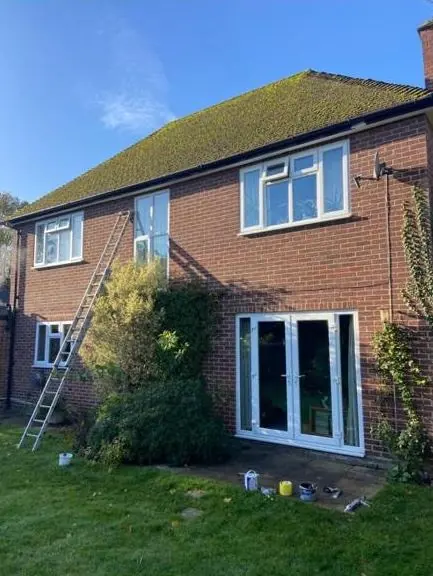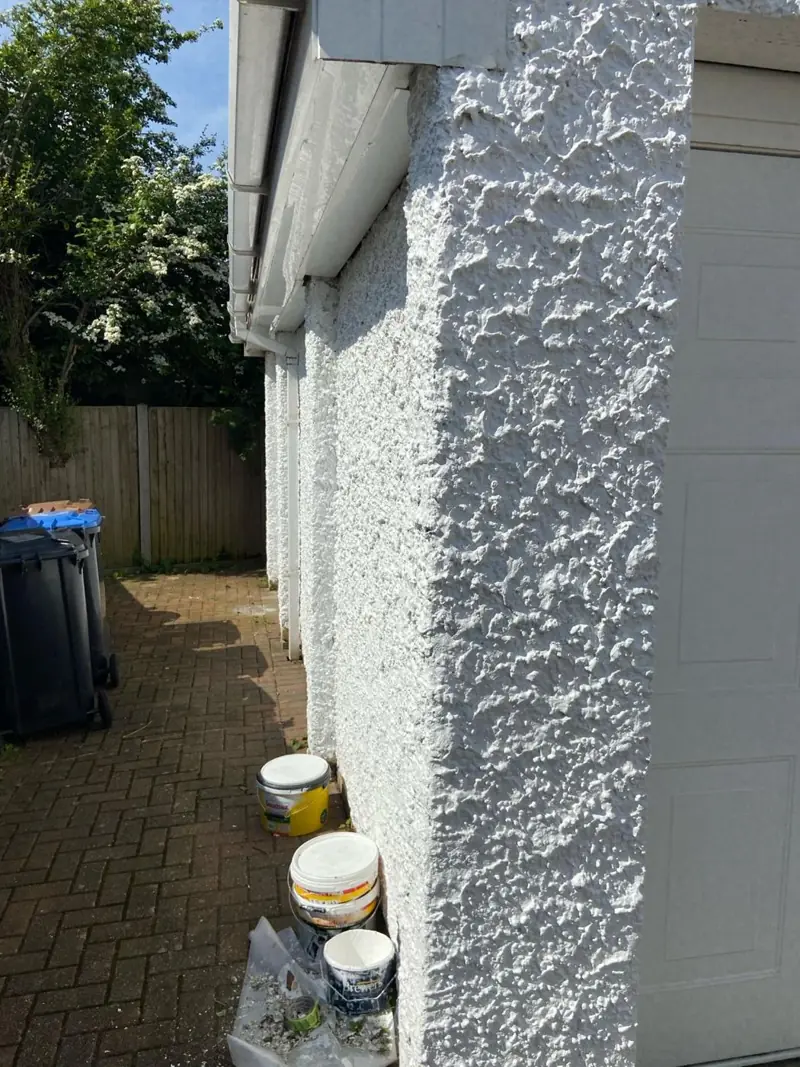
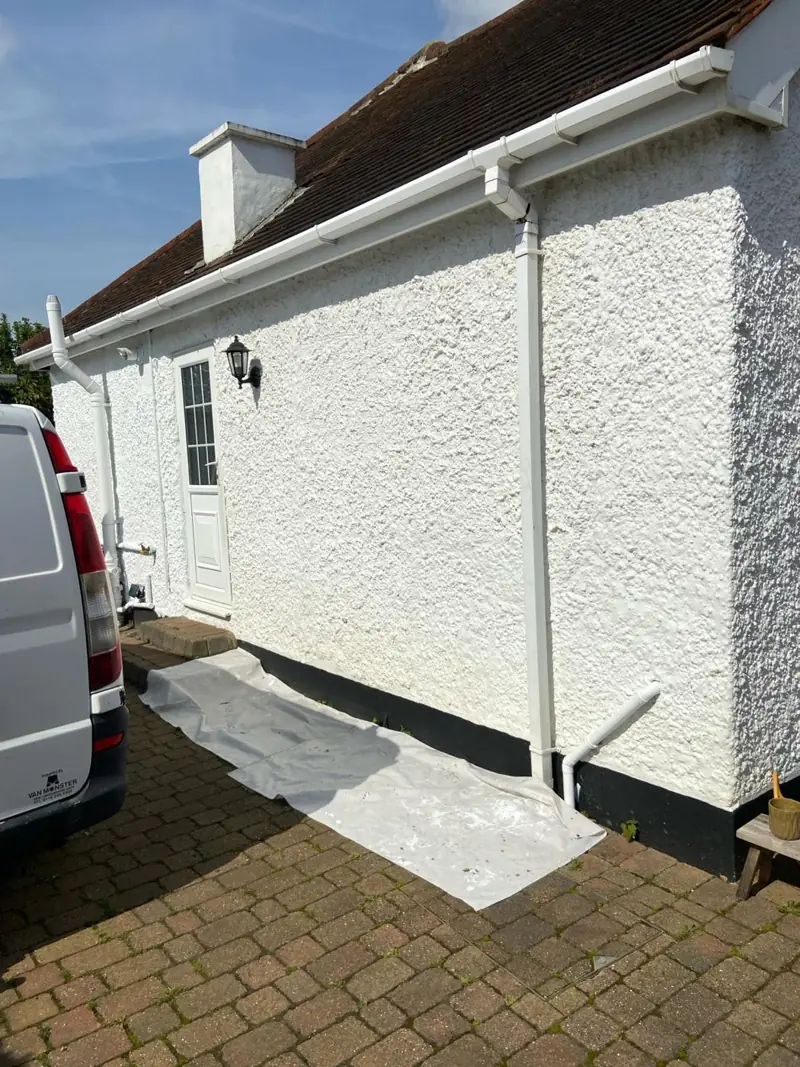
Dean paints fascias, soffits, gutters and downpipes in Bugbrooke, NN7, about 5.1 miles west of Northampton. Many listed cottages here have stone-coped gables and no bargeboards, so most roofline work is on later housing and on houses with deep timber eaves.
Why the old core has so little roofline timber
Look up at the 17th and 18th century cottages on High Street, West End and Ace Lane and you will often see stone-coped gables with kneelers rather than timber bargeboards. The roofs are slate or plain tile with brick stacks, and where a gable is coped in stone there is no bargeboard to paint at all. On these houses the roofline job, if there is one, tends to be the gutters, downpipes and brackets, painted to protect the iron or to tidy plastic that has faded.
That is worth knowing before you ask for a quote. We will tell you plainly if there is little to do up top, and suggest whether the windows and doors below would benefit more from attention. Our Bugbrooke page sets out how the village’s older and newer housing differ.
Deep bracketed eaves on the former rectory
The clearest exception in the conservation area is New Creation Hall, the former rectory built in 1815 in yellow brick. Its deep bracketed eaves are a feature of the building, and painting them is careful, slow work:
- Each bracket is cut in by brush, because spraying or rolling would leave runs in the recesses and paint on the brick.
- The soffit boards behind the brackets are checked for soft timber, which tends to start where gutters have overflowed.
- Old paint is taken back with care, since joinery on a building of this age can carry lead-based layers that must not be dry-sanded.
- Colour stays as existing unless consent says otherwise, as the hall is Grade II listed.
Eaves at this height usually mean a scaffold or tower rather than ladders, and the scaffold has to sit clear of any protected trees in the conservation area. We assess both on the quote visit.
Roof edges on Levitts Road, Meadway and Camp Close
Outside the core, the later streets are where most fascia and soffit painting in Bugbrooke happens. The sources we use do not record when these houses were built or what their roof edges are made of, so the first job is to look. Some homes will still have painted softwood boards, others will have uPVC, and some a mix where boards have been replaced on one elevation only.
| What we find | What we would usually suggest |
|---|---|
| Painted timber, paint flaking | Scrape, spot-prime bare wood, undercoat and top coat |
| Timber with soft or rotten sections | Repair or replace the section before painting, then paint the whole run |
| Faded uPVC | Clean and paint with a coating made for plastic, if you want a colour change |
| Cast iron gutters | Wire brush, treat rust, prime with a metal primer and top coat |
The step-by-step process is on our main fascia and soffit painting page.
Leaves, damp and what sits below the gutter
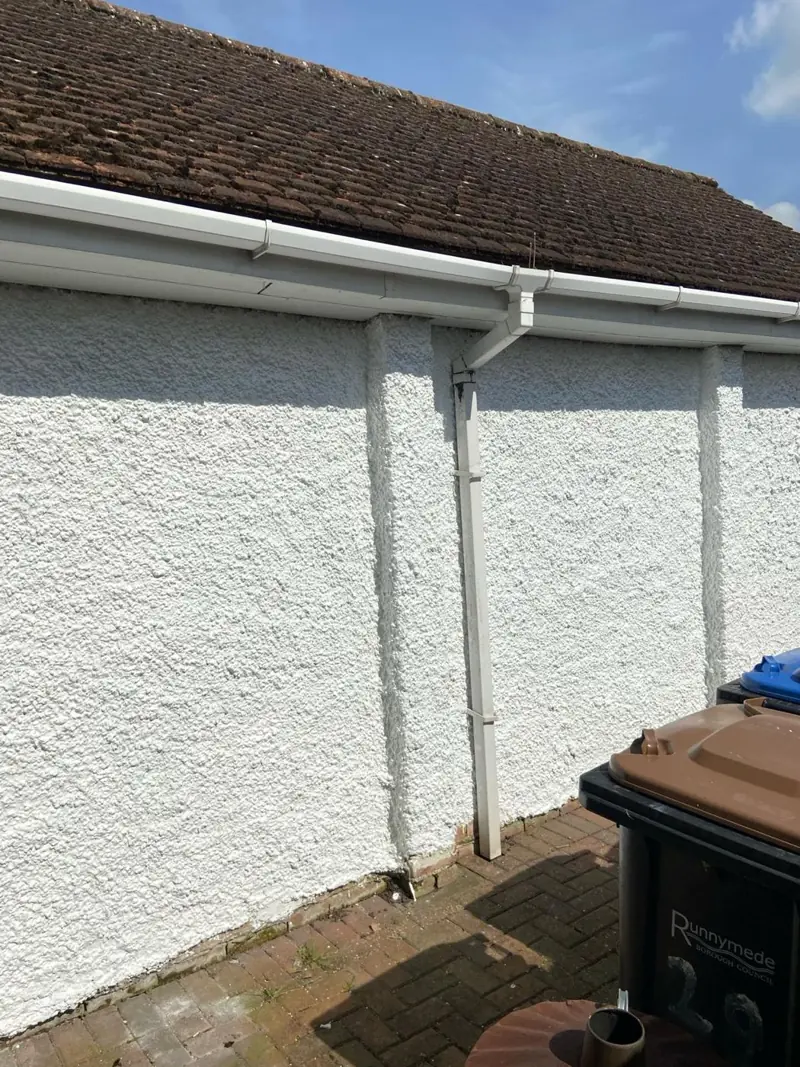
Trees in Bugbrooke’s conservation area are protected, so they cannot simply be cut back. Leaves blocking gutters are one of the commonest reasons fascias rot, because the overflow runs straight down the face of the board. Clearing the gutters before painting, and keeping them clear, does more for the timber than an extra coat. Houses near the Hoarestone Brook and on the Nene side of the ridge also stay damp for longer after rain, so we make sure boards are dry before priming. If you are weighing up the cost, our painter and decorator cost guide explains what affects a roofline quote.
Last updated by Dean, DH Painter & Decorator.