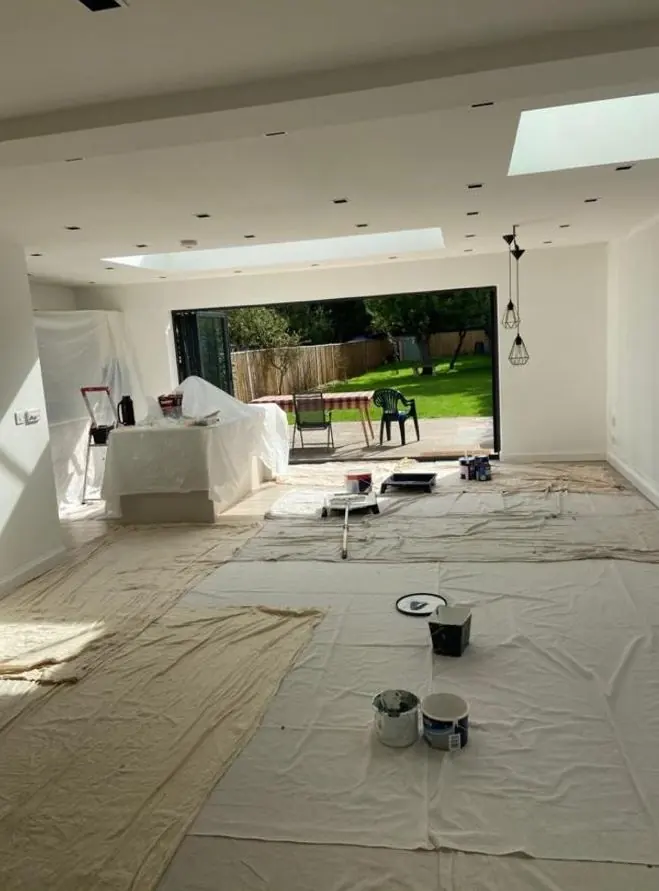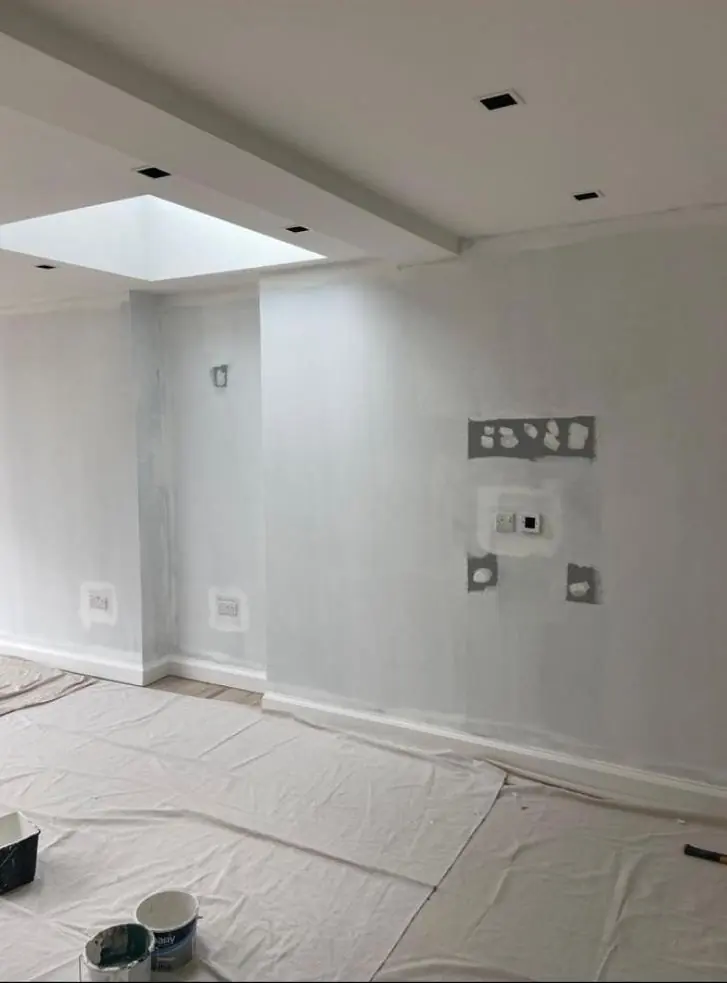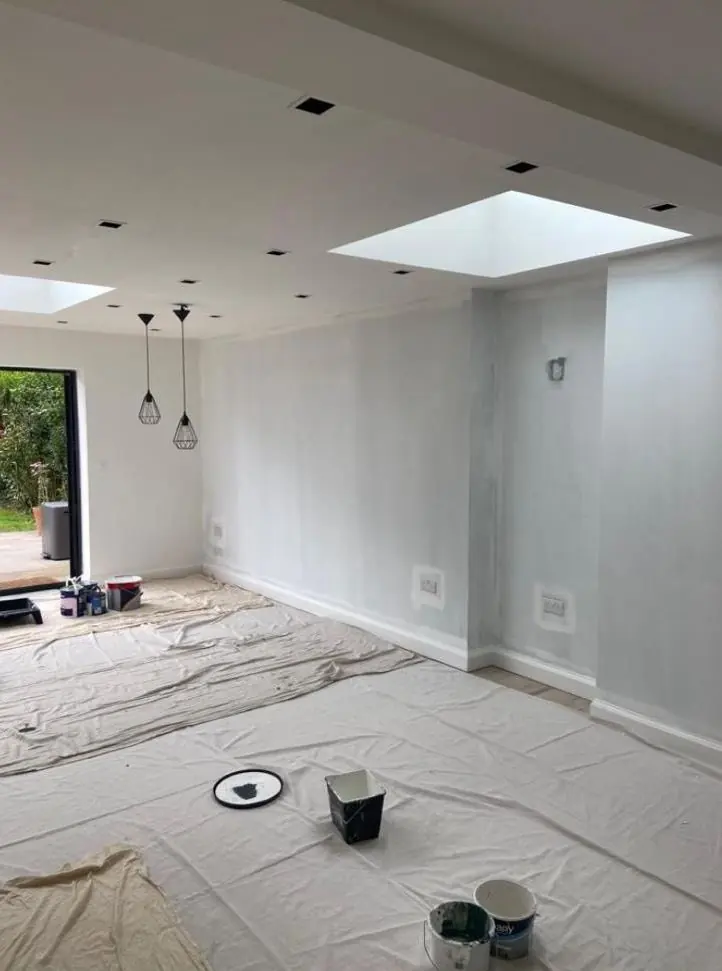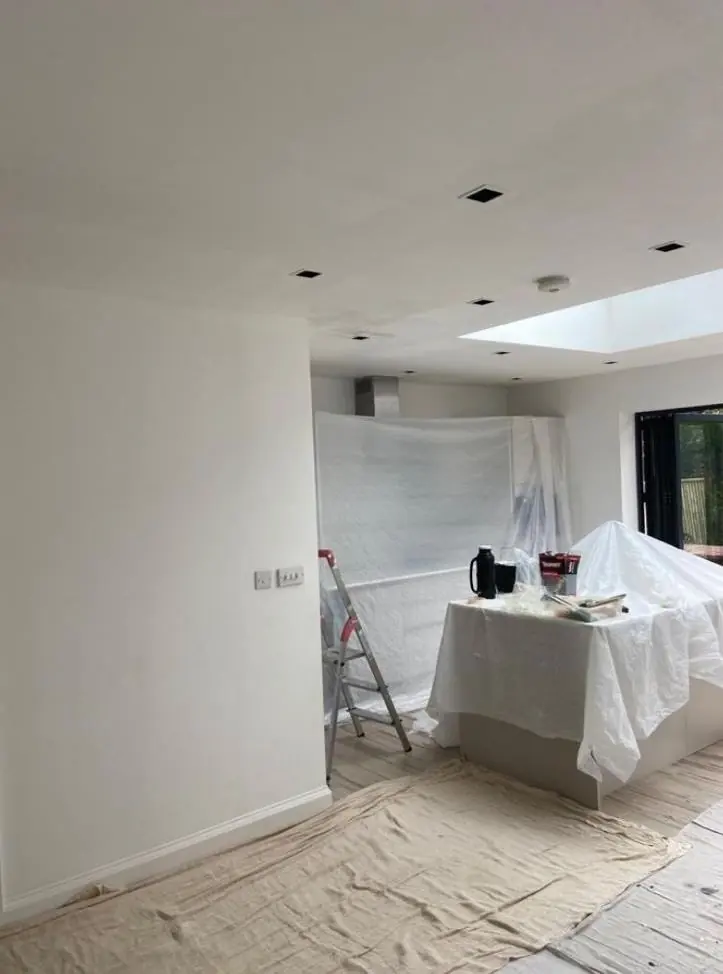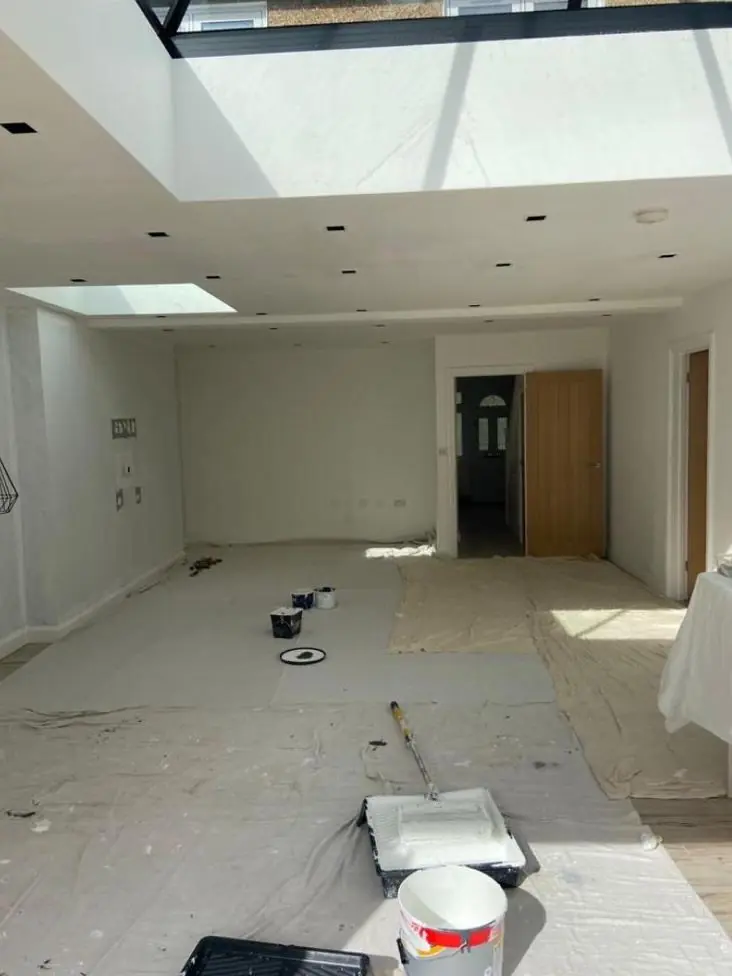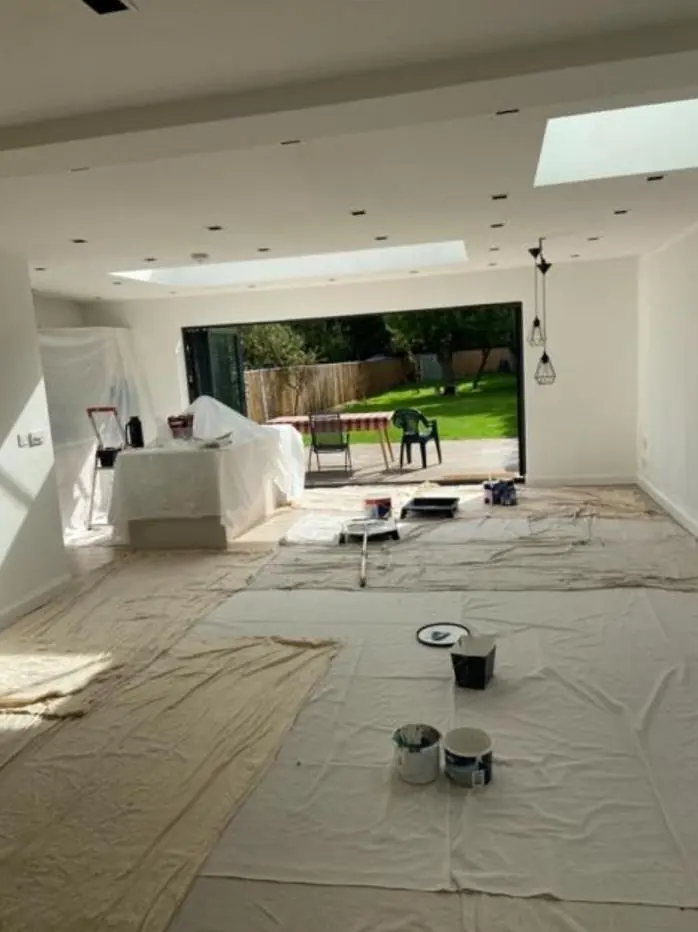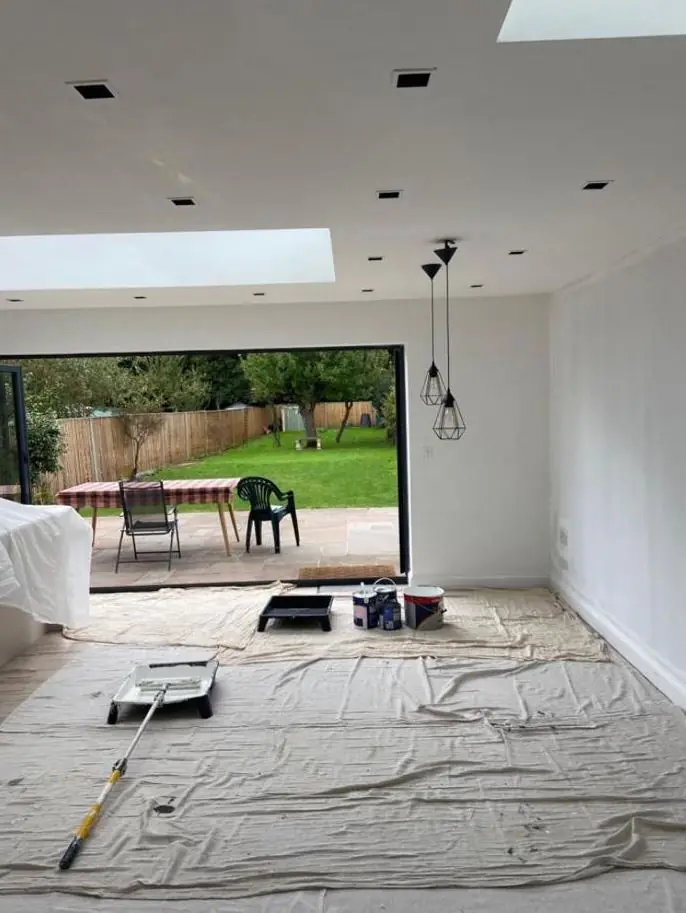
DH Painter & Decorator decorates newly plastered rooms, extensions and conversions in Bugbrooke, about 5.1 miles west of Northampton. Dean seals new plaster with a mist coat before finishing, and uses breathable paints where new work joins old lime-plastered walls in the village's historic houses.
Two kinds of wall in one village
Bugbrooke has an unusual mix. The conservation area, designated in 1991, holds 32 listed buildings, most of them 17th and 18th century ironstone cottages and farmhouses with lime-plastered walls inside. Around that core are later streets such as Levitts Road, Meadway and Camp Close, where a new extension or a re-skim is built and plastered in modern gypsum. The two walls behave differently when painted, and an extension on an old cottage puts them side by side.
Gypsum skim on the later houses
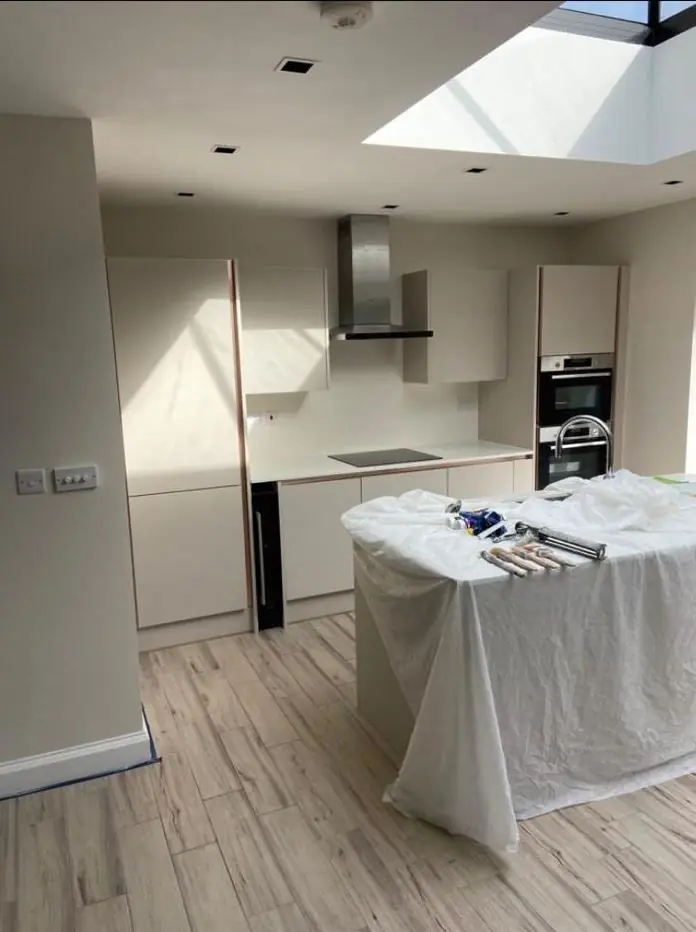
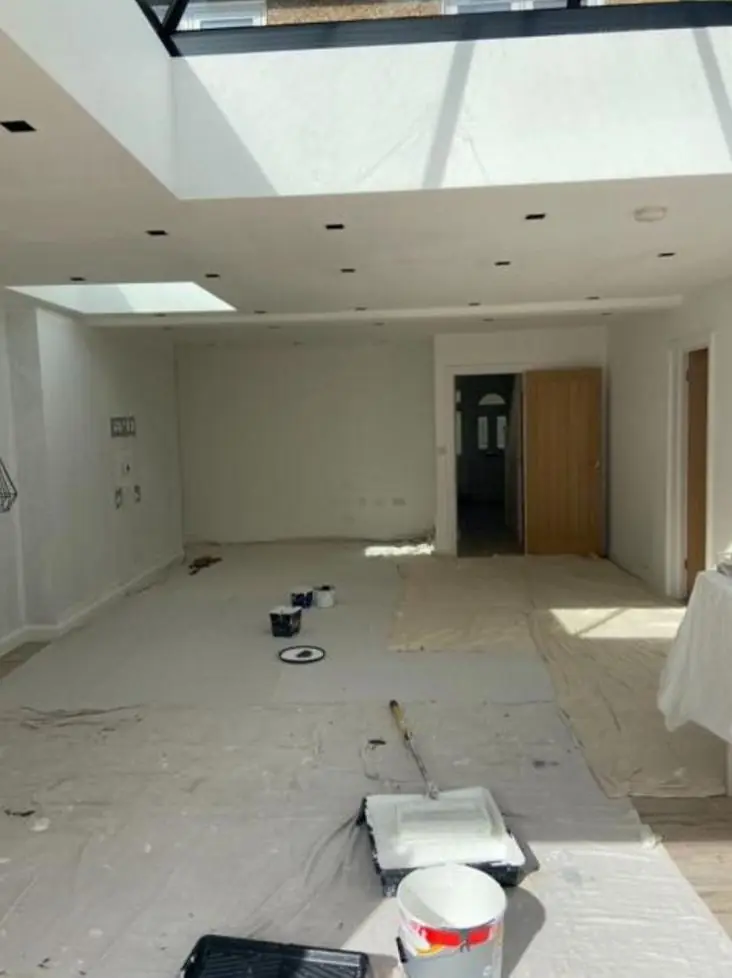
A new extension or a re-skimmed room on Levitts Road, Meadway or Camp Close follows the familiar sequence: the plaster dries right through, then takes a mist coat before any finish. Our mist coat guide explains why. The Bugbrooke point is drying time. A rear extension facing down towards the Nene valley in winter can take noticeably longer to dry than the same room in summer, so we check it rather than go by the calendar.
Extensions bring new woodwork too: skirtings, architraves, window boards and door linings, usually bare or factory primed. These need knotting where needed, priming and two coats, and the joint between new skirting and new plaster is caulked once the walls are dry.
Where new plaster meets old lime
The harder job is in the older houses. When a cottage gets a new rear room, a repaired wall or an opened-up attic, the new plaster often runs straight into old lime plaster on stone. Lime walls need to breathe. Moisture moves through the ironstone and out through the plaster, and an impermeable vinyl coat over the old wall can trap it, so the paint blisters and flakes. A common pattern is a crisp new extension next to an older room where the paint starts to fail along the junction.
| Surface | First coat | Finish |
|---|---|---|
| New gypsum skim | Mist coat once fully dry | Two coats of emulsion |
| New lime plaster | Left to cure longer, breathable paint only | Breathable mineral or clay-based paint |
| Old lime plaster next to new work | Clean, consolidate loose areas | Same breathable system carried across |
Where the two meet, carrying one breathable finish across both walls gives an even colour and avoids sealing the old wall. New lime plaster also needs longer to cure than gypsum before any paint goes on, and we will not rush it.
Openings cut through old walls bring their own snags. New lintels, reveals and patched plaster around a widened doorway or a new window in a stone wall are often a mix of materials in a small area, and each one takes paint a little differently. We prime or mist coat each patch to suit what it is made of, so the finish coats dry to one even sheen across the whole wall.
Listed homes and practical points
Many of the houses where this matters are listed, and alterations to a listed building, inside or out, usually need listed building consent before the builder starts. By the time we arrive to decorate, those decisions are made, but it is worth telling us what the consent says about finishes. Access in the old core is tight. Lanes such as Ace Lane, Church Lane and Pilgrims Lane are narrow and walled with stone, so we plan where the van goes and bring materials in by hand when we need to.
The full process, from moisture checks to final coats, is on our new plaster and extension painting page. See the Bugbrooke area page for more on the village’s houses.
Last updated by Dean, DH Painter & Decorator.