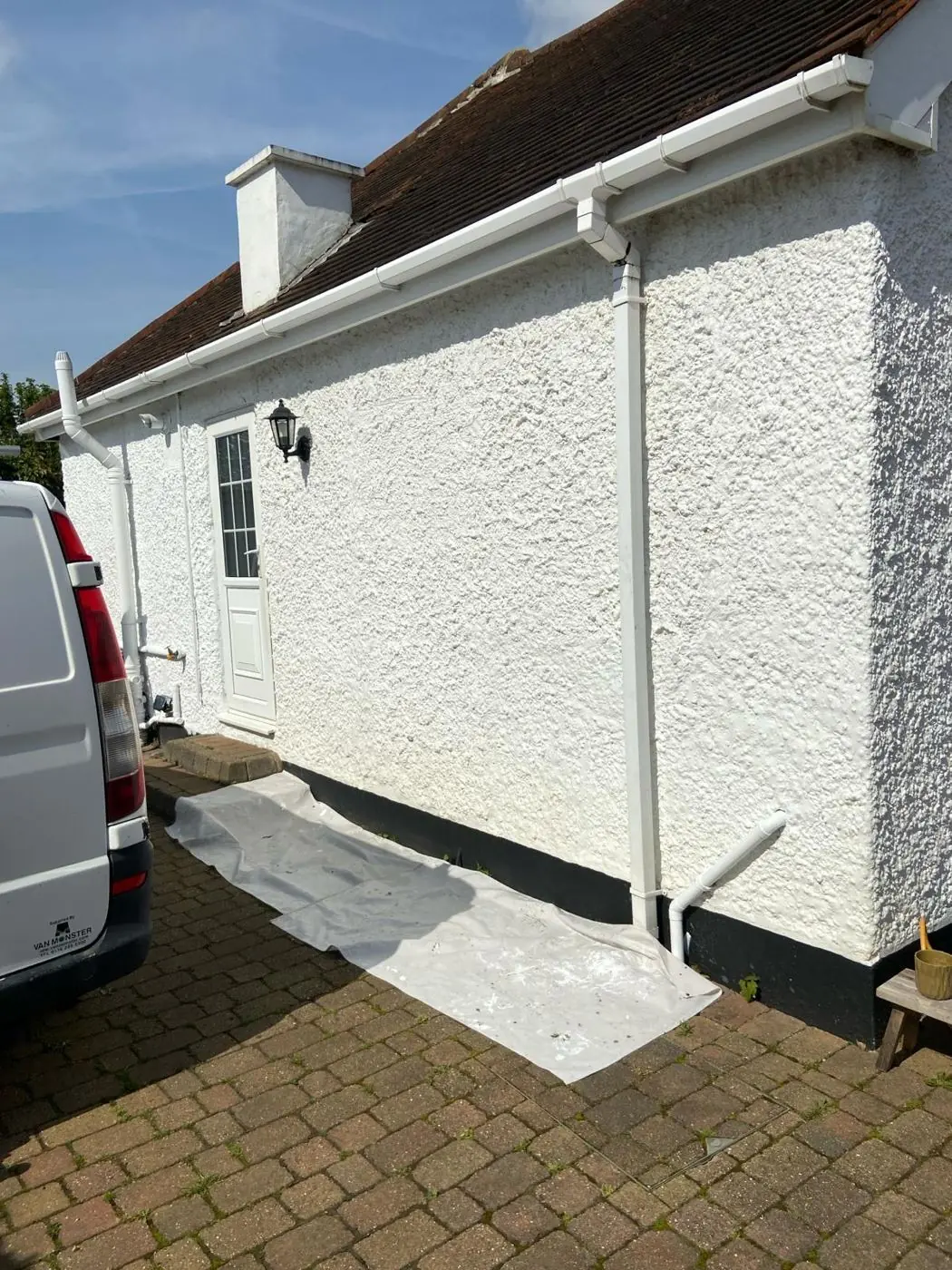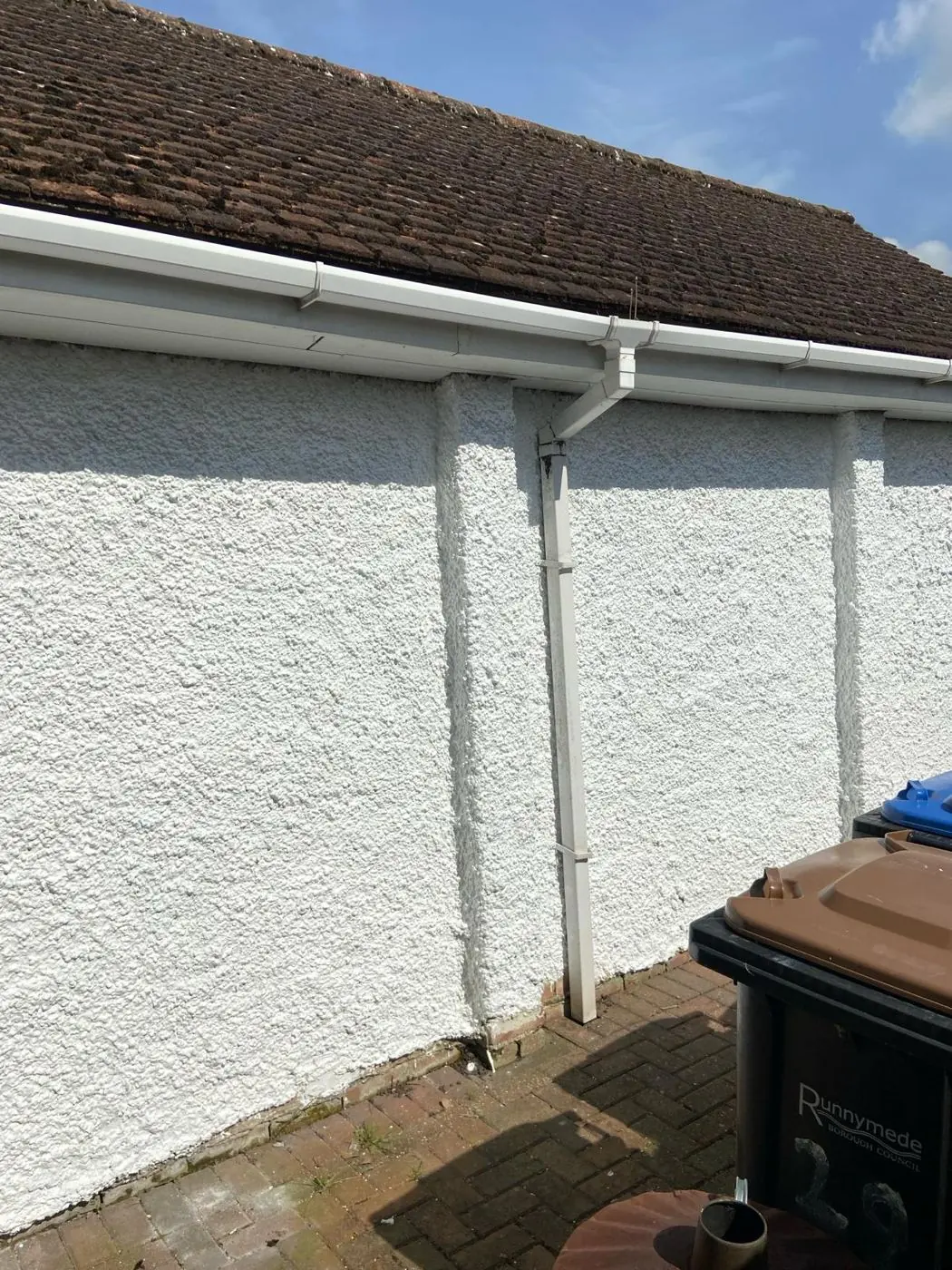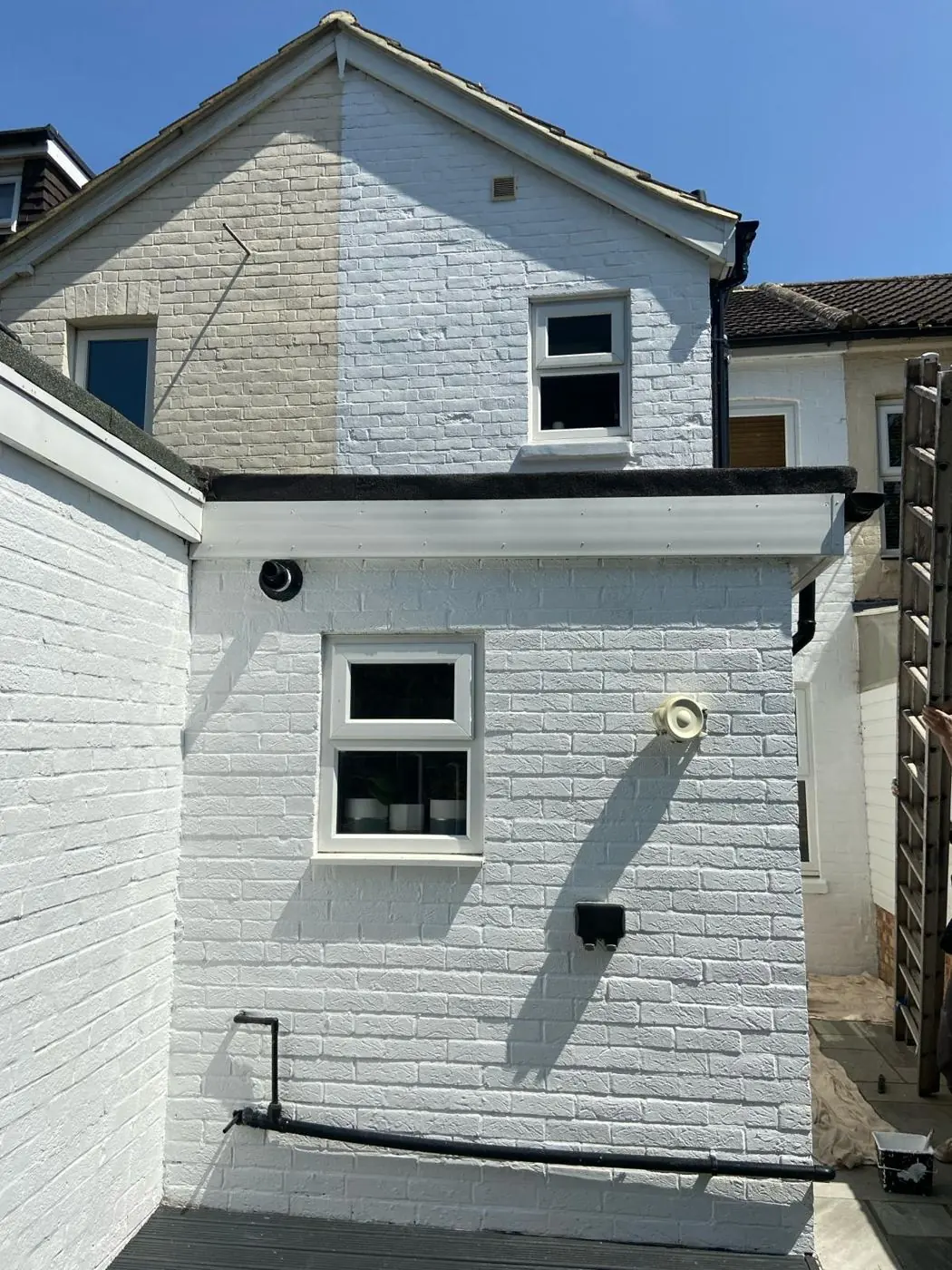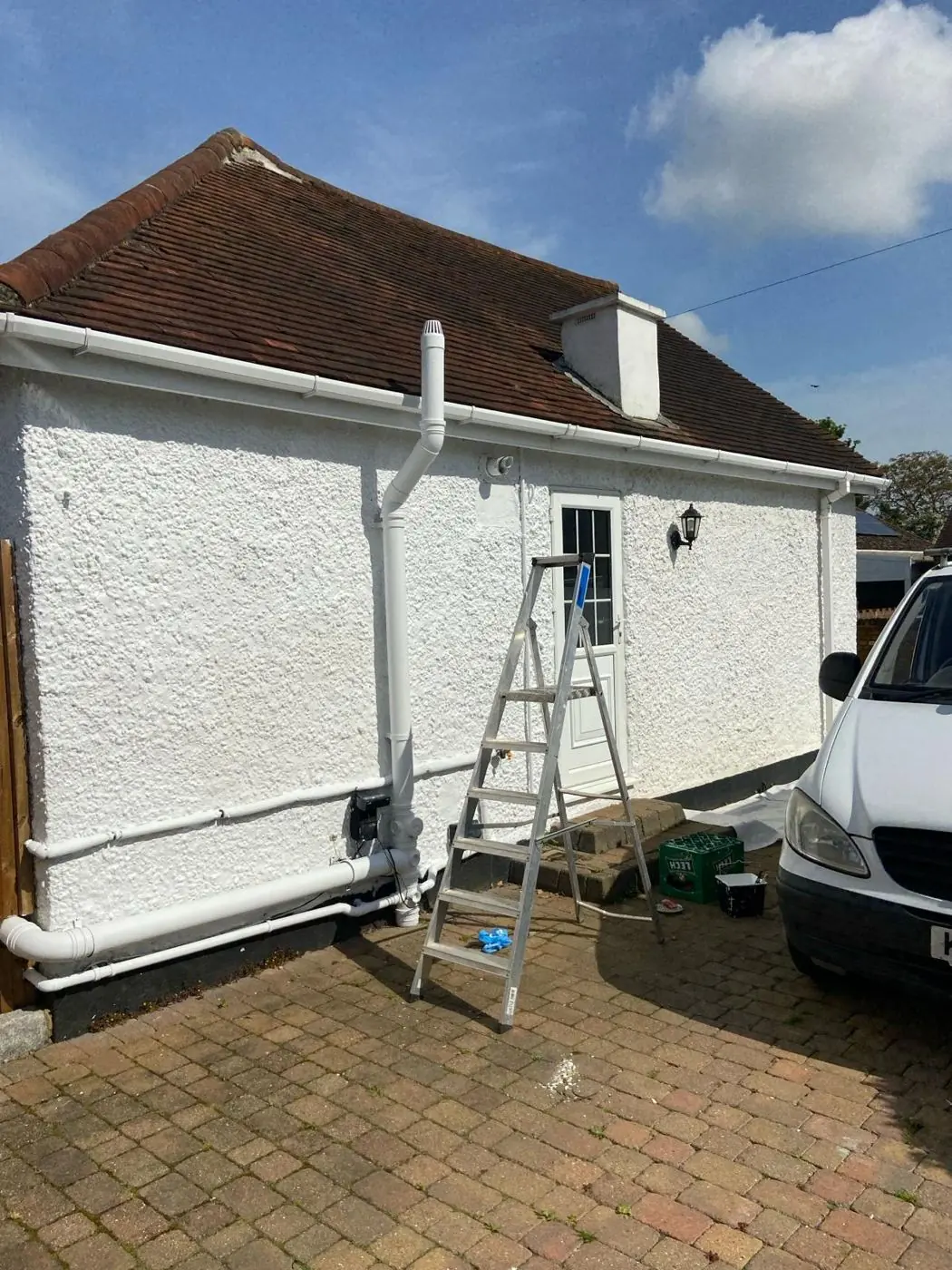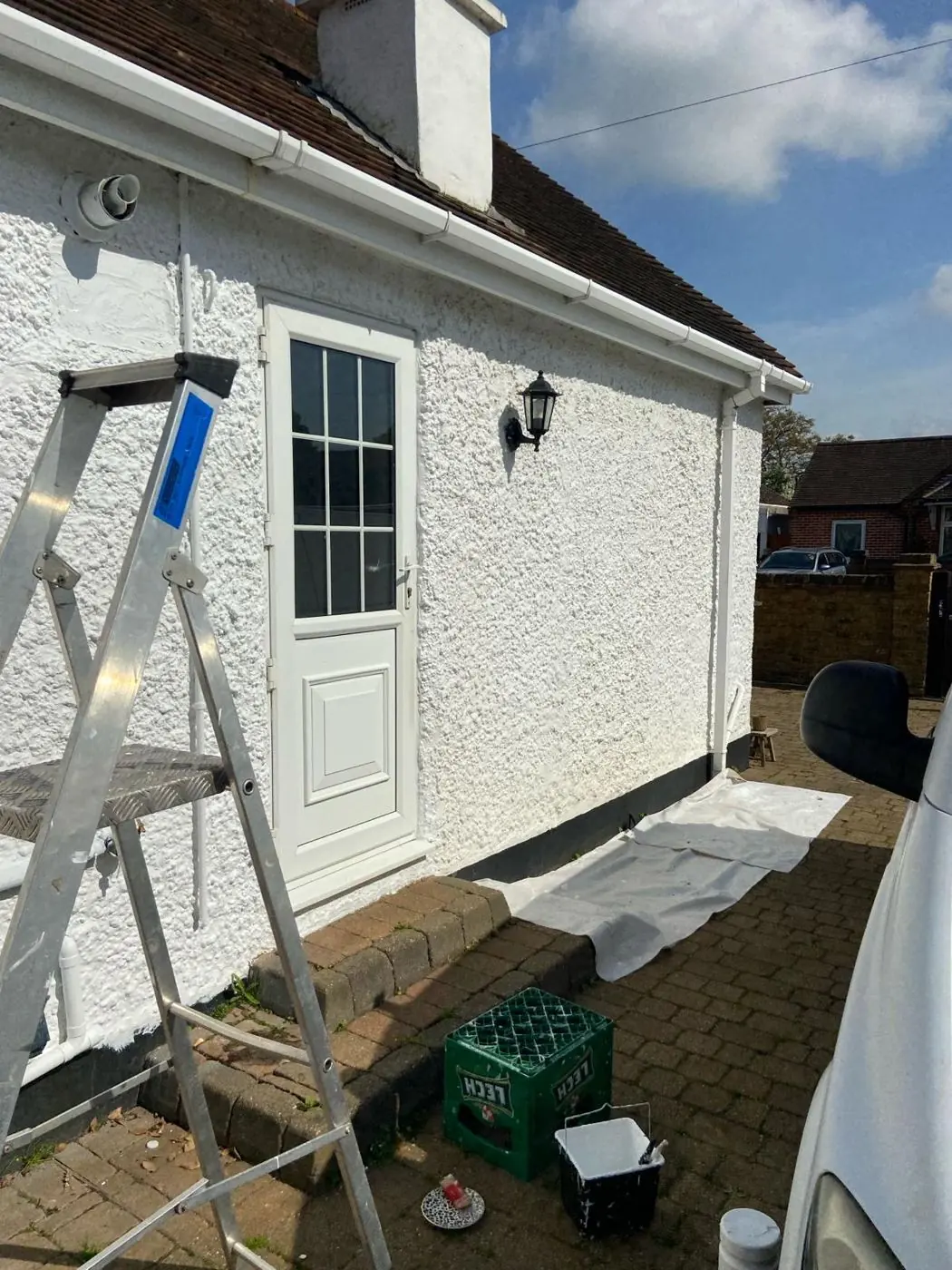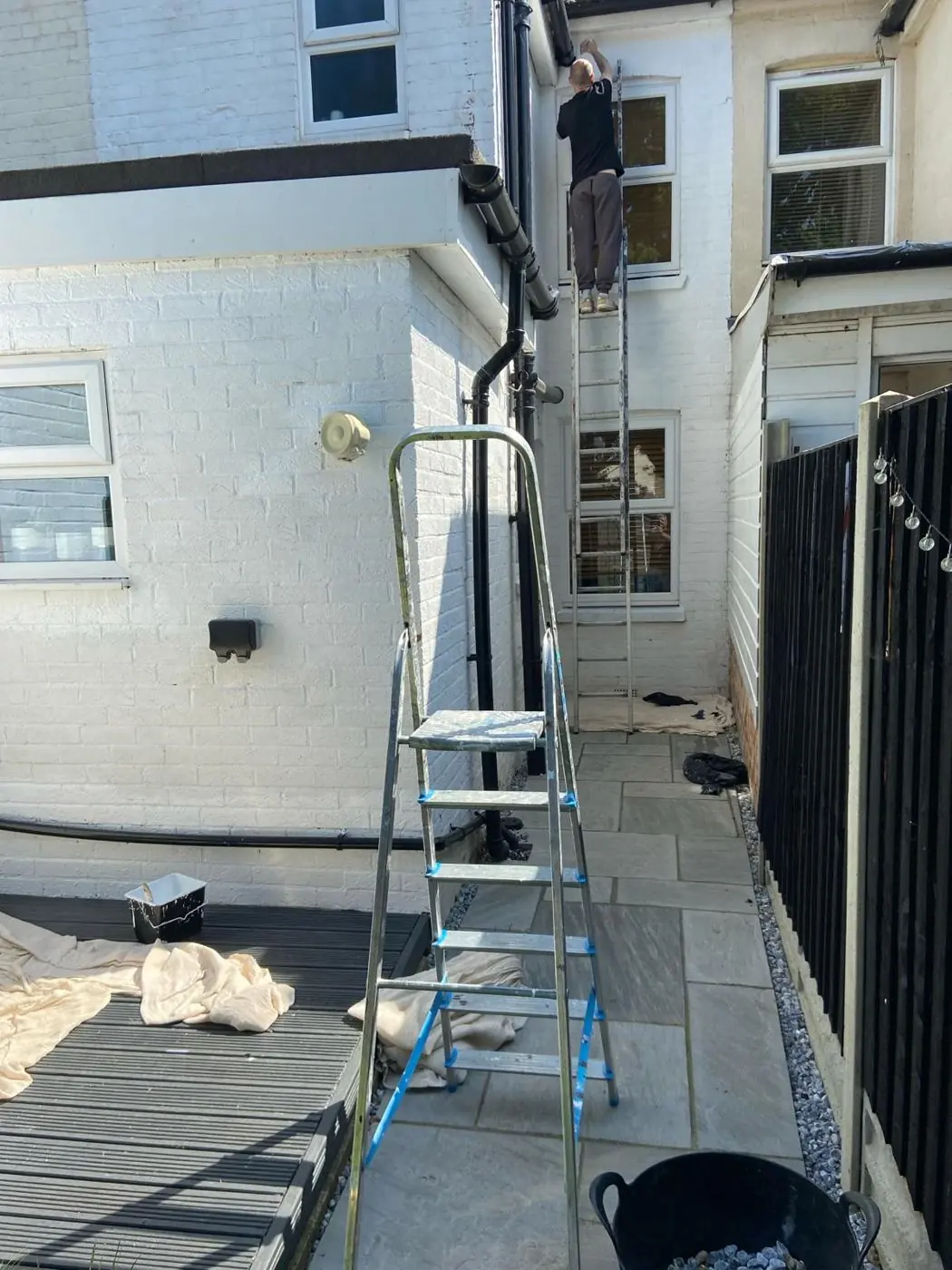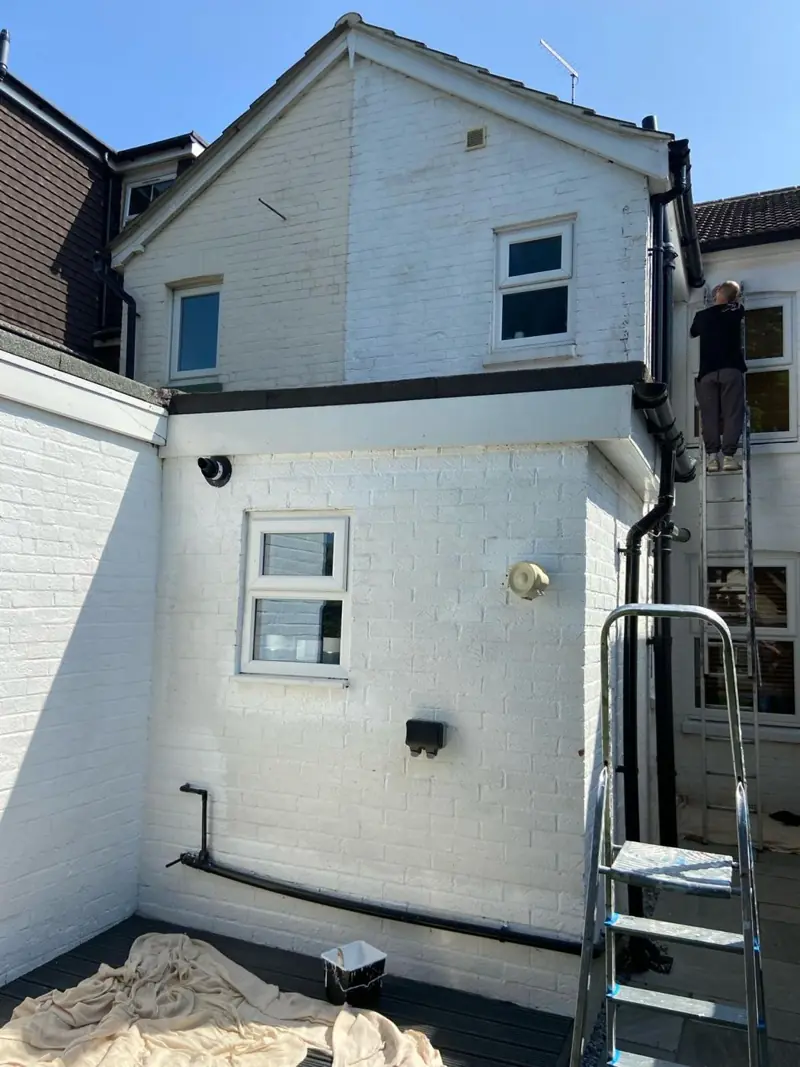
We paint render and masonry in Bugbrooke, NN7, 5.1 miles west of Northampton town centre. In the conservation area that work is small and specific, such as render over old brick and stone that needs a vapour-permeable mineral or lime-based coating, while bare ironstone is left alone.
A village where most walls should never be painted
Most masonry in Bugbrooke’s historic core is coursed squared ironstone, with limestone on the church, the Manor House and The Homestead. The listing descriptions treat this as bare stone, and the honest advice for almost all of it is to leave it unpainted. If a wall is damp or stained, the answer is to find the cause, such as a failed gutter or high ground against the wall, rather than coat it.
That leaves a short list of surfaces in the conservation area that are meant to carry a finish, and each needs a product that lets the wall breathe. Plastic masonry paints with low vapour permeability seal moisture into old walls built with lime mortar and no damp course, and the result is blown render and flaking paint within a few winters. The general process we follow is set out on our render and masonry painting page. Below is what it means for Bugbrooke’s particular walls.
Render over brick and stone on Church Lane
3 and 5 Church Lane are a listed pair of late 18th century cottages altered in the 19th century. Their fronts are rendered over a mix of brick and stone, and the end wall is exposed coursed ironstone and limestone. Mixed backgrounds like this move and dry at different rates, which is why hairline cracking often follows the line of a hidden change in material.
On render of this kind, our approach is:
- Tap-test the render for hollow areas before anything else, and report any that need a plasterer rather than painting over them.
- Remove loose and flaking coatings by hand, and identify what is already on the wall, because a modern film-forming paint has to come off before a lime-based finish will hold.
- Fill fine cracks with a lime-compatible filler, not a cement or acrylic one that would set harder than the render.
- Apply a mineral silicate or lime-based paint that matches the existing colour, since a change on a listed building may need consent.
The exposed end wall is left as stone, and we mask it carefully so no finish strays onto it.
Plinths and cob: the low-level problem walls
The Dower House, Grade II* and dating partly from 1706, has a rendered plinth. Plinths take rain splash and ground moisture, so they are usually the wettest part of an old wall. A breathable finish matters even more here, and we would only work on one when it has had time to dry out after wet weather.
The Homestead’s listed cob wall, probably 18th century, about 1.5 metres high and 44 metres long with a pantile coping, is a different material again. Cob is earth, and modern masonry paint should never go on it. If an owner wants it finished, limewash is the only suitable coating, built up in thin coats and renewed over time. Often the right choice is to leave it alone.
Damp is the common thread. The Hoarestone Brook runs north through the village to the Nene floodplain, and walls near water and in shade dry slowly. Our guide to painting render and roughcast explains why breathability matters on any older wall.
Rendered walls on later Bugbrooke streets
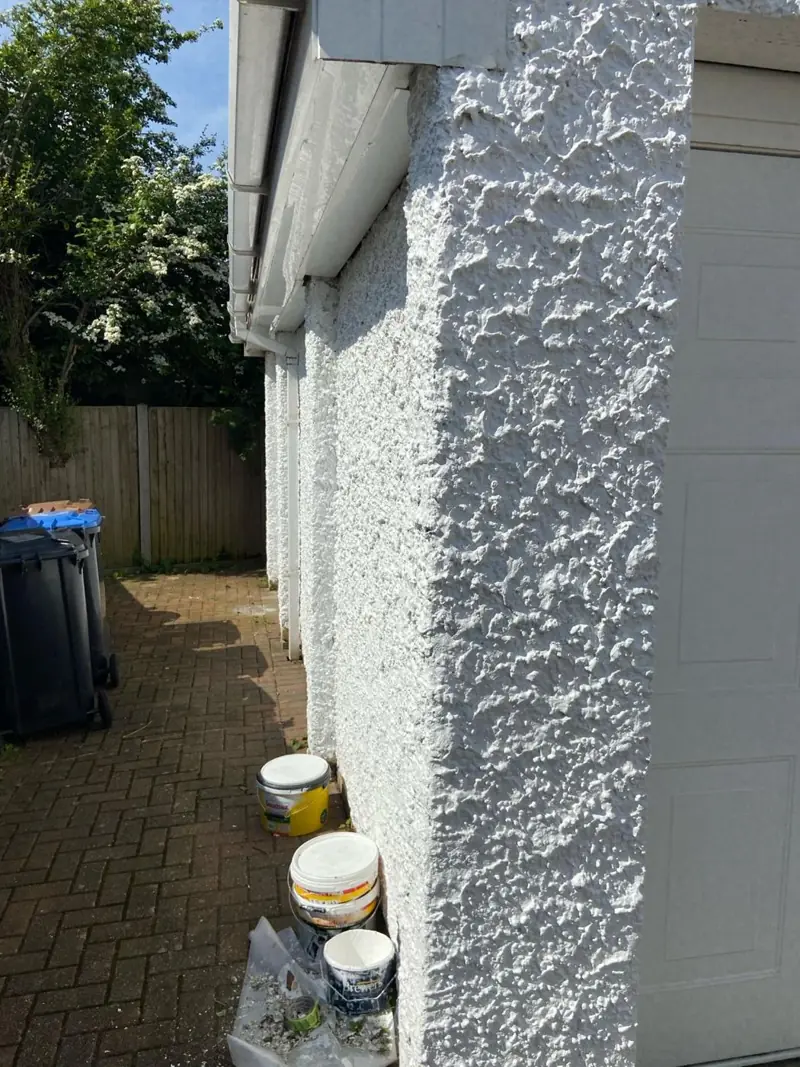
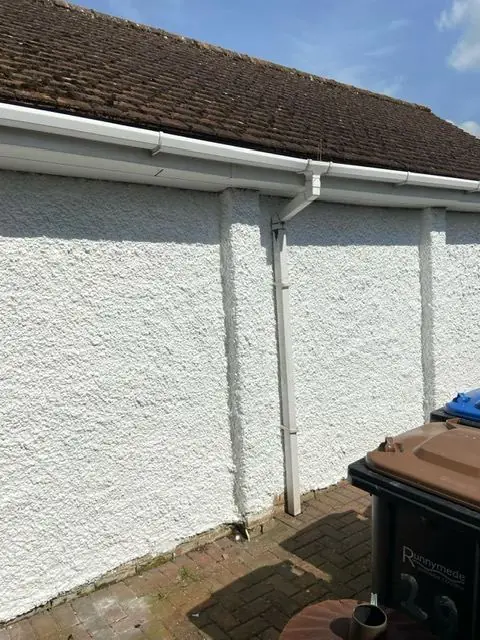
The sources we use do not record how the houses on later streets such as Levitts Road, Meadway and Camp Close were built, so we survey each one before quoting. Where a newer home has cement render or pebbledash on a modern wall with a damp-proof course, a good quality masonry paint is normally the right choice. If you live outside the conservation area, the Bugbrooke area page gives a wider view of how the village’s housing varies.
Last updated by Dean, DH Painter & Decorator.