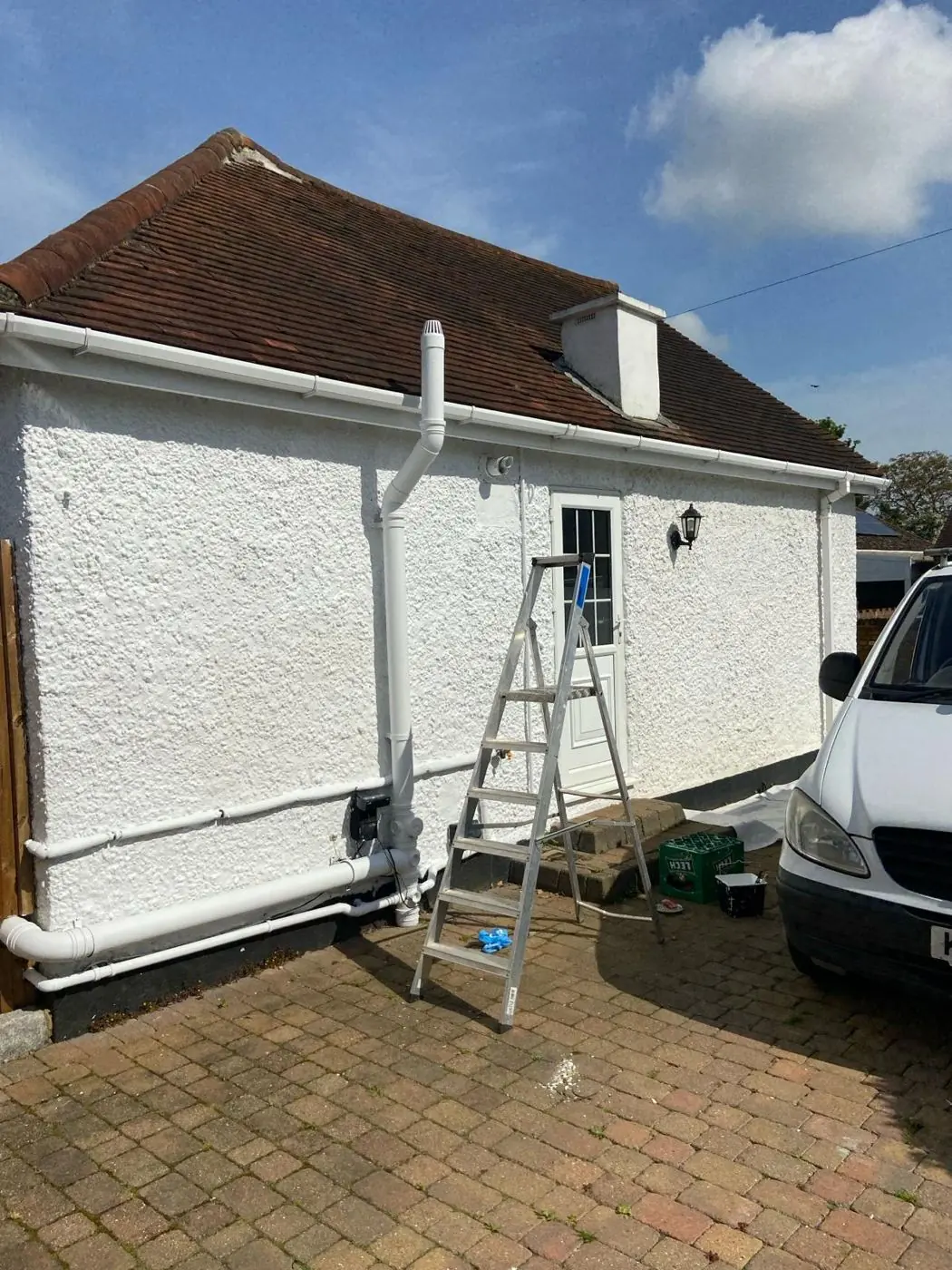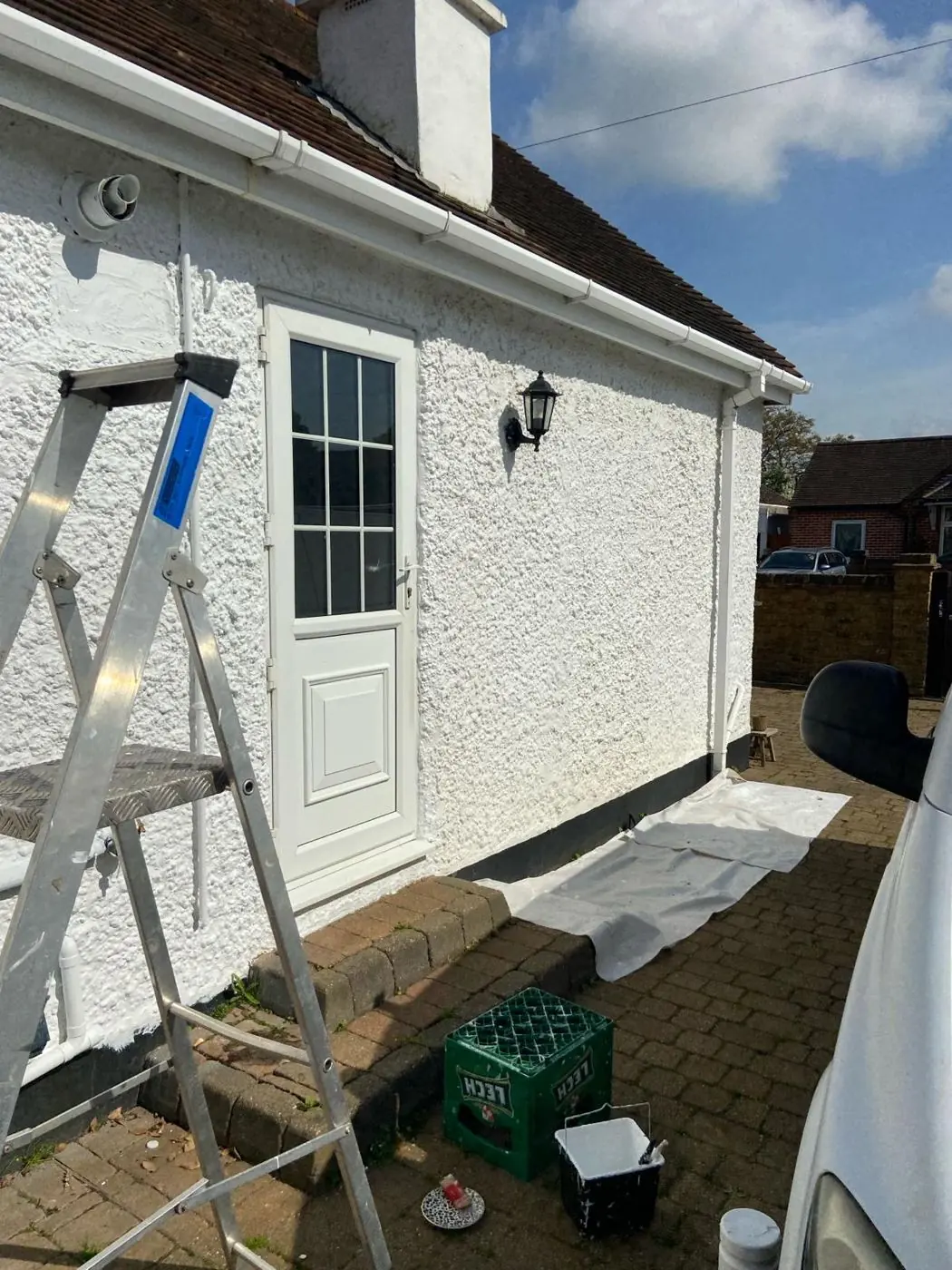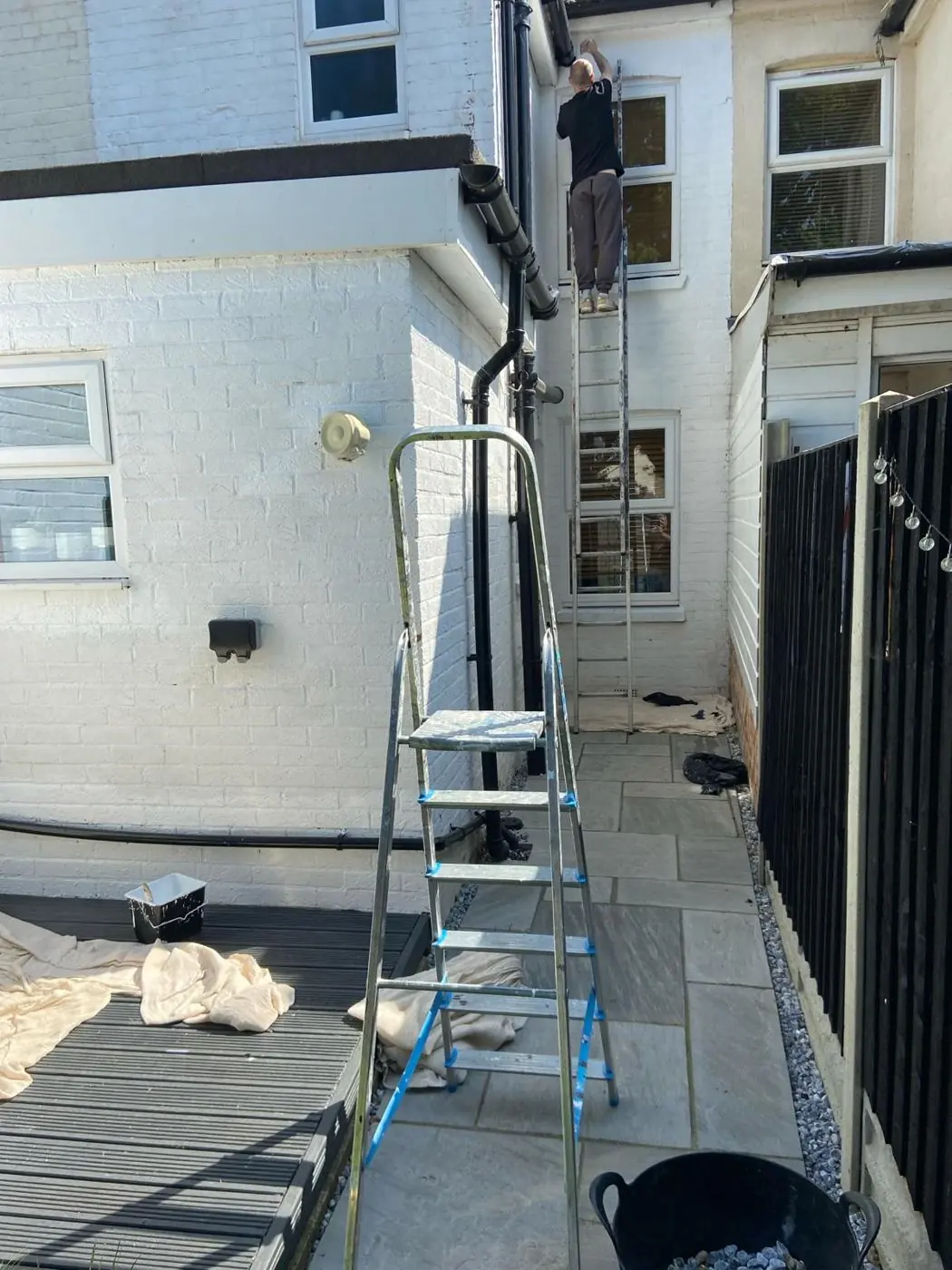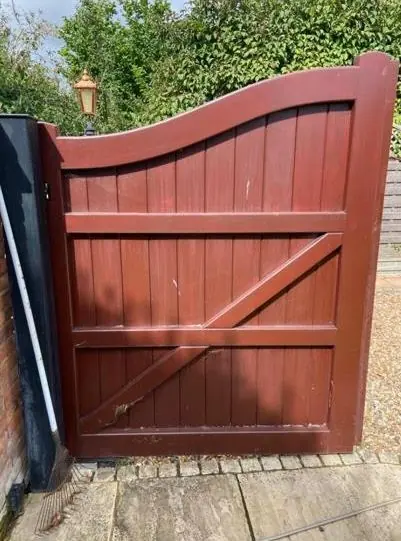
DH Painter & Decorator paints the outside of homes in Wollaston, the hilltop village in North Northamptonshire about 3 miles south of Wellingborough. Dean covers it from our Northampton base, roughly 9.6 miles to the east, and prices walls, joinery and boundaries after a visit to the house.
Start with the wall: limestone, lias or something newer
Wollaston is not one kind of house. In the old core, from the High Street out to Bell End, cottages put up between the late 1600s and the 1750s are regular coursed limestone, with some lias and, on bigger buildings, bands of ironstone. Some of those walls have since been painted or partly rendered. Further out, Neale Close, Briarwood Way and the roads around them carry later estate houses and bungalows, and the land east of Hookhams Path has been allocated for about 80 new homes.
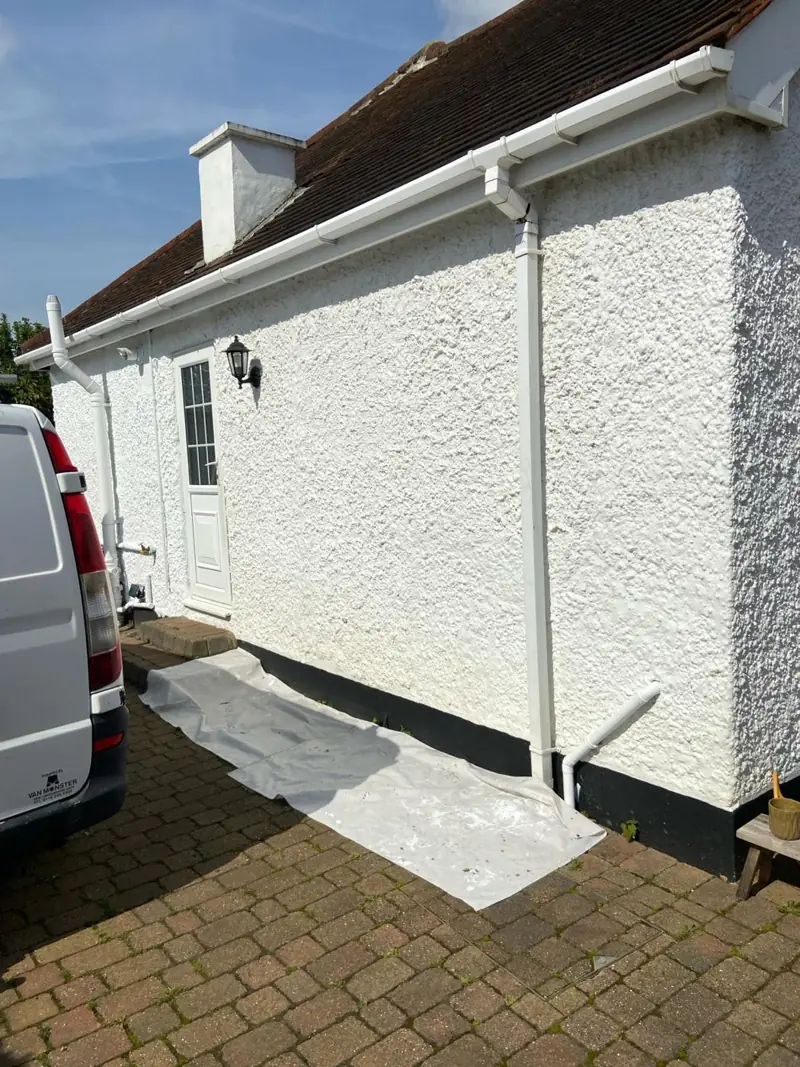
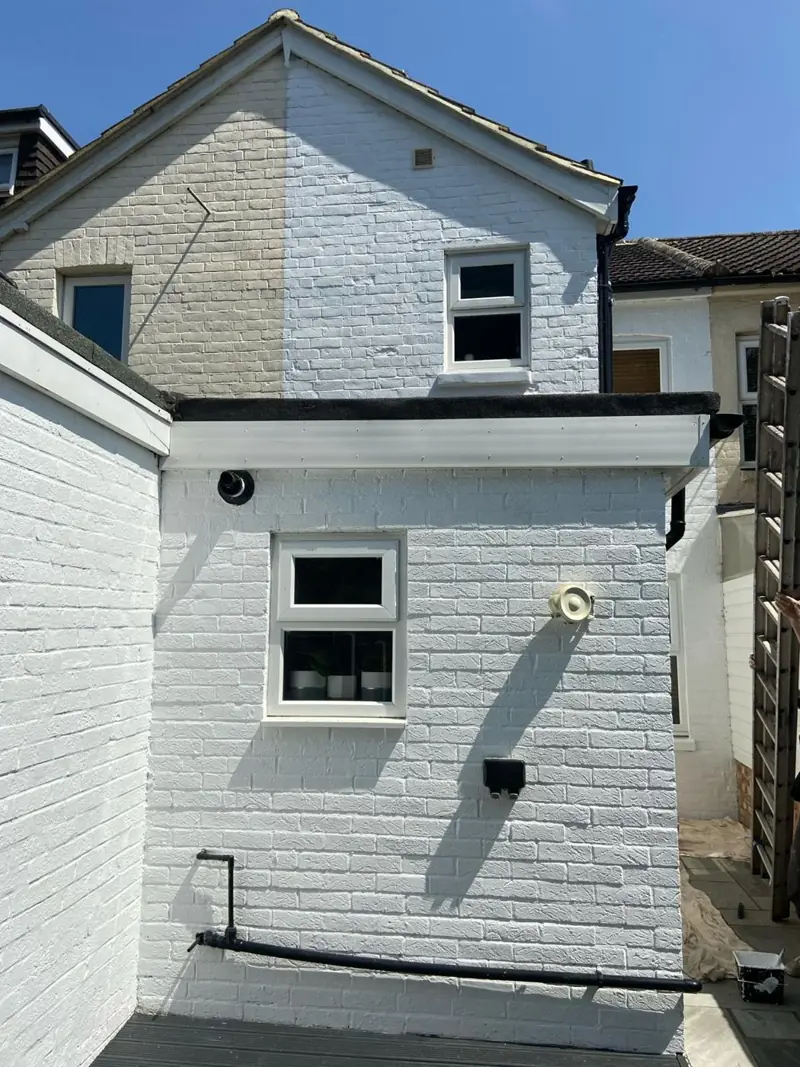
An exterior quote here therefore begins with a question about the wall itself. Bare coursed limestone is usually better left unpainted. Stone with a coat on it already, such as the front of 16 Duck End or The Boot, needs a breathable system that lets moisture out of the wall, and the old film may need testing before anything goes over it. Estate render and brick take a standard masonry paint. The detail on the wall side sits on our render and masonry painting page, and the full scope of outside work is on the main exterior painting page.
Sashes, casements and the timber around them
Joinery in the older part of the village is varied and old. The early 19th-century terrace at 28-38 London Road and properties on the High Street have sashes under flat stone arches. Preparation there has to leave the windows running freely, so beads and parting strips are kept clear of paint build-up and the sashes are not painted shut. The 18th-century cottages often have leaded or glazing-bar casements set under wooden lintels. Those lintels sit in the wall and take water from above, so we probe them for soft timber before painting and cut in by hand around narrow bars.
Front doors are part of the same picture. Panelled doors with moulded or reeded surrounds, like the six-panel door at No. 50 High Street, look right in a traditional oil or a good satin, applied with crisp edges on every moulding.
Thatch, listing and the conservation area
Several High Street and Church Lane homes are thatched, including 84 High Street and Stony Thatch. Near thatch we never strip paint with a heat gun or flame. Scraping, sanding and chemical strippers are used instead, and ladders are set so they don’t press on the eaves.
Wollaston has over 40 listed buildings, and its conservation area takes in the High Street and Beacon Hill. On a listed house, pick a new shade only after the council has confirmed whether consent is needed. Repainting like for like is the simpler route, and we can match the existing colour for you.
A village on a rise, and when to paint it
The village sits 50 to 80 metres above sea level on rising ground east of the Nene valley. Elevations that face west across the valley take wind-driven rain, so render and timber on that side wear faster than the sheltered side. In practice that means:
- booking exterior work for settled, dry spells rather than squeezing it into a showery week
- checking west-facing sills, door bottoms and lintels first, because they usually fail first
- allowing proper drying time between coats when the wind drops the temperature on the hill
Our guide on the timing exterior painting in the UK explains the temperature and dew point limits we work to.
Vans, ladders and the school run
Wollaston’s own plan admits parking is short: Newton Road, the school approaches and the older terraces are the pinch points. Hookhams Path also carries HGVs heading for the Hinwick Road industrial estate as well as school traffic. We fix where the van and ladders go before day one, keep deliveries small, and avoid putting ladders up on a footway at drop-off and pick-up times. If your house is one of the shoe-trade terraces, tell us how the back is reached so we can plan for it. More about Wollaston homes is on our Wollaston area page.
Last updated by Dean, DH Painter & Decorator.