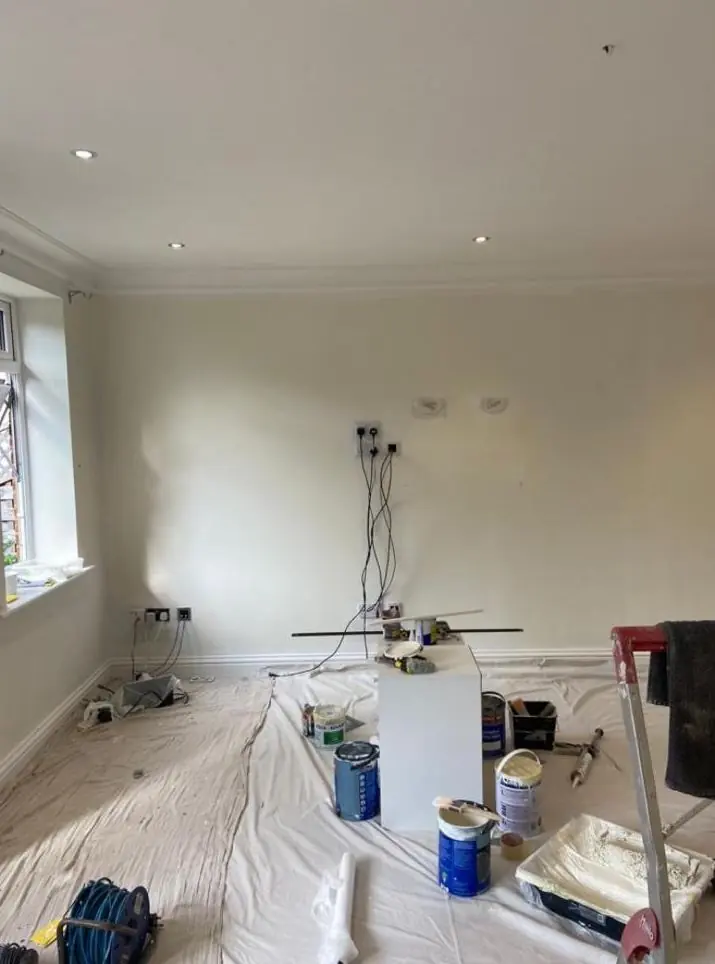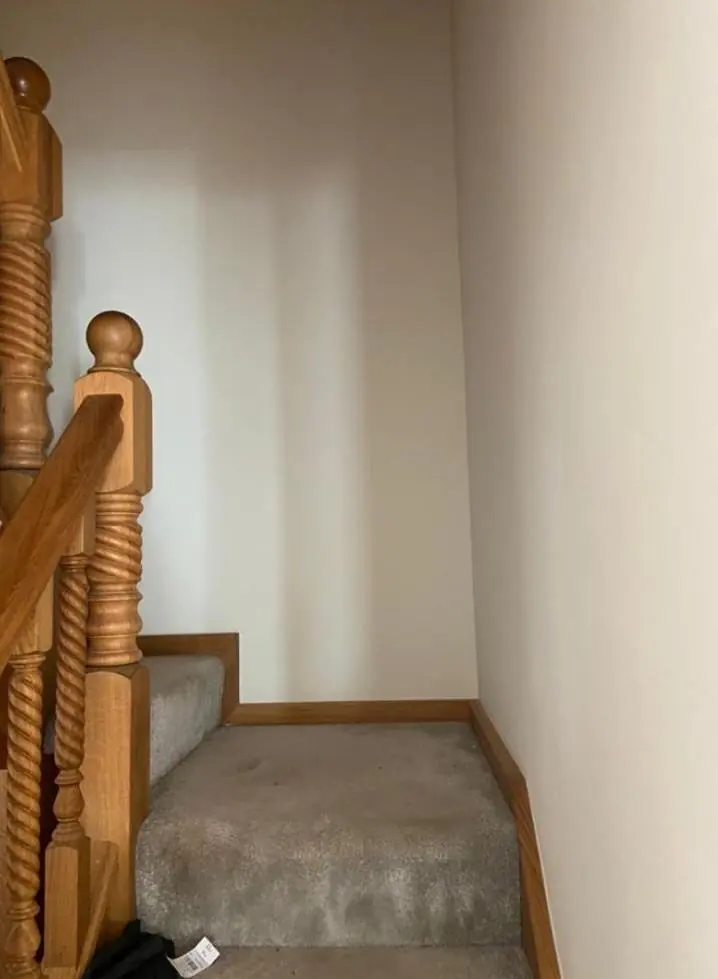
Dean at DH Painter & Decorator applies painted panelling, split-colour walls and faux effects in West Hunsbury (NN4), the Shelfleys estate two miles or so south-west of Northampton's centre. Most suit the large reception rooms and stairwells of its 1980s and 1990s four- and five-bed homes.
Plain rooms with space to work with
Most of West Hunsbury was built between the 1970s and 2000s, and the houses are modern inside, with plaster and plasterboard walls rather than period mouldings. Unlike a Victorian terrace, there is very little original detail to pick out. What the larger detached homes do have is size. A long through-lounge, a dining room in an extension or a square hall in a four- or five-bed house gives a decorative finish room to make sense. On a small wall the same finish can look fussy.
So decorative work here is about adding character rather than restoring it. Finishes that suit these rooms include:
- Shaker-style or batten panelling on the lower third of a dining room or hall, painted in a deeper colour than the wall above
- A two-tone split along a stair rake, with the line set parallel to the handrail
- A colour-washed or limewash-effect feature wall behind a fireplace or bed
- Painted arches or blocks of colour to frame shelving or an alcove
The galleried landing problem
Many of the bigger houses have open stairwells and galleried landings, so the tallest wall in the house is often the one people most want to decorate. Any effect has to read correctly from the hall below and from the landing above, which rules out finishes that only look right at eye level. Mark-out lines have to stay straight over a long, high run. We set the lines with a laser level from a stair platform or a small tower rather than measuring up from the treads, because stair nosings are rarely consistent enough to work from.
Panelling on modern walls
MDF panelling is fixed to plasterboard walls, so before painting we check the fixings have hit studs or used the right plugs. Every joint, pin hole and mitre is filled and caulked, and the bare MDF edges are sealed so they don’t swell under water-based paint. On walls where the house has settled, a perfectly level panel line can make a slightly sloping ceiling more obvious. Dean will show you where the line looks right by eye, which is not always where the level puts it.
Finish choice matters as well. Panelling in a family hallway takes knocks from bags, bikes and pushchairs, so we use a durable eggshell or a scuff-resistant matt rather than a chalky decorative paint.
In a dining room or lounge, the choice is more about the look. A very flat matt on the wall above panelling and a soft eggshell on the panels themselves give the two surfaces a subtle difference in light, which shows off the profile of the battens. For a limewash-effect feature wall, the base coat has to be completely even and well sealed on modern plaster, because the translucent top layers show any patch or filled hole beneath them. We prime and sand those walls more carefully than for a flat emulsion finish, and build up the effect in thin layers so you can stop at the depth you like.
A different brief: the Grade II farmhouse
The one historic building here is Hunsbury Hill Farmhouse, an 18th-century ashlar house that is now the Hunsbury Hill Centre. Decorative work in a listed building like this is a different discipline. Traditional finishes such as distemper or limewash on suitable surfaces, and careful work around original sash joinery, are the starting point. Before any change of finish, the building’s managers would need the council’s view on whether consent is required.
If you are weighing up the cost of panelling against a simpler painted scheme, our cost guide sets out what affects the price. For the full range of effects and how each one is applied, see our decorative finishes in Northampton page. For other decorating on the estate, see the West Hunsbury area page.
Last updated by Dean, DH Painter & Decorator.