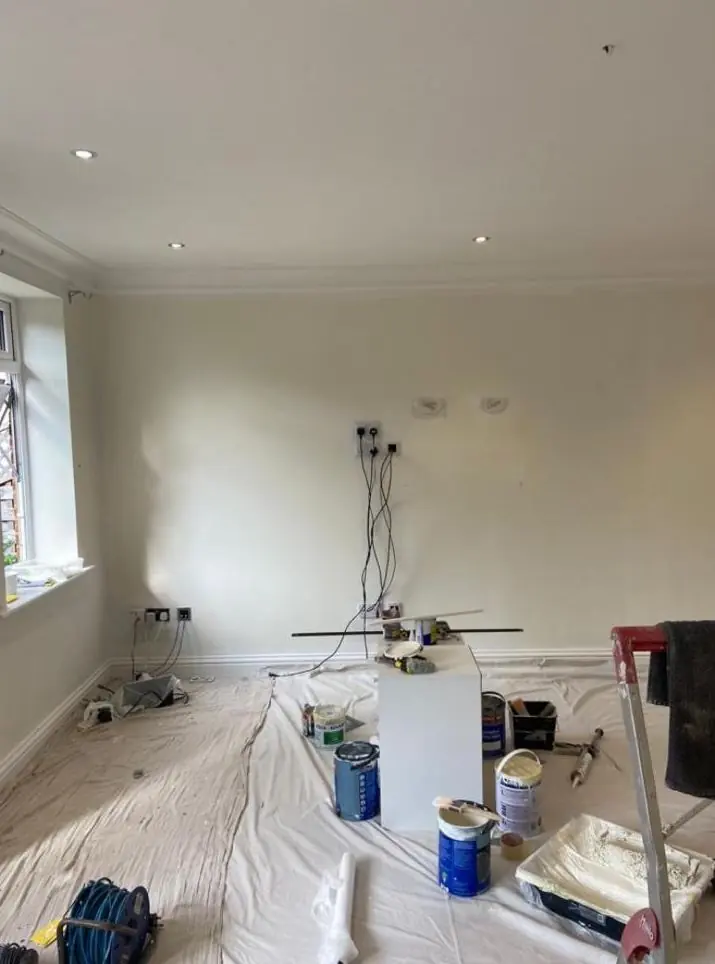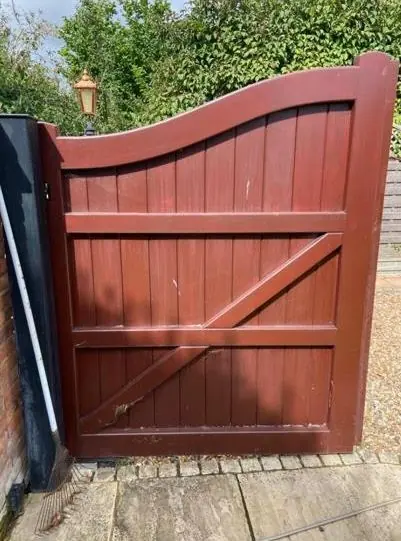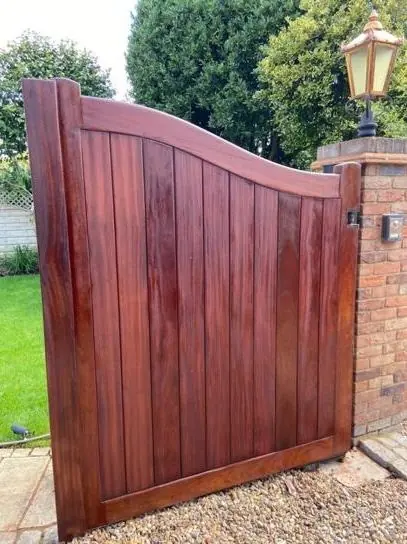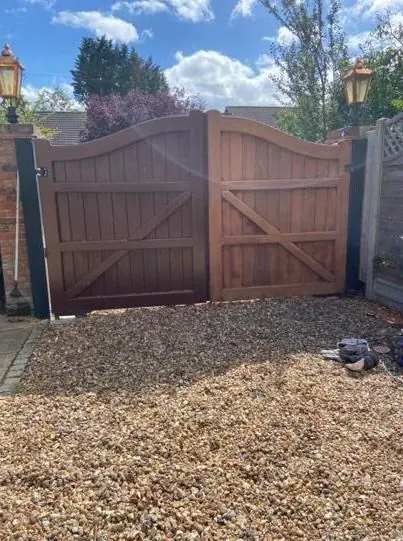
DH Painter & Decorator covers West Hunsbury (NN4), the estate around Hunsbury Hill Country Park about 2.1 miles south-west of Northampton town centre. Dean decorates its 1970s to 2000s detached and semi-detached houses, bungalows and extensions, inside and out, and gives a free written quote after a visit.
The estate around Hunsbury Hill
West Hunsbury sits on the southern edge of Northampton, west of Towcester Road and about half a mile from M1 junction 15A. Its older name, Shelfleys, still shows up on road signs, maps and bus displays. The estate was built from 1970 onward as part of the town’s expansion, with most of the houses going up in the 1980s and 1990s and a few additions into the 2000s. It has had its own parish council since 2013, and it is a separate place from East Hunsbury on the other side of Towcester Road.
The centre of the estate is Hunsbury Hill itself: an Iron Age hillfort known as Danes Camp, surrounded by old ironstone workings that were quarried from the 1880s and never landscaped. Since 1970 the hill has been a country park, now 38 hectares and heavily wooded, with the Northamptonshire Ironstone Railway Trust’s heritage line and museum inside it. Ladybridge Park and Wootton Brook Park add more green space along the southern edge. That much greenery is good to live next to, and it affects decorating on the houses that border it.
What the houses are like
Agent listings give a fair picture of the housing. Most homes are detached or semi-detached family houses, many in cul-de-sacs, with some detached bungalows. Listings mention a three-bed semi with a rear conservatory on Merryhill, four- and five-bed detached houses with double garages at Fienesgate and Aviemore Gardens, a five-bed with a self-contained annex at Bramble End, and a detached house on Reedhill set on about a third of an acre with views over the Swan Valley. One agent describes a four-bed detached as a 1985 Francis Jackson build.
Three things follow from that for a decorator:
- Modern interiors. Walls are plaster and plasterboard, so preparation is filling, sanding and caulking rather than repairing old lime plaster.
- Lots of additions. Extensions, conservatories, annexes and garage conversions are everywhere, and each one brings new plaster and a join with the original house.
- Big houses, big plots. Four- and five-bed homes mean tall stairwells and galleried landings inside, and four exposed elevations and long fence runs outside.
Inside: extensions, stairwells and whole-house schemes
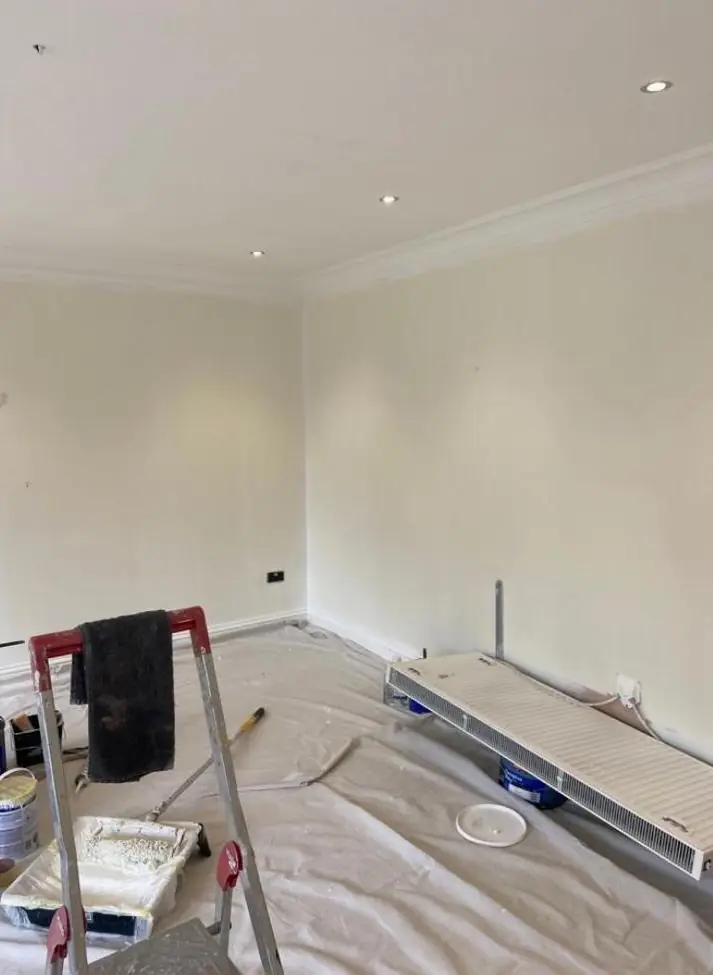
Because the houses are mostly owner-occupied, interior jobs here tend to be whole-house repaints or schemes planned round a new extension, rather than quick refreshes between tenants. The hardest part is usually the join between an extension and the original rooms. New plaster needs a mist coat, and the crack line where old and new walls meet needs a flexible filler, or it shows again within a year. Our interior painting and new plaster and extension painting pages cover both in detail.
Stairwells are the other big item. Open stairs and galleried landings in the larger detached houses have high walls that can’t be reached safely from a ladder on the treads, so we use a stair platform or small tower. Many of these houses still have their original softwood doors, skirtings and architraves, often yellowed under old oil-based gloss, and converting them to a water-based satin is a common part of a full repaint. Rooms on the park side of a house get cool, filtered light, so colour choices there need more care than in an open south-facing lounge.
Outside: shade, algae and timber
Houses from the 1980s and 1990s usually still have their original timber fascias, soffits and bargeboards, plus timber garage doors and porch details. On a detached house that is four elevations of woodwork, often reachable from the driveway with ladders or a tower. Our fascia and soffit painting page explains how we deal with flaking and rot.
The wooded country park and tree-lined plots bring shade, leaf litter and green algae, especially on north-facing walls, fences and woodwork. Most exterior jobs on those plots start with a biocide wash and time to dry. Gardens on low ground near Wootton Brook and Ladybridge Park stay damp, so fence bases and lower woodwork need a breathable, water-repellent finish. Elevations facing Towcester Road and the A43 pick up traffic film that needs degreasing before any paint goes on. Wall materials on the estate houses vary, so render or masonry is assessed on site rather than assumed. Timing matters too, and our guide on when to paint outside in the UK explains why. On shaded plots by the park, the drying window after a wash-down is shorter than on an open plot, so we keep an eye on the forecast and leave woodwork overnight before the first coat if it is still damp.
Shops, halls and the listed farmhouse
West Hunsbury has no business park. Its commercial and community buildings are a small parade on Hunsbury Hill Road, with a supermarket, pharmacy, optician, estate agents and post office alongside Camp Hill Health Centre, plus the Hill Shop on Towcester Road, Parsons Meade Community Centre, the primary school, St Benedict’s church and the railway museum in the country park. Work on any of these is planned around opening hours and bookings, with early starts and quick-drying coatings on shopfronts.
The oldest building is Hunsbury Hill Farmhouse on Rothersthorpe Road, built around 1770 and listed Grade II. It is ashlar stone with a Welsh slate roof and sash windows, and it is now the Hunsbury Hill Centre, with function rooms and a main hall seating up to 120. Painting there calls for breathable, lime-compatible products on the stone, traditional sash preparation and, where needed, listed building consent.
Inside the community buildings, the priorities are different again. A hall that is booked for parties, classes and meetings needs hard-wearing, wipeable finishes on walls and doors, and the work has to fit around the booking diary, often in blocks of a day or two at a time. Low-odour paints let a room go back into use quickly once it is dry.
Getting a quote
We cover West Hunsbury from our Northampton base, and the quick run down Towcester Road makes it straightforward to reach. Most houses have a driveway, so the van and equipment stay on your plot, though some cul-de-sacs have little turning space. Dean visits to look at the work, talks through colours and products, and gives a free written quote. If you want an idea of costs first, our painter and decorator cost guide explains what affects the price.
Last updated by Dean, DH Painter & Decorator.