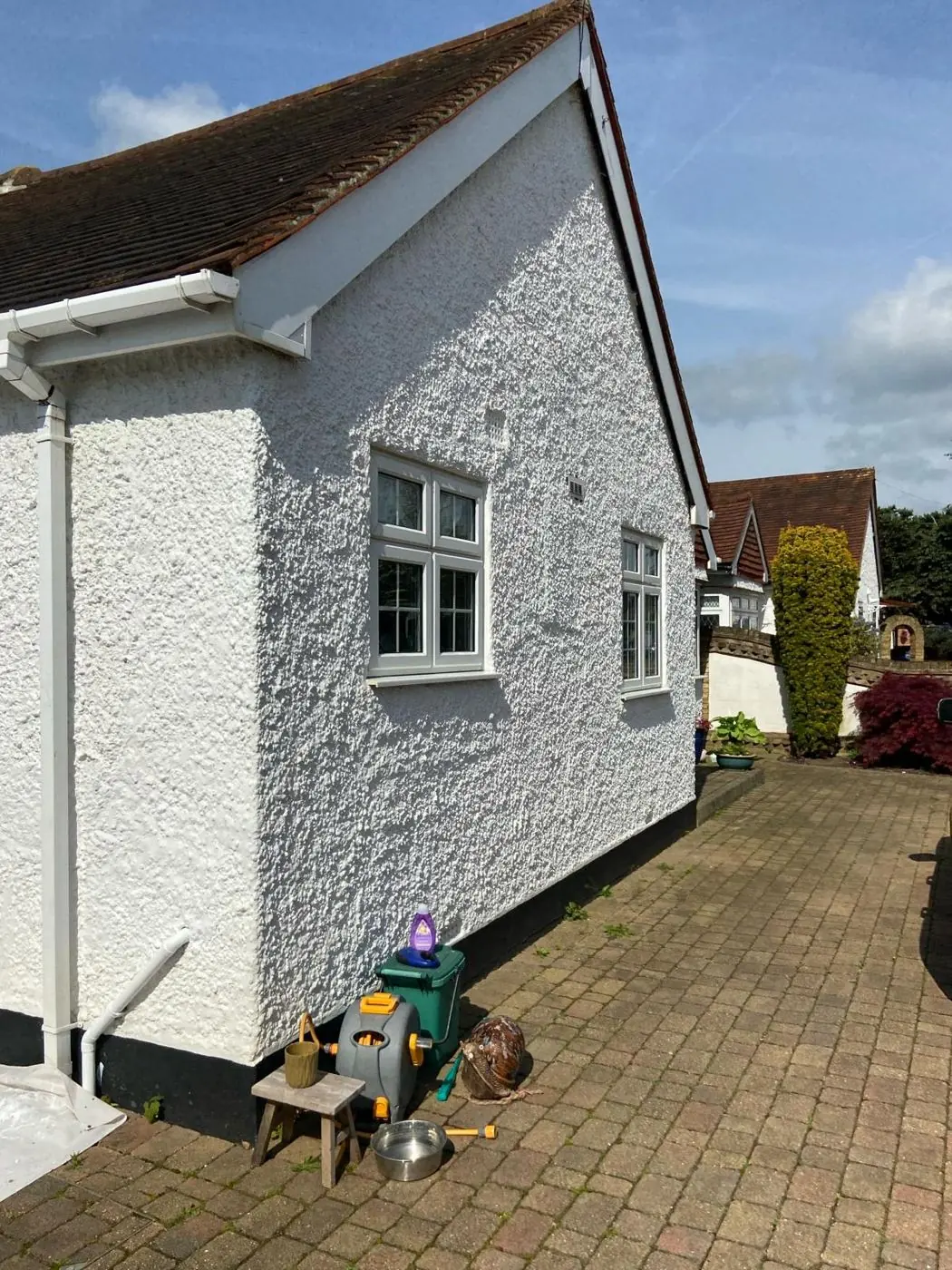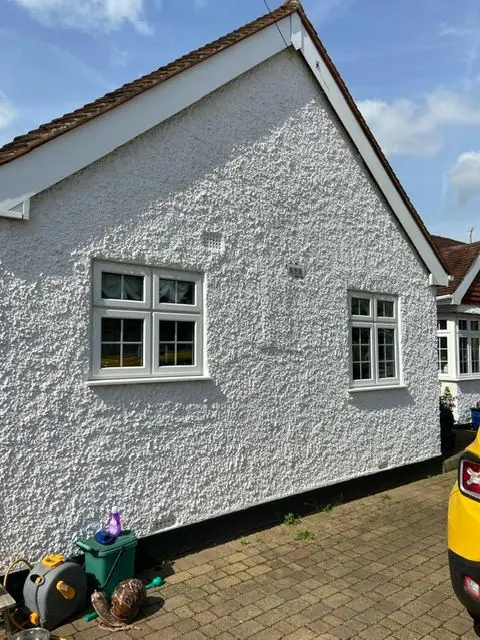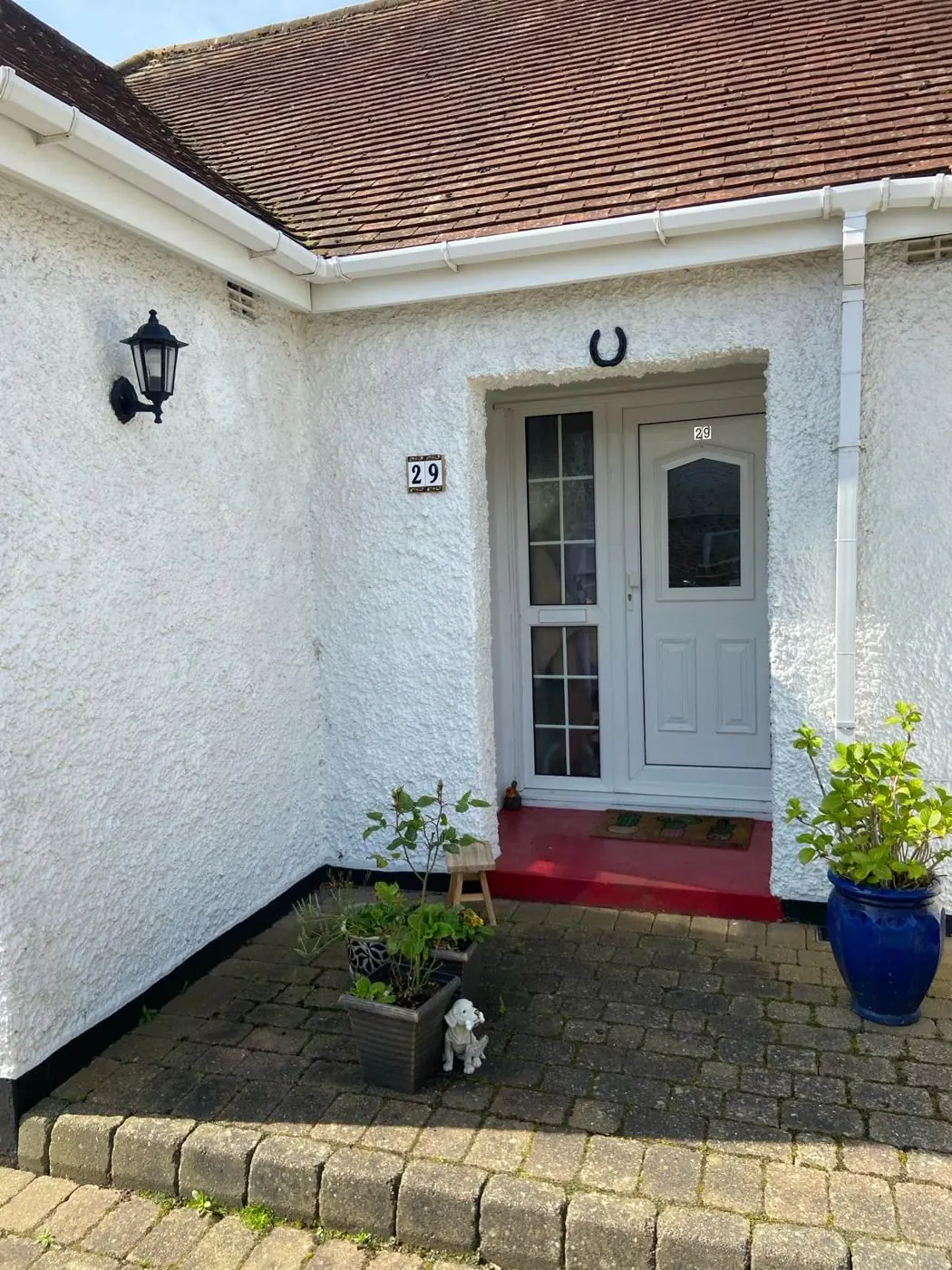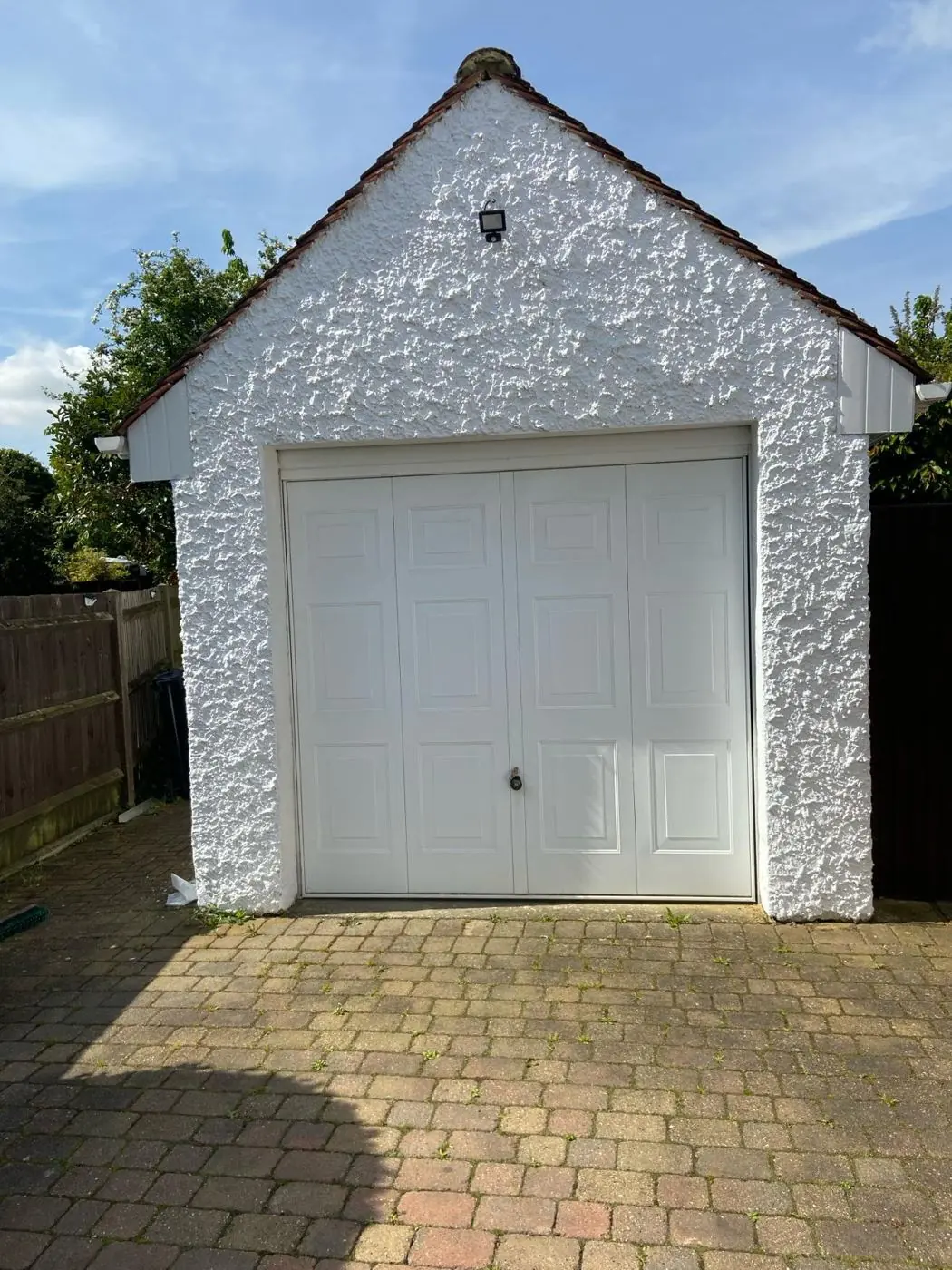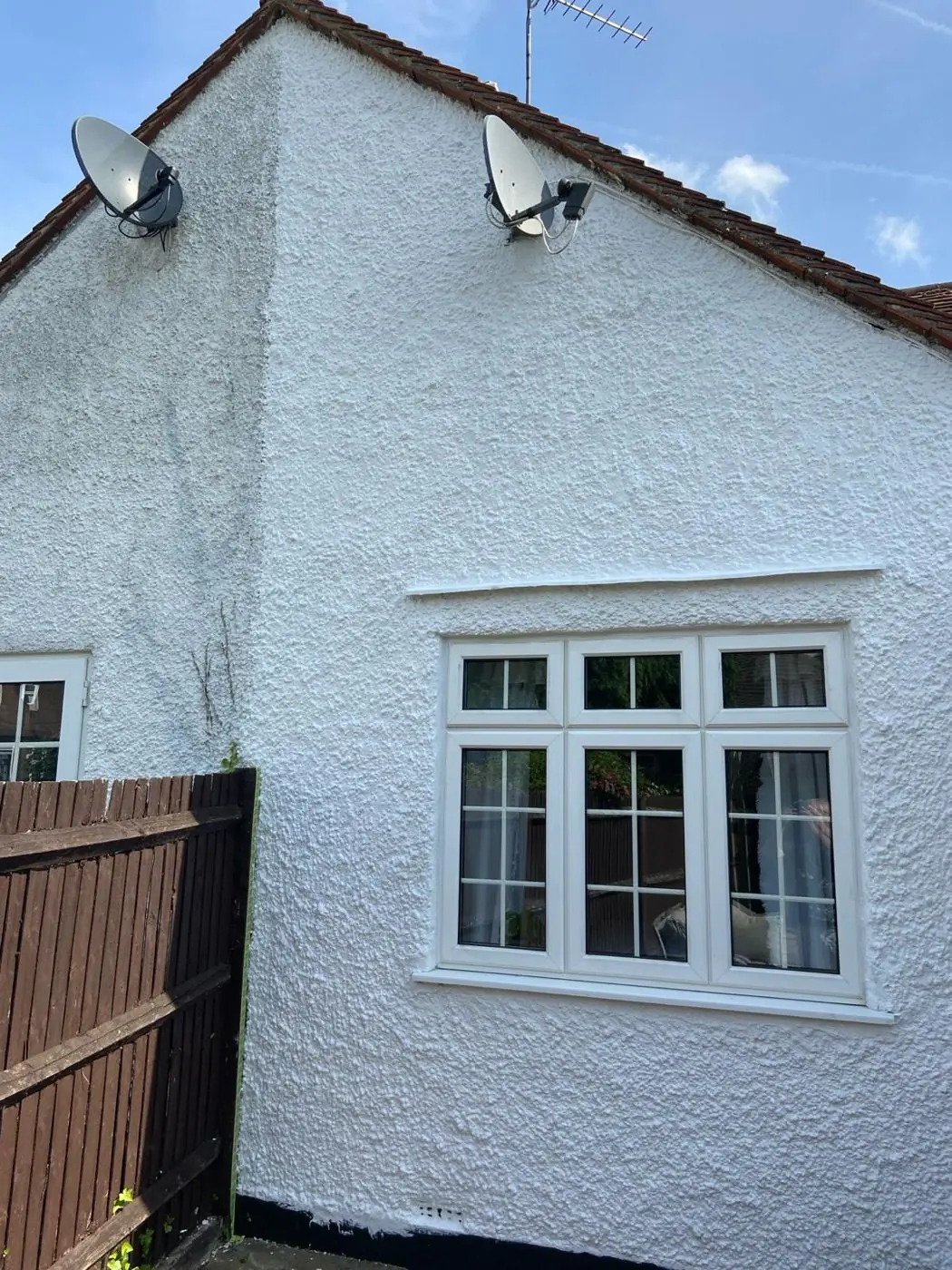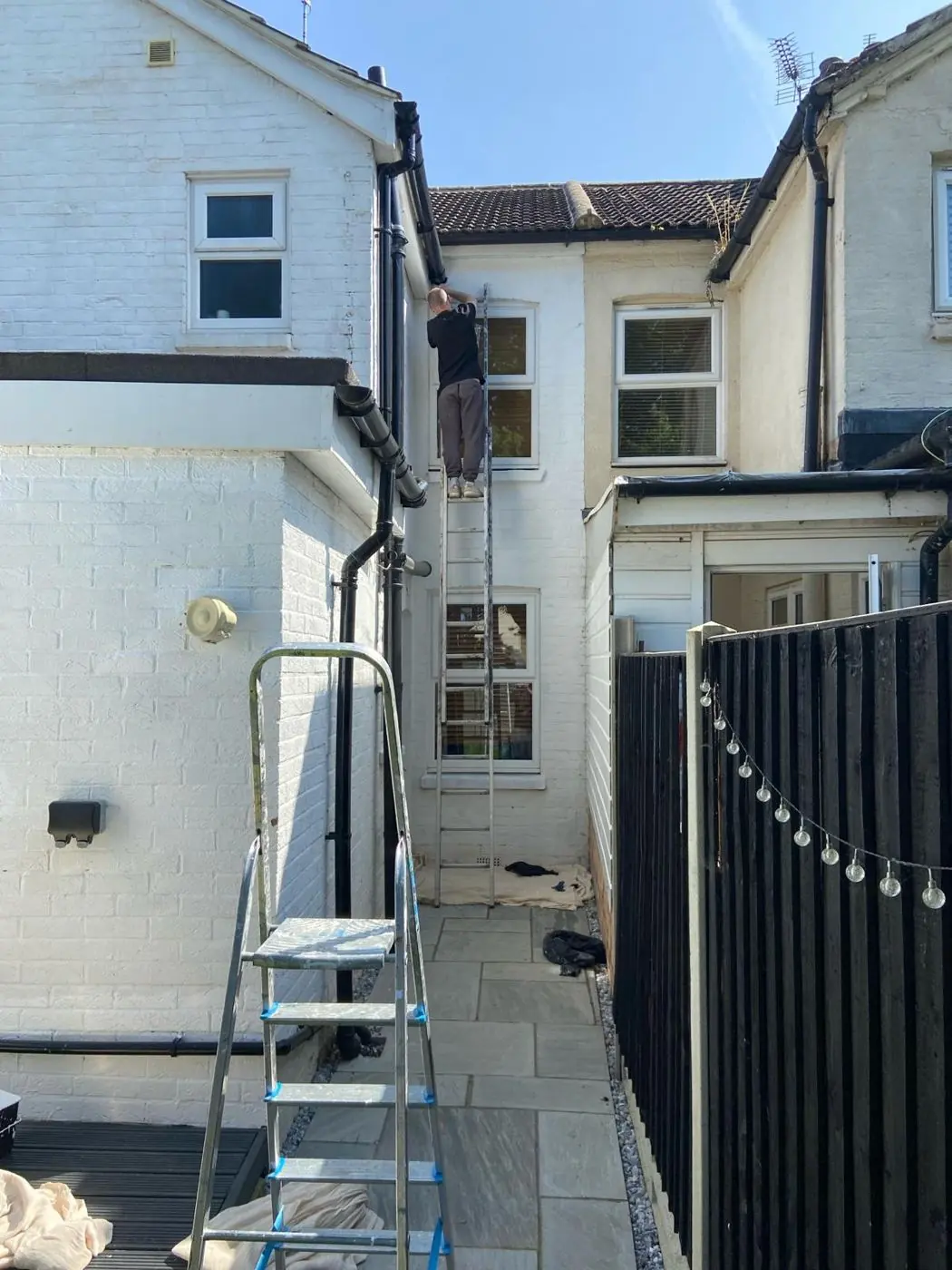
DH Painter & Decorator paints rendered and masonry walls in West Hunsbury, NN4, on Northampton's southern fringe two miles from the town centre. Because wall finishes on the estate vary from house to house, Dean inspects each one before recommending a coating, and uses breathable systems wherever damp or old stone is involved.
Start with the wall, not the paint chart
Most of West Hunsbury was built between 1970 and the 2000s, and the published sources say little about what its walls are made of. We would rather admit that than pretend every house has the same surface. In practice, a masonry job here begins with Dean looking closely at your walls. He checks whether they are rendered, painted brick or bare brick, how sound any existing coating is, and where water is getting in.
That visit decides the specification. A sound, previously painted render can take a breathable masonry paint after cleaning and stabilising. Hollow or cracked patches need repairing first. Bare facing brick that has never been painted is usually better left alone. We will tell you that plainly, even though it means less work for us. Our main render and masonry painting service covers the full preparation sequence.
Which conditions on the estate affect the coating
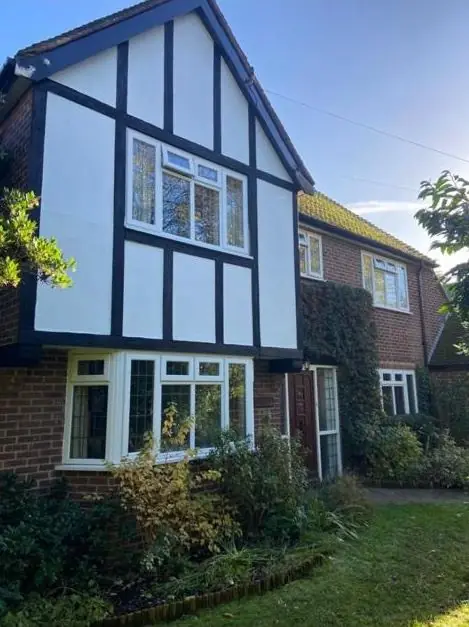
Rather than a general checklist, the table below links the conditions found around West Hunsbury to what they mean for a painted wall.
| Local condition | Effect on painted masonry | How we handle it |
|---|---|---|
| Woodland plots and the edges of Hunsbury Hill Country Park | Shade keeps walls damp, and green algae spreads on north faces | Biocide wash, a dwell period, then brushing down before any coating |
| Low-lying gardens towards Wootton Brook and Ladybridge Park | Slower drying and damp rising at the base of walls | Breathable paint, longer gaps between coats, and close attention to plinths |
| Elevations facing Towcester Road or the A43 | Traffic grime that stops paint from bonding | A degreasing clean before the stabiliser and paint go on |
| Extensions and annexes added later | New render or block next to older, weathered surfaces | Matching the coating system so old and new walls weather at the same rate |
Damp is the thread running through most of that table. A non-breathable coating on a wall that stays wet holds the moisture behind it, and that is when blistering and peeling start. On shaded or low-lying West Hunsbury plots we specify vapour-permeable masonry paint and avoid sealing the base of the wall against the ground. Our guide to painting render and roughcast explains how those coatings behave.
Hunsbury Hill Farmhouse and stone that has to breathe
The exception to the estate’s modern walls is Hunsbury Hill Farmhouse, put up around 1770 by Edward Bouverie of Delapre and listed at Grade II since 1976. It is now the Hunsbury Hill Centre. Its walls are ashlar stone under a Welsh slate roof, and stone like that relies on moisture moving freely in and out. Acrylic masonry paint would trap that moisture and could damage the face of the stone. Any coating work there would need mineral or lime-compatible products. Because the building is listed, the owners would also need to check with West Northamptonshire Council whether listed building consent is required before any change of finish.
We mention the farmhouse because it is the clearest example on the estate of why the surface decides the product. The same thinking applies, on a smaller scale, to any older wall or boundary stone you come across nearby.
Getting to the walls
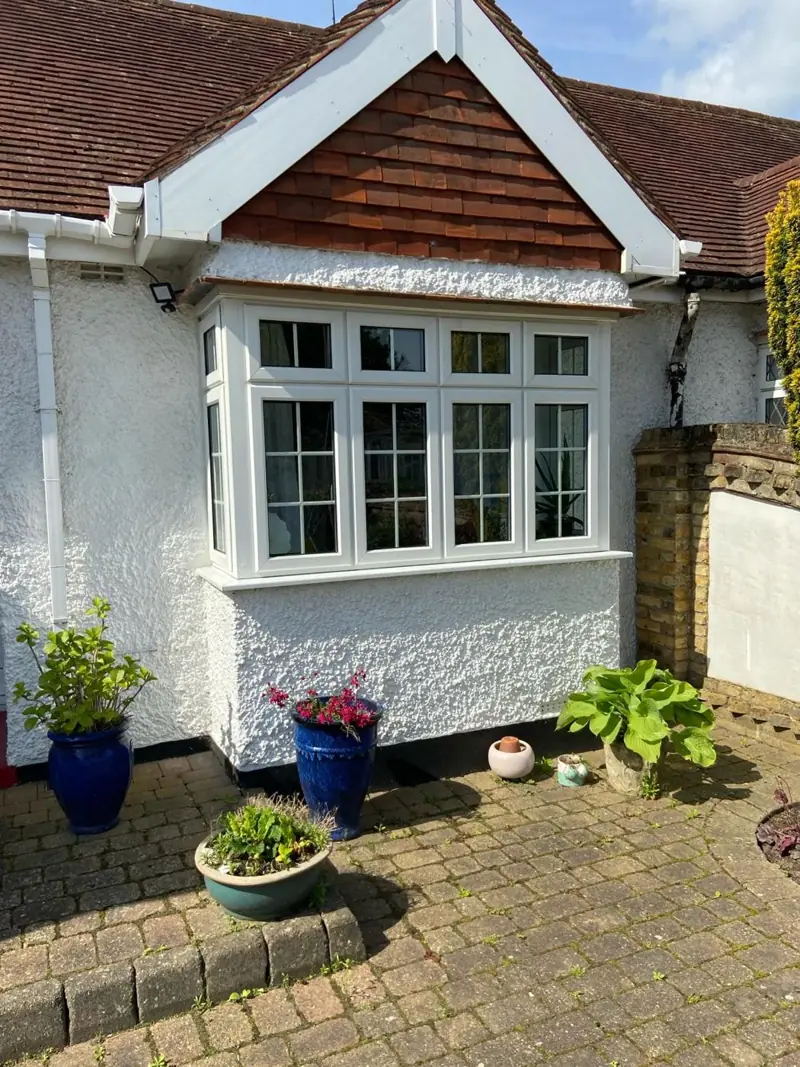
Detached houses here usually stand on their own plots with a driveway, so a tower can go up against a gable without blocking neighbours. Larger plots such as those on Reedhill, around a third of an acre, can mean several separate wall areas to reach. Dean prices each elevation separately so you can phase the work if you prefer. More on the estate’s housing is on our West Hunsbury area page, and we reach it from Northampton in a few minutes via Towcester Road.
Last updated by Dean, DH Painter & Decorator.