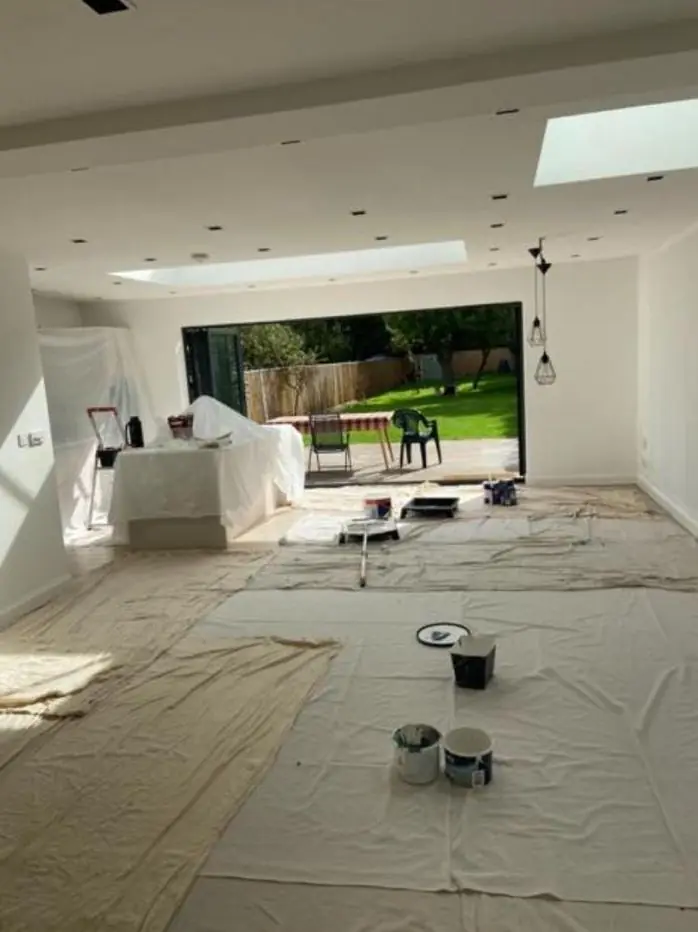
DH Painter & Decorator handles commercial painting in Abington, 1.6 miles north-east of Northampton town centre. Most business premises here line the Wellingborough Road, and work on them is planned around trading hours, a busy pavement and buildings where some stonework should not be painted at all.
The Wellingborough Road strip
Wellingborough Road, known locally as the Welly Road, is Abington’s commercial spine. Wikipedia lists its mix of restaurants, pubs and supermarkets, and the street also holds business units in older industrial buildings. Burlington House at No. 369, the surviving 1892 office frontage of Manfield’s shoe factory, is now split into units including a restaurant and a care home, according to Northampton Museums. Few of these premises can close for decorating, so the job is planned around when the doors are open. Supermarkets add another layer: deliveries arrive at set times and aisles stay stocked, so staff areas behind the shop floor are often the easiest place to start.
The building stock is varied too. Along one stretch you can pass the 1898 Abington Hotel, the 1892 Manfield frontage and, behind No. 254, the former Abington Works, a factory built between 1896 and 1906. Each of these has different surfaces inside, from plastered dining rooms to painted brick and tall industrial walls, so the specification is written building by building.
The general way we run commercial jobs is on our main commercial painting page. Here is how that applies to this stretch of road.
Working around service in restaurants and pubs
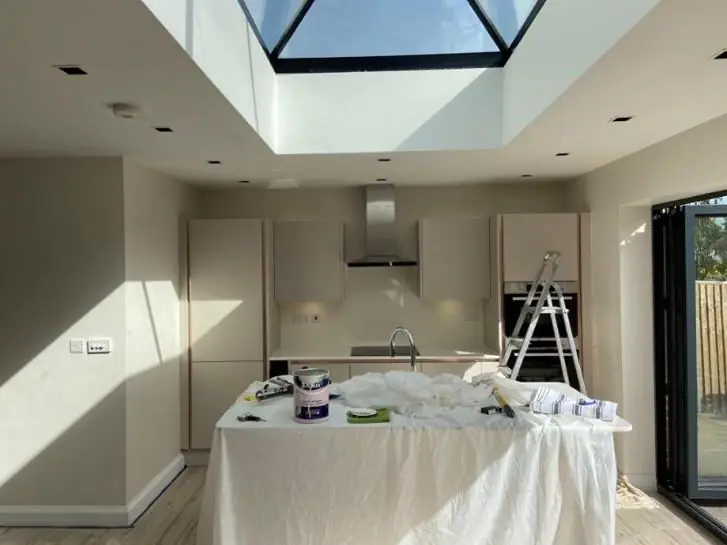
Food and drink premises have the tightest windows. The usual options are:
- Before opening: early starts in dining rooms and bars, cleared and ventilated before lunch service.
- Closed days: larger areas done on the day of the week the business shuts.
- Zone by zone: one section of a dining room screened off while the rest trades.
We use low-odour, water-based paints in customer areas so the smell does not reach the food or the tables, and quick-drying products where a room has to reopen the same day. Kitchens and back corridors get wipeable finishes that cope with steam and frequent cleaning, and we agree with the manager which areas are off limits during prep.
Brick, stone and what to leave alone
Two of the commercial buildings on this road are listed and built in red brick with carved or dressed stone. The Abington Hotel, an 1898 building by Matthew Holding, is a good warning: its Historic England listing notes that black and red paint on the ground-floor stonework spoils its appearance. The same lesson applies to the stone-dressed Manfield frontage and, just off the main road, to Mobbs Miller House on Christchurch Road, the 1920s former Co-operative shoe factory whose listing includes its iron railings and gates.
On buildings like these the painting work is the joinery, signage boards, metalwork and interiors, not the brick or carved stone. Where stone has been painted in the past, cleaning or removal is a specialist job, and on a listed building it may need consent. We will tell you if a request falls into that category rather than quote for it. Frontage joinery and fascias are covered in more detail on our shopfront painting page.
Pavement, parking and public safety
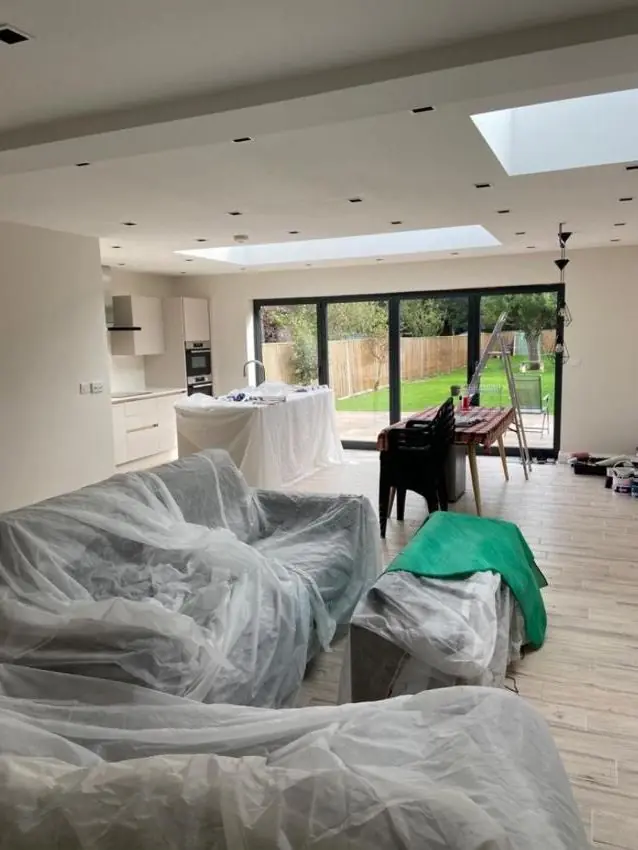
Front elevations on Wellingborough Road sit right next to a busy public pavement and a main road. Any ladder or tower work outside is set up with barriers and signage, scheduled for quieter times where possible, and kept as compact as the job allows. Materials come in early, and anything left overnight goes inside the premises, not on the street. For business units inside converted factory buildings, we coordinate with the building manager about shared entrances, lifts and other tenants. Dean is fully insured for commercial work and can supply details on request. Written method statements and risk assessments can be provided where a landlord or head office asks for them. For other services in the district, see our Abington area page.
Last updated by Dean, DH Painter & Decorator.