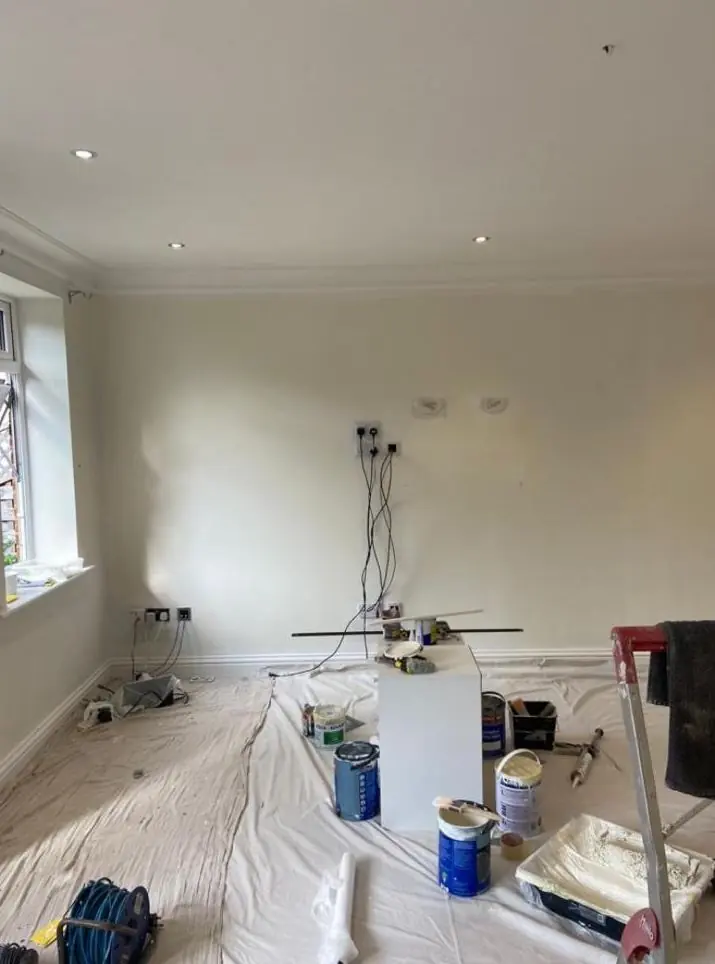
Painter & decorator covering Northampton and surrounding areas

Decorative Finishes in Abington

Hand-painted detail for Abington homes: picked-out plasterwork in park-side Edwardian houses, panelled doors in terraces, and breathable finishes for old stone.

  • Over 30 years experience
  • Free quotes & advice
  • Fully insured & trained
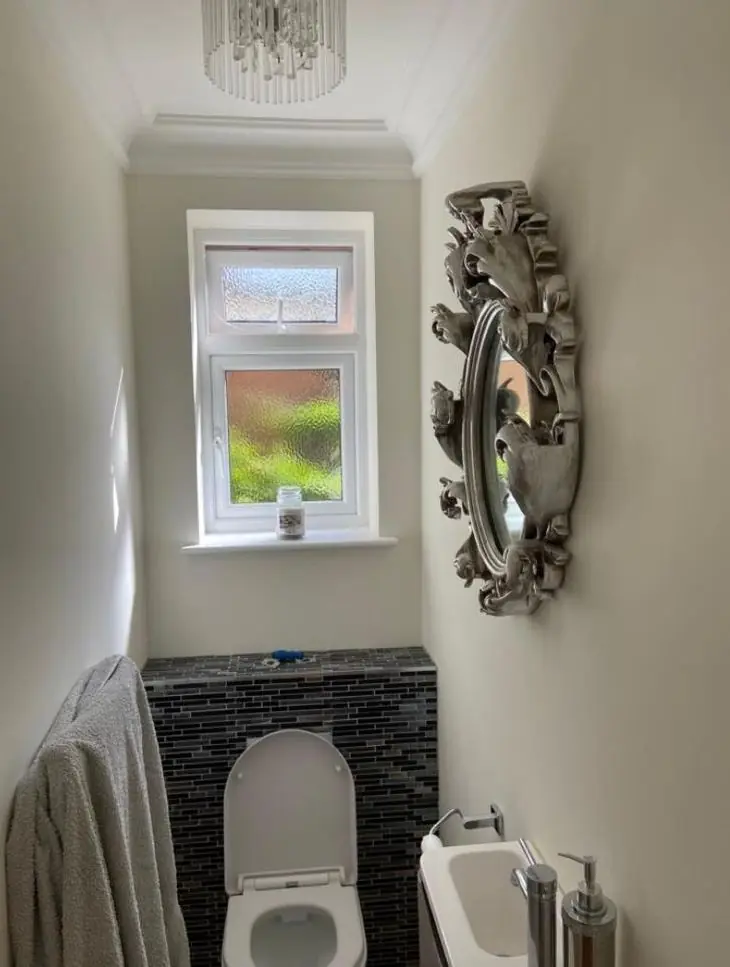
Cloakroom with cream walls, white coving and window frame painted, ornate mirror hung

DH Painter & Decorator offers decorative paint finishes in Abington, 1.6 miles north-east of Northampton town centre. The larger Edwardian houses facing Abington Park and the period terraces with cornicing and panelled doors suit heritage detailing, while the district's listed stone cottages call for traditional, breathable materials only.

Plasterwork worth picking out

The Grade I listed Abbey in the park, now the museum, is noted in its listing for its fine plaster ceilings, a reminder that ornamental plaster has a long history in Abington. The park-facing homes of about 1900-1925 on parts of Christchurch Road, Park Avenue South and Abington Park Crescent have larger rooms, and where they keep ceiling roses, cornices or panel mouldings, those details can be picked out.

Picking out means painting parts of that moulding in a second colour or sheen so the profile reads. Done well, it is subtle. Some approaches that suit houses of this date:

  • A ceiling rose with its central boss and outer ring in a slightly warmer white than the ceiling, so the shape shows without looking like a cake decoration.
  • The lowest member of a cornice painted in the wall colour, which visually lowers a very tall ceiling.
  • Wall panel mouldings in a shade one or two steps darker than the panel infill.

The work is slow. Every line is cut in by hand, often two or three times, and we usually allow more time for a single rose than for painting the ceiling around it.

Panelled doors and dados in the Victorian terraces
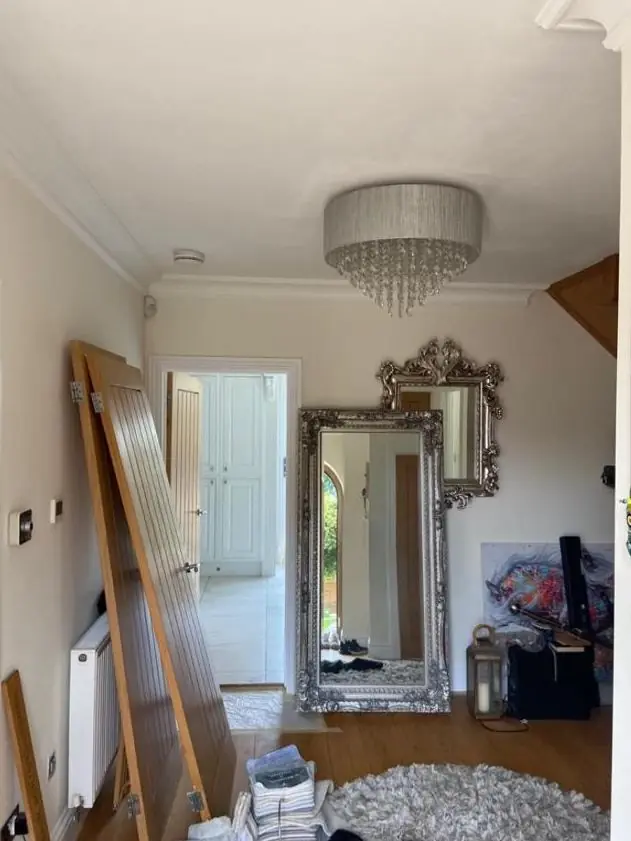
Hallway with chandelier and ornate mirrors, cream walls painted and oak doors propped ready

In the late-19th-century streets, decorative work tends to sit lower on the wall. Original four- and six-panel doors can be finished with the mouldings in one tone and the flat panels in another, a traditional look that suits the age of the houses. Where a hallway or stair still has a dado rail, a darker, harder-wearing colour below it and a lighter one above was a practical period choice and still makes sense in a narrow terrace hall that doubles as the route for bins and deliveries.

Old doors here often carry many coats of paint, possibly including lead-based layers on older houses. Before any two-tone scheme, we test, then prepare with wet abrading or other dust-controlled methods so the mouldings are crisp again rather than rounded over by decades of paint.

Listed stone cottages: traditional materials only

A handful of Abington’s oldest buildings are listed squared-rubble stone: Archway Cottages at 9-12 Wellingborough Road, The Cottage on Christchurch Road and the 1846 former almshouses at 1-4 Abington Cottages on Abington Avenue. On buildings like these, modern acrylic or vinyl paints trap moisture in stone and lime. If the surface already has a limewash or similar traditional coating, the right finish is more of the same, and the stone itself should never be painted if it is bare. Work to a listed building that alters its character may need listed building consent, so we ask owners to speak to West Northamptonshire Council’s conservation officers before we start.

Feature walls in converted factory flats
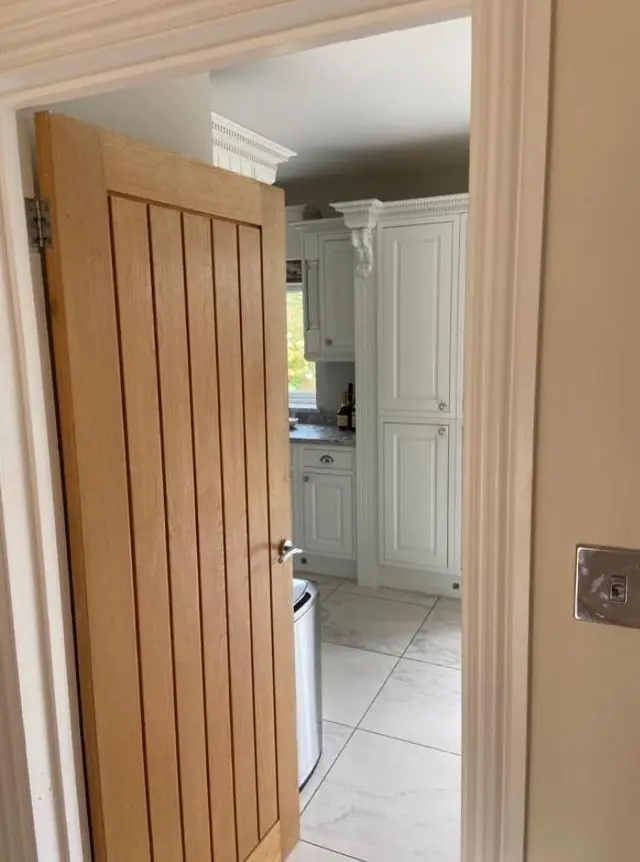
Oak door opening onto a kitchen, with off-white walls and freshly glossed frame

Flats in Abington’s former warehouses and factories are a different brief. Tall walls and exposed brick invite contrast: a deep colour on a single plastered wall beside bare brick, a colour-blocked band at door height, or a painted arch around a window recess. These are big surfaces, so we use an access tower and set out straight lines with a laser level and tape rather than freehand. The main decorative finishes page covers faux effects and panelling methods in more detail.

Starting a decorative job

Dean looks at the plaster, woodwork or stone first, because no finish survives a weak surface, then sketches out options with you. For other work in the district, see our Abington area page.

Last updated by Dean, DH Painter & Decorator.
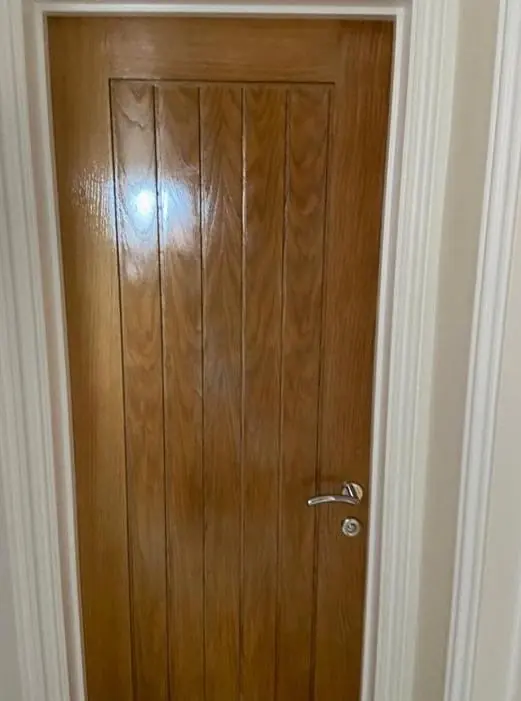
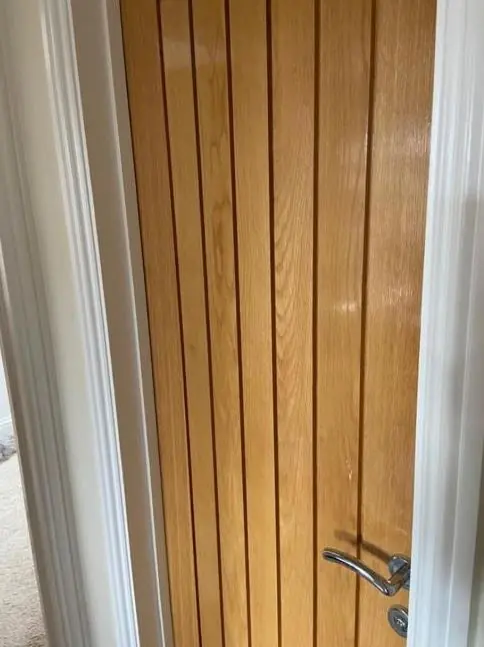
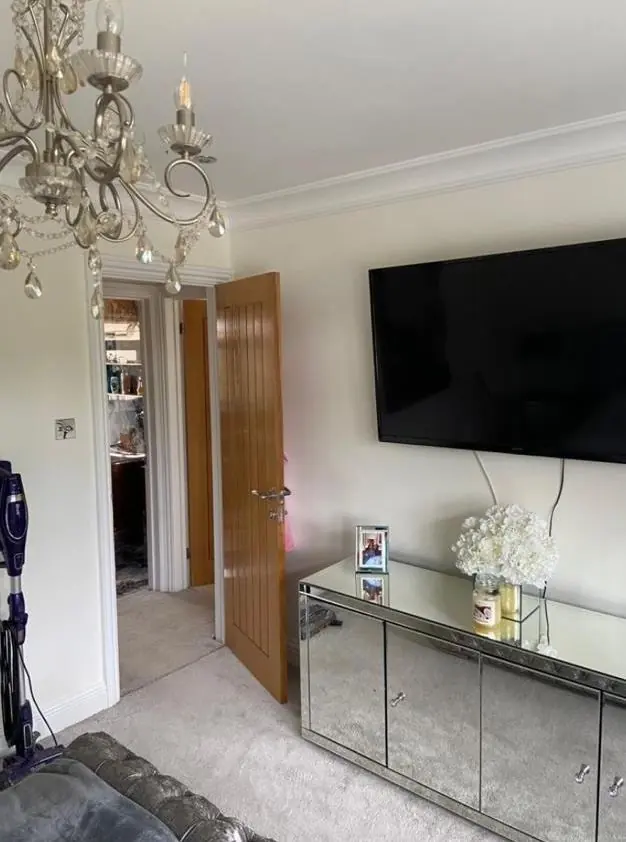
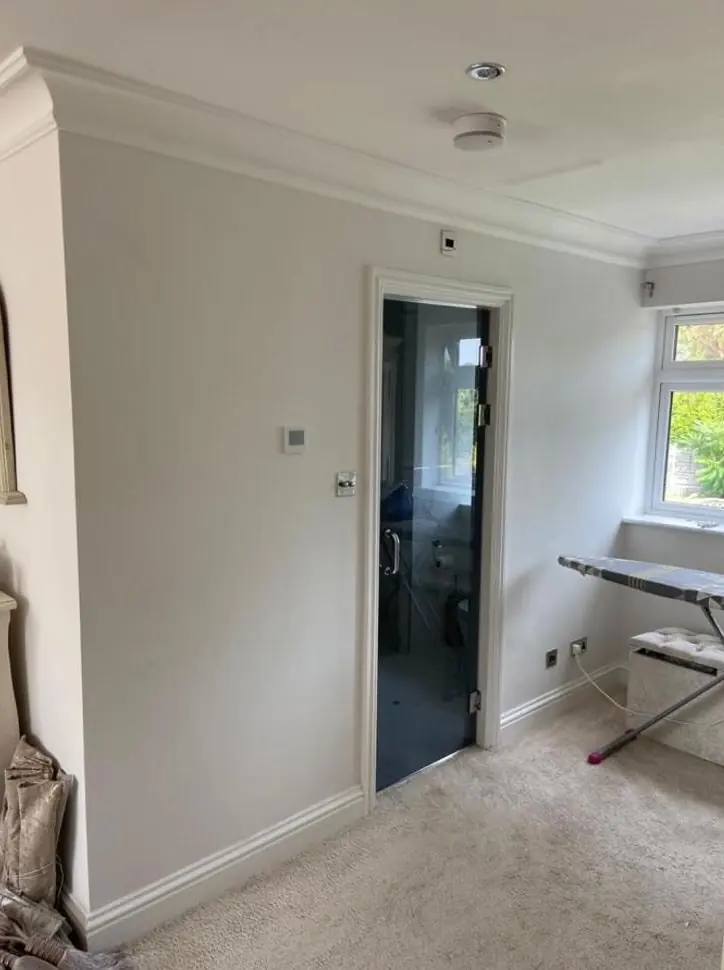
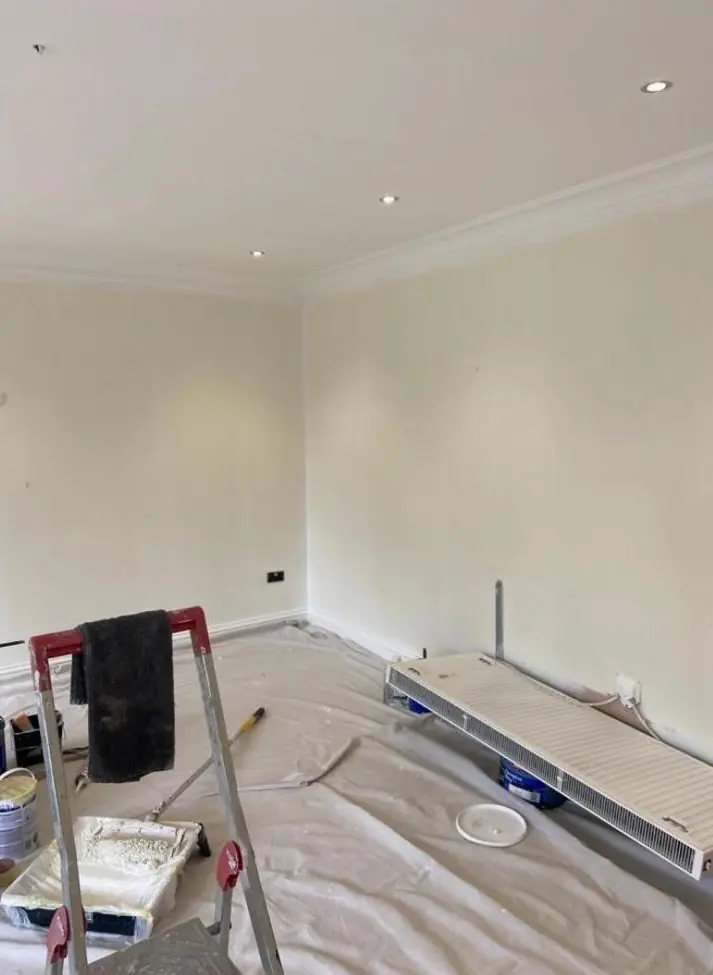
Oak cottage-style door varnished to a high-gloss sheen within a white painted frame Close-up of an oak door with a lacquered finish beside white gloss architrave Living room around a wall-mounted TV, cream walls and white coving finished Room corner finished in pale grey-beige with white coving, skirting and door frame Corner of a lounge with walls painted soft white, dust sheets and radiator off the wall Living room walls painted off-white with dust sheets, roller tray and paint tins mid-job

Decorative finishes in Abington: your questions answered

Can't see your question? Call us on 07539 779 036 and we'll happily talk it through.

Can you pick out the ceiling rose and cornice in my Abington Park house?

Yes. Where the early-1900s houses facing the park keep their roses, cornices or panel mouldings, those suit a second colour or sheen. Every line is cut in by hand, so it takes longer than a plain ceiling. Dean can suggest subtle options, such as a warmer white for the rose, that suit the age of the house.

Can you limewash a listed stone cottage in Abington?

Where a listed building such as the squared-rubble cottages on Wellingborough Road or Abington Avenue already has a limewash or similar traditional coating, renewing it with the same kind of breathable material is the usual approach. Bare stone should be left bare. Check with the council's conservation officers first, as listed building consent may be needed.

Is a two-tone finish suitable for old panelled doors in a Victorian terrace?

It suits them well, provided the doors are prepared properly first. Doors in Abington's terraces often carry many paint layers, possibly including lead. We test, then use dust-controlled abrading so the mouldings are sharp again before painting the panels and frames in two coordinating colours.

What decorative finishes work in a converted factory flat?

Tall walls and exposed brick in Abington's converted warehouses suit bold contrasts: a deep colour on one plastered wall beside bare brick, colour-blocked bands or a painted recess around a window. We use an access tower and a laser level to set out crisp lines across the large surfaces.

What customers say about Dean

Most of our work comes from recommendations and returning customers. These are real reviews from customers after the job was finished, in their own words.

More customer reviews

After completing my gates I was then assured Dean was more than competent to repaint the inside of my property from top to bottom. It’s a large 4 bedroom house and was done to a very high standard. Once again I would highly recommend him.

Customer review Gates, then a full four-bedroom interior

I contacted Dean to get the outside of the house painted; the house is all roughcast render. He has done a fantastic job; the house is looking brand new. The same he did for our garage, painted our bedrooms x2, did extra jobs for us like skirtings and door frames, and painted even our gates. I could not recommend him enough; he is attentive, smiling, always on time, and nothing too much; I am so happy with what Dean has done; he went above and beyond. I have recommended him to all my friends and family.

Read full review
Customer review Roughcast render, garage, bedrooms and gates

Dean did a great job for a good price i'd be very happy to recommend him always on time polite and friendly.

Customer review Painting and decorating

Start your project

Get a free painting and decorating quote

Tell us a little about the job and we'll arrange a visit to look at it properly. Quotes and advice are always free, with no obligation.

What happens next

  1. We get back to you to arrange a convenient time to visit.
  2. Free visit. We look at the job and talk through colours, finishes and any repairs.
  3. Written quote. A clear price covering preparation, materials and the finish we agreed.

Request a free quote

Please enter your name.

Please check your email address.

Please enter a valid phone number.

Prefer to talk? Call 07539 779 036.

Call 07539 779 036Call nowFree quote