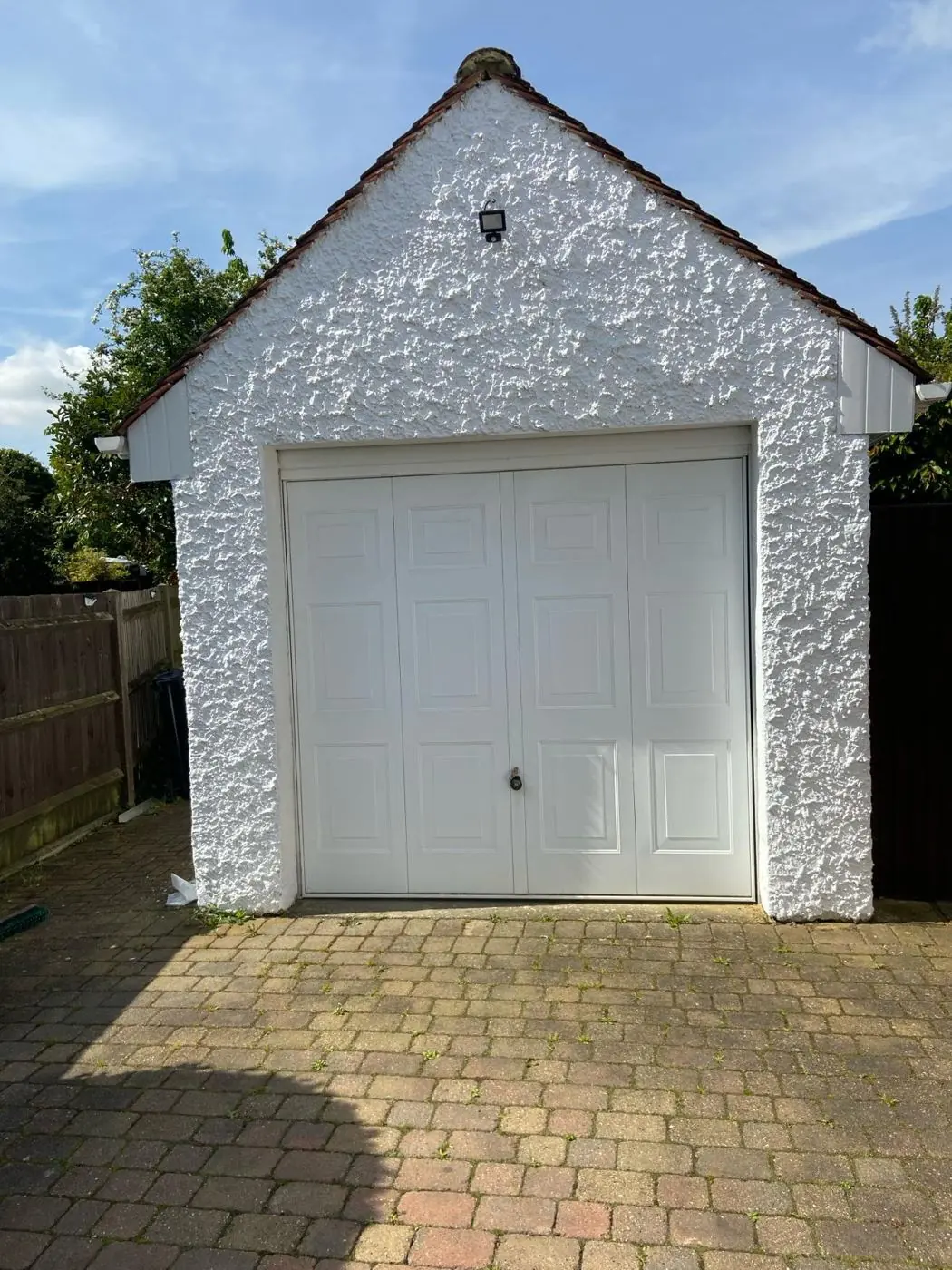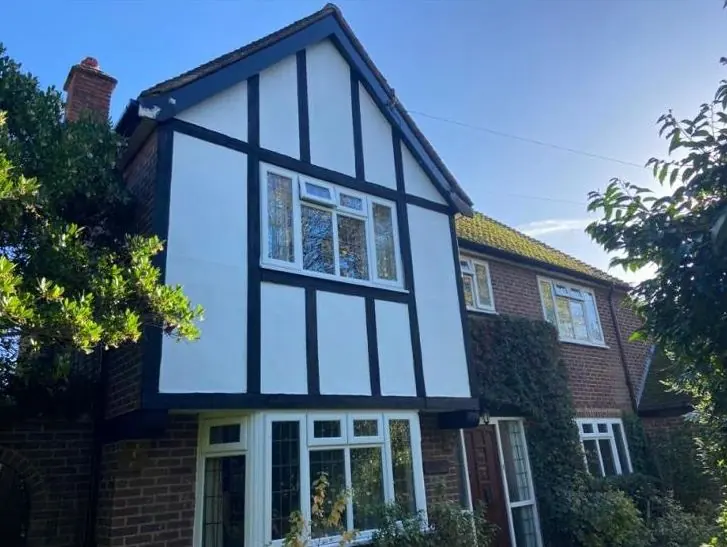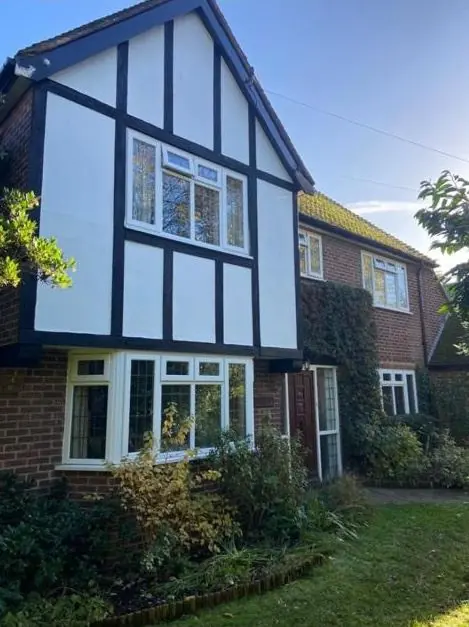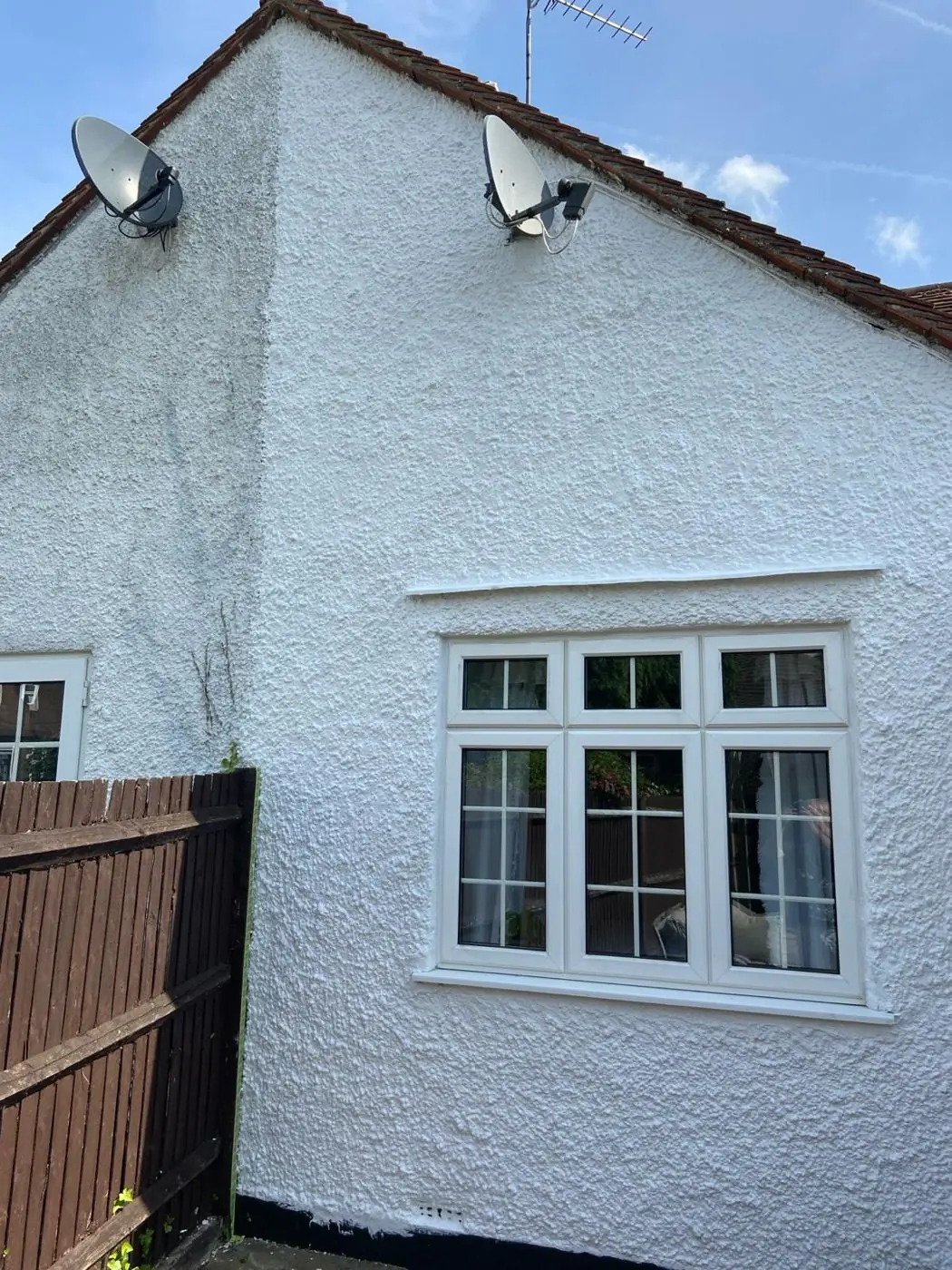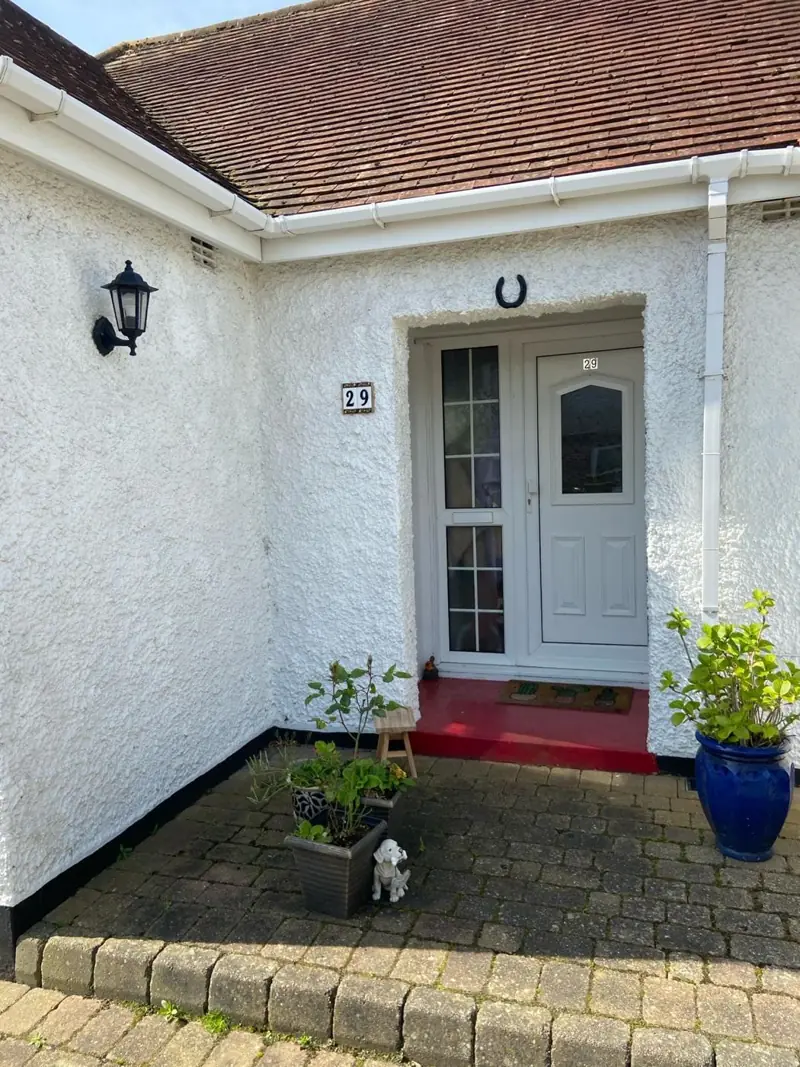
Dean paints timber fascias, soffits, gutters and downpipes on Abington houses, from Victorian terraces to 1930s-50s homes. We cover the district from Northampton, 1.6 miles from the town centre, and every roofline job here starts with a wash and a check of the timber.
Rooflines in the shadow of the park
Abington Park has tree avenues planted in the 1740s and 1790s, and the houses on parts of Christchurch Road, Park Avenue South and Abington Park Crescent look straight out at them. Big old trees mean leaf litter in gutters, sap on boards and a damp, shaded roofline that grows green algae. Paint put over that will lift. So on these houses the first stage is cleaning:
- gutters cleared of leaves so we can see whether the joints leak
- fascias, soffits and gutter faces washed with a fungicidal treatment
- time left for the treatment to work and the boards to dry before sanding
A gutter that overflows onto a fascia rots it from the top edge, so if a joint or outlet is leaking we show you before painting over the stain.
Timing matters on these streets. We aim to paint park-side rooflines in late spring or summer, once the boards have had a run of dry weeks and before autumn leaf fall fills the gutters again. Painting straight after a wet spell under trees is how moisture gets trapped behind a new coat.
Softwood boards on the interwar houses
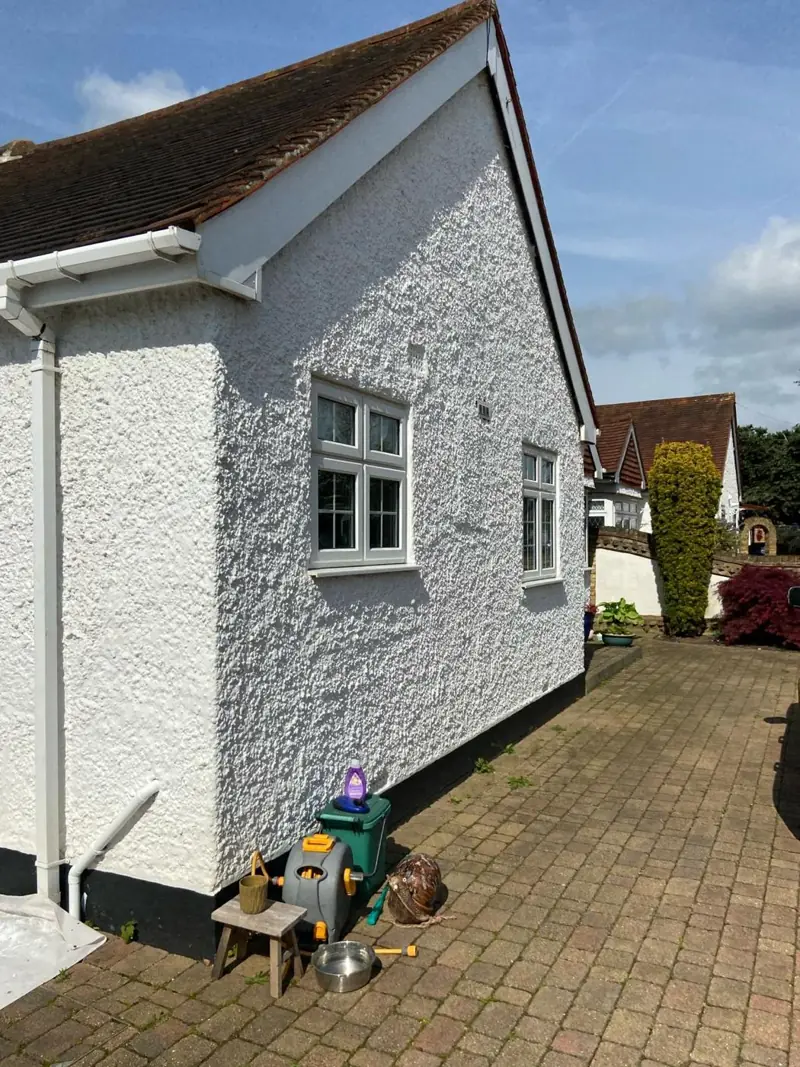
Mixed in among the Victorian streets, Abington has houses from the 1930s to the 1950s, and these were often built with softwood fascias and soffit boards. After decades of recoating, the paint film builds up and cracks along the grain, and the bottom edge of the fascia, where water drips, is usually the first place to go soft. We probe the boards, scrape back to sound paint, spot-prime bare timber and use a microporous trim paint that lets the wood breathe. Where a section has rotted through, it needs a carpenter before decoration, and we say so rather than fill it.
Painting a terrace roofline from a narrow pavement
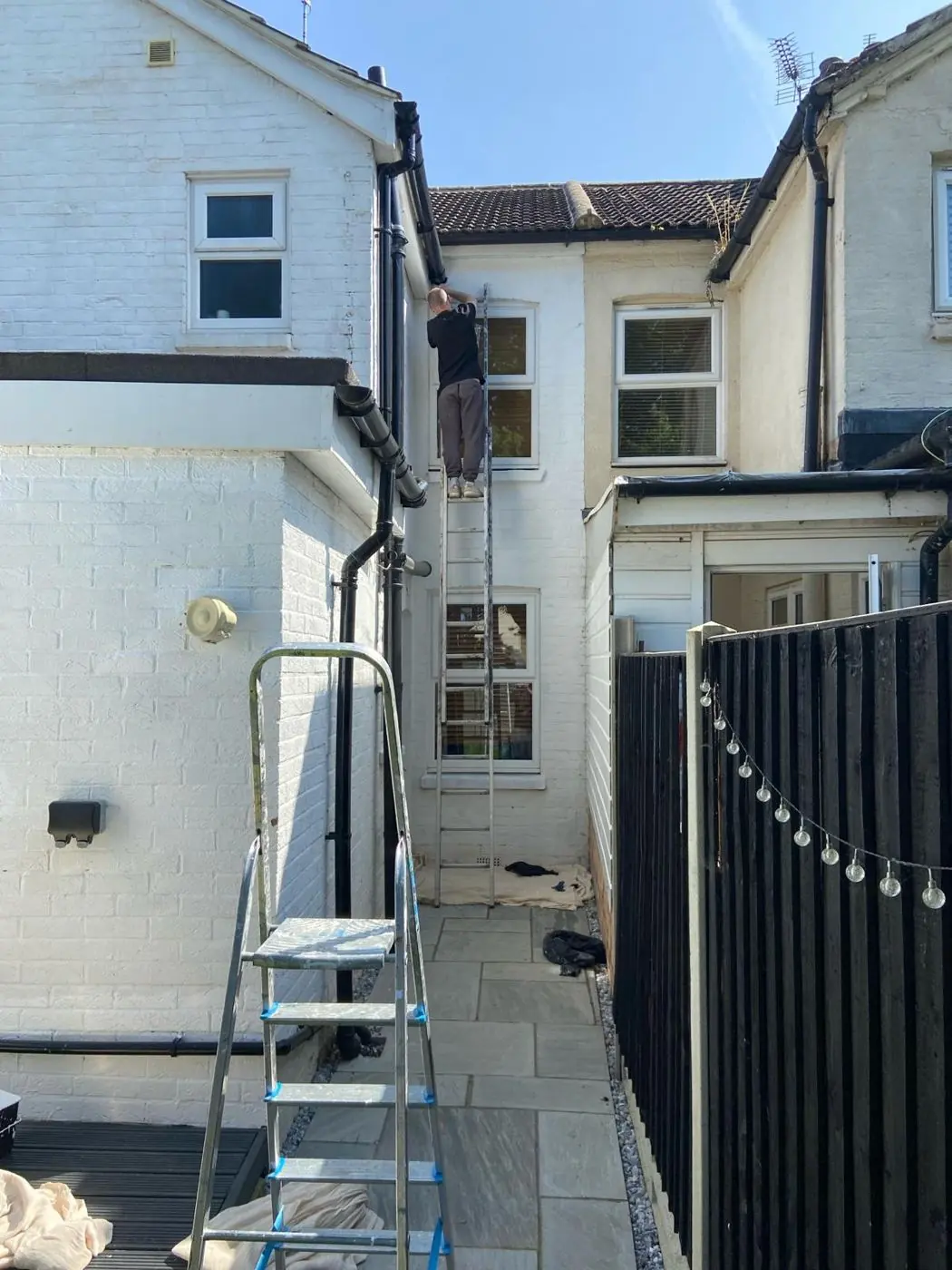
Where a Victorian terrace front opens straight onto the pavement, its eaves sit directly above the footway. A ladder for the front roofline stands on a public pavement with on-street parking alongside, which shapes how we set up. We work in short runs, keep someone at the foot of the ladder where the pavement is busy, use a stand-off so the ladder does not rest on the gutter, and move along rather than leaving the walkway blocked. If cars are tight to the kerb, an early start often helps.
At the back the problem is different. On terraces with no rear access, which planning minutes record for Cedar Road, ladders come through the house. Victorian terraces often have a lower rear outrigger, so that part of the roofline can be easier to reach, but every trip passes through your hall, and we protect it before the first one.
Converted factory and warehouse buildings in the district are another matter. Their eaves are often higher than a house, so the roofline may need an access tower rather than ladders, which we price separately once we have seen the site.
Gutters, downpipes and colour on the park edge
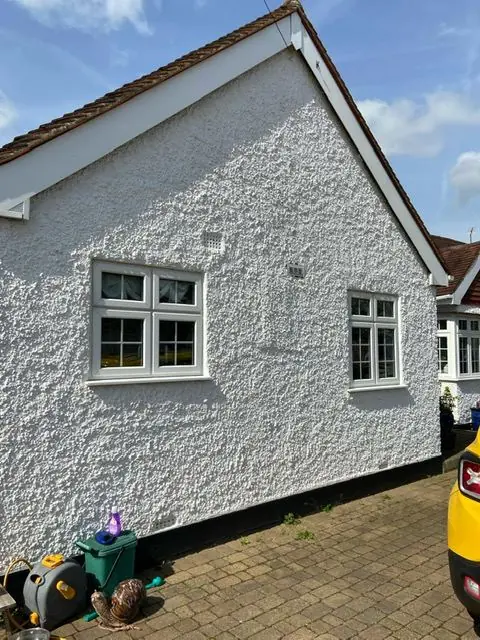
Older metal gutters on period houses need rust treated and primed like any other ironwork, while plastic gutters only need cleaning and a suitable paint if you want them recoloured. We paint downpipes and brackets in the same visit so the roofline matches top to bottom. On park-facing houses in the Abington Park Conservation Area, a dark traditional colour for rainwater goods and white or off-white for boards tends to suit the run of houses; ask West Northamptonshire Council before a bold change.
For our general approach to rooflines, see the main fascia and soffit painting service. If the walls below need attention too, the Abington area page lists the other services we offer here.
Last updated by Dean, DH Painter & Decorator.