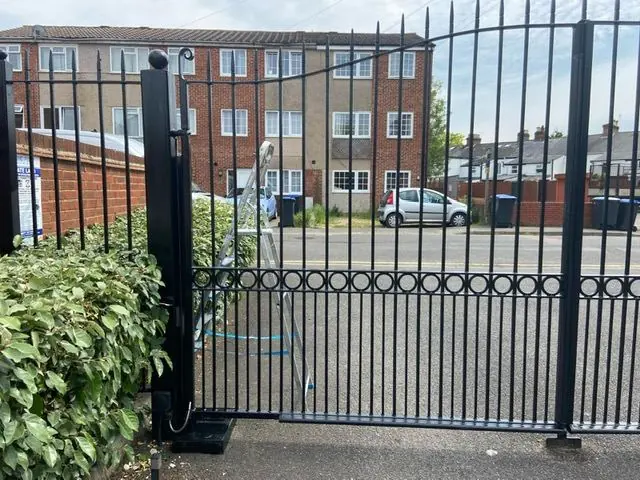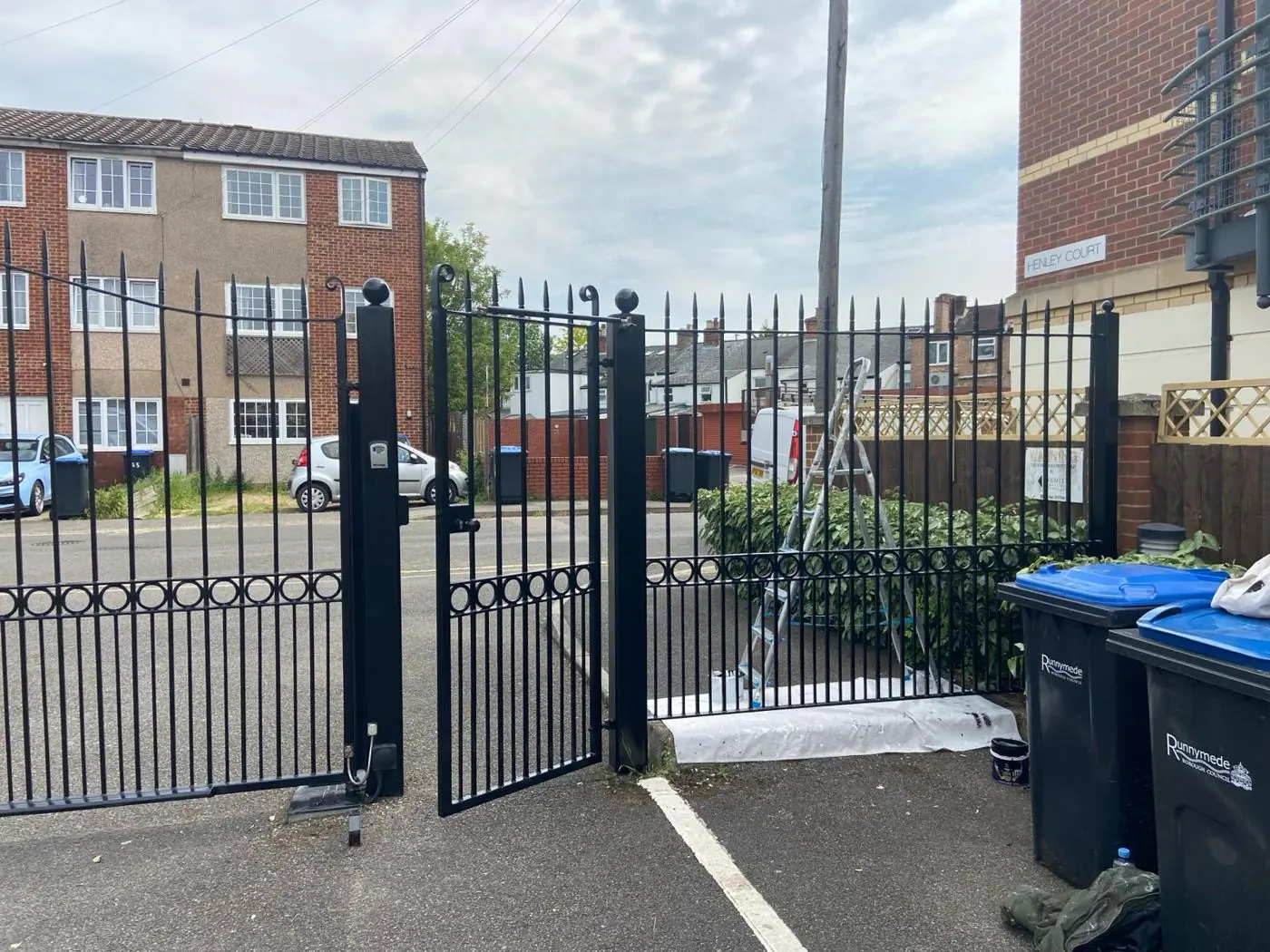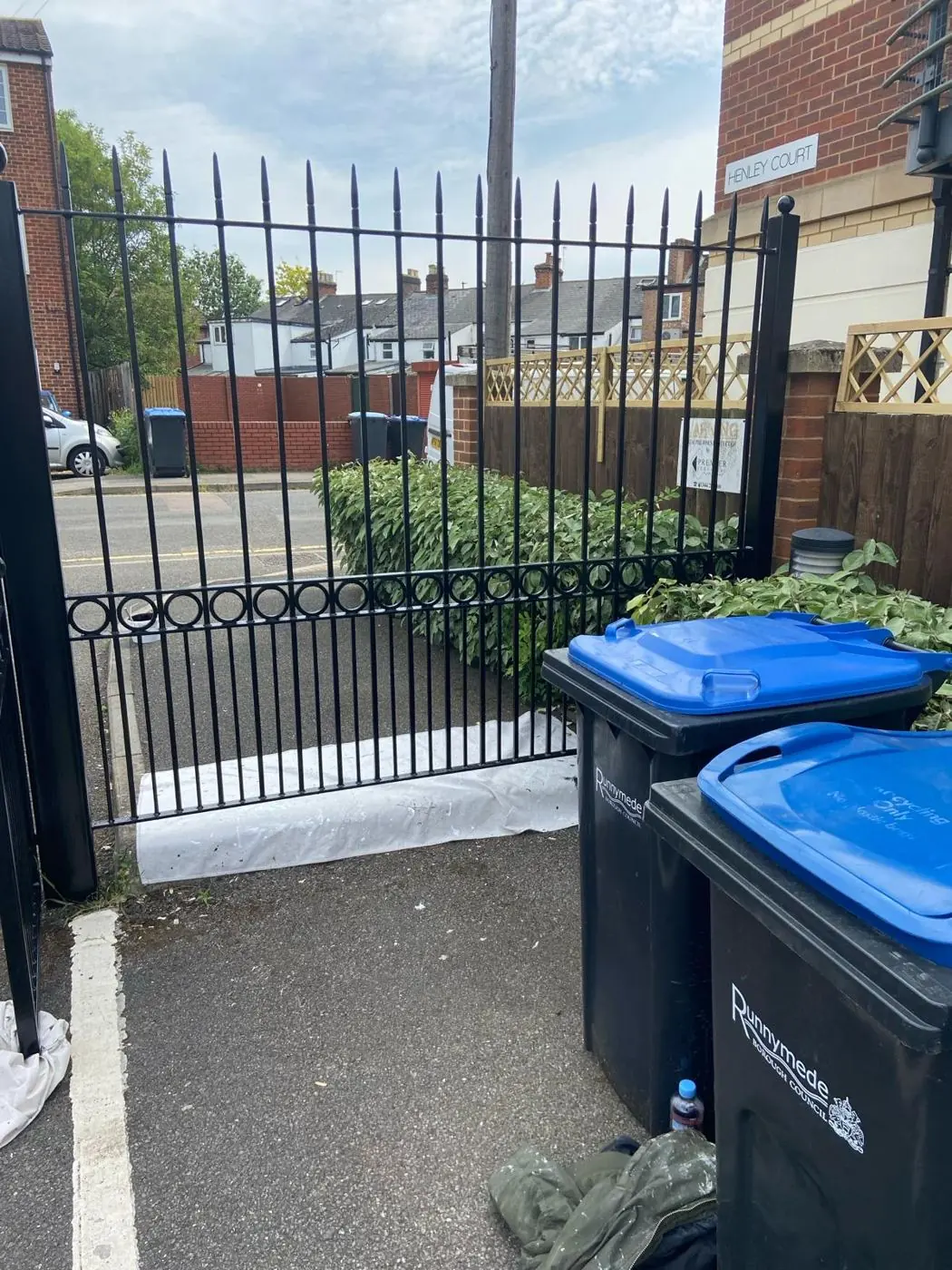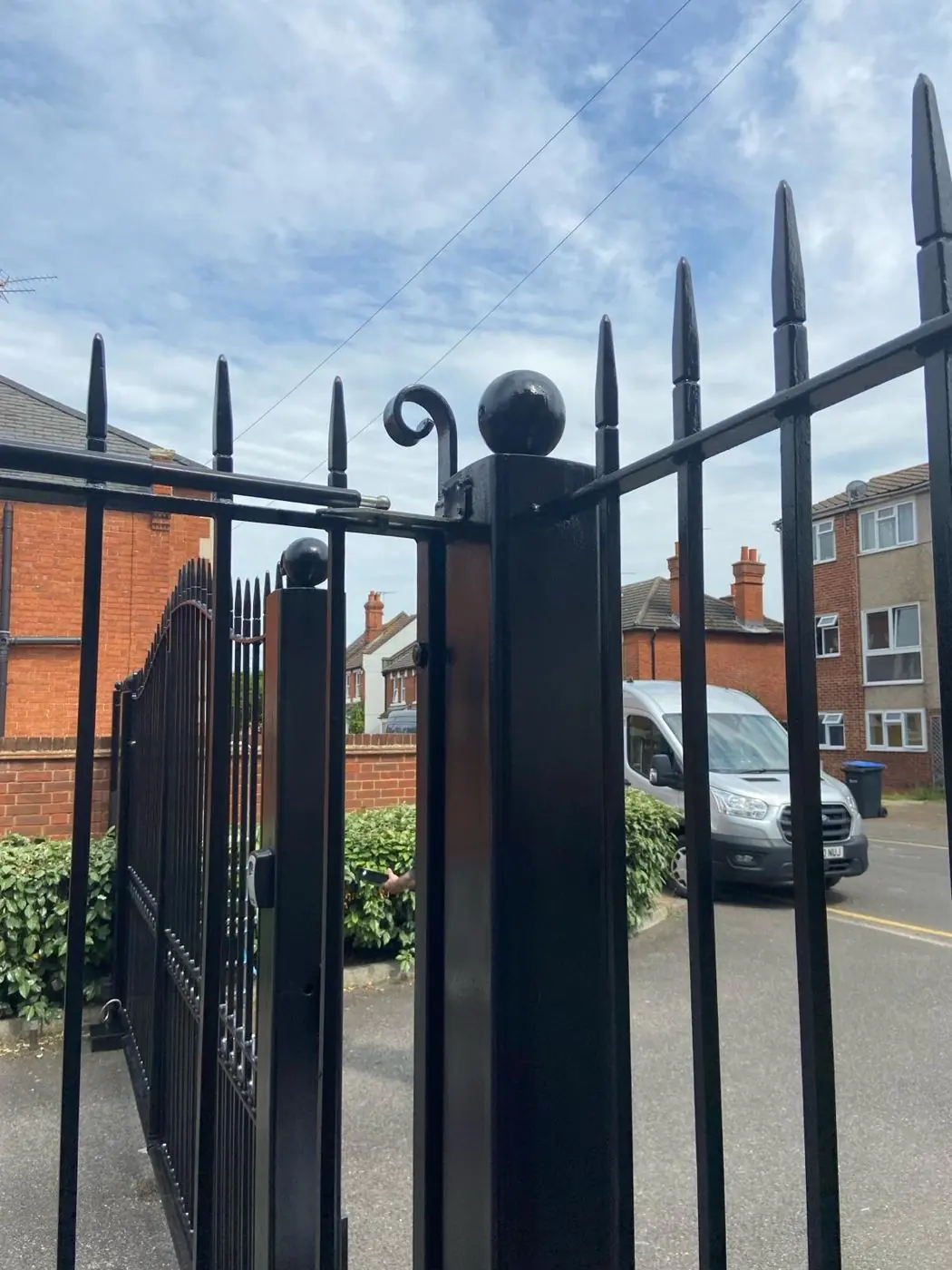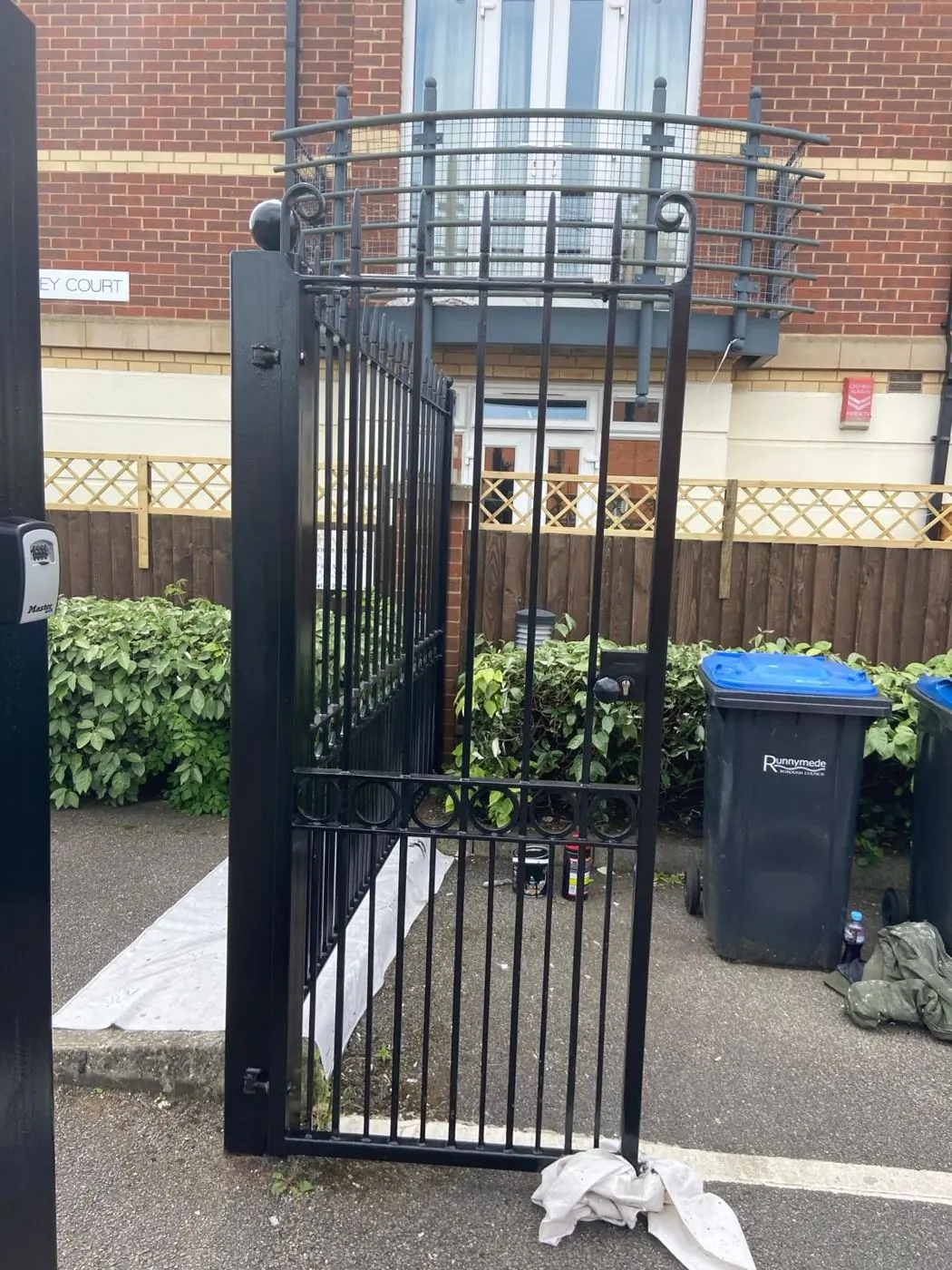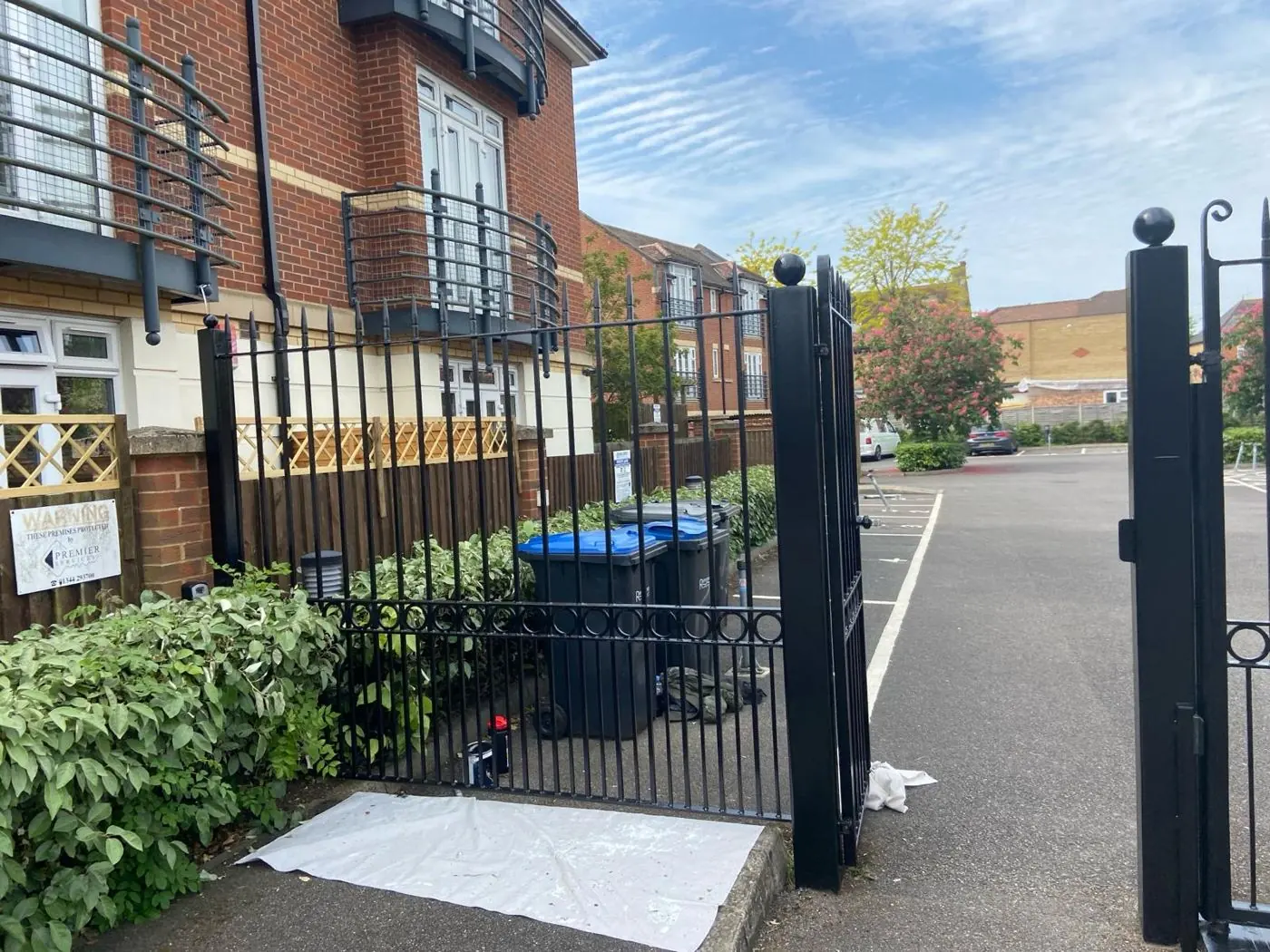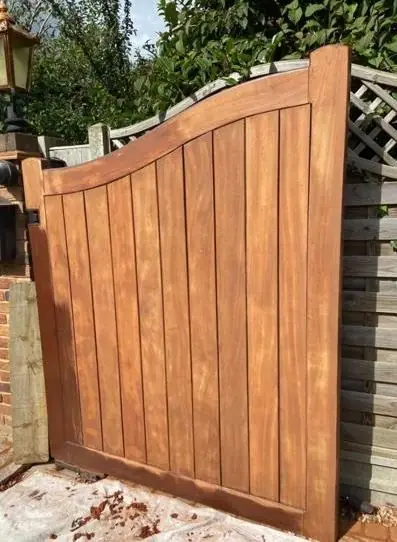
We stain and paint fences, gates and garden timber in Abington, NN1, around 1.6 miles from Northampton town centre. Dean works out first how the materials will reach your garden, because on many of the district's terraces the only route is through the house.
When the only way to the garden is the hallway
In 2023, Northampton Town Council planning minutes recorded that residents of Cedar Road have to carry rubbish through the house to the kerb, because the terrace has no usable rear access. Other terraces in the district may be the same. For fence work that matters more than people expect: stain is runny, a fence job needs brushes, sheets, a stepladder and sometimes a pressure washer, and all of it has to cross your hall. We plan it like this:
- hall and stair floors covered before the first trip
- everything brought through once at the start and taken out once at the end
- stain carried in lidded containers and decanted in the garden, never in open tins
- brushes cleaned outside, not at your kitchen sink
If you share an alleyway with neighbours, tell us when we quote, as that can make things much simpler.
Small yards, close neighbours
A Victorian terrace garden is usually narrow, and the fence on each side is shared with the house next door. Whoever owns the panel, we stain only your face of it, and we hang sheets on the neighbour’s side to catch drips coming through the gaps. If you want both sides done, agree the colour with your neighbour first; a dark stain on one side often shows through feather-edge boards. In streets with HMOs and houses converted to flats, such as Adams Avenue and Cedar Road, a landlord may prefer to have shared garden fences done between tenancies, when the garden is empty.
Gates and fences on the park edge
Houses facing Abington Park on Christchurch Road, Park Avenue South and Abington Park Crescent are in the Abington Park Conservation Area, and some have timber gates and boundary fences seen from the park. For anything visible from the street or parkland, a muted, natural stain usually suits the setting better than a bright colour, and if you are thinking of replacing a boundary rather than staining it, West Northamptonshire Council is the place to ask first.
These boundaries sit under the park’s mature trees, so they stay shaded and damp. We scrub off algae and let the timber dry properly before staining, since stain over damp wood dries patchy. Tree works in the conservation area need notice to the council, so if branches overhang the fence, any cutting back is for you to arrange separately before we arrive.
Stain or paint in a shaded garden?
For older, weathered fences in shady Abington gardens we tend to recommend a penetrating stain. It soaks in, wears gradually and is easy to top up without stripping. An opaque fence paint covers grey, patchy timber better and works well in a small terrace yard where you want one clean colour behind planting. Brand-new treated panels should be left to dry out first.
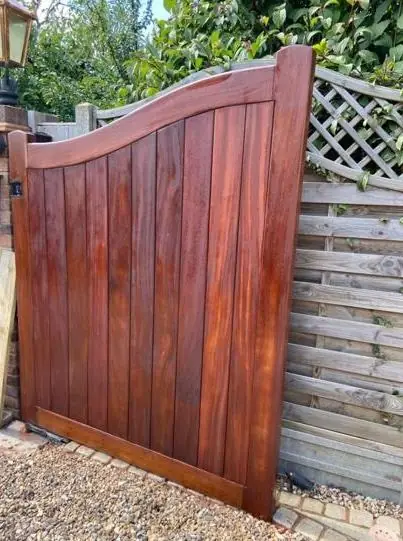
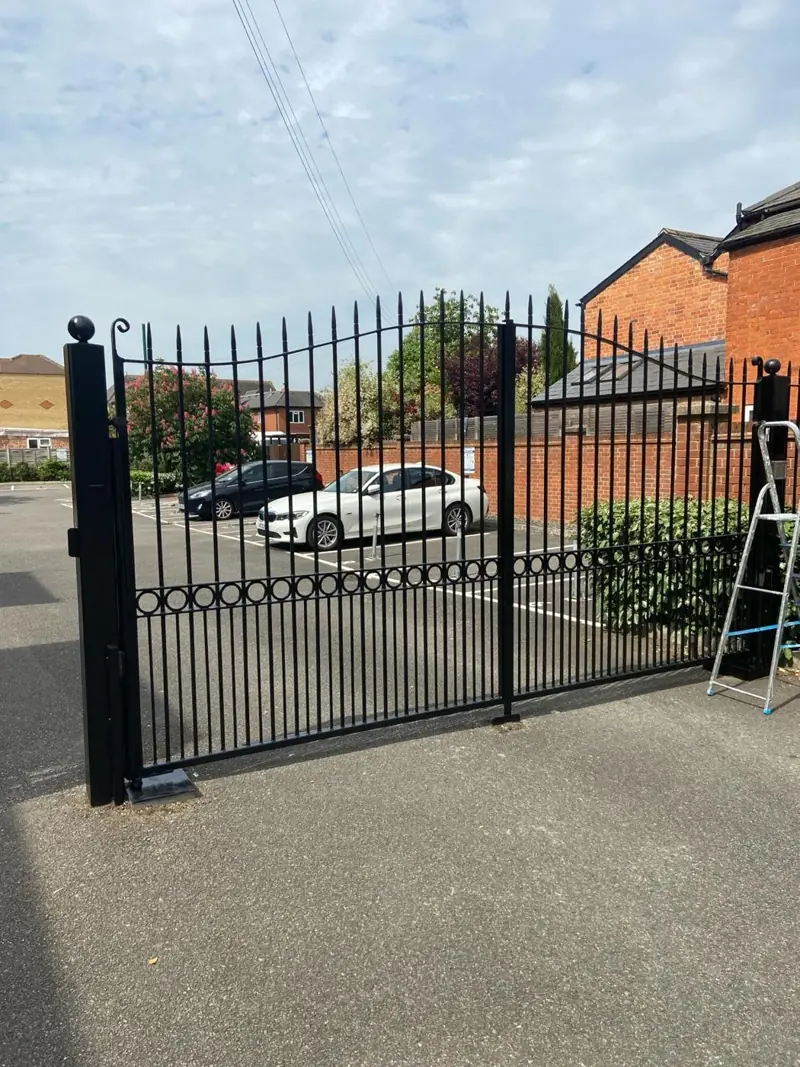
Gates get different treatment from panels. A timber side or rear gate is handled every day, so the latch side, the hinge side and the bottom rail where rainwater sits are sanded back further and given an extra coat. Ledged and braced gates are stained with the gate open, so the edges and the backs of the braces are covered too. Because the hallway route makes repeat visits awkward, we try to finish fence and gate together in one dry spell.
The general detail is on our main fence and gate staining service, and other work we cover locally is on the Abington area page.
Last updated by Dean, DH Painter & Decorator.