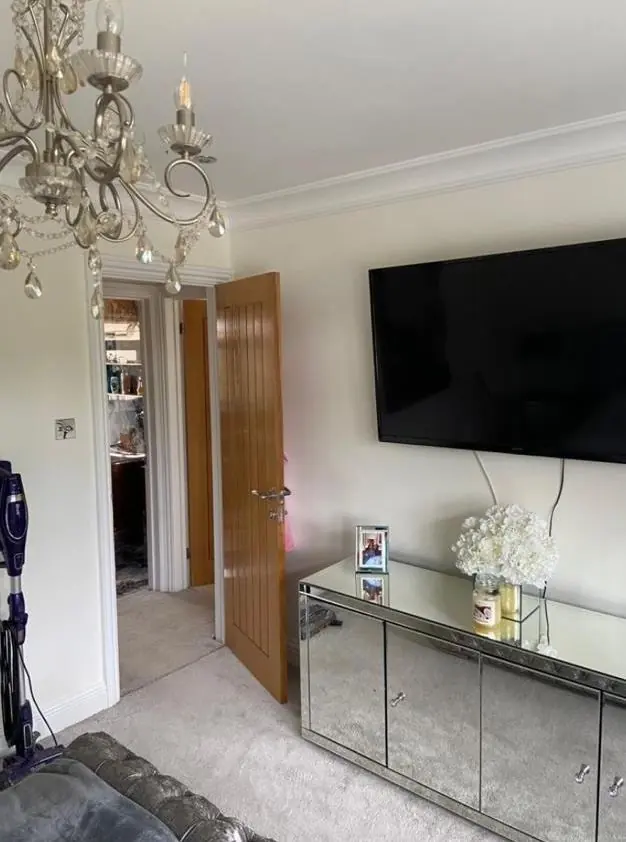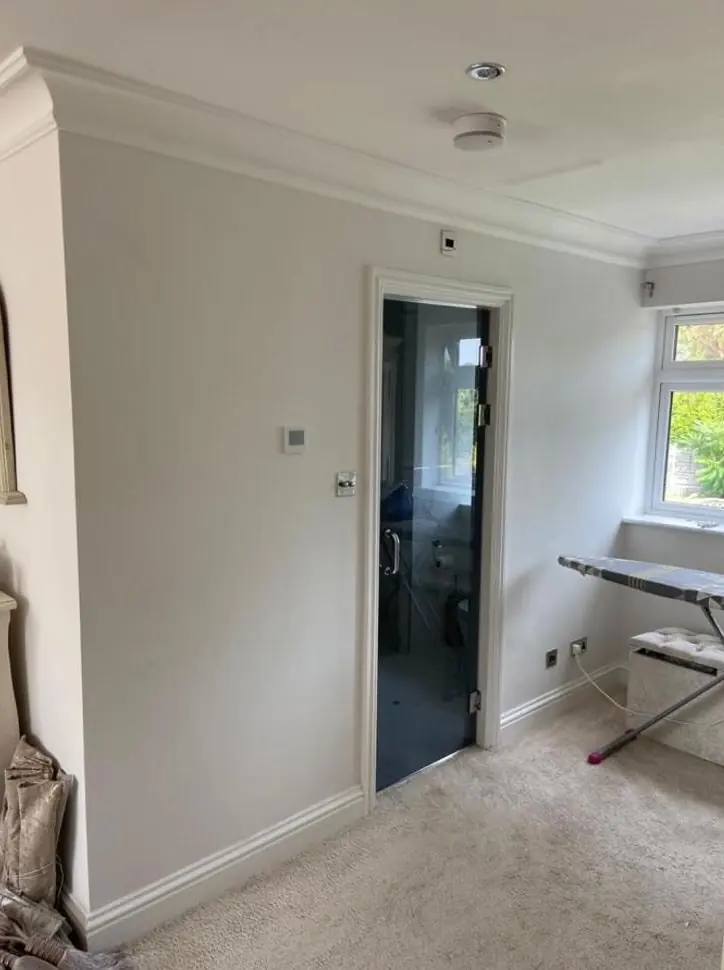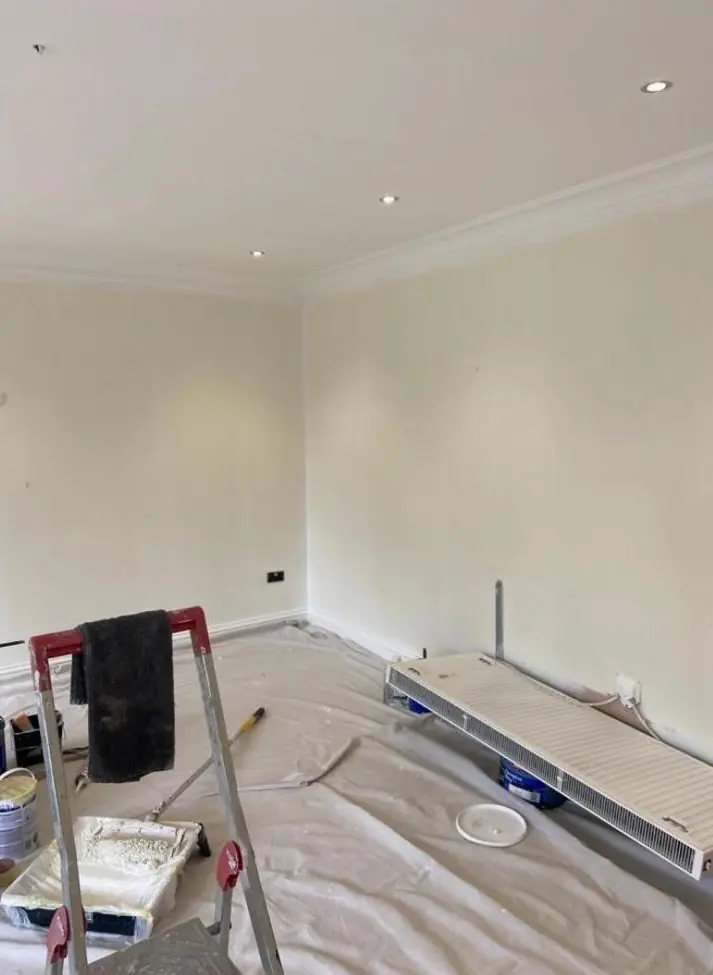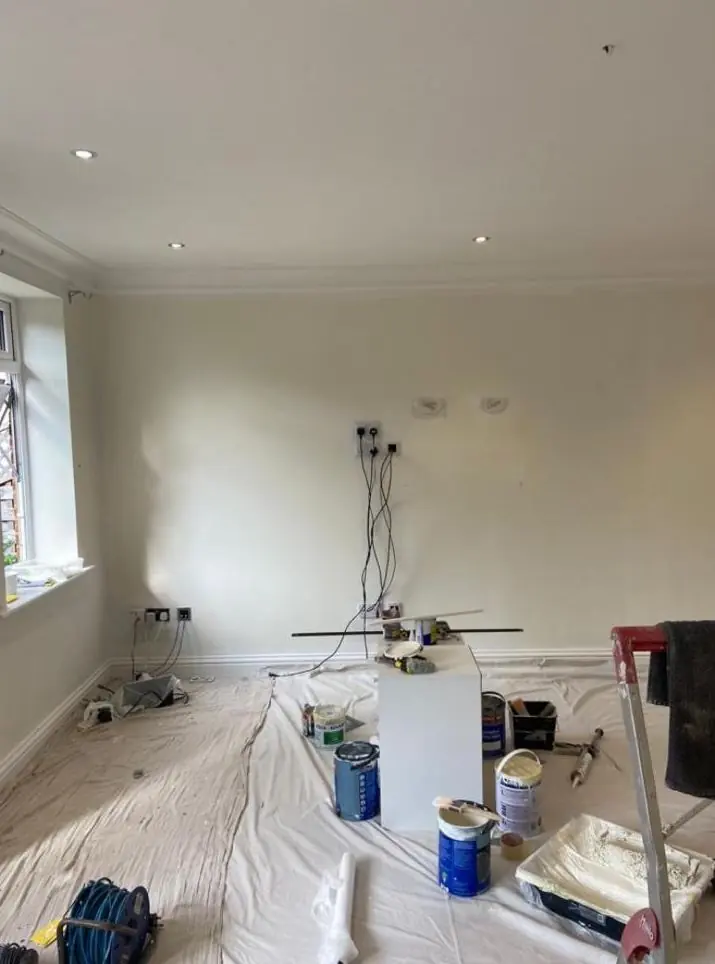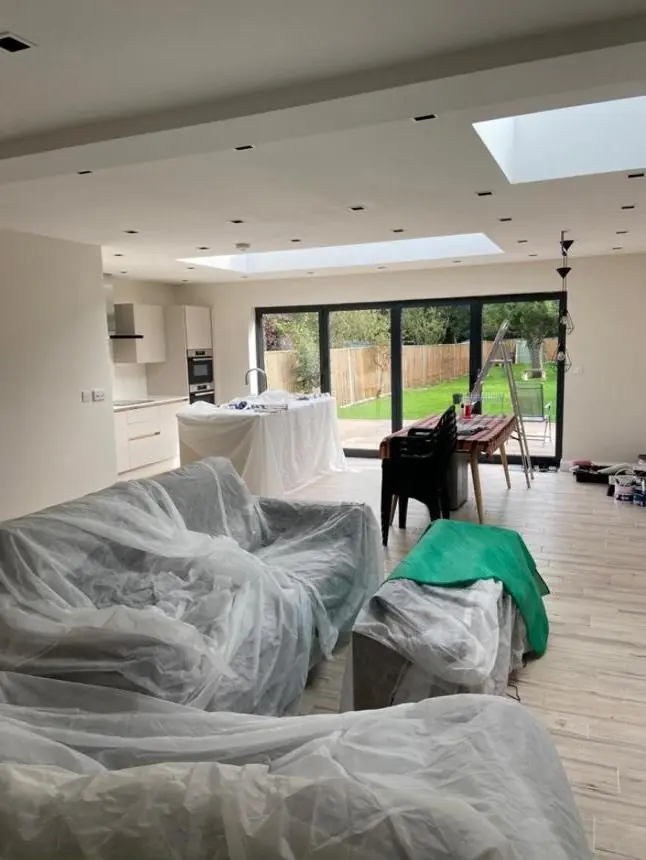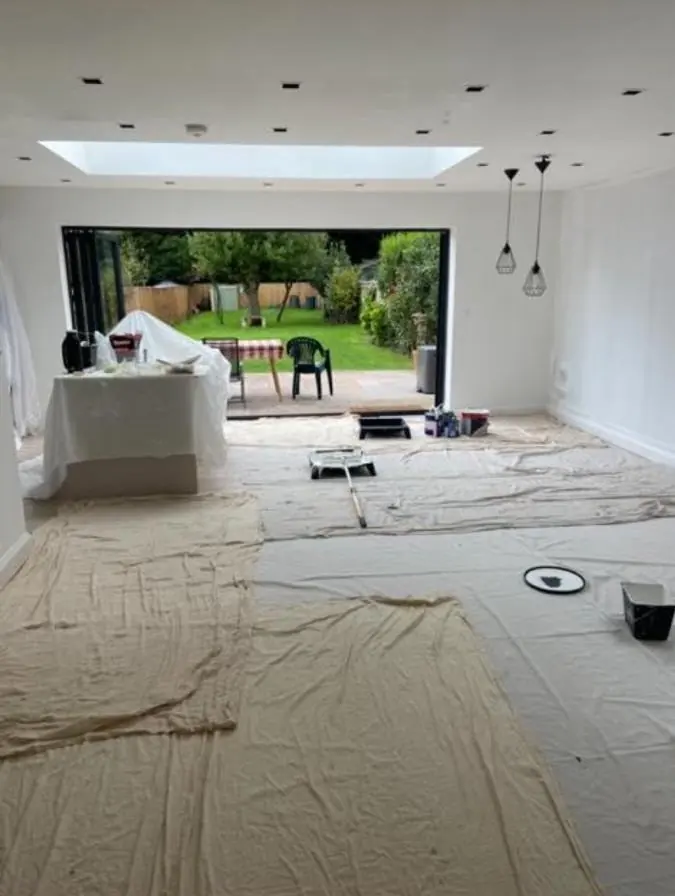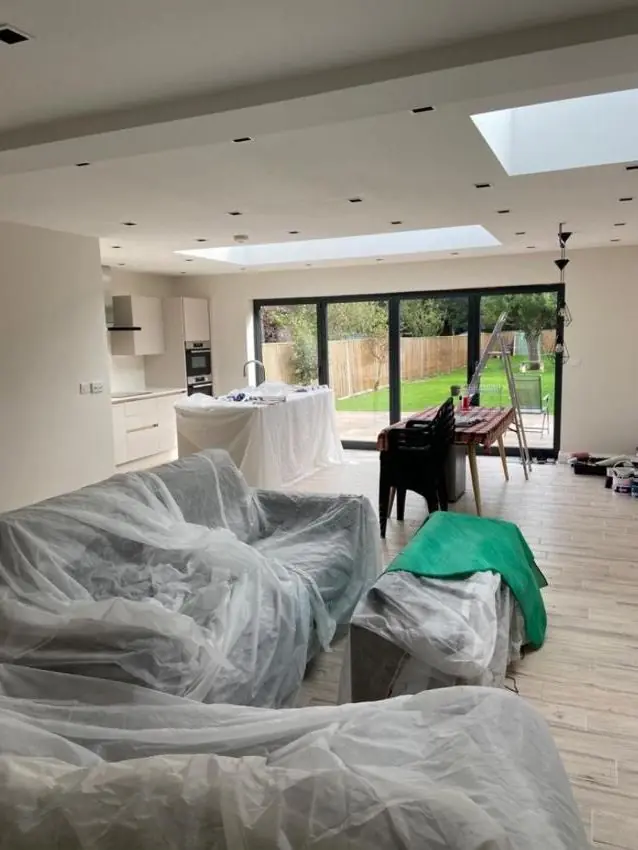
Dean decorates new plaster in Abington, 1.6 miles north-east of Northampton town centre: re-skimmed rooms, rear extensions and houses being split into flats. The work starts with checking the plaster is dry, then a breathable mist coat, snagging and finish coats on walls, ceilings and new joinery.
Why so much new plaster appears here
Abington’s housing has been reworked a great deal. Planning records from 2023 include the conversion of 110 Adams Avenue into five flats, a house on Abington Avenue returning from HMO to a single home, and HMO applications on Cedar Road, and Wikipedia notes that old warehouses in the district have been converted to flats. Each of those changes tends to bring new stud walls, re-skimmed rooms and sometimes a rear ground-floor extension for an extra kitchen or bedroom. Add the ordinary run of Victorian homeowners having a tired ceiling or chimney breast re-plastered, and plenty of bare pink walls end up waiting for paint.
We pick up once the plasterer has gone. The general method, from drying checks to finish coats, is set out on our main new plaster and extension painting page. This page looks at what is different about doing it in Abington.
Where new skim meets a 130-year-old wall
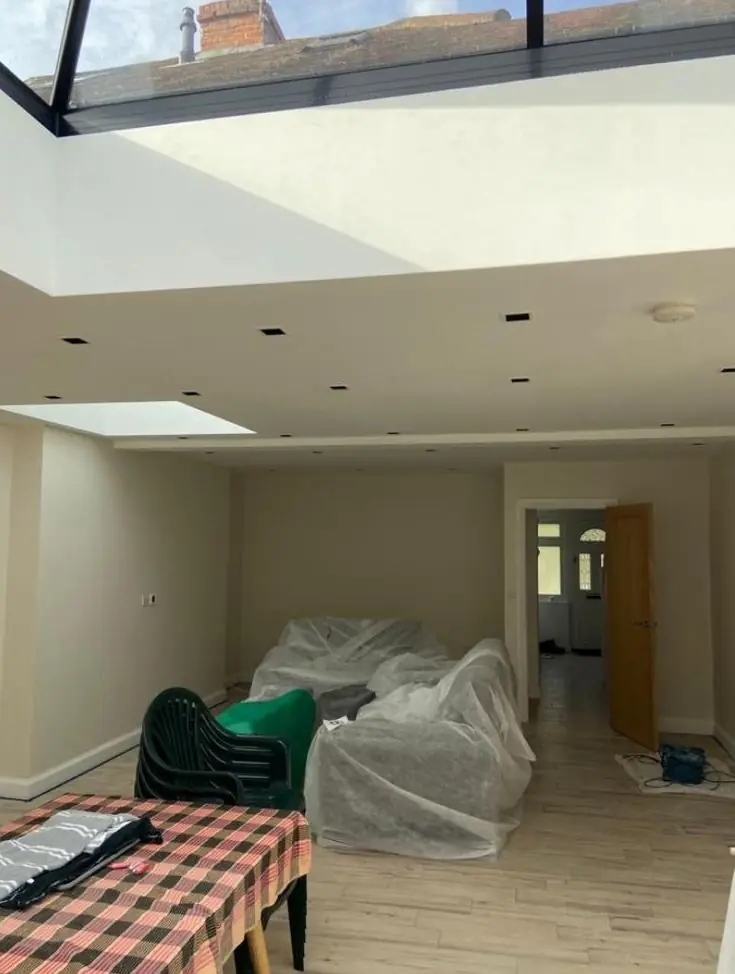
In a terrace from the 1890s, a new extension or re-skimmed wall usually butts up against original plaster. That older plaster may be lime-based, and it moves and absorbs differently from a modern gypsum skim. The junction is where cracks show first, so we treat it as its own task:
- Flexible filler or decorator’s caulk along internal corners where new meets old.
- Scrim or a lining paper on any junction that has already cracked.
- Spot-priming old patches so they do not flash through the finish coat.
- Breathable paint on original walls where they are known to be lime plaster.
Older ceilings in the same rooms may be lath and plaster. A builder working next to one can shake it, so we check the original ceilings for fresh cracking before any paint goes on.
Mist coat timing on a conversion
On a flat conversion the decorating sits inside a wider programme, and there is often pressure to paint as soon as the plaster looks dry on the surface. Fresh skim needs time to dry right through, which takes longer in winter, in rooms with no heating yet and on walls behind kitchen units. Painting too soon traps moisture and leads to blistering and peeling. We check colour and moisture across each wall before sealing it with a thinned breathable emulsion, and we explain the reasons in our guide to painting new plaster with a mist coat.
Where a builder or developer needs several flats finished at once, we stage the work so finished units are not walked through by other trades, and we agree a snagging pass at the end once the carpets or flooring are down. Converted warehouse buildings bring extra height: walls well above domestic level and long ceiling runs, which need a tower and a continuous wet edge so the mist coat dries evenly.
Rear extensions on streets with no back gate
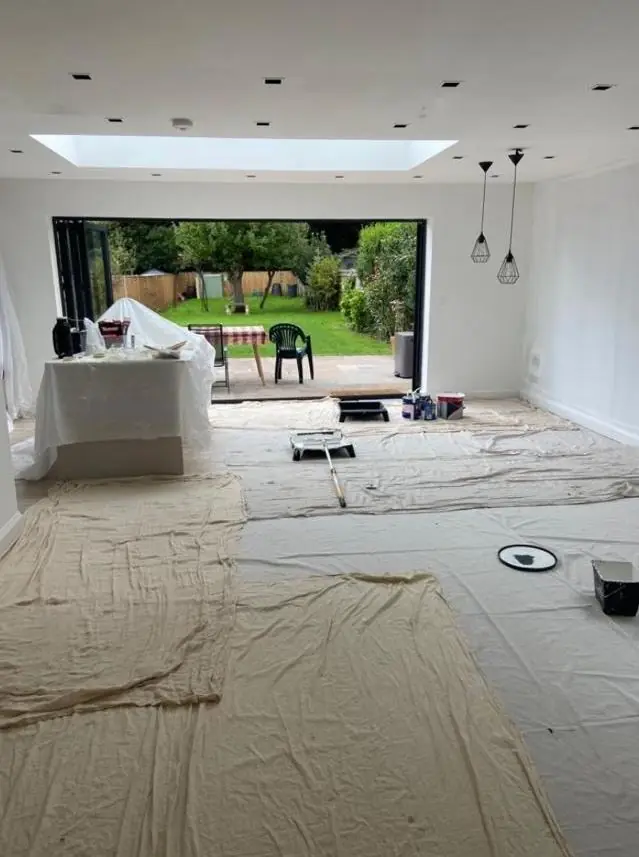
Some Abington terraces, such as those on Cedar Road, have no usable rear access, so extensions there are built and decorated with everything carried through the house. On these jobs we protect the hall and the route through the front room before anything comes in, keep our kit to compact loads and fit around parking on narrow residential streets. New softwood or MDF skirtings, architraves and doors in the extension are knotted, primed and caulked before the top coats, so the new room matches the woodwork in the rest of the house. For more on the district as a whole, see our Abington area page.
Last updated by Dean, DH Painter & Decorator.