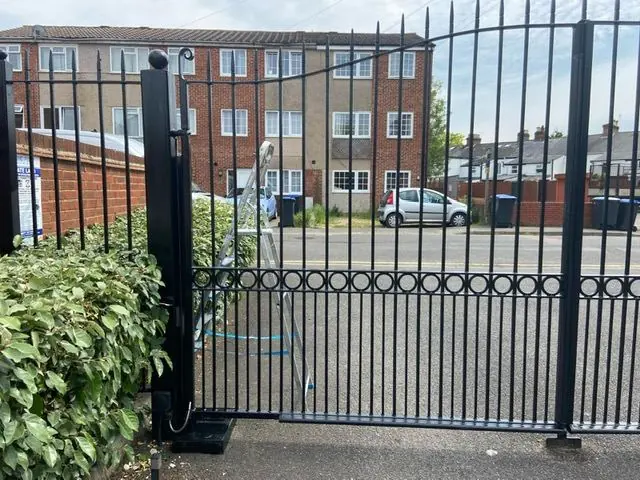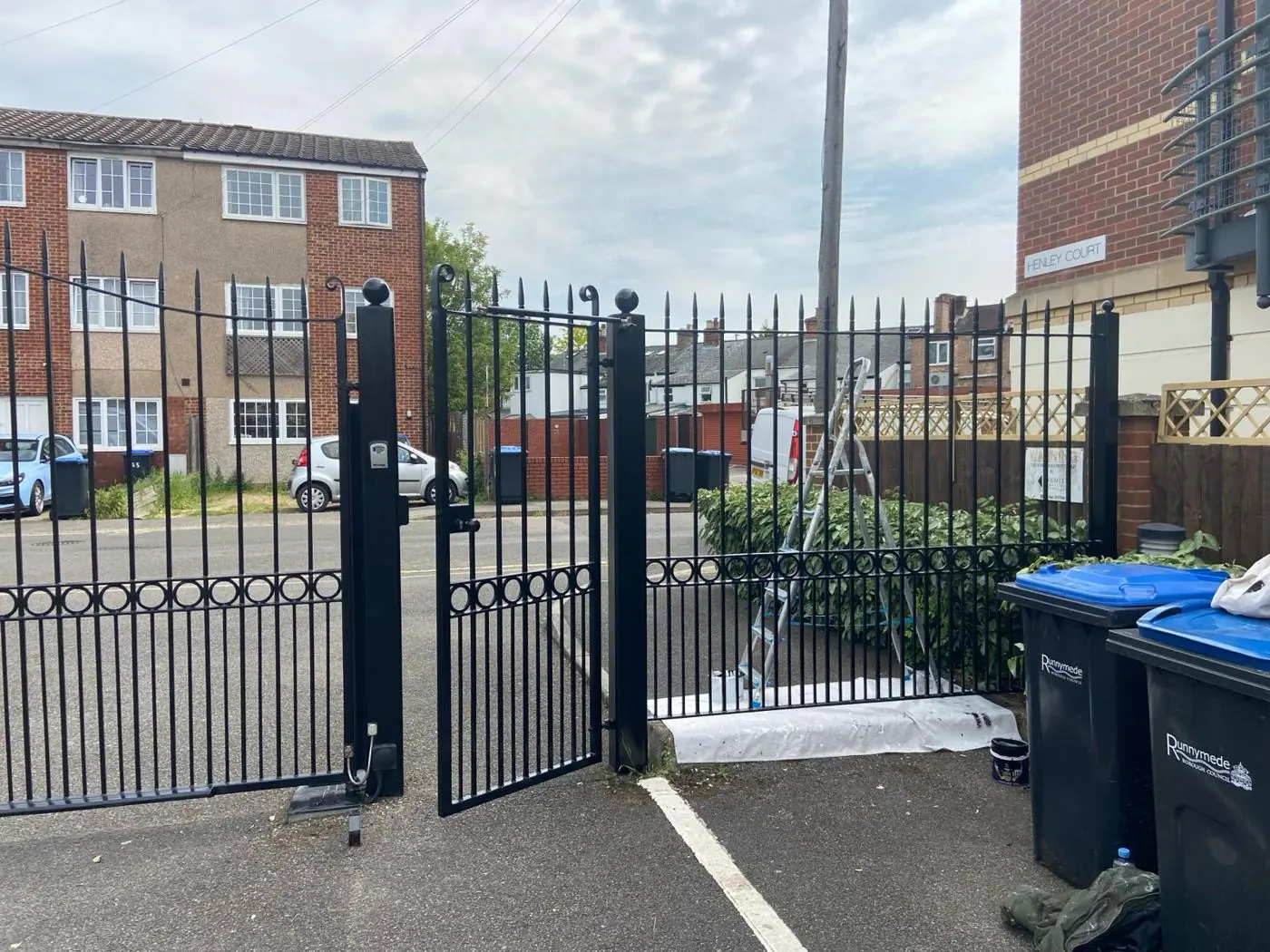
DH Painter & Decorator repaints metal railings, gates and boundary ironwork in Abington, about 1.6 miles north-east of Northampton town centre. Most of the district's ironwork stands on front boundaries beside the pavement, so Dean plans the preparation around passers-by and parked cars.
Front boundaries in a period district
Abington’s ironwork is mostly at the front of the house. The early-20th-century homes facing Abington Park often have railings or iron gates on their front walls, and period houses elsewhere in the district have short runs of boundary metalwork too. One example is listed: the Grade II listing for Mobbs Miller House, the former Co-operative Wholesale Society boot and shoe factory on Christchurch Road, built 1922-25, specifically includes its front walls, ornamental iron railings and gates. That shows how much boundary detail counts towards the character of these streets.
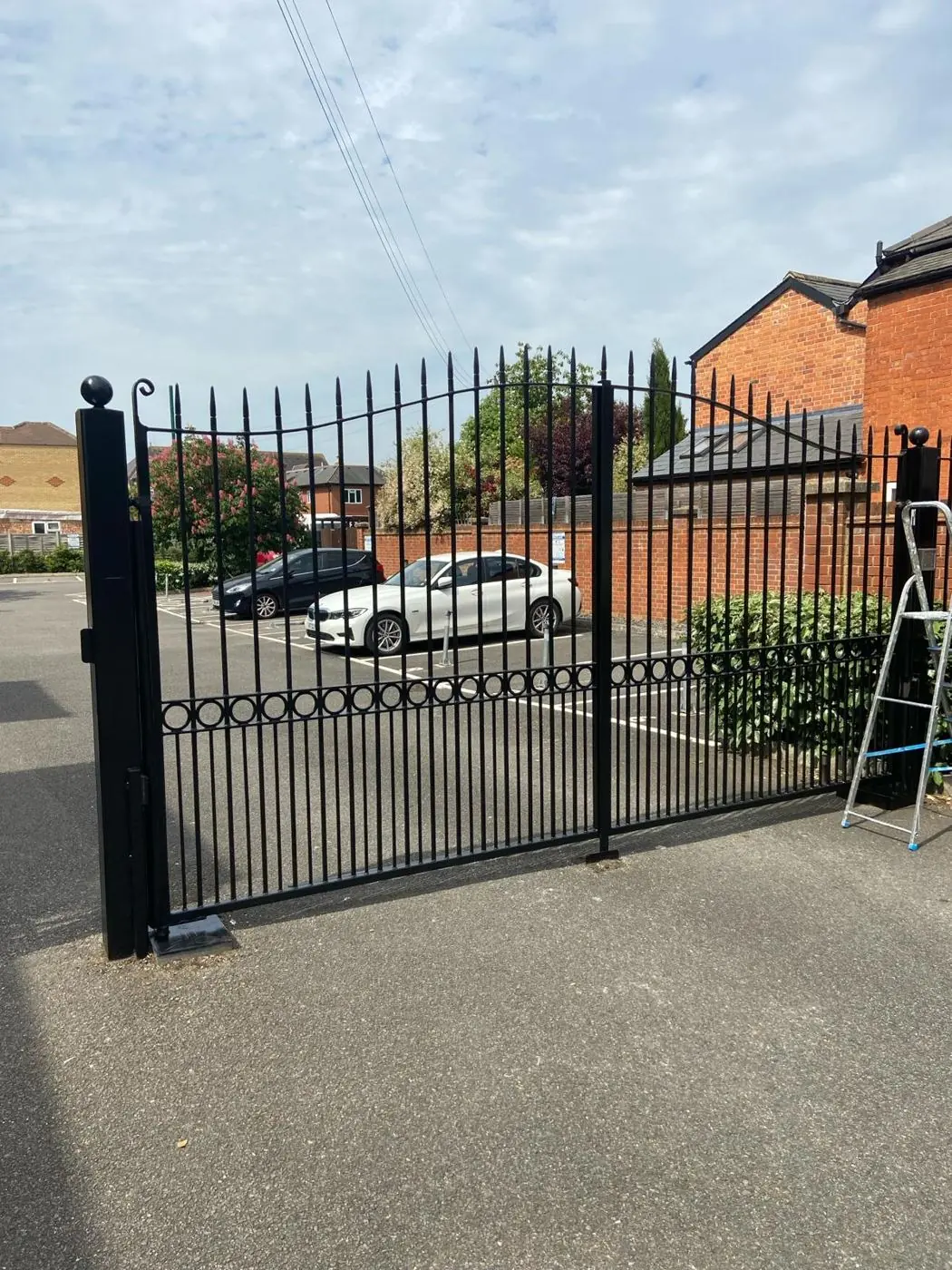
Older railings and gates are often cast or wrought iron carrying many coats of paint. Before quoting we look at which metal it is, how deep the rust goes, and whether any bars have corroded where they enter the stone or brick coping, because expanding rust there can crack the wall.
Preparing ironwork beside a pavement
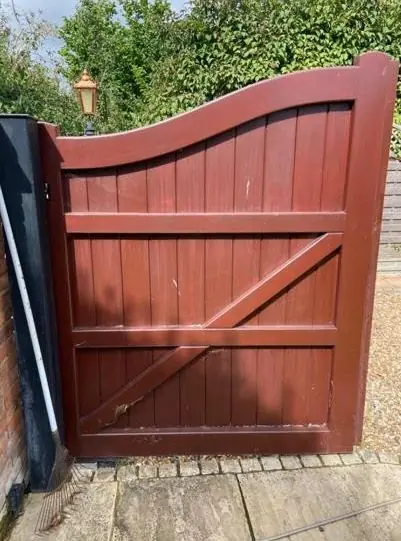
Wire-brushing and scraping rust is messy, and on Abington’s streets it happens right next to a public footpath and on-street parking. So we:
- lay sheets on the pavement and against the wall face to catch flakes and dust
- keep a gap for pedestrians, with signs on wet paint
- brush rather than spray, keeping paint and dust well clear of parked cars
- treat old layers as possibly lead-bearing, avoiding dry power-sanding and bagging the debris
Once rust is back to sound metal, a rust-inhibiting metal primer goes on the same day so bare iron is never left overnight. Then come two finish coats, worked into the scrolls, collars and finials where water sits.
Listed and conservation-area railings
For a listed boundary such as Mobbs Miller House’s, the owner should check with West Northamptonshire Council before any change of colour or finish, as listed building consent may be needed. Whether a job counts as like-for-like maintenance is for the council to say, not us. On the park-facing houses in the Abington Park Conservation Area, the Historic Environment Record describes the designation as a way to manage change in a sensitive and consistent manner. Black or a very dark traditional colour is the usual choice for railings there, and we would steer you away from anything that breaks up the run of boundaries along the park.
Gates that get used every day
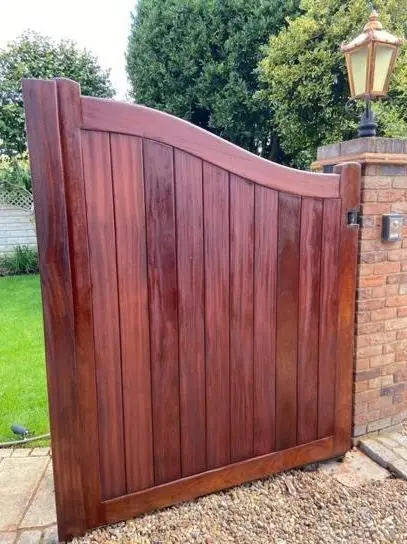
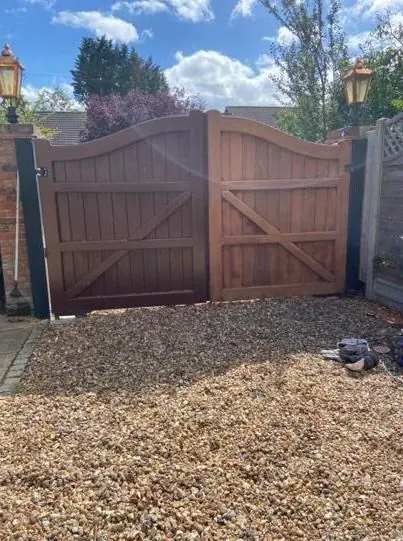
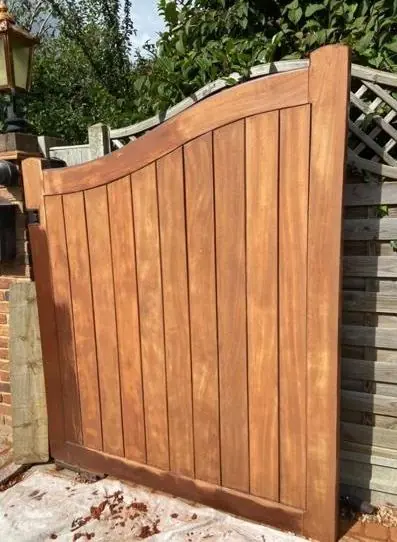
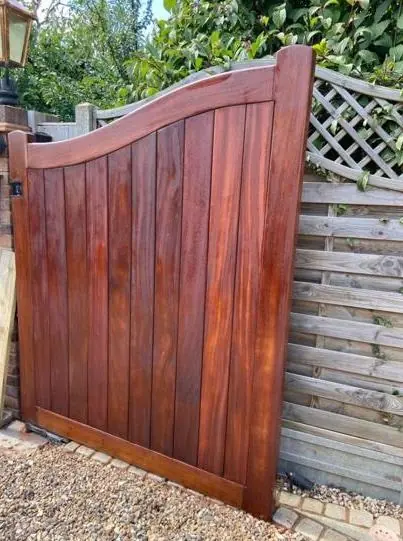
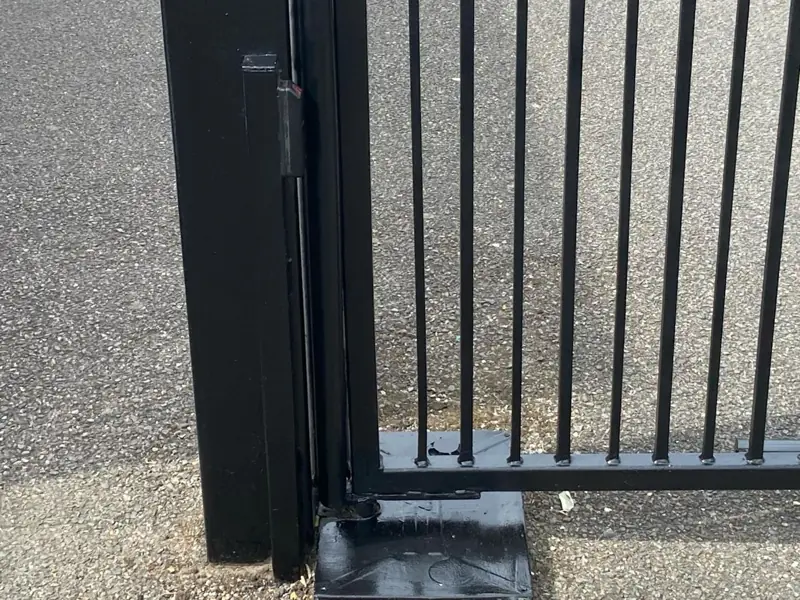
Side gates on terraces and drive gates on larger houses wear in different places from railings: the latch, the hinge pins and the bottom rail where water and grit collect. We free off and grease hinges after painting, not before, and leave the gate propped so the paint is not marked on day one. If your gate is galvanised steel, it needs a specific primer, or the paint will peel off the zinc.
Timing makes a difference here too. Railings facing the park can hold dew well into an autumn morning, and primer on damp metal will not bond, so we start once the steel is dry to the touch. Where a converted factory or warehouse building has metalwork on a larger scale than a house front, it is quoted after a look at access.
The main metal gate and railing painting service covers metal types and products in more depth. For other work in the district, see our Abington area page, and if you are comparing quotes, the guide to choosing a painter and decorator may help.
Last updated by Dean, DH Painter & Decorator.