
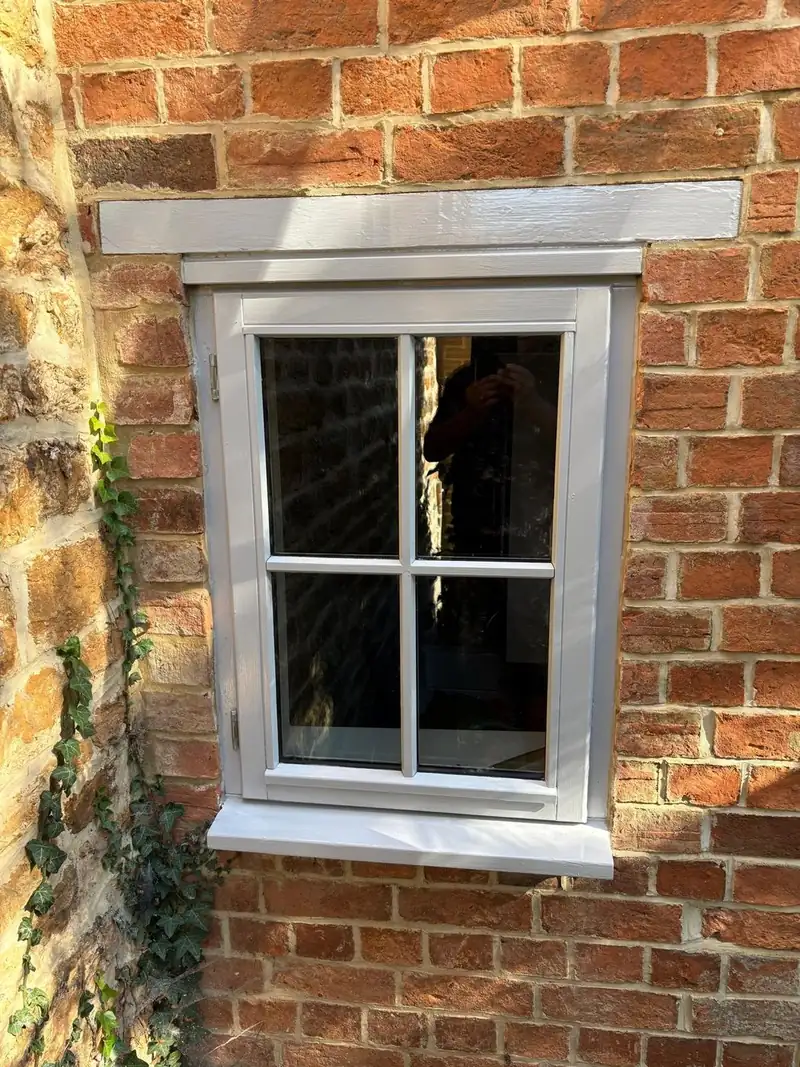
Most Abington joinery is old: over half the district's homes predate 1900, and the park houses are expected to keep painted timber windows and doors. We prepare and paint it properly, lead-safe where needed; the district lies about 1.6 miles north-east of Northampton town centre.
Gloss, not stain: what the conservation area expects of joinery
For the houses facing Abington Park, the council’s 2005 conservation area guidance is direct about woodwork: new and external joinery should be painted with a gloss paint and should not be stained, and traditional windows and doors should be kept and repaired rather than replaced with uPVC, aluminium or other modern materials. On Christchurch Road, Park Avenue South, Abington Park Crescent and the park end of Wellingborough Road, painting timber joinery is the expected way to look after a house, and where the original timber survives, keeping it is the point.
That decides how it is prepared. Softwood that has been painted for a century is usually sound under the paint, but sills, the bottom rails of doors and the lower joints of casements soften first. Loose and flaking paint is cut back, failed putty raked out and replaced, and small soft patches are consolidated and filled with resin. Any bare timber is sealed before we leave that day, and undercoat and gloss go on in thin coats rather than one heavy one. Repaired timber on a house like this outlasts a replacement, and it keeps the frontage as the assessment describes it.
Lead in the old paint on Abington skirtings and doors
52.6% of properties in the Abington MSOA were built before 1900, according to the Valuation Office Agency’s 2026 figures. In houses that old, the lower layers on skirtings, architraves, doors and window boards nearly always include lead paint, which was widely used in household paint until the 1960s. It does no harm while sealed under later coats and is hazardous as dust or fumes. So old layers are tested before preparation. Where lead is present we abrade wet, never dry, with no burning off or dry power sanding, sheet the room, clean up with a suitably filtered vacuum and keep children and anyone pregnant out until the room is cleaned down. Where layers are thick enough to blur the mouldings, a chemical stripper on the worst sections is cleaner than sanding.
| Joinery | Where in Abington | Preparation and paint |
|---|---|---|
| Panelled doors, deep skirtings, architraves | Pre-1900 terraces | Lead test, wet abrading, undercoat and a hard-wearing gloss or eggshell |
| Timber sashes and casements | Park-facing houses, white-painted | Rake out putty, resin repairs, white gloss |
| Art Nouveau porch and door case | 257 Abington Avenue; 36 Christchurch Road | Hand cutting-in on mouldings; second colour if wanted |
| Crittall steel windows | 1930s houses, e.g. No 22 Abington Park Crescent | Rust treatment and metal primer, not wood primer |
Can I change the colour of my front door in the conservation area?
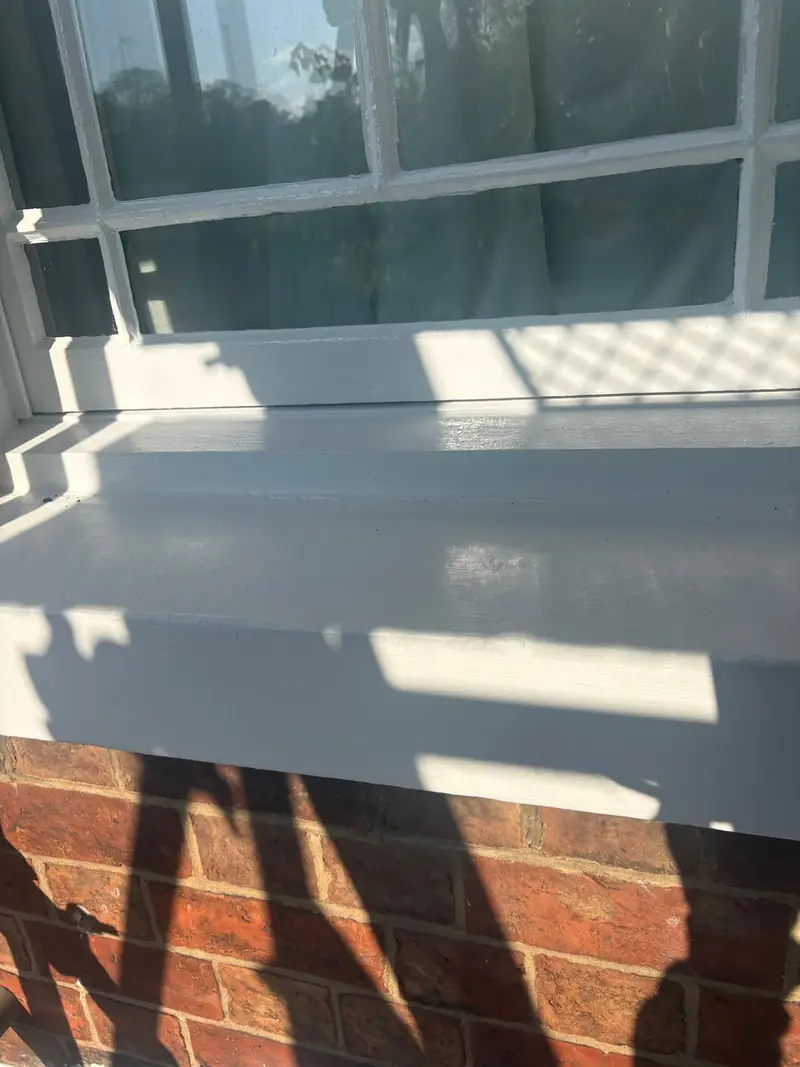
Check first. The 2007 Article 4 direction for the Abington Park Conservation Area removes permitted development rights for painting any part of a house that fronts a highway, and the 2005 assessment that led to it listed alterations to windows and doors on front and visible side elevations among the intended controls. So a new colour on the front door of a house inside the boundary needs planning permission, while repainting in the existing colour is normally maintenance. Back doors facing the garden, rather than a road, are not affected.
Some of these doors deserve extra care. The assessment notes an Art Nouveau porch at 257 Abington Avenue and arched entrances at 44-48 Christchurch Road, whose mouldings take detailed brushwork, with each bead and panel edge cut in rather than flooded. Choosing the colour is covered on our Abington colour advice page.
| Fact | Detail | Source |
|---|---|---|
| Joinery guidance (park houses) | External joinery painted in gloss, not stained; traditional windows and doors repaired, not replaced | West Northamptonshire Council |
| Built before 1900 | 52.6% of Abington MSOA properties, against 12.3% in West Northamptonshire | GOV.UK |
| Front-elevation controls | 2007 Article 4(2) direction covers painting road-facing parts of houses in the conservation area | West Northamptonshire Council |
| Steel windows | No 22 Abington Park Crescent, a 1930s Moderne villa with Crittall windows | West Northamptonshire Council |
Steel windows on the 1930s houses
Not every Abington window is timber. No 22 Abington Park Crescent, a 1930s Moderne villa, has Crittall steel windows. Steel frames need a different system: corrosion is brushed back to bright metal, treated, primed with a metal primer and finished in a paint made for metal. A wood primer on steel lets rust creep under the new coat within a season or two. Gates and railings are treated in the same way, as our Abington page on metal gates and railings explains.
The main woodwork, door and skirting painting service covers products and finishes in general, and the Abington page shows where the conservation area boundary falls.
Sources
- Abington Park Conservation Area Assessment and management plan (December 2005), West Northamptonshire Council (accessed 2026-11-16)
- Council Tax: stock of properties, 2026 (table CTSOP4.1, build period), Valuation Office Agency (accessed 2026-11-16)
- Article 4(2) Direction 2007: Abington Park Conservation Area, West Northamptonshire Council (accessed 2026-11-16)
Last updated .


