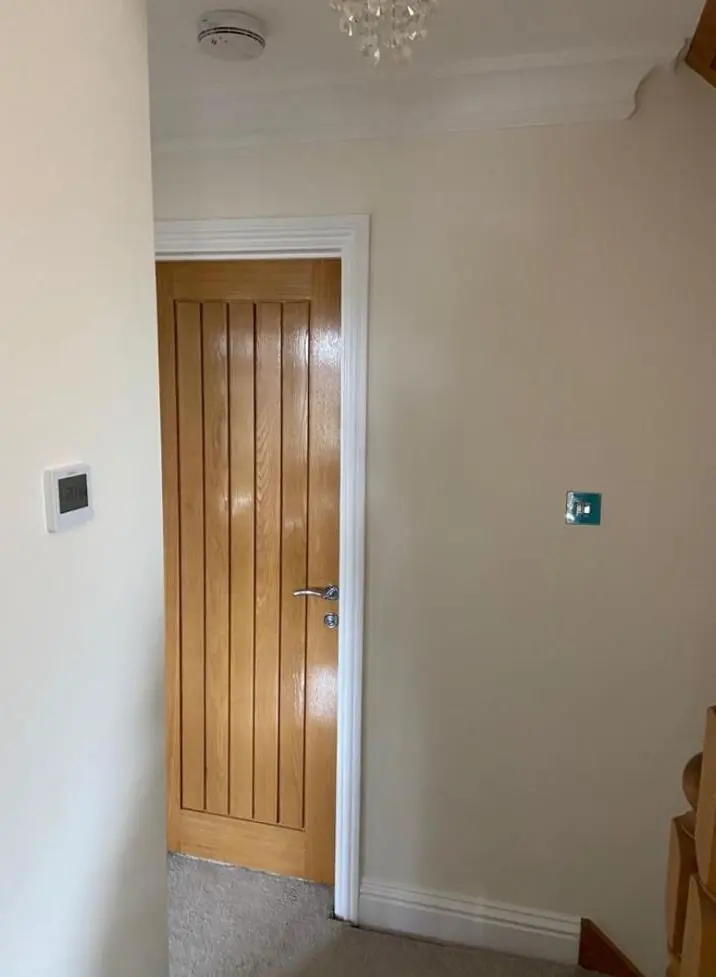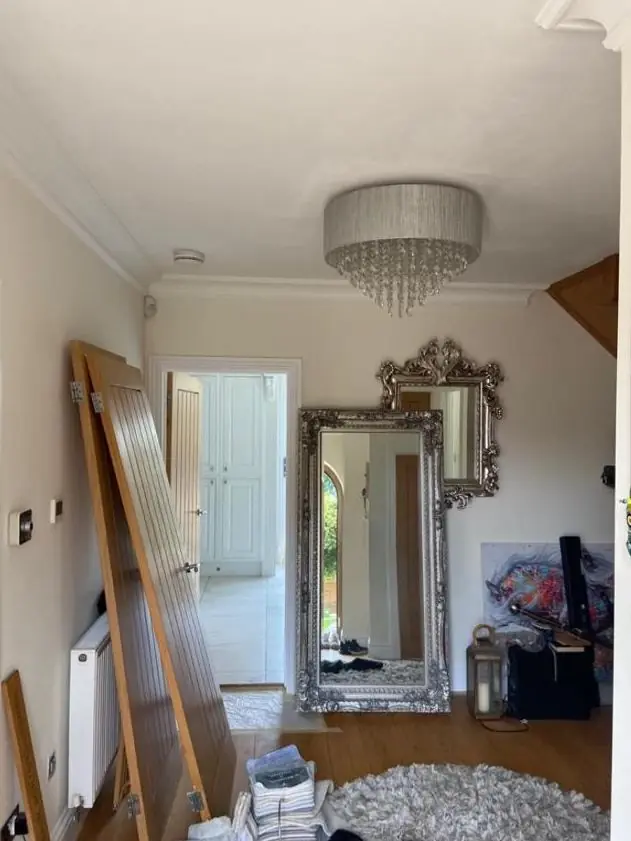
DH Painter decorates hallways, stairs and landings in Blisworth, 4.6 miles south-west of Northampton. Dean plans access to suit the house, from the narrow stairs of High Street stone cottages to the taller stairwells in the old farmhouses and the canal-side mill apartments.
Narrow flights in the stone cottages
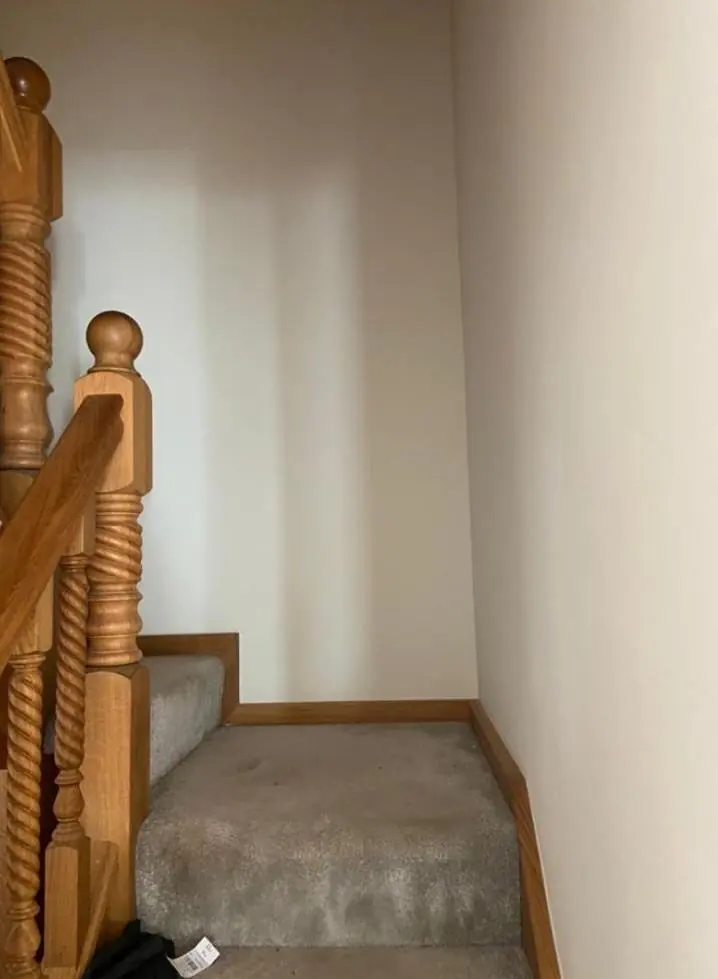
The labourers’ cottages on High Street and lower Stoke Road are one or two storeys, with thick limestone walls, low ceilings and small windows. Their stairs tend to be steep and narrow, sometimes enclosed between walls, with very little room on the landing. That makes the job slower than the square footage suggests. A standard stair platform may not fit, so we use compact steps and short boards sized to the space, and work in sections so the stairs stay usable for you during the day.
Low ceilings bring their own problem. Heads and shoulders brush the walls on a tight cottage stair, so we choose a finish for the lower walls that can be wiped clean. On old lime plaster that means a breathable emulsion with some scrub resistance rather than a vinyl paint that would trap moisture in the wall.
Tall stairwells: farmhouses and mill apartments
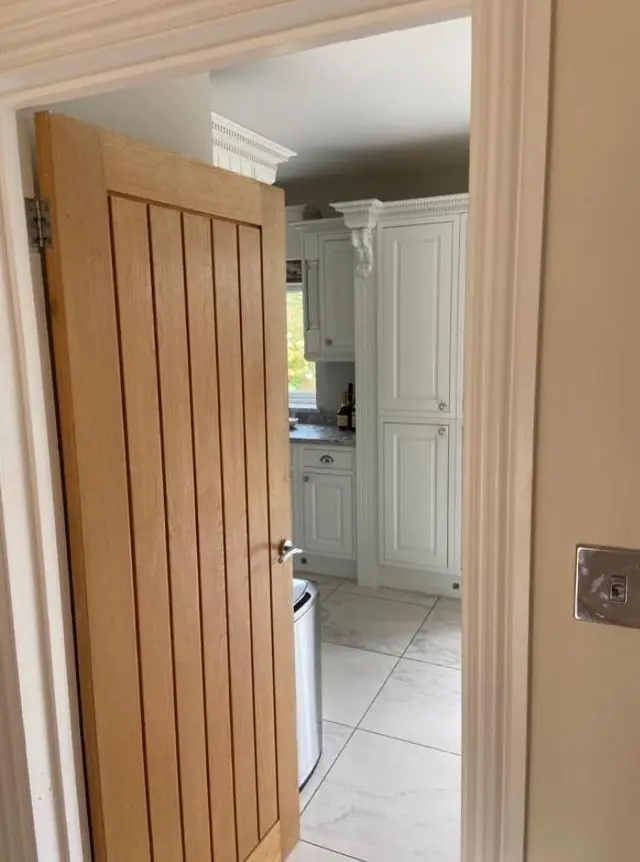
At the other end of the scale, the former yeoman farmhouses dotted through the village are mostly three storeys, set gable end to the road. Stairwells in houses like these can drop two full floors, and the top of the wall over the stair is often well out of ladder reach. The same applies to some of the flats inside the converted canal-side mill, built for steam milling in 1879. For these we put up proper staging across the stairwell so every part of the wall and ceiling can be reached safely and evenly. You can read about stairwell access in general on our main hallway, stairs and landing page.
In the mill, communal stairs and private hallways may sit under different responsibilities. If you are a leaseholder, it is worth confirming what is yours to decorate before we quote.
Old walls that are not flat
A hallway in a 17th- or 18th-century Blisworth cottage shows every bump in the lime plaster under raking light from the front door. We fill cracks with materials that suit lime, avoid hard gypsum patches that can crack around the edges, and often recommend a matt finish because it hides undulation far better than silk. Where you want paper on the stairs, lining paper usually goes up first to even out the surface.
In listed houses, which are numerous in the conservation area, original balusters, handrails and panelling should be repainted like for like. Removing or altering them may need consent.
Estate houses and 1930s terraces
The 1930s red-brick terraces and the 1960s-70s cul-de-sac houses have straight stairs with conventional spindles and plasterboard or flat plaster walls. These are quicker to prepare and suit durable modern emulsions and waterborne enamels on the spindles and strings. Off-road parking on the estates also makes getting equipment in simple. Because these houses have off-road space, the hall is often the main route in from the drive, so a scrubbable matt on the walls and a tough satin on the spindles and handrail suit them.
Getting in and out on High Street
For a front-door hallway on High Street, the van usually cannot park outside, and the cottages have no rear access. We bring in dust sheets, boards and steps through the front door in one go, keep the pavement clear for pedestrians, and protect the entrance floor carefully because it is the only way in and out for everyone. More about the village is on our Blisworth page.
Last updated by Dean, DH Painter & Decorator.