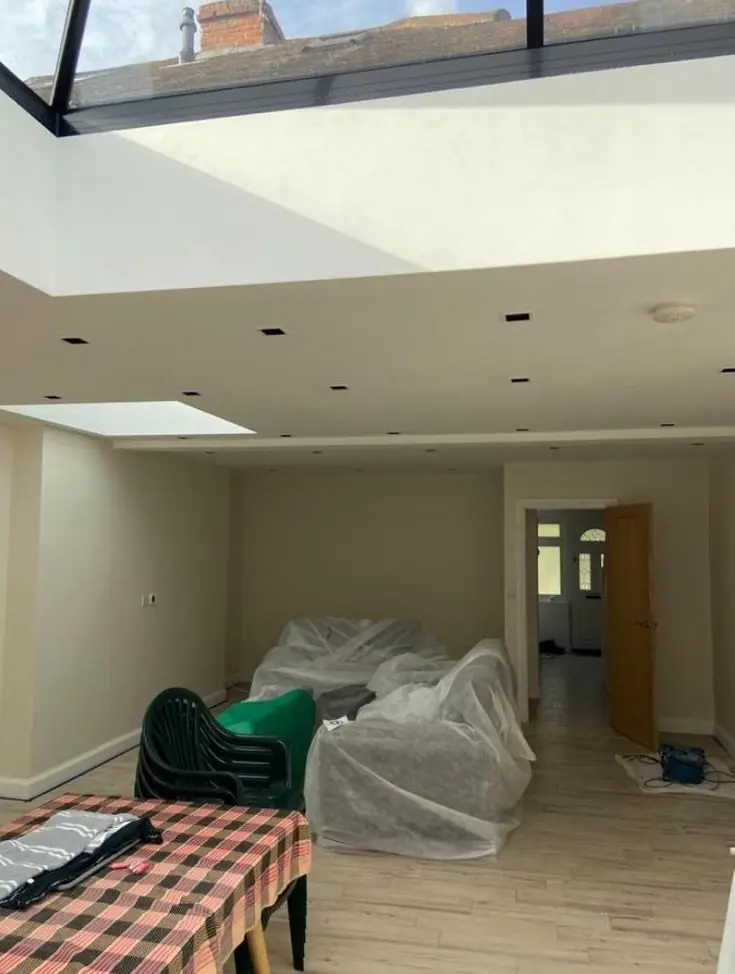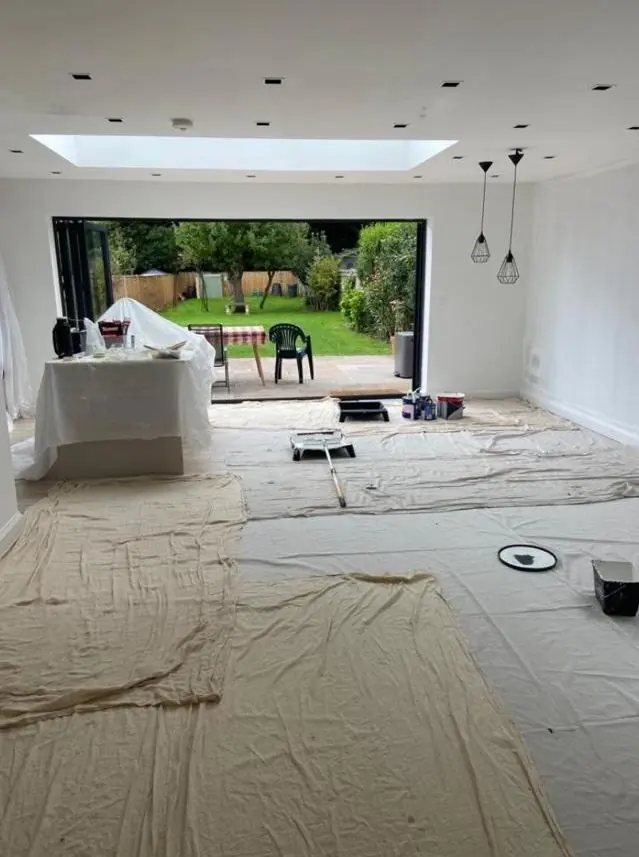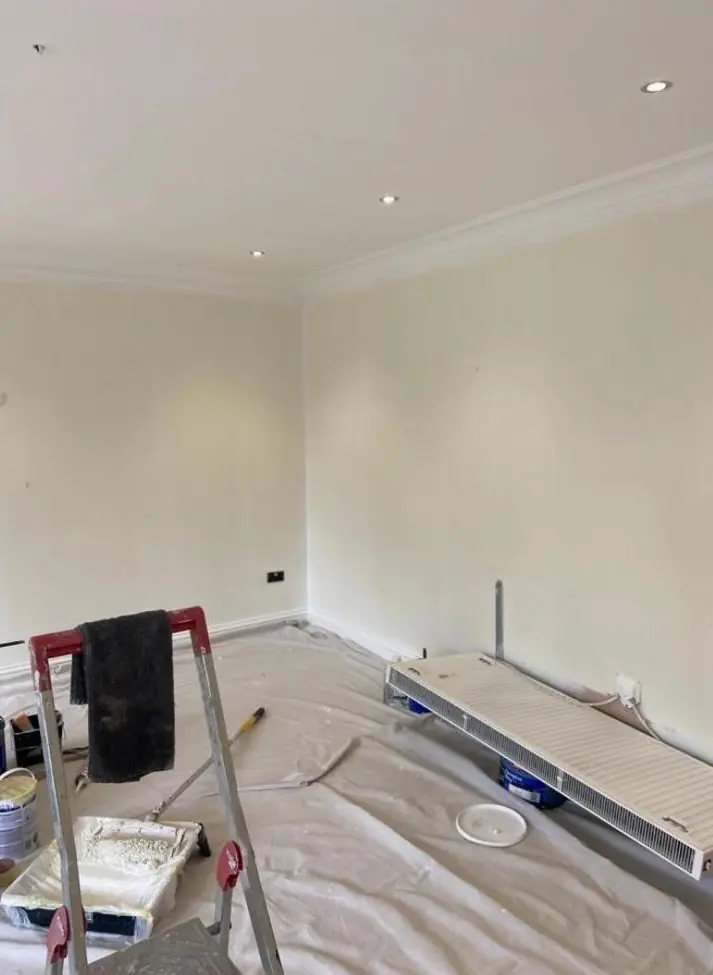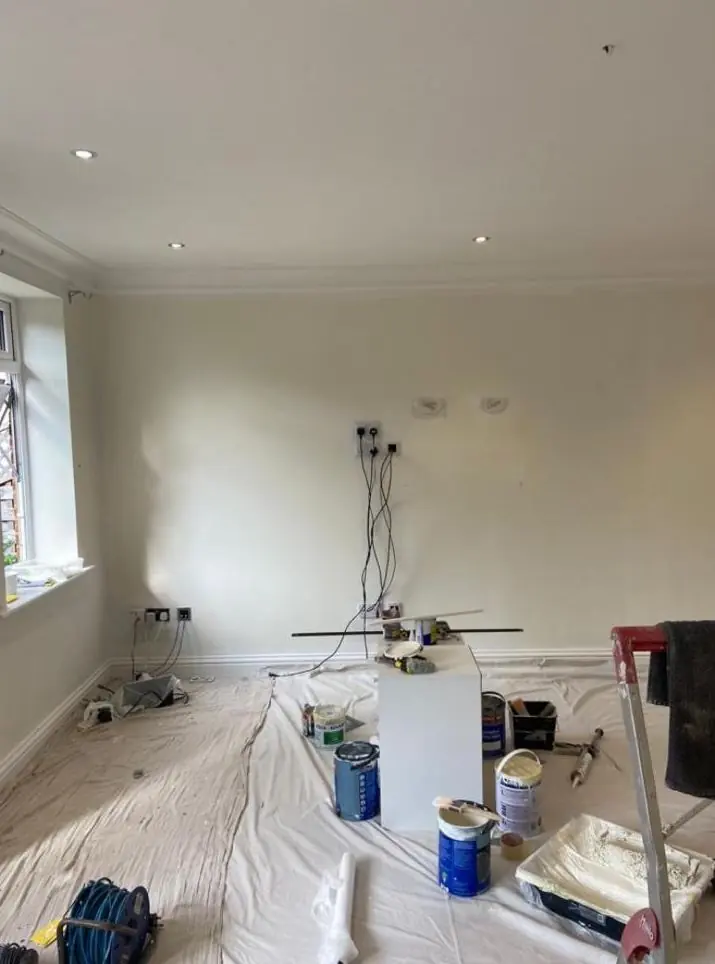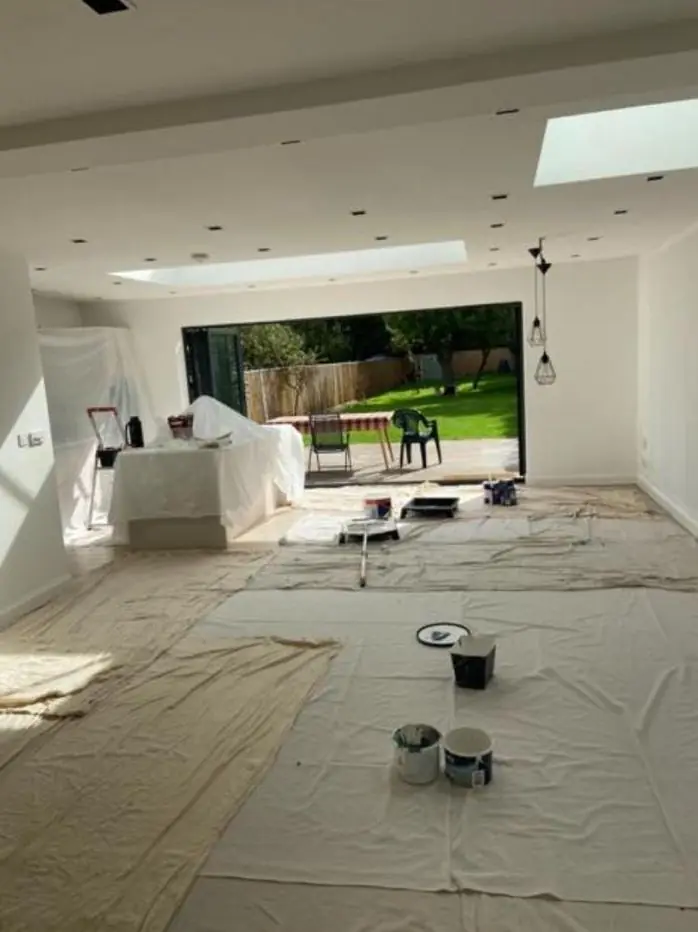
Dean decorates freshly plastered rooms, extensions and conversions in Blisworth, about 4.6 miles south-west of Northampton. Gypsum plaster in a modern extension takes a standard mist coat system, while new work tied into the village's limestone buildings needs breathable paint so moisture can still escape.
Where fresh plaster comes from in Blisworth
New plaster in Blisworth tends to come from three kinds of project. The post-war cul-de-sac estates on the north-west and east sides were built in brick, and rear and side extensions on those houses are a likely source. Infill houses within the village add more. The third, and the trickiest, is the conversion of old single-storey outbuildings, such as those grouped round the yards of the 17th-century yeoman farmhouses, into living space.
Each of these needs the same starting point: plaster that has dried properly and a diluted mist coat that soaks in and gives the finish coats something to grip. Our guide to mist coats on new plaster explains the drying times and mixes. This page is about what changes when the plaster is in Blisworth.
When new plaster meets limestone and lime
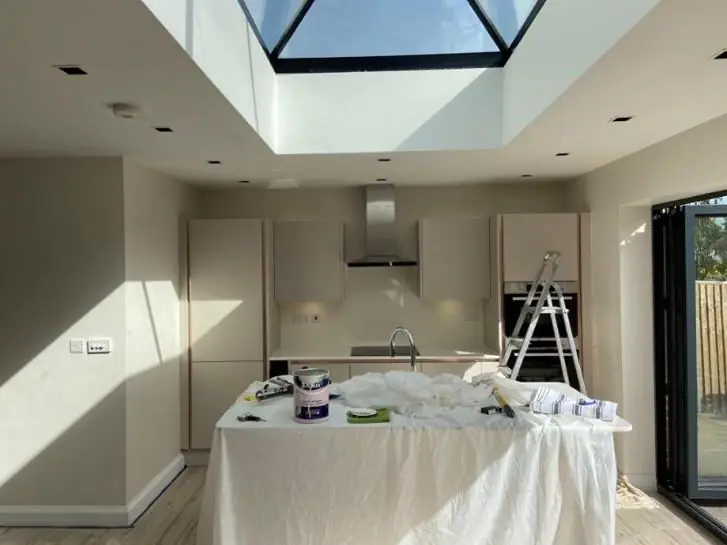
Most of the older houses in the village are of limestone rubble banded with ironstone and finished inside with lime. These walls rely on moisture passing through them. When an extension or a knocked-through opening joins modern gypsum to an old lime wall, the two behave differently. Gypsum wants a sealed, wipeable paint; the old wall needs a vapour-open one.
Our approach is to treat the old fabric on its own terms. Where new skim runs onto original limestone or lime plaster, we use a breathable emulsion across the whole wall so you do not end up with a sealed strip trapping damp beside a section that can breathe. If the builder has patched an old wall with hard cement or gypsum, we flag it, because the conservation area appraisal names inappropriate wall repairs as one of the main threats to Blisworth’s buildings, and lime-based making-good is the better match on stone.
Outbuilding conversions
A converted barn or stable has thick stone walls, often limewashed or lime-plastered inside, and sometimes a mix of new plasterboard partitions and old masonry. Moisture can take longer to leave a building like this than a timber-framed extension, so we check the surfaces with a meter before decorating and are happy to wait if they are not ready. Painting too soon is the usual cause of peeling and patchy colour in conversions. Exposed stone that was never plastered is a separate decision: in this village most limestone is left bare, and we would not paint it simply because the room around it is being decorated.
If the building is listed or within the curtilage of a listed house, of which there are many in the Blisworth Conservation Area, your builder or architect should already have consent in hand. We follow the specified finishes rather than substituting a modern paint system.
Fitting in with the build
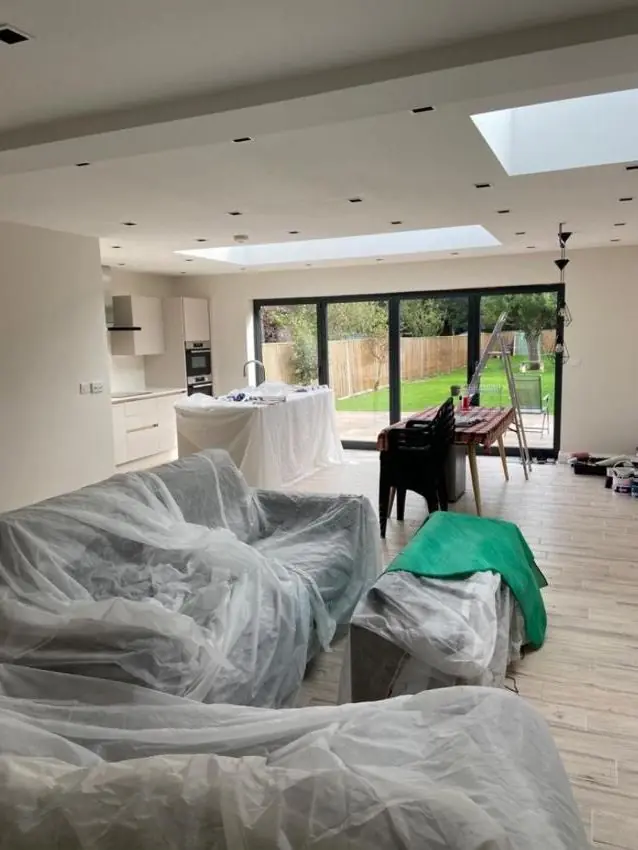
- We like to see the plaster a week or two before decorating, so drying can be judged rather than guessed.
- On estate extensions with off-road parking, deliveries and access are easy, and we can often decorate while the kitchen fitter finishes elsewhere.
- For conversions off High Street, where there is no rear access and parking is short, we arrange arrivals around the build’s own deliveries.
- Snagging dents and sanding marks in fresh plaster is done after the mist coat, when they show up clearly.
The full process for extensions, roof lanterns and snagging is on our main new plaster and extension page. Other work we cover in the village is listed on the Blisworth area page.
Last updated by Dean, DH Painter & Decorator.