Dean decorates hallways, staircases and landings in Gayton, a hilltop village around 4.8 miles south-west of Northampton. Older houses here have dog-leg stairs with turned or stick balusters and high attic stairwells that need tower access, while the newer infill homes have open stairwells and fresh plaster.
The staircases in Gayton’s older houses
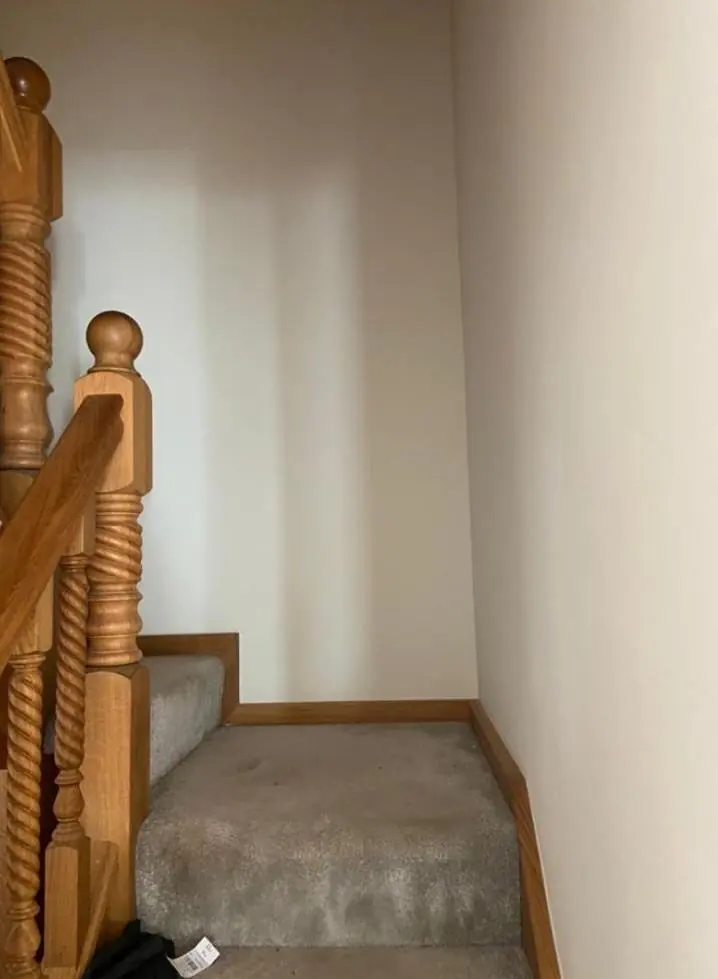
The listing descriptions for Gayton’s older houses record dog-leg staircases, rising in two flights to a half landing, with turned balusters in some and plain square stick balusters in others. A dog-leg stair packs a lot of woodwork into a small space: strings, handrail, newel posts at each turn and a long run of balusters, each with four faces or a turned profile to sand and paint. On a turned baluster the hollows and beads collect drips and runs from earlier coats, and those are cut back by hand before anything new goes on.
Gayton had 544 residents at the 2011 census, and we cover it from our Northampton base under five miles away. Hallway and staircase work here is measured and quoted on the stair you actually have, because a limestone house on Deans Row or Baker Street and a recent infill home take very different amounts of time.
Two storeys plus an attic: working at height
Many of the older stone houses rise two storeys with an attic above, some on an L-plan. Where the stair continues into the attic, the stairwell wall runs well beyond what a ladder can safely reach. We use a stair access tower or adjustable platform set across the treads so the upper wall and ceiling can be cut in properly, and treads, handrails and any stone flags are protected before it goes up.
Getting the kit to the door is part of the plan too. Gayton’s Neighbourhood Development Plan says the village roads were never designed for today’s traffic and notes on-street parking pressure and damaged grass verges. If you have a drive or yard where the van can stand while the tower is unloaded, mention it when you book.
Inside, the tight turn of a dog-leg stair limits where a tower can stand, so the half landing often becomes the base for reaching the upper flight. On stone-flagged or old boarded hall floors we use padded feet and boards so nothing marks the surface.
Old stair or new stair: what changes
| Feature | Older limestone houses | Recent infill homes |
|---|---|---|
| Balusters | Turned or stick, many paint layers, hand preparation | Machined spindles, primed or factory-finished |
| Walls | Uneven stone with lime or old plaster, often suited to breathable paint | Flat new plaster that needs a mist coat |
| Ceilings | Low over landings, sometimes beamed | Taller, open stairwells |
| Paint system | Traditional or breathable products suited to the fabric | Durable modern emulsion and waterborne satin |
Light, mud and colour in a stone-walled hall
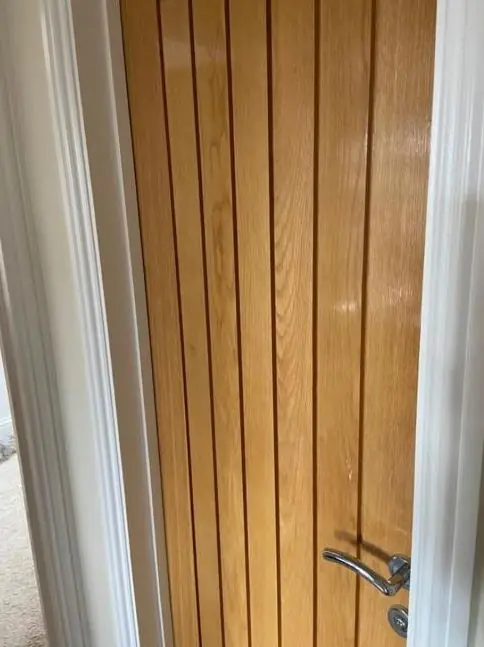
Thick walls and small windows leave many older Gayton halls darker than the rooms off them. A slightly warm off-white on the walls, with the handrail and treads kept a deeper tone, keeps the space bright without showing every scuff. Halls are also where boots, dogs and bikes come in from the farmland and footpaths around the village, so a scrubbable finish on the lower wall, or a painted dado band, means a few marks can be touched up without redoing the whole stairwell. Inside the conservation area’s listed houses, changing the finish on a historic staircase may need consent, so get the council’s view before deciding to paint bare or varnished timber.
Next steps
The order we work in on every stairwell, from protection to final coats, is set out on the main hallway, stairs and landing decorating page. You can read more about the village on our Gayton page, and the cost guide explains what affects the price of stairwell work. Phone Dean on 07539 779 036 and he’ll come out to look at the stair before giving a free quote.
Last updated by Dean, DH Painter & Decorator.