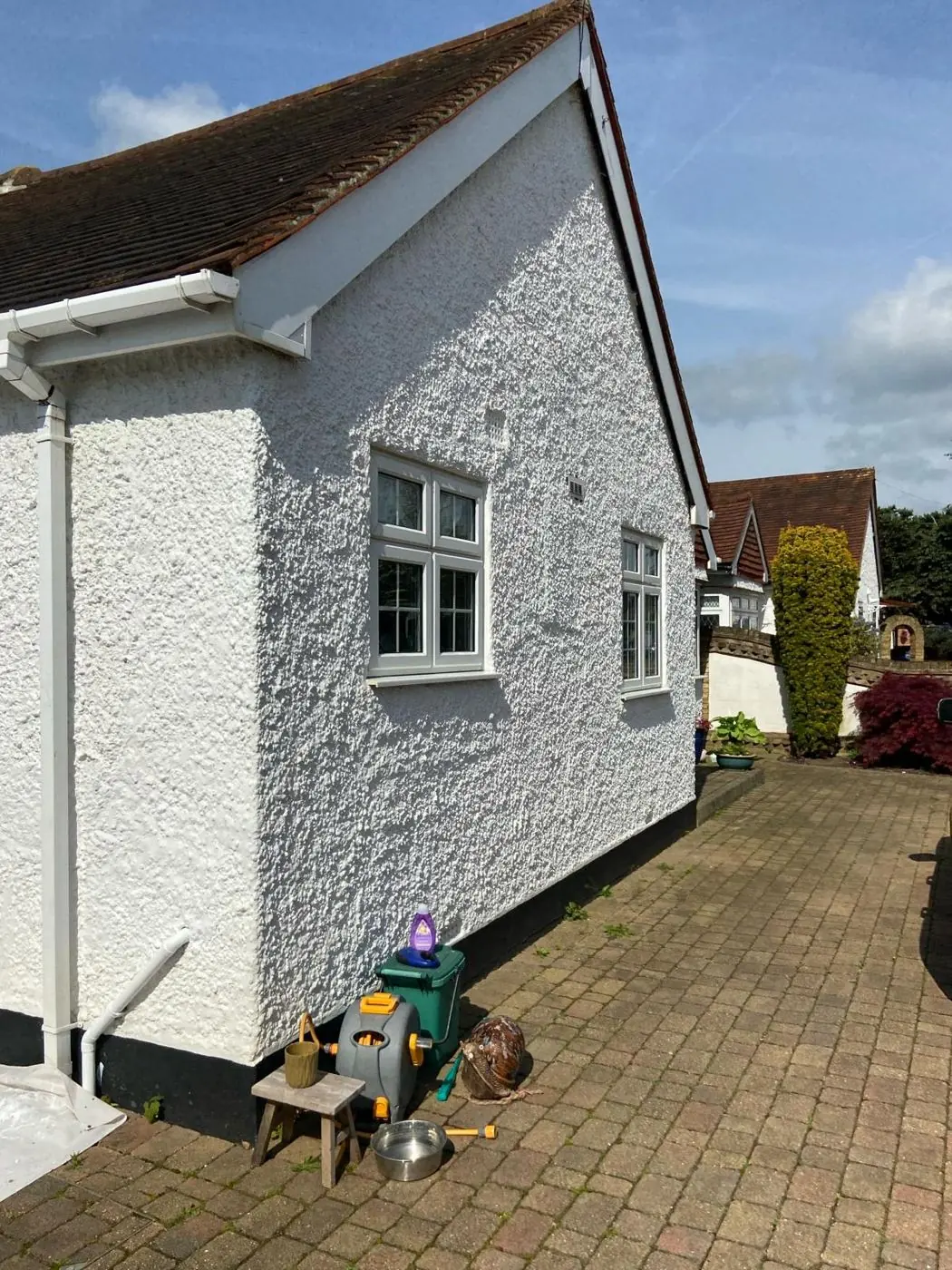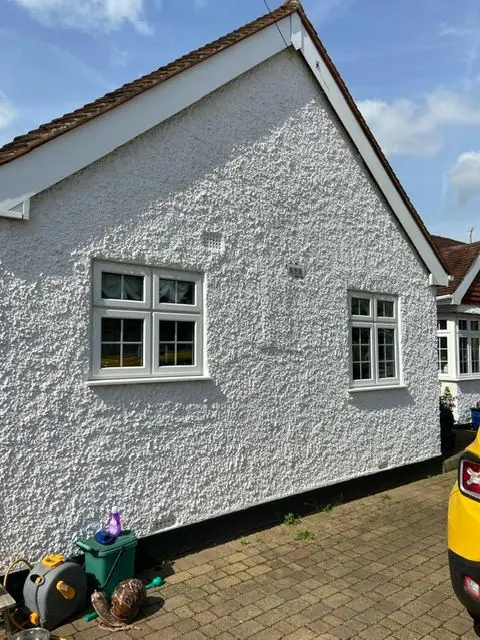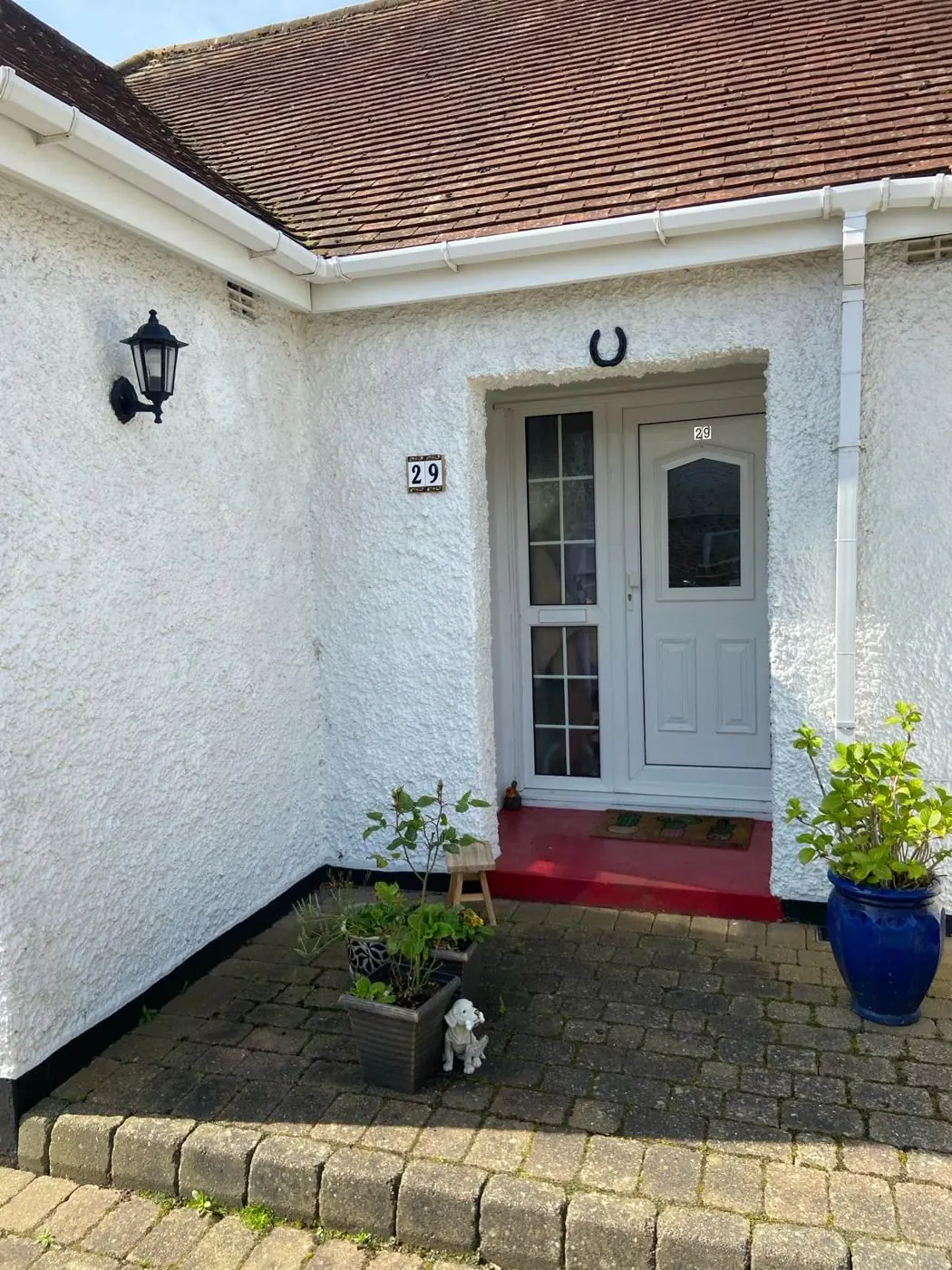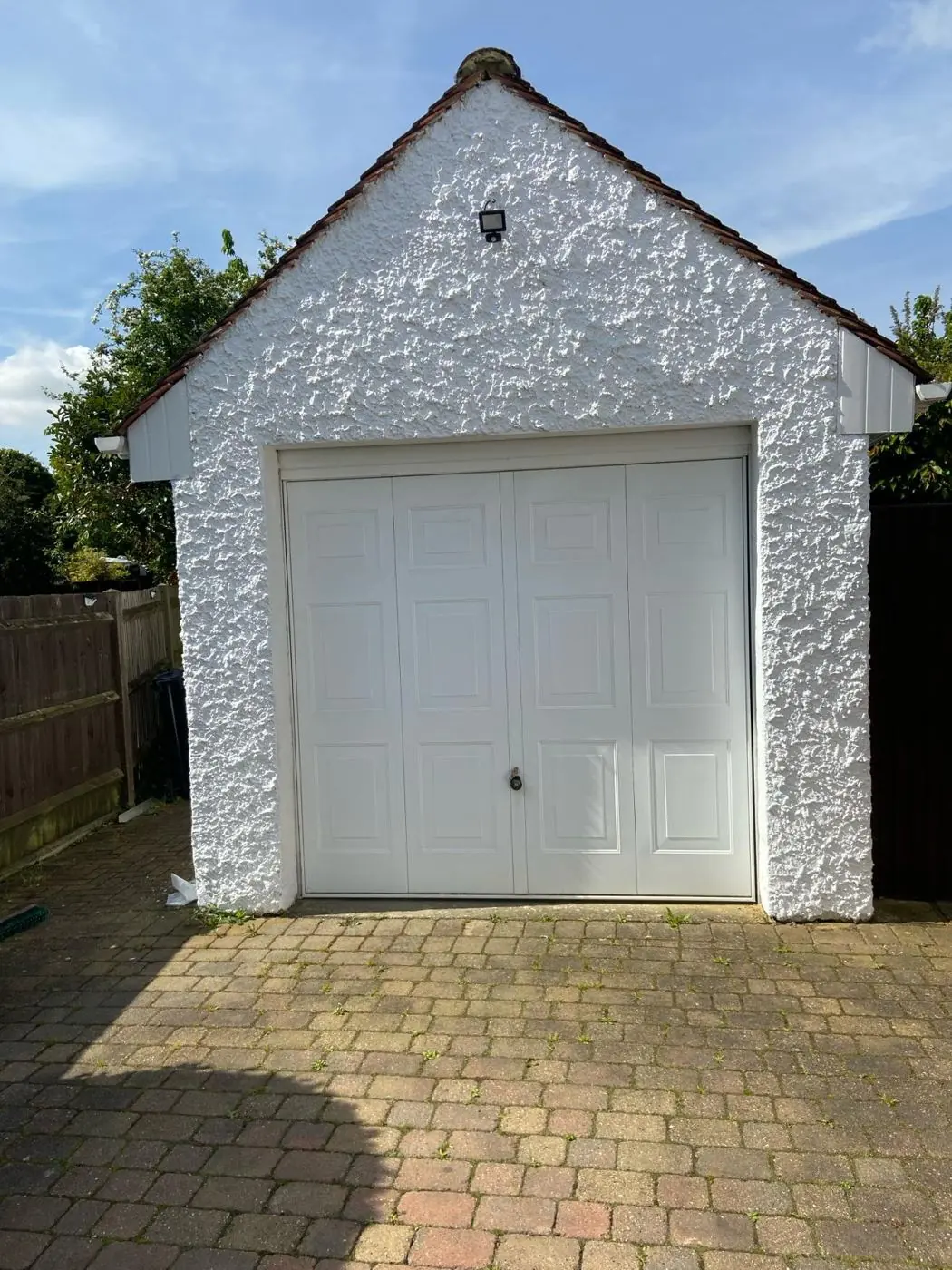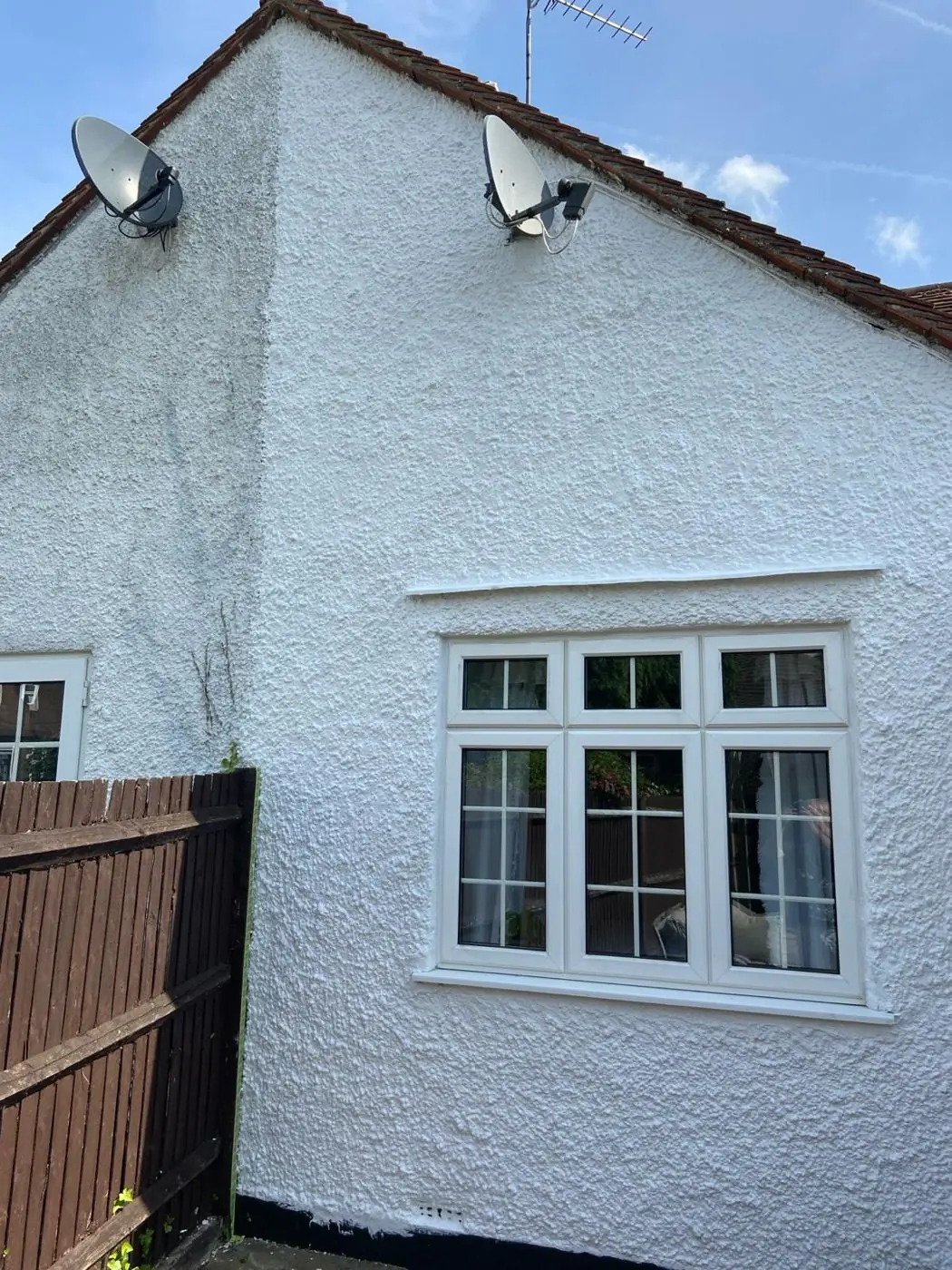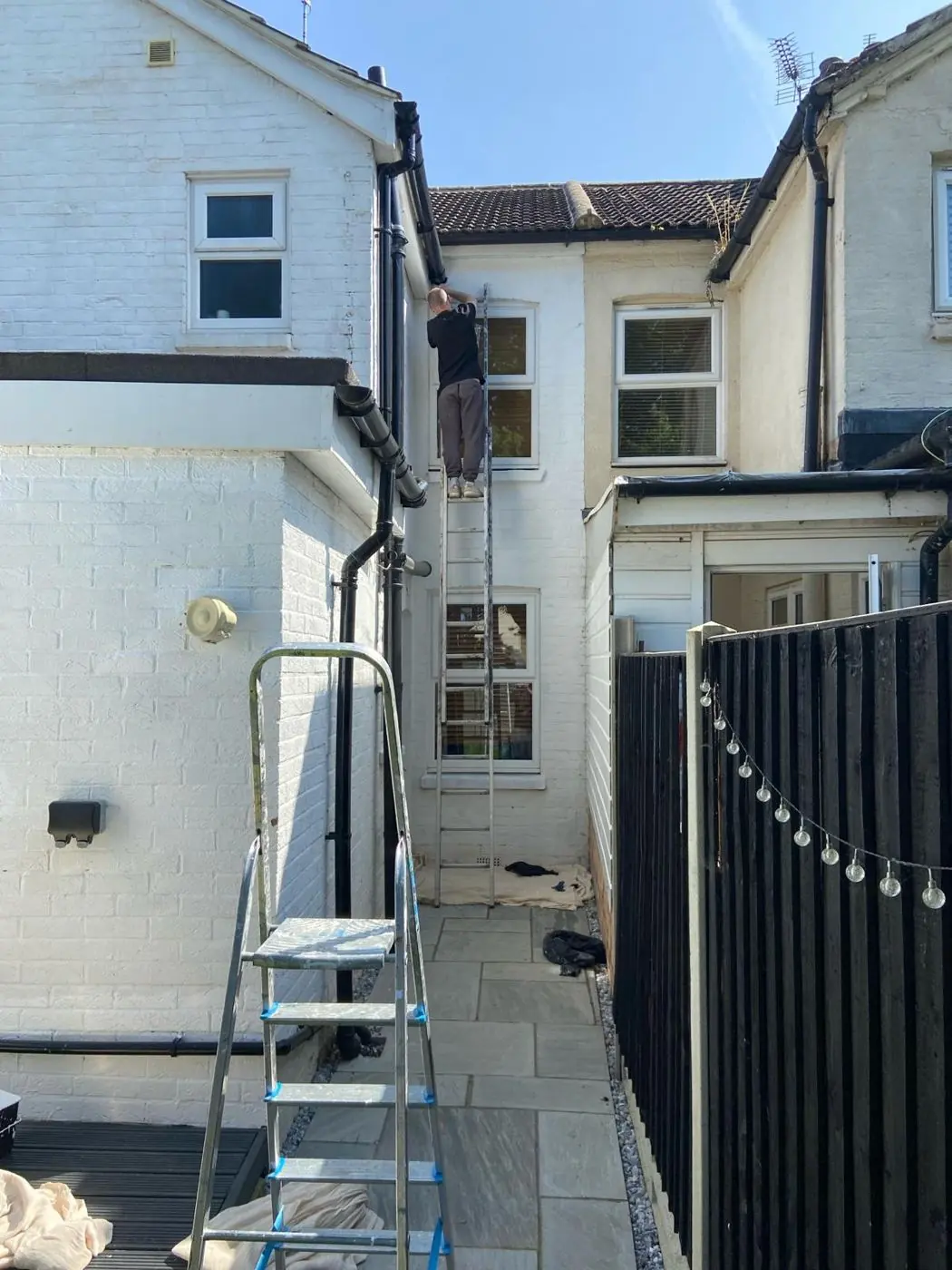
We paint render and masonry in Blisworth, NN7, a limestone village 4.6 miles south-west of Northampton. Most of the village's limestone should stay unpainted, but rendered or already painted stone needs vapour-open mineral or lime-compatible paint over lime repairs, while the brick terraces and estates take standard systems.
Most Blisworth stone is better left alone
It is worth saying plainly at the start: the coursed limestone with ironstone banding that lines High Street, Stoke Road and Church Lane should not be painted. Stoneacre at 3 High Street has banding that Pevsner singled out above any other in the district, and the effect depends on the two stones showing. Painting bare stone hides it and, with the wrong paint, traps moisture in walls built to breathe. If you ask us to paint a bare stone wall in the conservation area, we will talk you out of it.
Where masonry painting does make sense here is on stone that has already been rendered or painted, and on the brick houses built from the 1930s onwards.
Rendered limestone and old paint layers
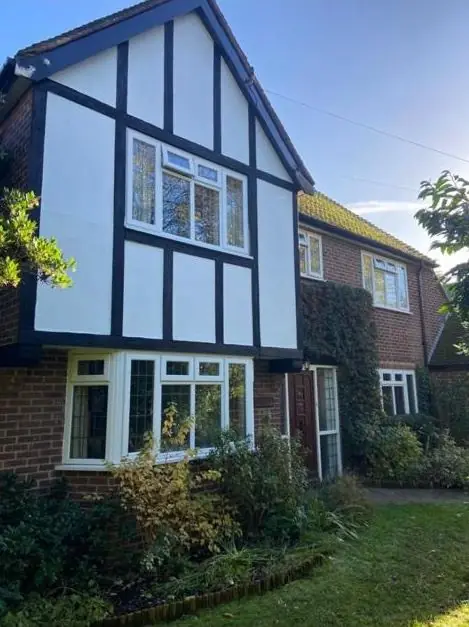
Blisworth House on Church Lane, built in 1702, is rendered limestone with contrasting ironstone dressings, and it is a useful guide to how render was used on stone here. A lime-based render over limestone needs a finish that lets moisture out: a mineral silicate paint, a limewash or another coating made for lime. Ordinary acrylic masonry paint forms a tighter skin, and on old stone that can lead to blistering, damp patches inside and render coming away.
Some older houses already carry layers of modern paint. In those cases we test how well the existing coating is holding and how damp the wall is before deciding anything. The options range from patch repairs and a compatible top coat to taking failed coatings off in sections, and we explain the trade-offs on site rather than guessing from a photo.
Repairs come before paint
The 2015 conservation area appraisal names inappropriate wall repairs and pointing as one of the main threats to the village. Cement patches and hard mortar on soft limestone push moisture into the stone, which then spalls around them. So before any coating, we:
- Look for hollow render by tapping, plus cracks, staining and areas behind leaking gutters.
- Rake out failed areas and make good with a lime mortar or lime render, not cement.
- Let lime repairs cure properly before a breathable paint goes over them.
- Leave the ironstone dressings and quoins exposed where they were exposed before.
Large render repairs or repointing whole elevations is plasterer’s or mason’s work, and we will say so if a wall needs that before it is ready for us.
Brick terraces, estates and the canal side
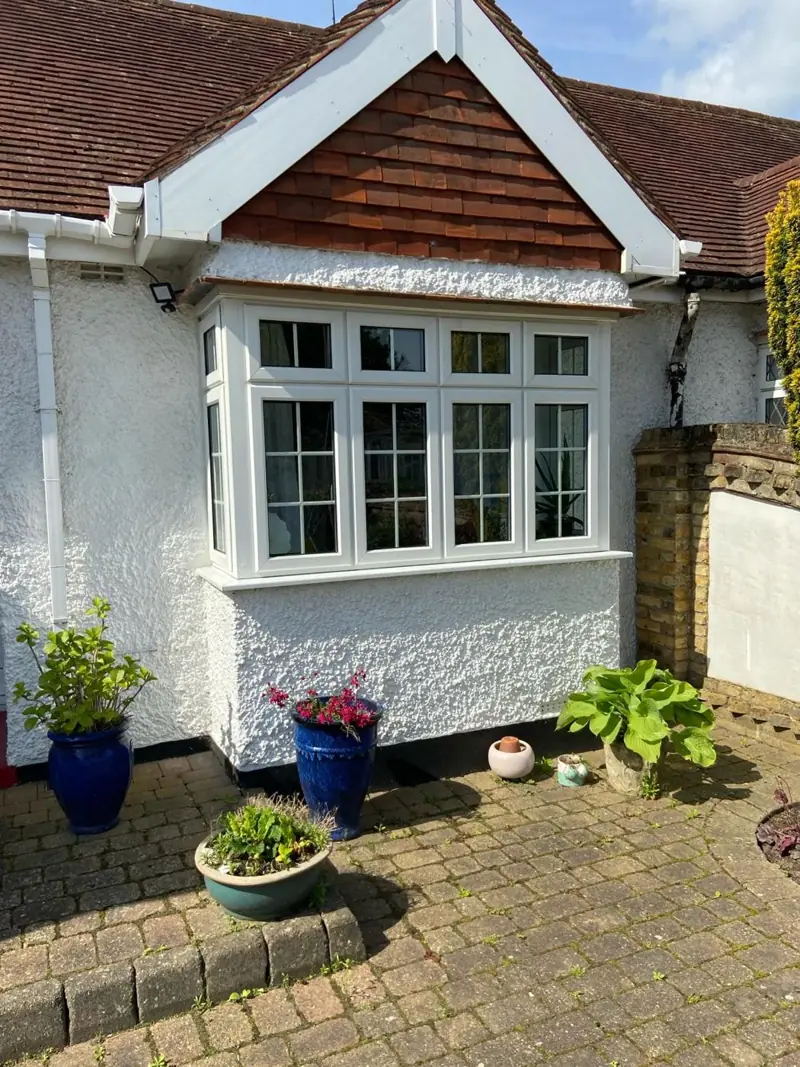
The other half of Blisworth’s masonry is conventional. The 1930s council-style houses and the post-war estates are brick, sometimes rendered or painted later. They suit the standard approach on our main render and masonry painting page: fungicidal wash, stabiliser on chalky areas, crack filling and two coats of breathable masonry paint. Our guide to painting render and roughcast goes into the product choices.
Brick is more common along the separate Grand Union Canal Conservation Area. Walls near the water stay damp for longer, so drying time after washing and checking moisture levels before painting matter more there than on the upper village streets. Article 4 Directions on four Stoke Road and four Courteenhall Road houses also mean a colour change on those fronts should be cleared with the council first. For the village as a whole, see our Blisworth page.
Last updated by Dean, DH Painter & Decorator.