We hang wallpaper and lining paper across Blisworth, an NN7 village 4.6 miles south-west of Northampton. In the old limestone cottages we nearly always line the walls first and plan the pattern around uneven corners; in the 1930s terraces and 1960s-70s estate houses, the walls are usually ready for paper sooner.
Lining first in the cottages of the old core
The cottages built along High Street and Stoke Road in the 17th and 18th centuries have thick stone walls finished in lime plaster. That plaster was trowelled over rubble, not set against straight battens, so it rolls and dips across a wall and the corners drift out of plumb. Hang a patterned paper straight onto it and every hollow catches the light along a seam, while the edges either gape or overlap where the wall changes plane.
Lining paper hung horizontally takes out the smaller ripples and gives the finishing paper an even surface to grip. It also helps with fine cracking in old plaster, which can otherwise telegraph through a thin paper within months. On walls that are badly hollow we may suggest a double layer of lining, or a word with a plasterer first if a patch is coming away from the stone. Nothing goes on until the wall underneath is sound.
Paper choice on solid stone walls
Old limestone walls need to breathe. A heavy vinyl, or a paper with a plastic face, slows moisture escaping through the wall and can lead to lifting seams or mould behind the paper, especially on ground-floor walls and on the side of a cottage that sits against the pavement. On these walls we steer people towards traditional paper-backed or non-woven papers with a breathable face. We also check the walls with a meter before we start. If a wall reads damp, papering it will not solve the problem, and we will say so before you buy the rolls.
If your cottage is one of the listed buildings in the Blisworth Conservation Area, check whether there is any historic paper or decorative plaster underneath before it is stripped. Removing historic finishes from a listed interior can need consent from West Northamptonshire Council.
Setting out a pattern in a low room
Ceilings in the one- and two-storey cottages are low and often slope a little from one end of the room to the other. With a large pattern repeat, the place you start the first drop matters more than usual, because a motif cut in half along a ceiling line that wanders is easy to see from the doorway. We set the first length on a true plumb line and place the pattern so that a full motif runs along the most visible wall. Any adjustment for a running ceiling line is then pushed into a corner behind the door or above a deep window reveal, where it will be least noticed.
The brick houses: Little Lane, Courteenhall Way and the estates
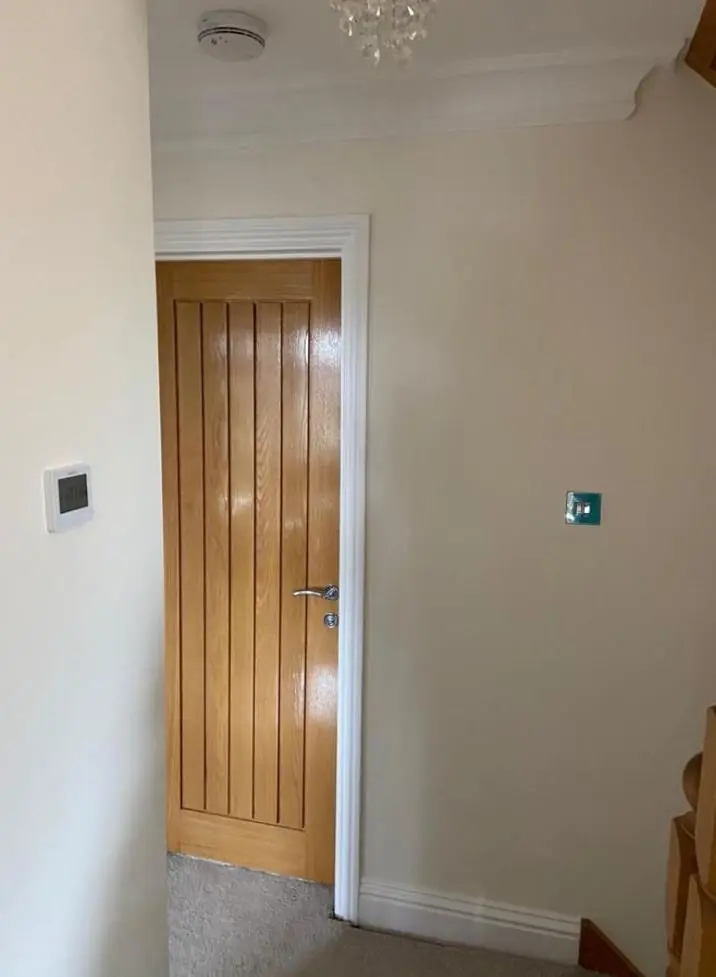
Coronation Cottages on Little Lane, Greenway Terrace on Courteenhall Road and the 1938 houses on Courteenhall Way are red brick with flatter walls, and the cul-de-sac houses of the 1960s and 70s are more even still. Feature walls, chimney breasts and full rooms in these houses usually need only stripping, filling and sizing before the paper goes up. They are also the homes where vinyls are fine in kitchens and bathrooms, because the walls behave very differently from solid stone.
Arranging the work
Parking on High Street is limited and there is no rear access to many of the small plots, so we plan where the van goes and bring the pasting table and rolls in through the front. Before quoting, Dean looks at the walls, measures the rooms and checks the pattern repeat on your chosen paper so that the roll count is right. You can read more about stripping, lining and paper types on our main wallpaper hanging page, and about the village as a whole on the Blisworth area page.
Last updated by Dean, DH Painter & Decorator.