Dean paints fascias, soffits, bargeboards and gutters across Blisworth, the NN7 village 4.6 miles south-west of Northampton beside the Blisworth Tunnel. The village mixes ornate Victorian bargeboards, slate and tile roofs on stone houses, thatch with no fascia at all, and standard estate rooflines.
Roofline in a village of thatch, slate and fishscale tile
Blisworth’s roofs are a mix: thatch on some of the oldest High Street cottages, slate and plain clay tile on many stone houses, concrete tile on others, and multi-pitched roofs with plain and fishscale tiles on the Victorian estate cottages. What sits under the roof edge varies just as much, so the first thing we do is work out what is actually there to paint.
Thatched cottages largely have no conventional fascia or soffit. The thatch overhangs the wall, eaves are low, and the upper joinery tucked under eyebrow dormers is the part that needs paint. Low eaves also mean ladders cannot always stand where they would on a slate roof, so access for first-floor windows is planned around the thatch rather than leaned against it.
The Grafton cottages and their Gothic bargeboards
The Grafton estate’s Victorian cottages and terraces on Stoke Road and Courteenhall Road are in a Gothic style, with pointed arched windows, multi-pitched roofs and decorative bargeboards. Those boards are the most demanding roofline work in Blisworth. Shaped and patterned boards collect dirt and water in every recess, and flaking paint in the detail is easy to miss from the ground.
Painting them is slow brush work:
- Every recess is scraped and sanded by hand, since a power sander cannot reach into the shaped detail.
- End grain on the cut edges is primed separately, because that is where water gets in first.
- Any soft sections are cut out and rebuilt with a resin filler before primer goes on, so the shape of the pattern is kept.
- Undercoat and top coat are laid on with small brushes, keeping the edges crisp.
On these two roads, Nos 8, 10, 12 and 14 Stoke Road and Nos 13, 15, 17 and 19 Courteenhall Road carry Article 4 Directions. A change in roofline colour there should be cleared with West Northamptonshire Council, and repainting in the existing colour avoids the question.
Access: wires, trees and pavements
Roofline work means long ladders or a tower, and several things in Blisworth get in the way. Overhead wires and telegraph poles run through the village, most noticeably where Northampton Road meets Courteenhall Road, so we check clearances before anything goes up. Near Blisworth House and the cemetery entrance, protected limes and beeches drop sap and leaves onto gutters and wet paint, and equipment cannot simply be placed under their canopy. On High Street, the pavement-edge cottages leave a narrow strip to work from next to traffic.
Standard boards on the 1930s and post-war houses
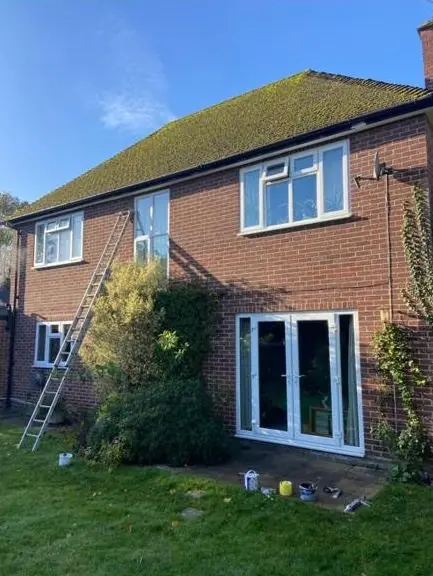
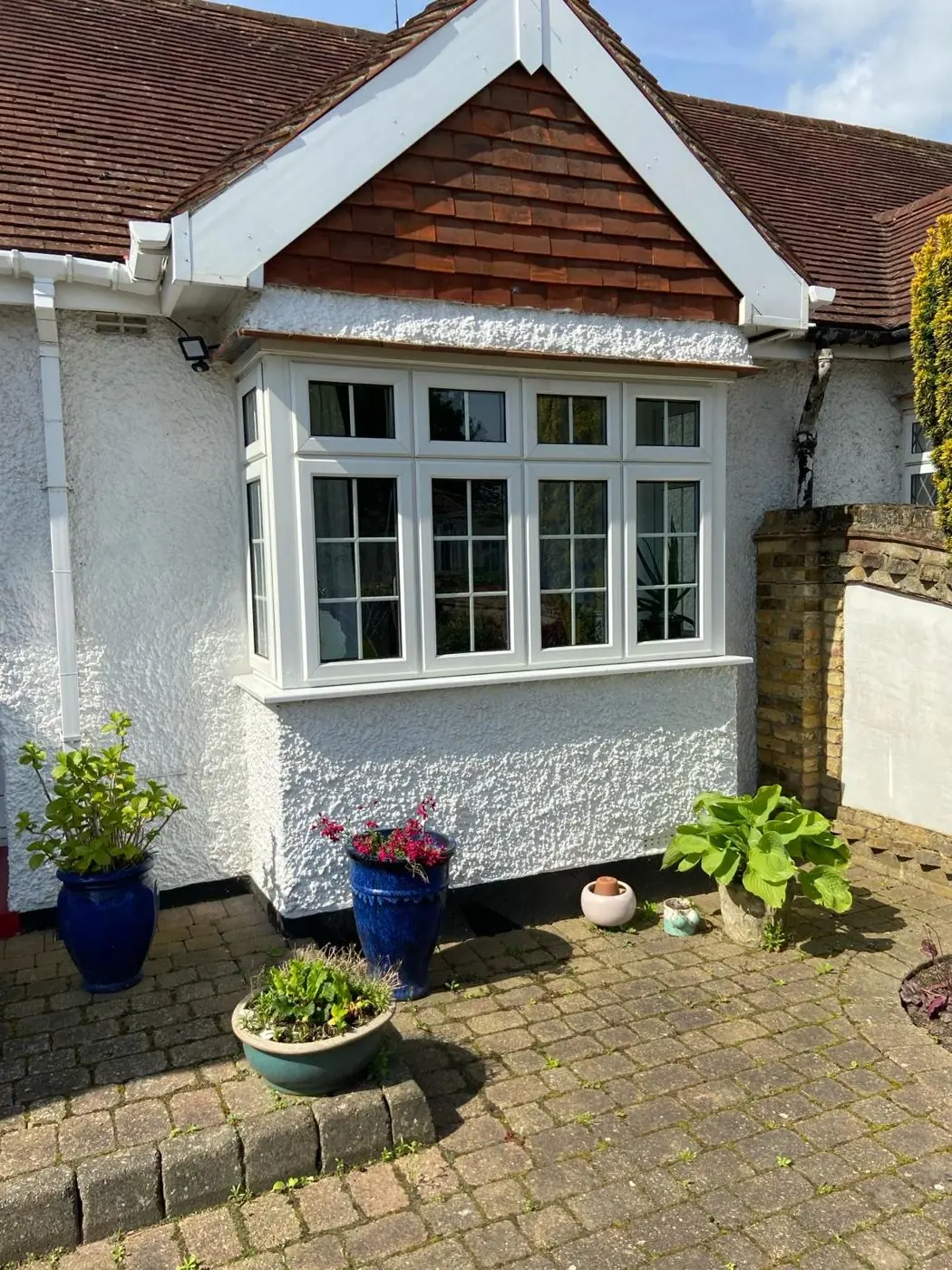
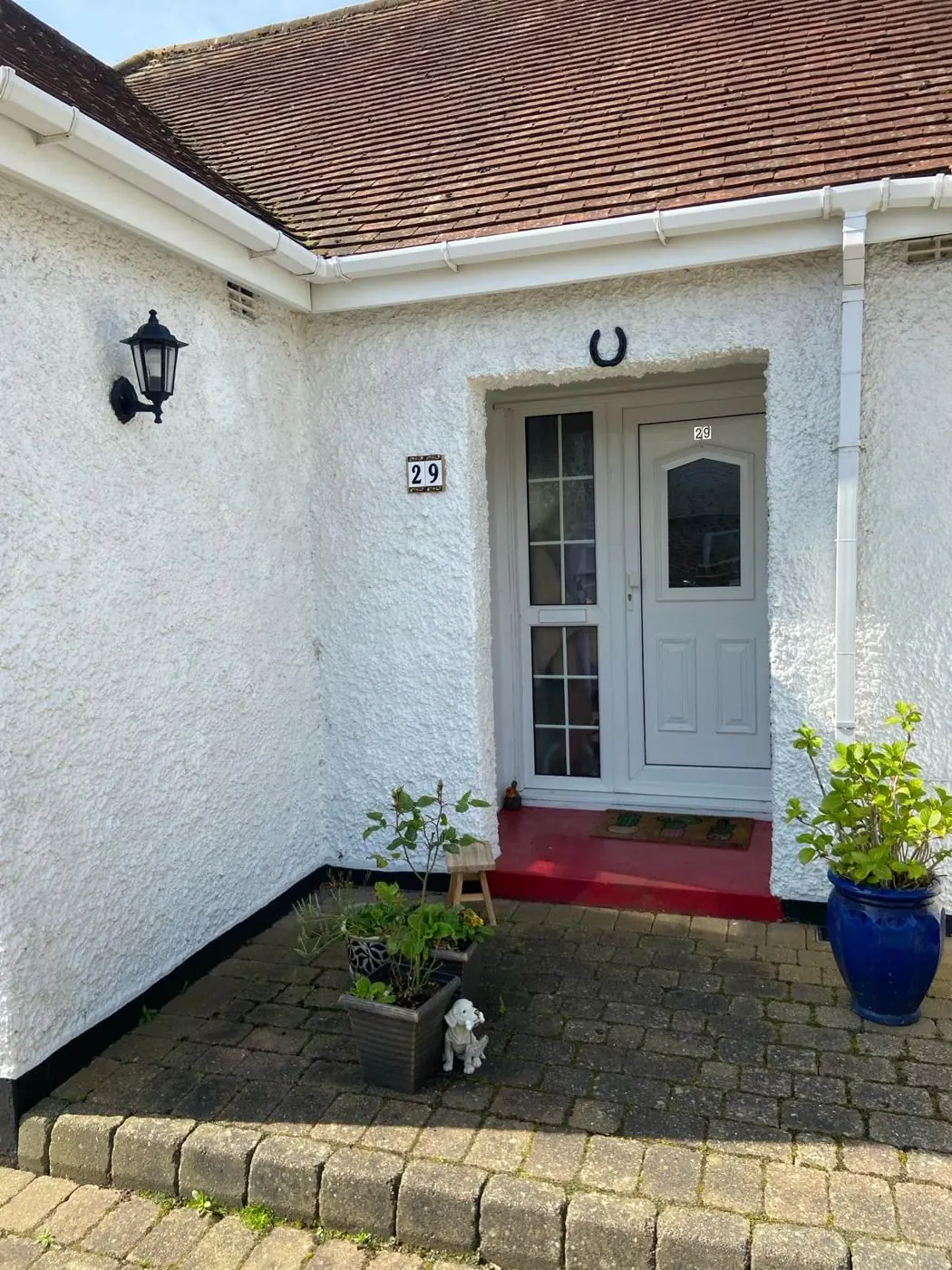
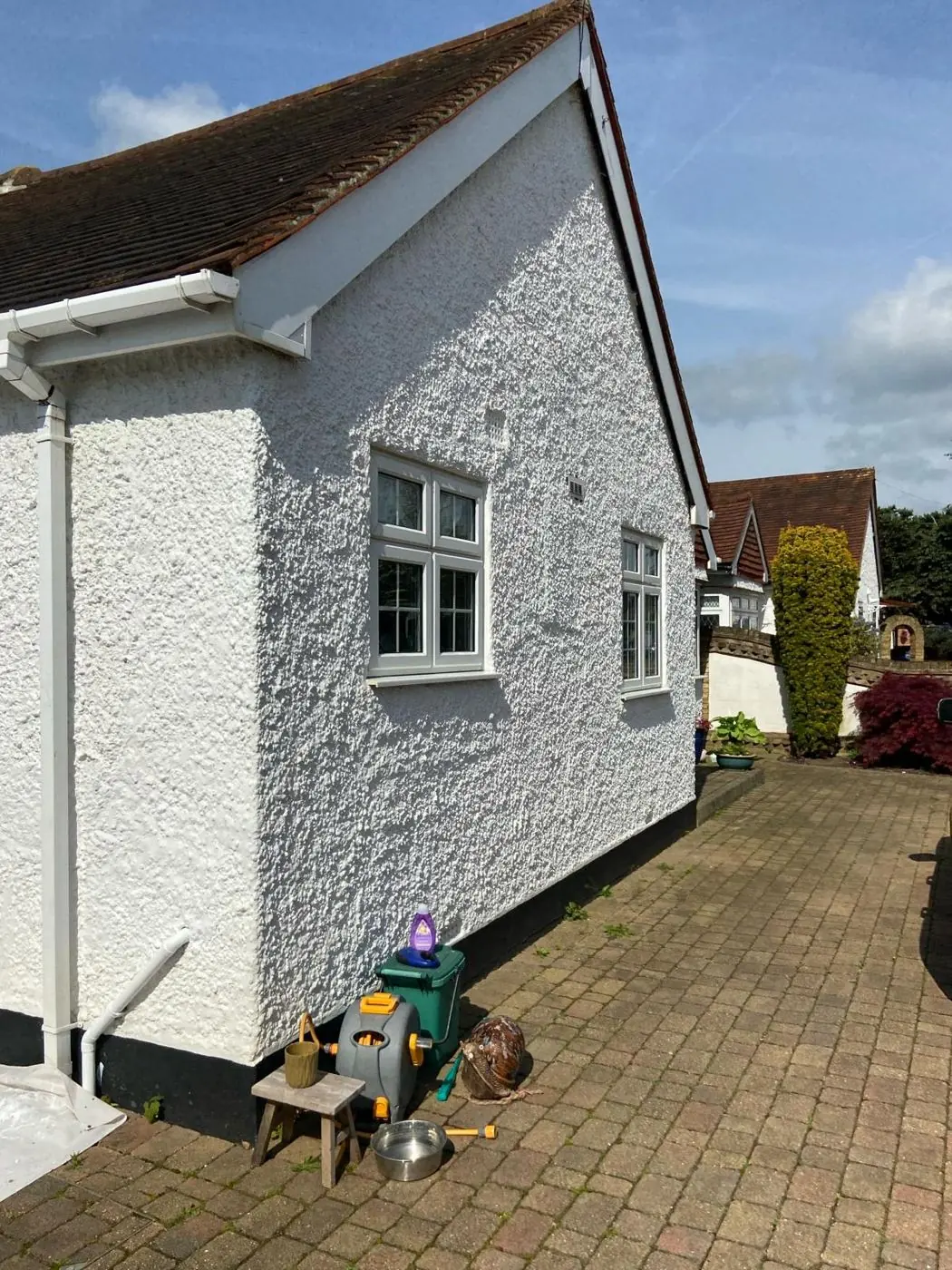
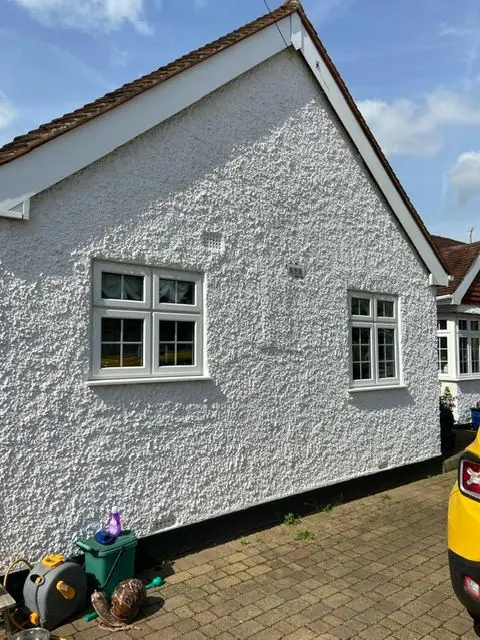
The brick houses on Greenway Terrace, Coronation Cottages and Courteenhall Way, and the 1960s and 70s estates, have ordinary timber or uPVC fascias and soffits. With off-road space to set up a tower, these follow the routine set out on our main fascia and soffit painting page: check for rot and leaking gutter joints, prepare, prime, undercoat and top coat, then paint gutters and downpipes so the whole edge matches.
Houses standing higher up, south-west of High Street, catch more weather, and their roofline paint tends to give up sooner on the exposed side. If your fascias are going, it is often worth having windows and doors looked at in the same visit; our Blisworth page shows how the rest of the village’s exteriors differ.
Last updated by Dean, DH Painter & Decorator.