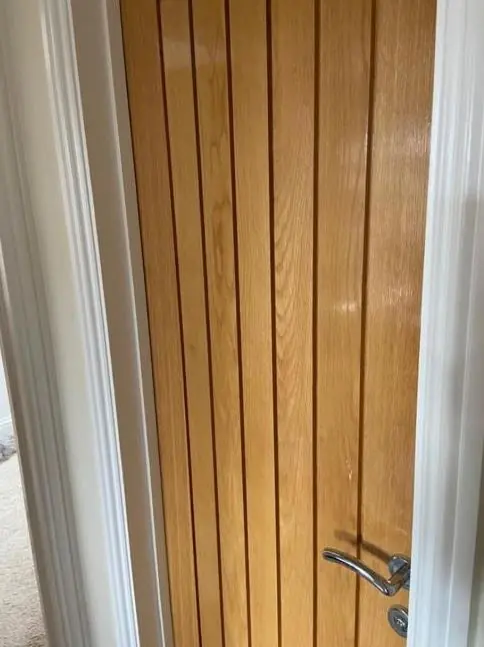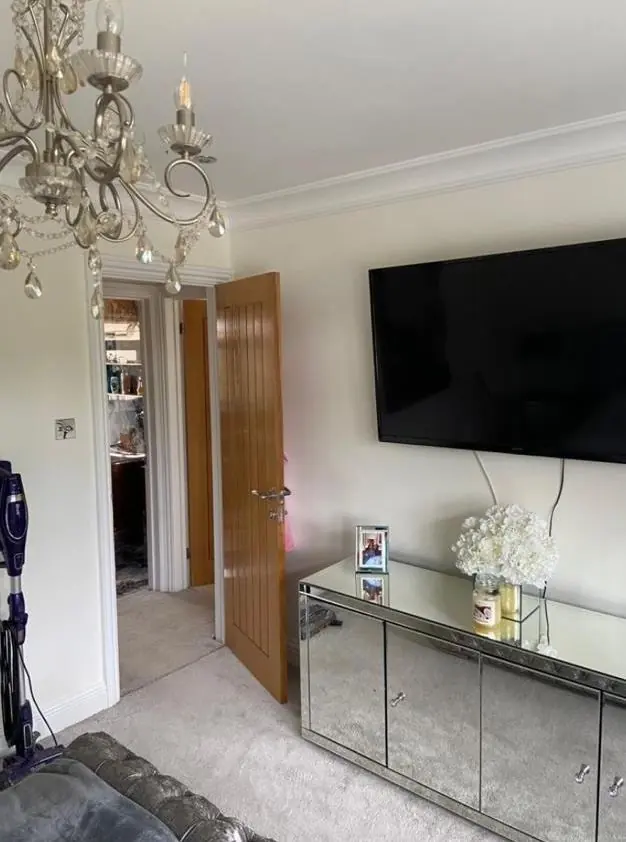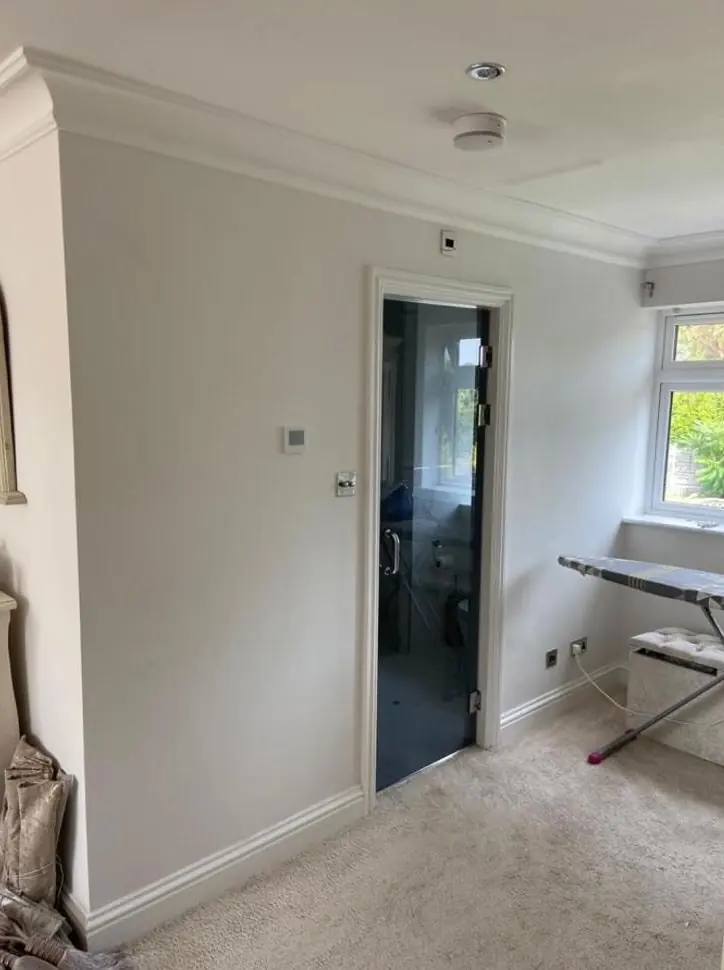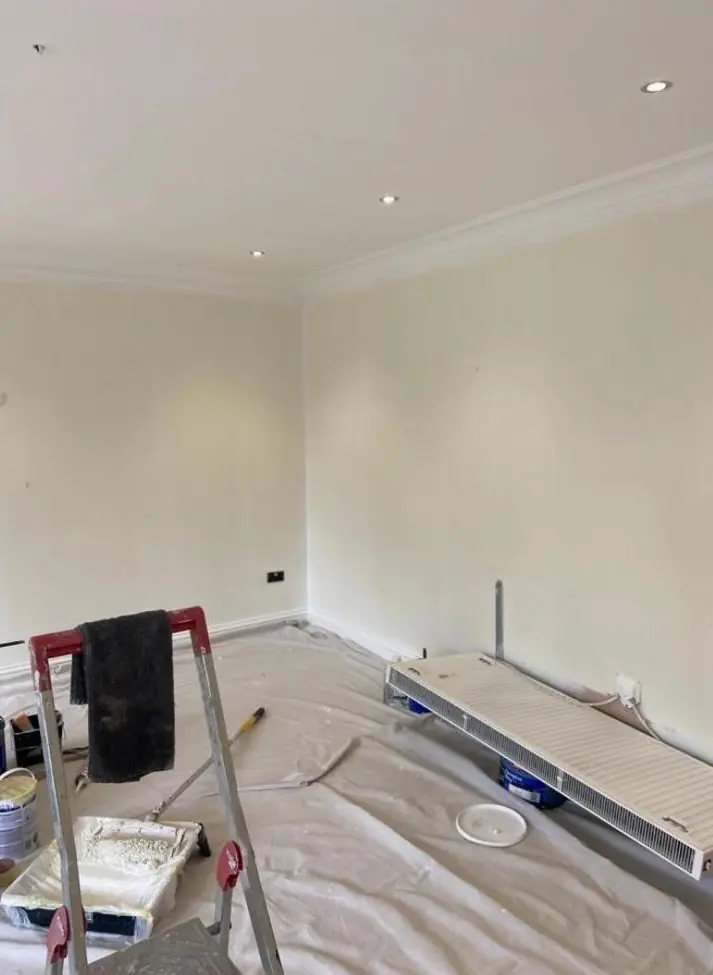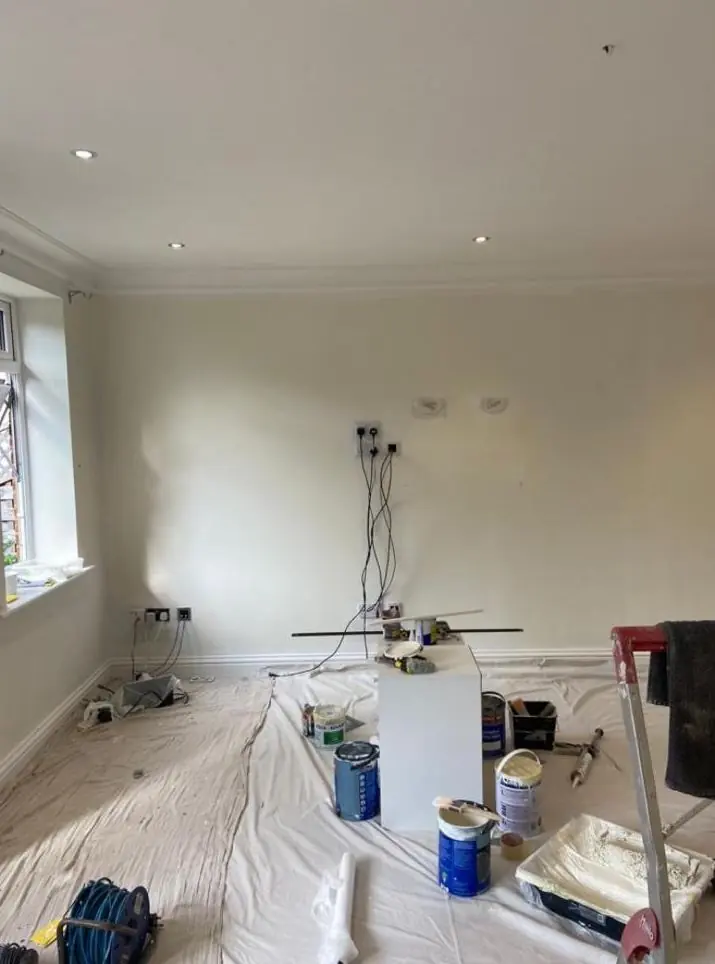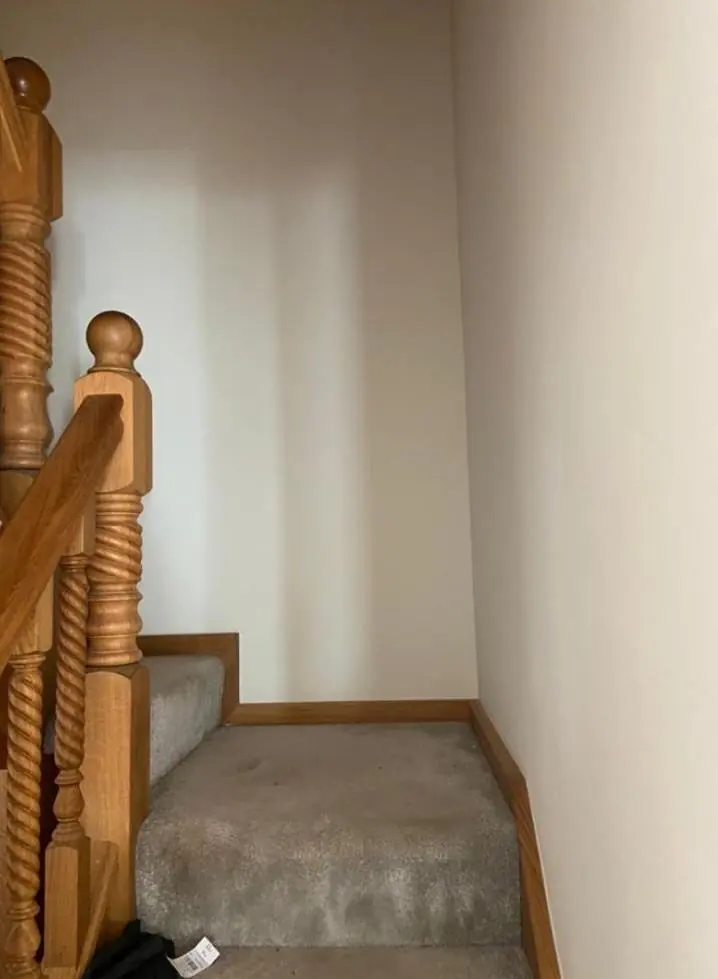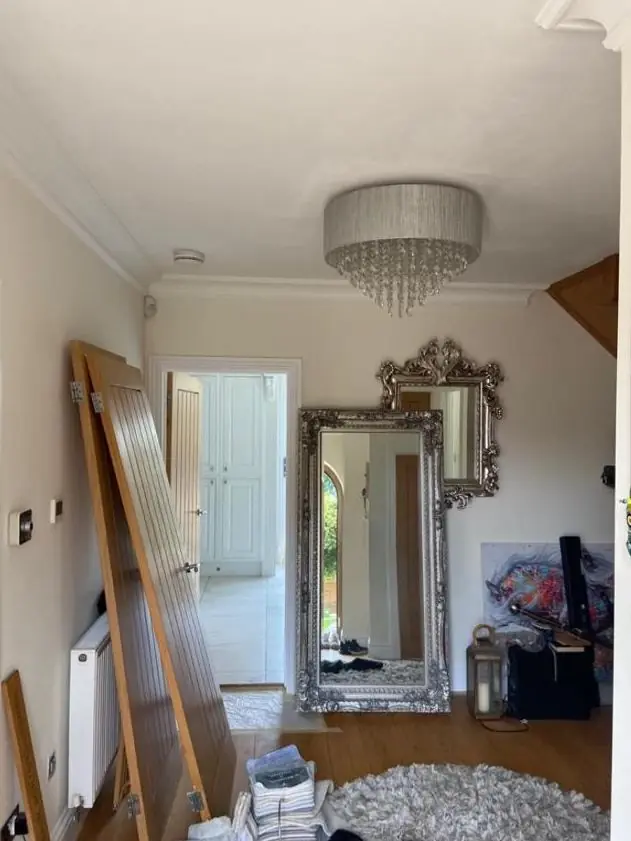
We carry out decorative paint finishes in Blisworth, which lies 4.6 miles south-west of Northampton on the old Towcester road. That can mean picking out the decorative bargeboards and pointed-arch joinery of the Victorian Grafton estate cottages, soft colourwashed walls in the older stone cottages, or panelling and feature walls in more recent homes.
The Grafton cottages and their Gothic joinery
The Dukes of Grafton owned much of Blisworth from 1675 until 1919, and in the Victorian period the estate put up cottages and terraces in a Gothic style along Stoke Road and Courteenhall Road. They are stone, with pointed arched windows, multi-pitched roofs, plain and fishscale tiles, and decorative timber bargeboards on the gables. These shaped boards are the closest thing the village has to a set piece of decorative painting.
Repainting them well is mostly brushwork. Every shaped edge, drop and curve has to be scraped, spot-primed and painted on both faces and the edges, because a board that is only painted on the front lets water in at the edges. A two-colour scheme, with the board in one shade and the shaped detail or the edges in another, can make the pattern read from the road. Where a house falls under one of the Article 4 Directions on Stoke Road or Courteenhall Road, or is listed, keep to the existing colours unless the council has agreed a change. The pointed-arch window frames get the same patient approach, with the glazing bars picked out cleanly against the stone reveal.
Knowing what to leave unpainted
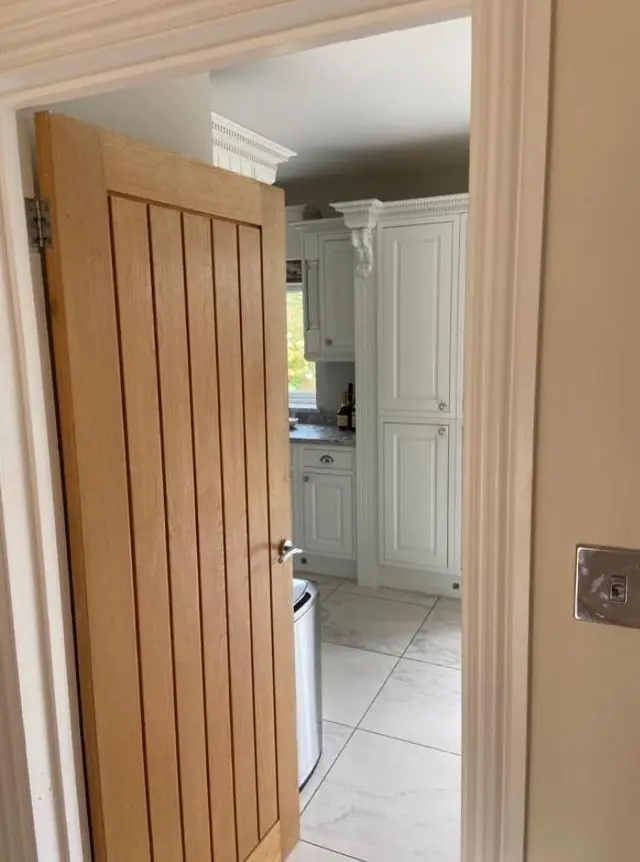
Decorative work in a stone village also means knowing what not to touch. The Old Rectory of 1841 has limestone ashlar walls with stone mullions and hood moulds, and Stoneacre on High Street shows off its limestone and ironstone banding. Those are stone details, meant to be seen as stone, and paint on them would harm both the look and the fabric. On houses like these the decorative interest comes from the joinery: casements, glazing bars, door panels and any timber surrounds, picked out in colours that let the stone lead.
Colourwash and soft finishes in the stone cottages
Inside the 17th- and 18th-century cottages, a flat modern emulsion can look out of place on walls that bow and dip. A colourwashed or softly layered finish suits those walls better. Built up in thin, breathable coats, it gives a gentle variation in tone that makes the most of uneven lime plaster rather than fighting it. Because the walls are solid limestone with no cavity, the products have to stay vapour-open. That rules out many glaze systems designed for flat modern plaster, so we choose materials to suit the wall first and the effect second.
In listed cottages, check with West Northamptonshire Council before introducing a new decorative scheme that would change a room’s historic character. Simple, traditional finishes are usually the easier route.
Panelling, feature walls and the farmhouses
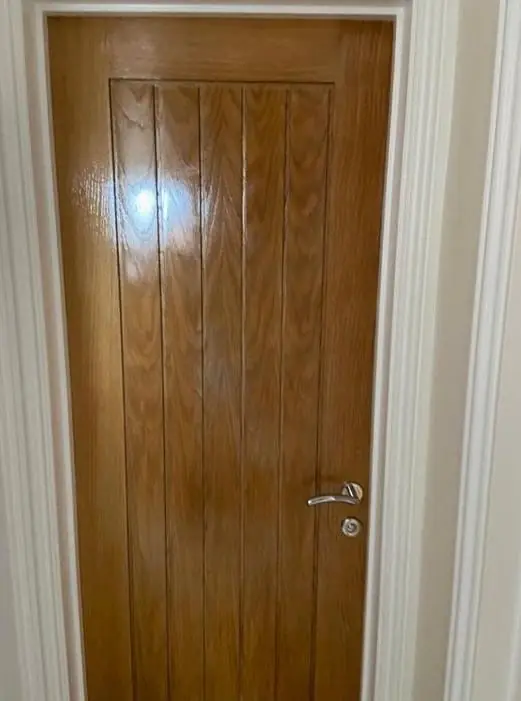
The three-storey yeoman farmhouses spread through the village, and the larger formal houses at the west end, have taller rooms where painted panelling, a picked-out dado or a two-tone wall can be in proportion. In the 1930s brick houses on Courteenhall Way and Little Lane, and in the 1960s-70s cul-de-sac estates, walls are flatter, so faux effects, sharp geometric feature walls and newly fitted MDF panelling are straightforward. The prep underneath is still what decides the result: filled joints, sanded pins and a primed surface before any colour goes on.
Work on the Grafton cottages’ gables means ladders beside the road. On Stoke Road and Courteenhall Road we plan access around traffic and the junction with High Street, which has school crossing lights.
The range of effects we offer, from faux finishes to panelling, is on our main decorative finishes page. For gable and eaves timber more generally, see fascia and soffit painting, and for the village as a whole, the Blisworth area page.
Last updated by Dean, DH Painter & Decorator.