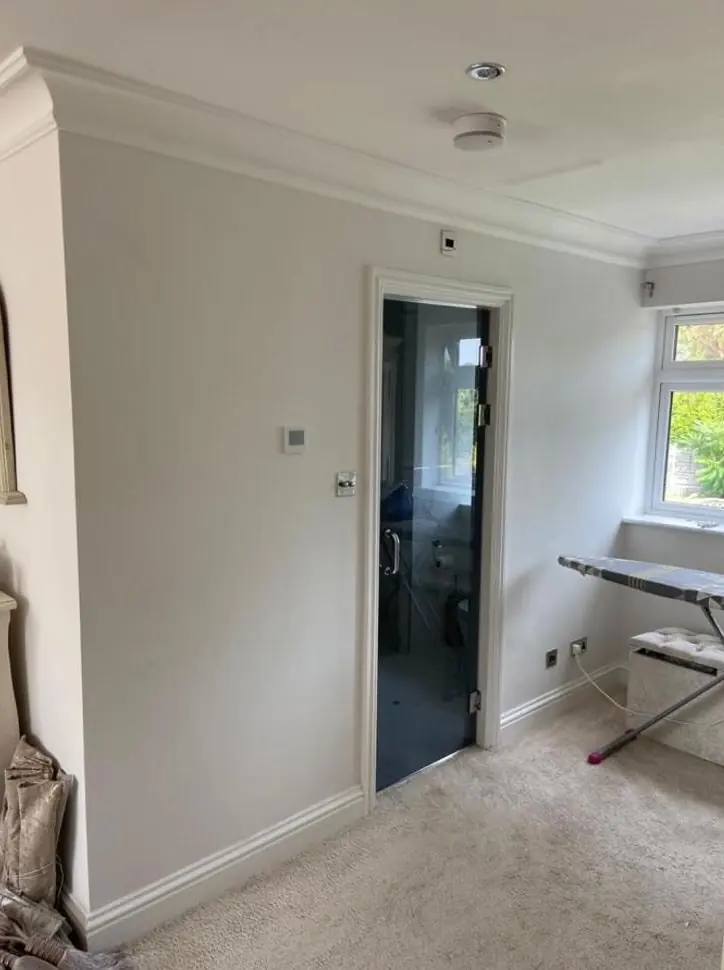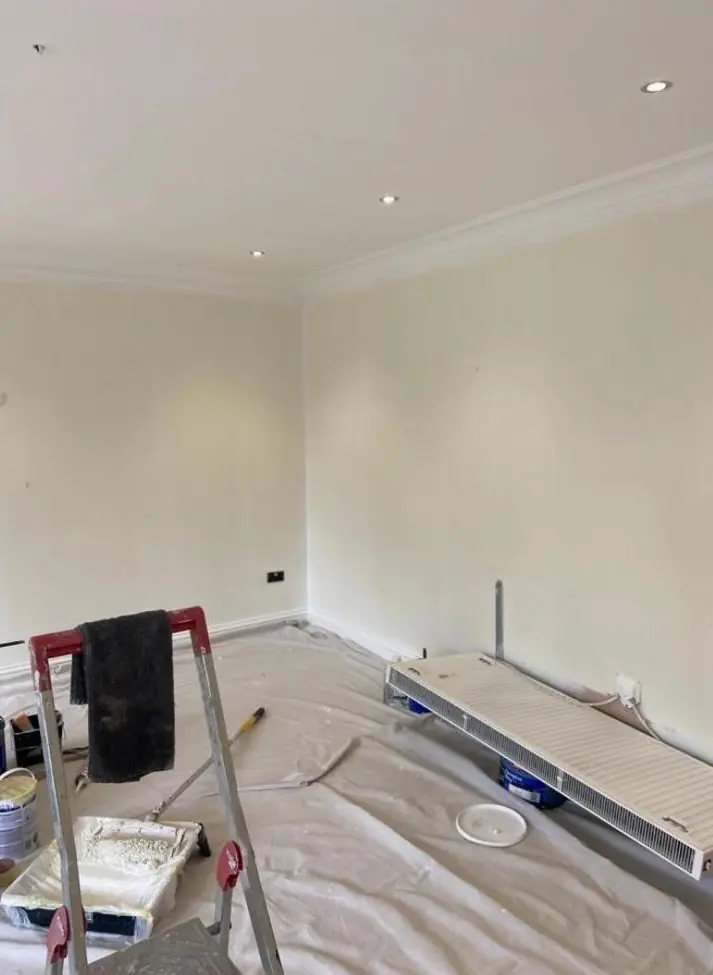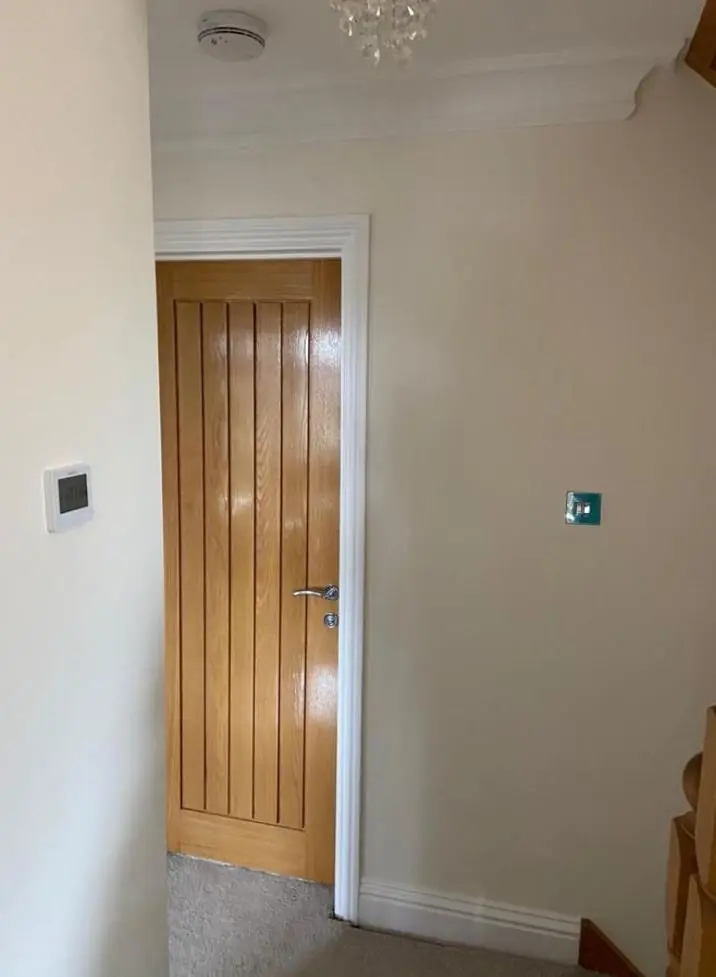
We carry out decorative paint finishes in Spratton, about 6.5 miles north of Northampton. Dean focuses on traditional work that suits the age of the village, such as limewash on old stone and plaster, and picking out the mouldings in Georgian rooms.
Limewash: the finish these walls were made for
Before modern emulsion, the inside of a lias or ironstone cottage would most likely have been limewashed. It is still the most honest finish for the late 17th and early 18th century houses in Spratton’s conservation area, such as those on Yew Tree Lane, because it is fully breathable and bonds into lime plaster rather than sitting on top as a skin. Built up in thin coats, it dries to a soft, slightly uneven colour with real depth, which suits rough walls far better than a flat modern paint.
Limewash only works on the right background. It needs bare lime plaster, stone or an earlier limewash; over vinyl emulsion it will not bond and simply rubs off. So the first job is finding out what is already there. If modern paint has been put over old plaster, Dean will tell you honestly whether removing it is practical, or whether a mineral paint is a better compromise. Limewash also rubs a little on the hand and needs renewing more often than modern paint, which suits some rooms and not others.
Picking out detail in the Georgian houses
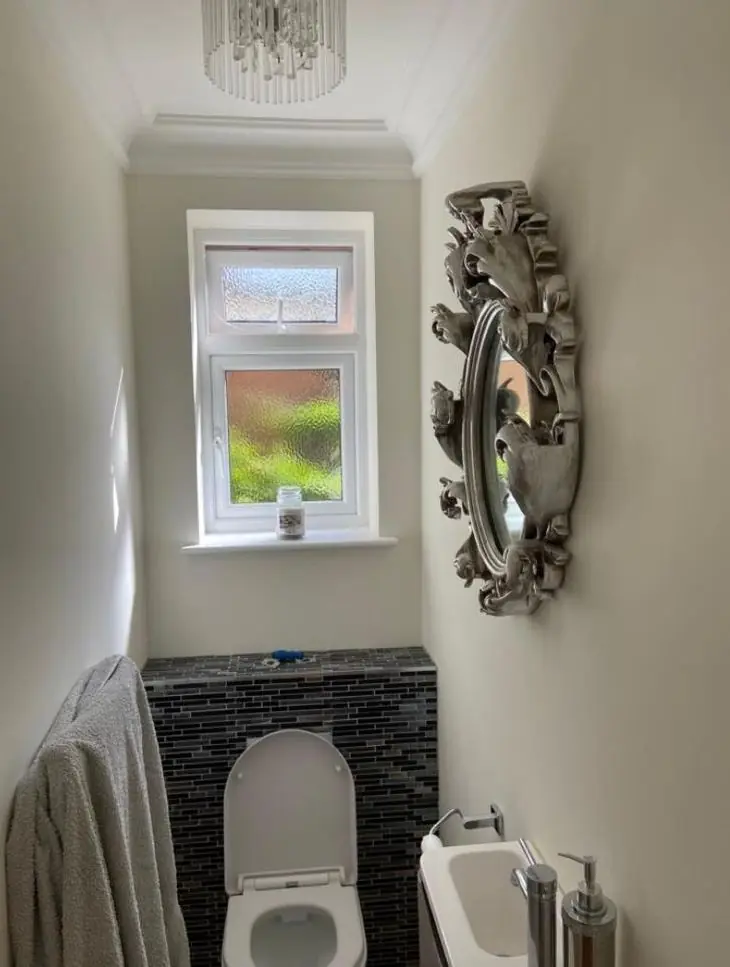
The later 18th century houses in the village, such as Spratton House on Church Road (1793) and the lias ashlar Northbank House on Manor Road, date from a period of moulded cornices, panelled shutters, dado rails and fielded doors. Picking out those mouldings in a second colour or a different sheen is decorative work in its own right. Done well, it draws the eye to the proportions of the room. Done roughly, it shows every wobble on a curved moulding.
- Cornices: one or two tones lifted from the wall colour, with crisp lines where the moulding meets ceiling and wall.
- Shutters and panelled doors: the panel field, the moulding and the frame in slightly different shades or sheens.
- Dado and picture rails: a contrast that ties the upper and lower walls together.
- Glazing bars on sashes: kept fine and sharp, since heavy paint build-up thickens them and makes the window look clumsy.
Effects that fit a chapel, a coach house or a cottage
Not every decorative finish belongs in an old house. A glossy modern metallic effect in a 1684 cottage tends to look out of place. Quieter, period-led effects sit better: a soft colour-washed wall, a stencilled border in an old-house palette, or a hand-painted panel in a converted space. The Old Chapel on Brixworth Road, converted in 1982, and the former coach house at Spratton House show how varied the village’s buildings are; tall open walls in a conversion can carry a bolder feature than a cottage parlour. Big walls like that need a tower so an effect can be worked continuously without visible joins.
Listed buildings and what to check first
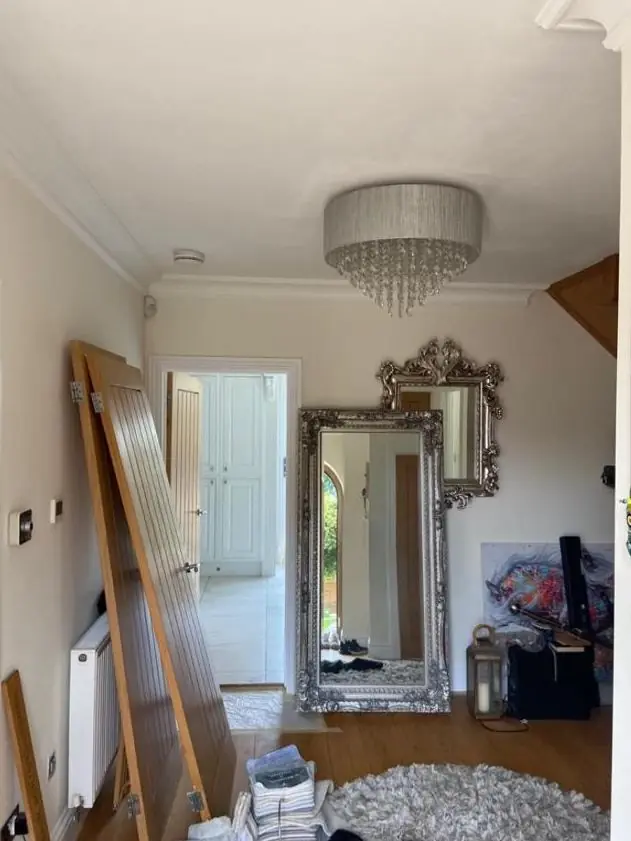
Spratton has several Grade II listed houses, including 2 Yew Tree Lane, The Fir Tree, Home Farmhouse, 7 Manor Road and Northbank House. Redecorating in the same manner is normally fine. Removing historic paint layers, applying a new finish to previously unpainted joinery or stone, or altering original features can need listed building consent from West Northamptonshire Council, and we would ask you to confirm that before work starts.
Spratton is 6.5 miles up the A5199 from our Northampton base. The main decorative finishes page covers the full range of effects, and most decorative work sits on top of our interior painting preparation. There is more on the village on our Spratton area page.
Last updated by Dean, DH Painter & Decorator.