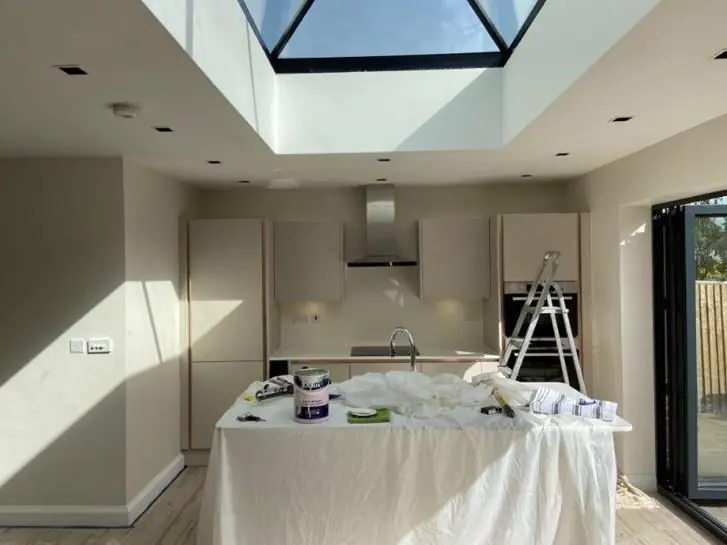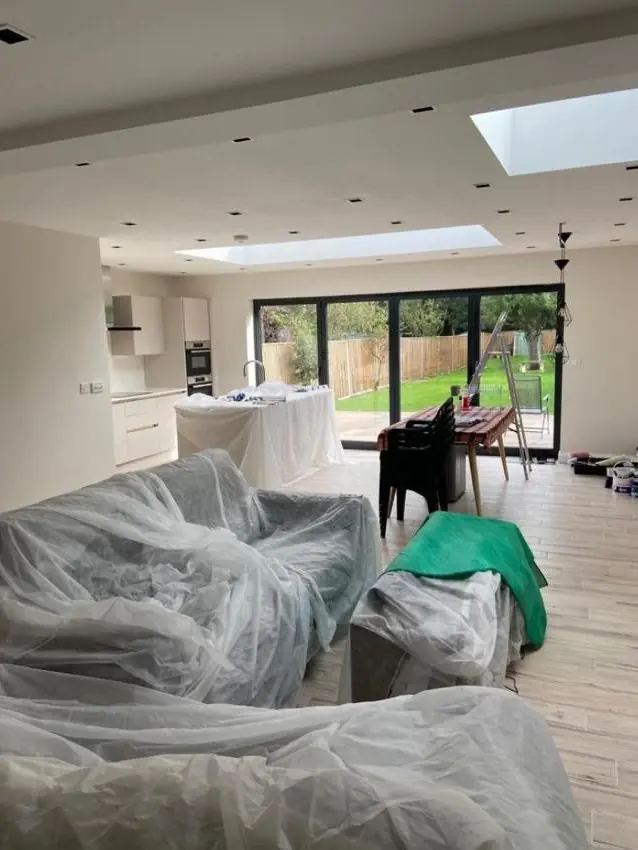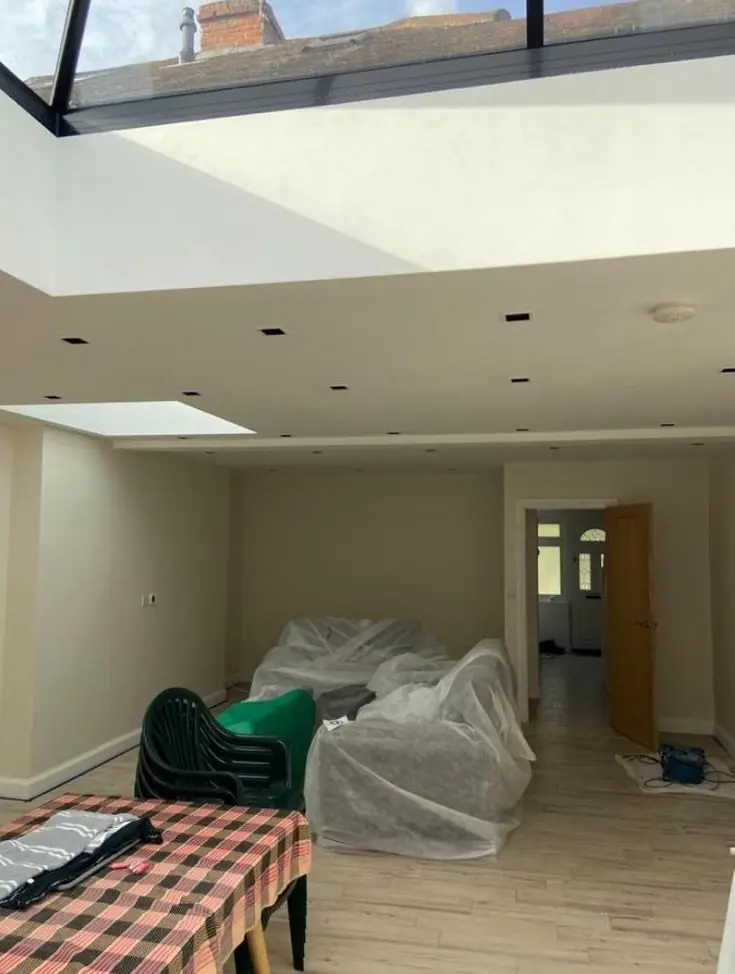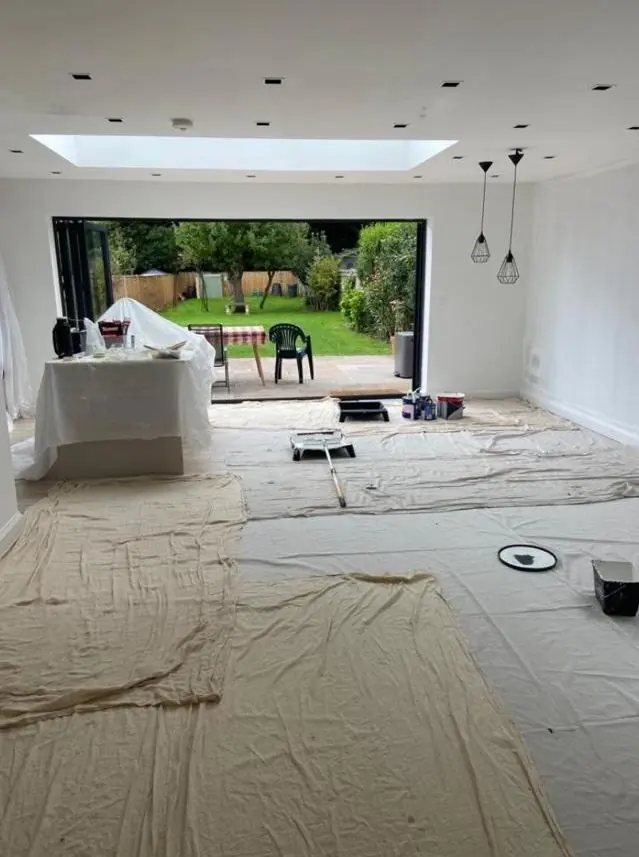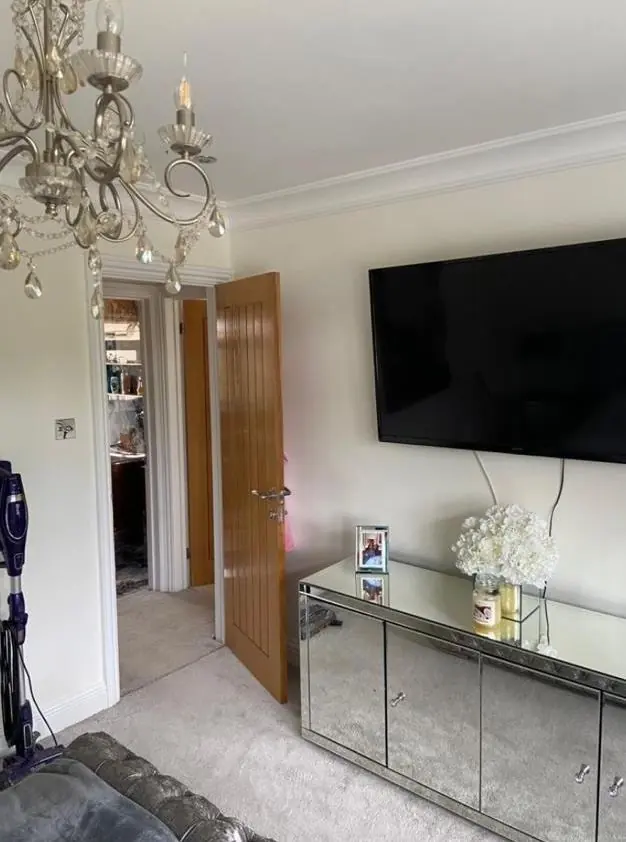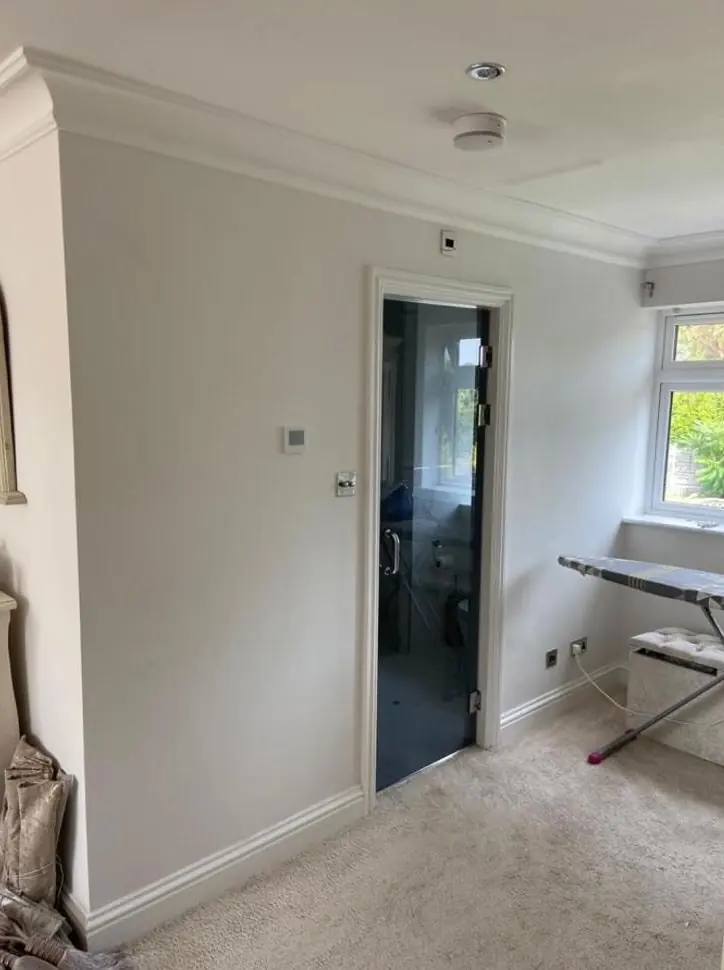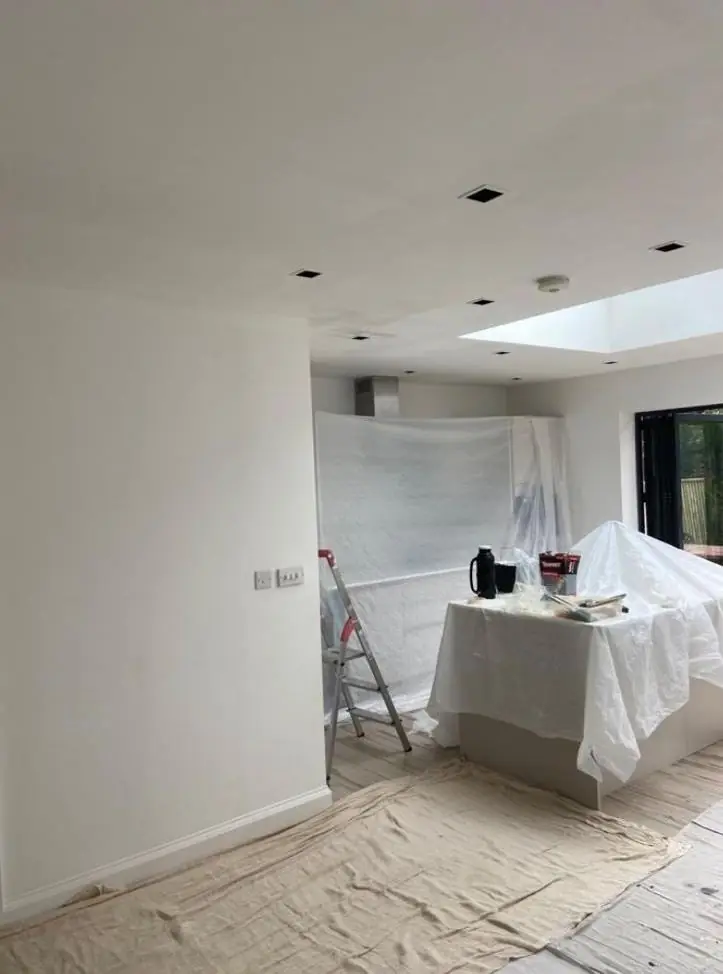
We decorate newly plastered rooms, extensions and conversions in Spratton, 6.5 miles north of Northampton town centre. In this village new work often sits beside 17th and 18th century stone walls, so the first job is to find out what each wall is plastered with before choosing the paint.
Where new work joins a 300-year-old wall
Spratton’s historic houses are built of coursed ironstone rubble and squared lias limestone, and the oldest date from the 1680s. When one of them gets an extension, a re-plastered room or a conversion of an outbuilding, the result is usually two very different walls meeting in the same room. The new side is often gypsum plaster on block or board. The old side may be lime plaster on stone, or it may have been re-plastered in lime to keep it breathable.
Those two surfaces should not get the same paint. A modern gypsum skim needs a diluted mist coat so the first coat soaks in and grips. Lime plaster on solid stone needs a paint that lets moisture out, such as a mineral paint, a clay paint or a breathable emulsion, or the wall will hold damp behind the film. We check with you or your builder which plaster went where, and look at it ourselves, before ordering paint.
The junction itself needs attention too. Where a new stud wall or extension meets an old stone gable, the two parts move differently through the seasons. A flexible filler along the joint and a slightly softer paint system on the old side reduce cracking, but a fine line can still reappear. We would rather tell you that now than promise a crack-free corner.
Lime plaster takes its own time
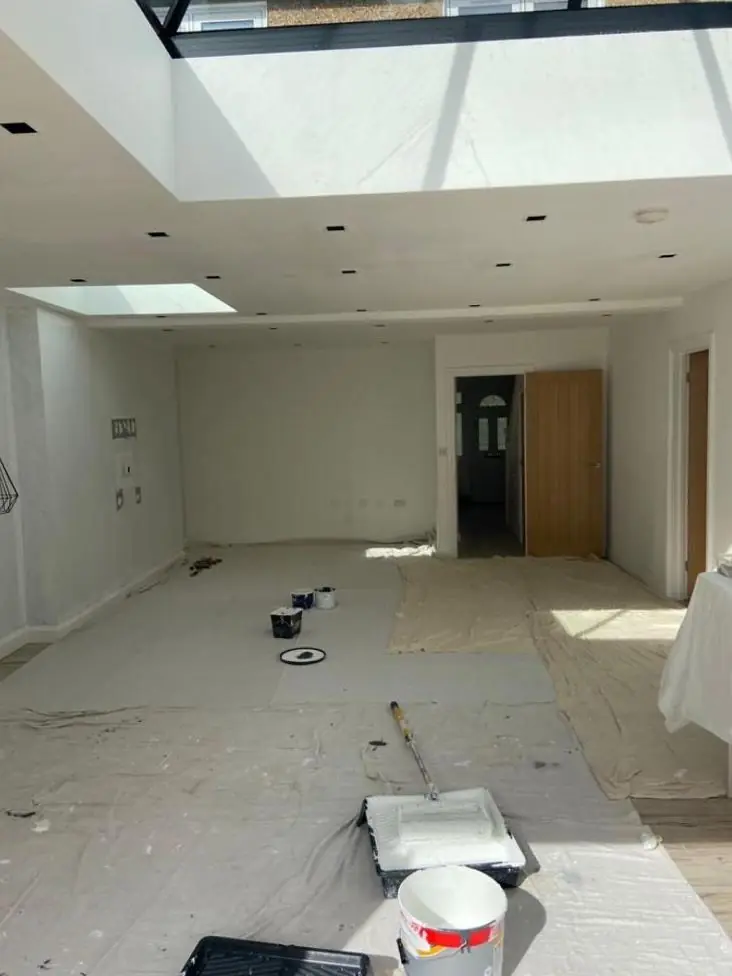
Gypsum plaster dries in a few weeks in a warm room. Lime plaster carbonates slowly and can stay damp much longer, particularly on thick stone walls in a village surrounded by open farmland. Painting too soon traps that moisture. We check the surface before sealing it. If it is not ready we say so and come back, rather than painting over it and leaving you with flaking or patchy paint a few months later.
Our guide to painting new plaster and mist coats explains the gypsum side in detail. For lime, the rule is simpler: no vinyl emulsion, and no rushing it.
Conversions with tall new walls
Converted buildings bring large areas of new plaster all at once. The Old Chapel on Brixworth Road became a house in 1982, and conversions of chapels, barns and coach houses tend to have tall walls and vaulted or open ceilings. Newly plastered walls at that height are decorated from a tower. Mist coating a high, fresh surface takes several hours in a single pass, and long walls need a wet edge kept going so no lap marks show once the finish coats go on.
- Gypsum skim on board or block: mist coat, then two finish coats
- Lime plaster on stone: breathable mineral or clay paint, no plastic film
- Junctions between old and new: flexible filler where they meet, and expect a hairline as the building settles
- New joinery: knot, prime and undercoat bare timber or MDF before it goes up, if the builder allows
Listed houses and the conservation area
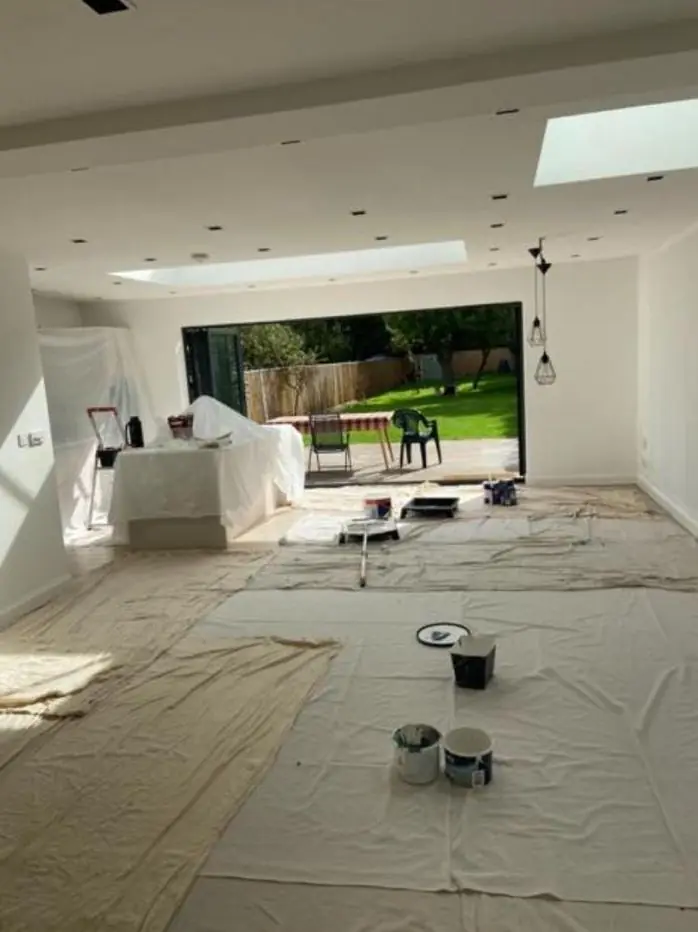
Much of Spratton’s core falls inside a conservation area, and several houses are Grade II listed. Any extension or internal alteration to a listed house will have gone through consent, and the conditions sometimes name the finish. If they do, we follow them. If you are unsure, it is worth checking before the decorating stage. For the full process on extensions, from drying checks to the finish coats on new MDF, see our main new plaster and extension painting page. Other services for the village are on the Spratton area page.
Last updated by Dean, DH Painter & Decorator.