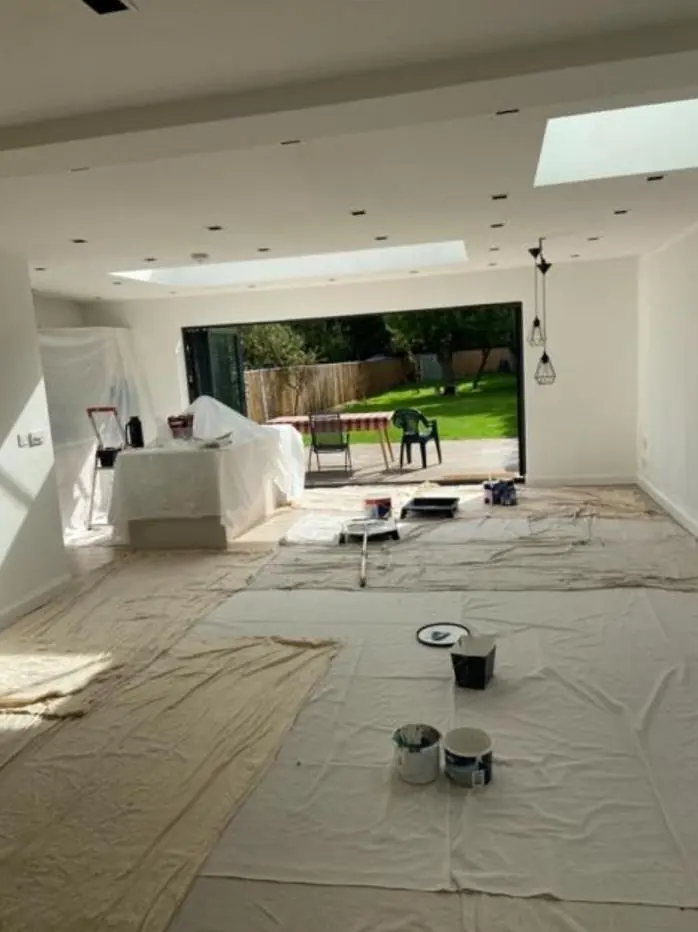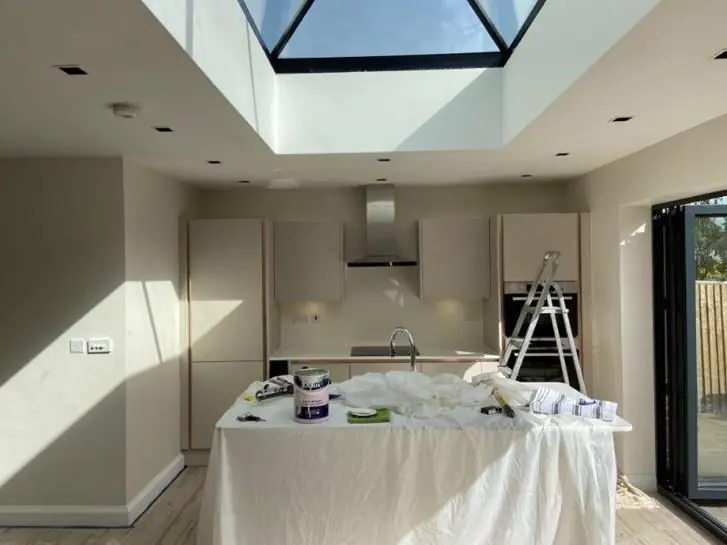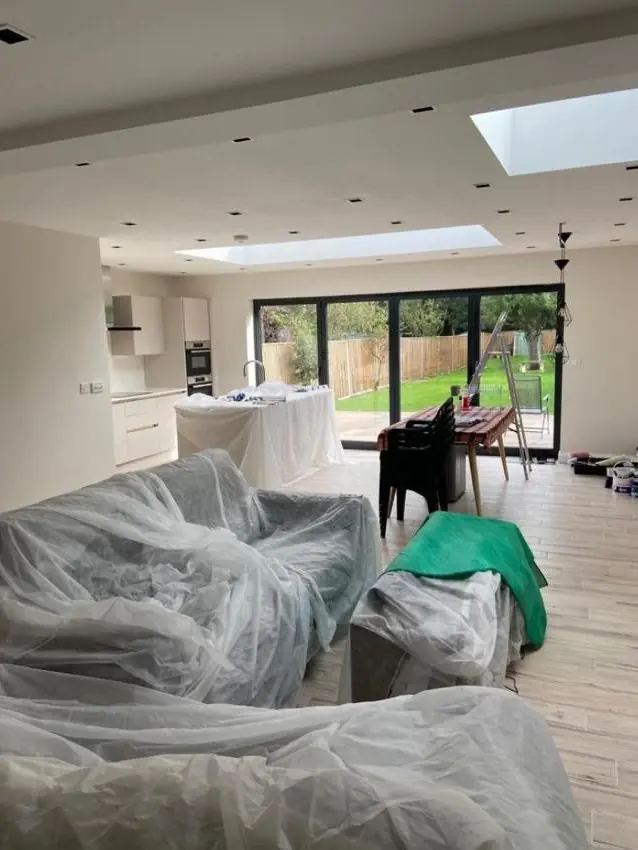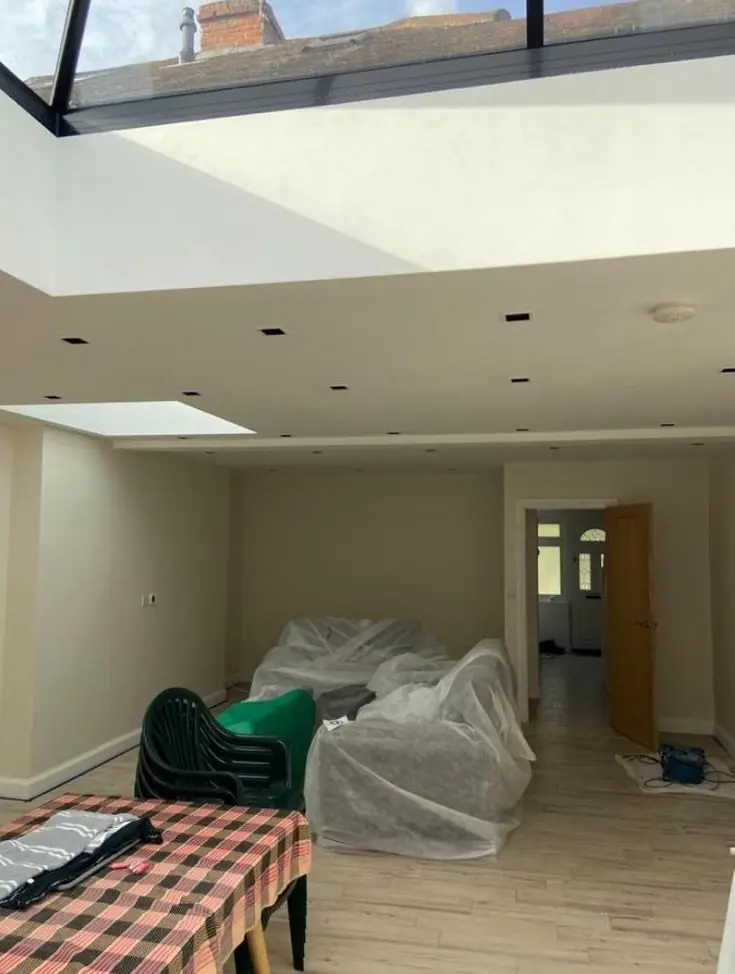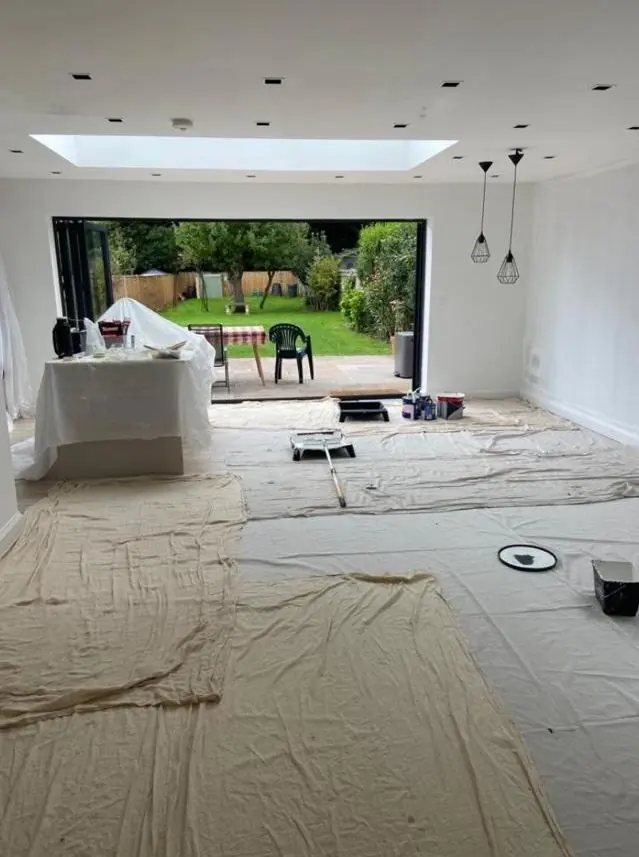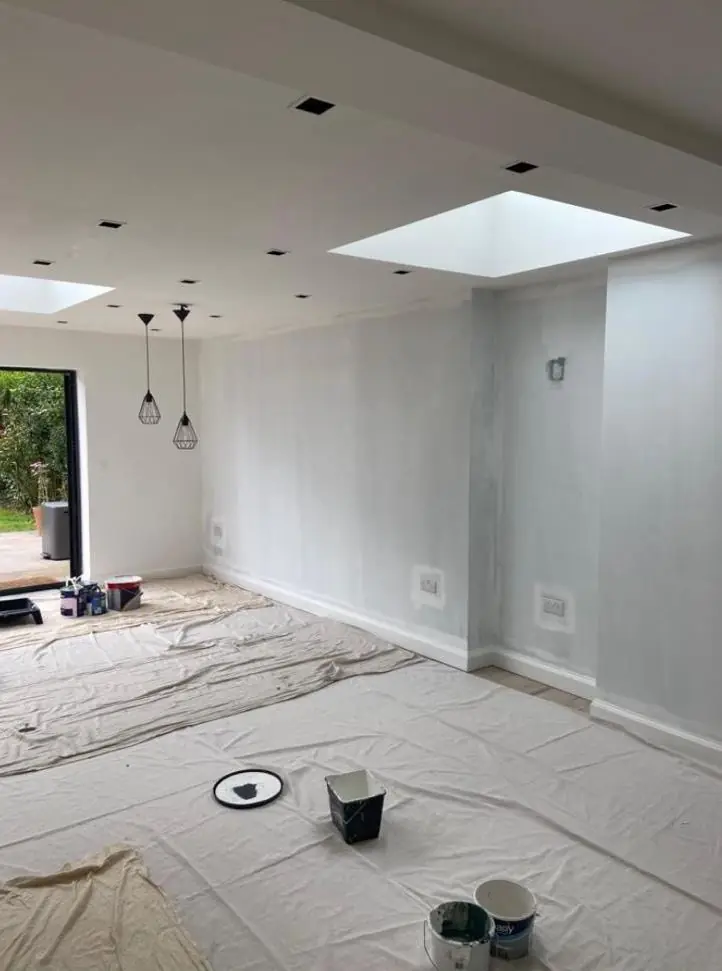
We decorate new plaster, extensions and re-skimmed rooms in Walgrave, about 7.9 miles north-east of Northampton. Dean checks the plaster is dry, applies the right mist coat and finishes walls, ceilings and new joinery, taking extra care where a modern extension meets an older lias house.
When a new extension meets a lias wall
A lot of older Walgrave homes are built of coursed lias, a local limestone, and their original interiors were finished in lime plaster. When an extension goes on, the new rooms are usually plastered in gypsum, and the interesting decorating question is the junction between the two. Lime plaster lets moisture move in and out of the stone. Seal it under a vinyl emulsion that runs straight across from the new wall and you can end up with damp patches and flaking along the old side within a winter or two.
Our approach is to treat the two surfaces as separate systems that meet at a sensible line, often a corner or the old opening. The new gypsum gets a conventional mist coat and finish. The old lime work keeps a breathable mineral or clay-based paint. If you want the colour to look continuous, we choose two paints that can be matched closely rather than one paint that suits only half the room.
Listed houses and consent
Walgrave has 18 listed entries in the parish, including Walgrave House on the High Street, Walgrave Hall Farmhouse on Hannington Road and several houses on Holcot Road and Gold Street. Any extension or internal alteration on a listed building will have been through listed building consent, and the approved drawings sometimes specify finishes. Before we quote for decorating, we ask whether the consent mentions paint or plaster, so the decoration matches what the council agreed.
Extensions on the post-war and 1970s houses
On the 20th-century streets the picture is different: Townsend Road and Springfield Road from around 1949, Amber Drive from around 1975, and the later closes such as Walker’s Acre, Church View and Manor Farm Close. Here the existing walls are usually gypsum too, so the job is more straightforward, but there are still things to watch.
| Surface | First coat | What we check |
|---|---|---|
| New gypsum skim on an extension | Thinned contract matt mist coat | Even pale colour, no dark damp patches |
| Re-skimmed wall in an inter-war room | Mist coat | Hairline cracks where new skim meets old plaster at picture rail height |
| Surviving lime plaster next to new work | Breathable mineral or clay paint, no mist coat needed | Soft or dusty areas that need consolidating |
| New MDF skirtings and architraves | Sealer or MDF primer on cut edges | Swollen edges, open mitres |
The method for mist coats, including how long new plaster needs to dry, is set out in our guide to painting new plaster, so we will not repeat it here.
Drying a new room in a country village
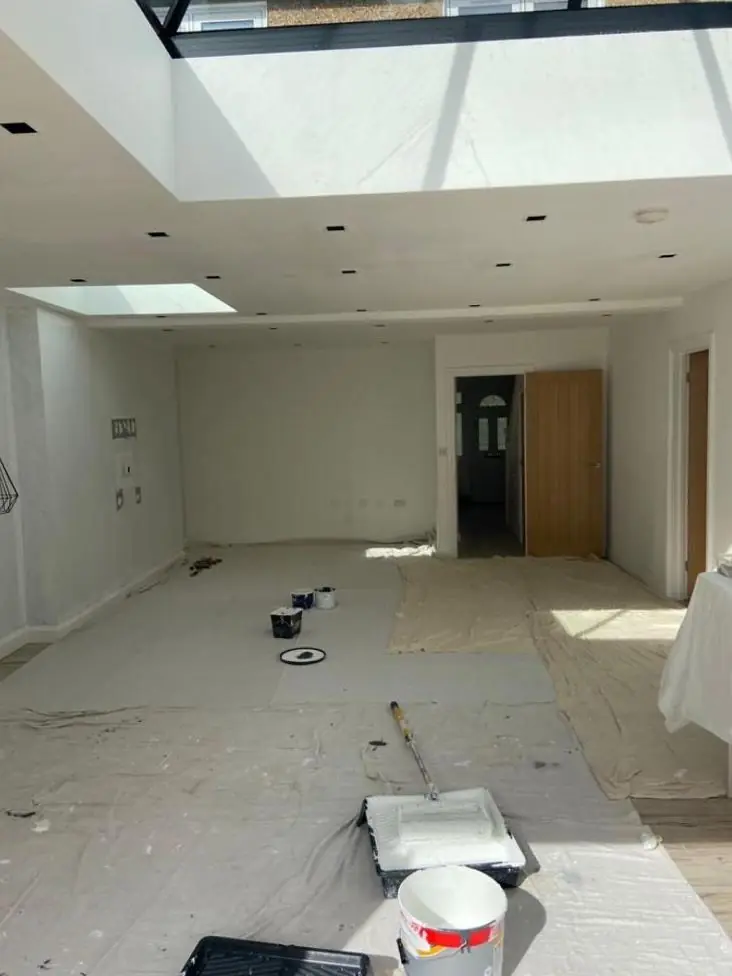
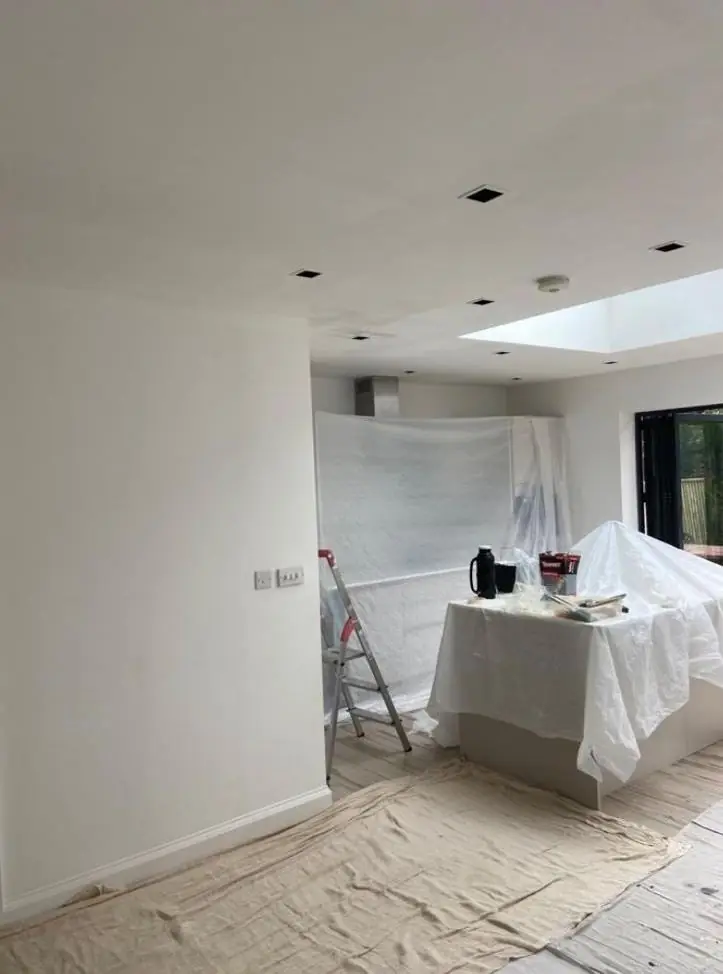
New plaster dries by giving off water into the air, and how fast that happens depends on heat and ventilation. A brand-new extension on a rural plot, with fields and mature trees around it, can stay cool and damp into spring if it is not heated. We will look at the plaster before booking the mist coat and tell you plainly if it needs more time; painting too soon is the most common reason new work peels.
Since Walgrave is about eight miles from Northampton with no trade supplier in the village, we time the visits so that drying, mist coat and finish coats run as full working days, bringing everything with us. Roof lanterns and vaulted ceilings need a tower or podium, which we bring on the same trip. The full scope of what we cover in an extension is on our new plaster and extension painting page, and other services in the village are on the Walgrave area page.
Last updated by Dean, DH Painter & Decorator.