Painter & decorator covering Northampton and surrounding areas

Render and Masonry Painting in Spratton

Breathable coatings for the rendered and painted walls in Spratton, and honest advice on the ironstone and lias that should never be painted.

  • Over 30 years experience
  • Free quotes & advice
  • Fully insured & trained
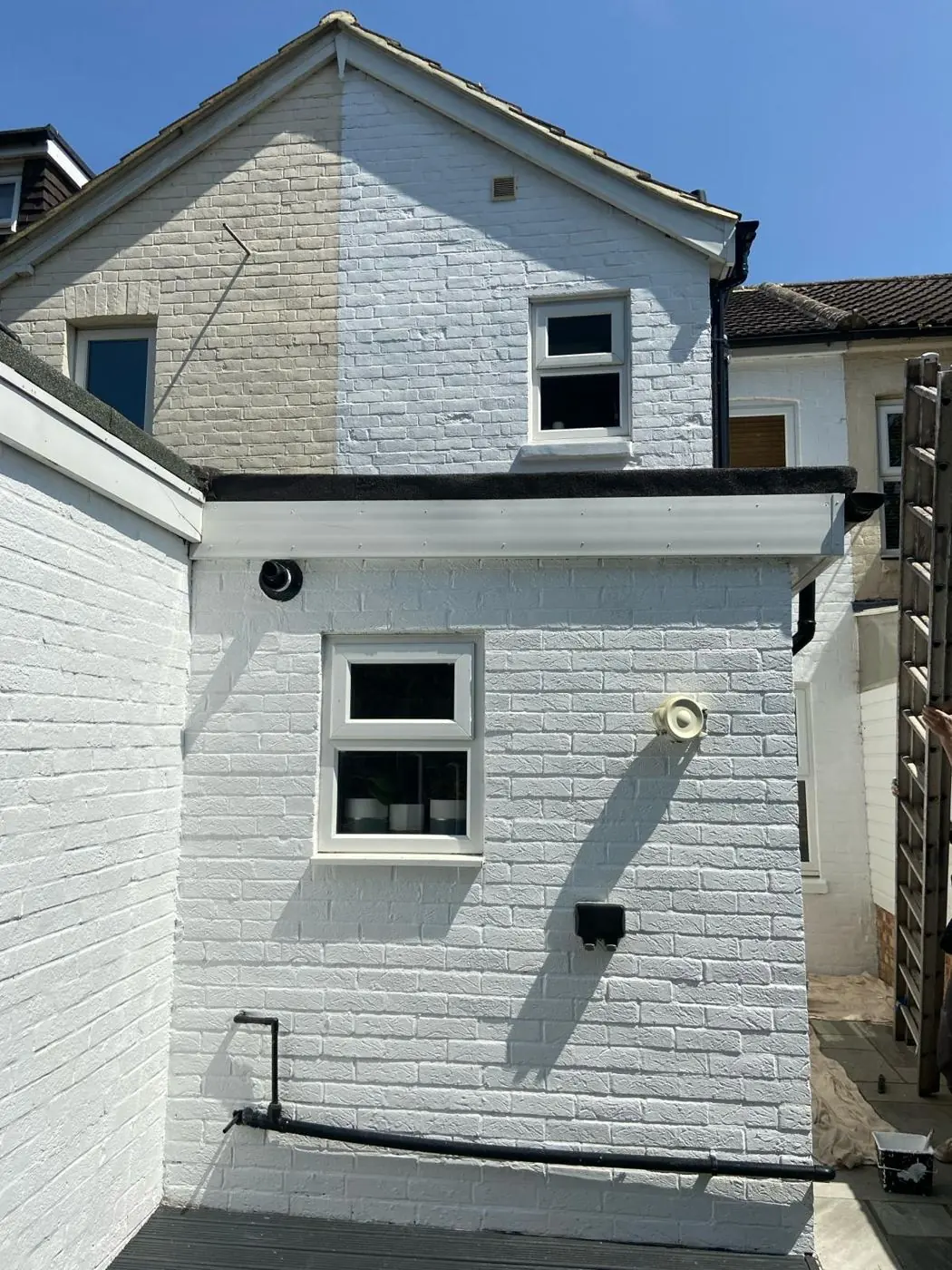
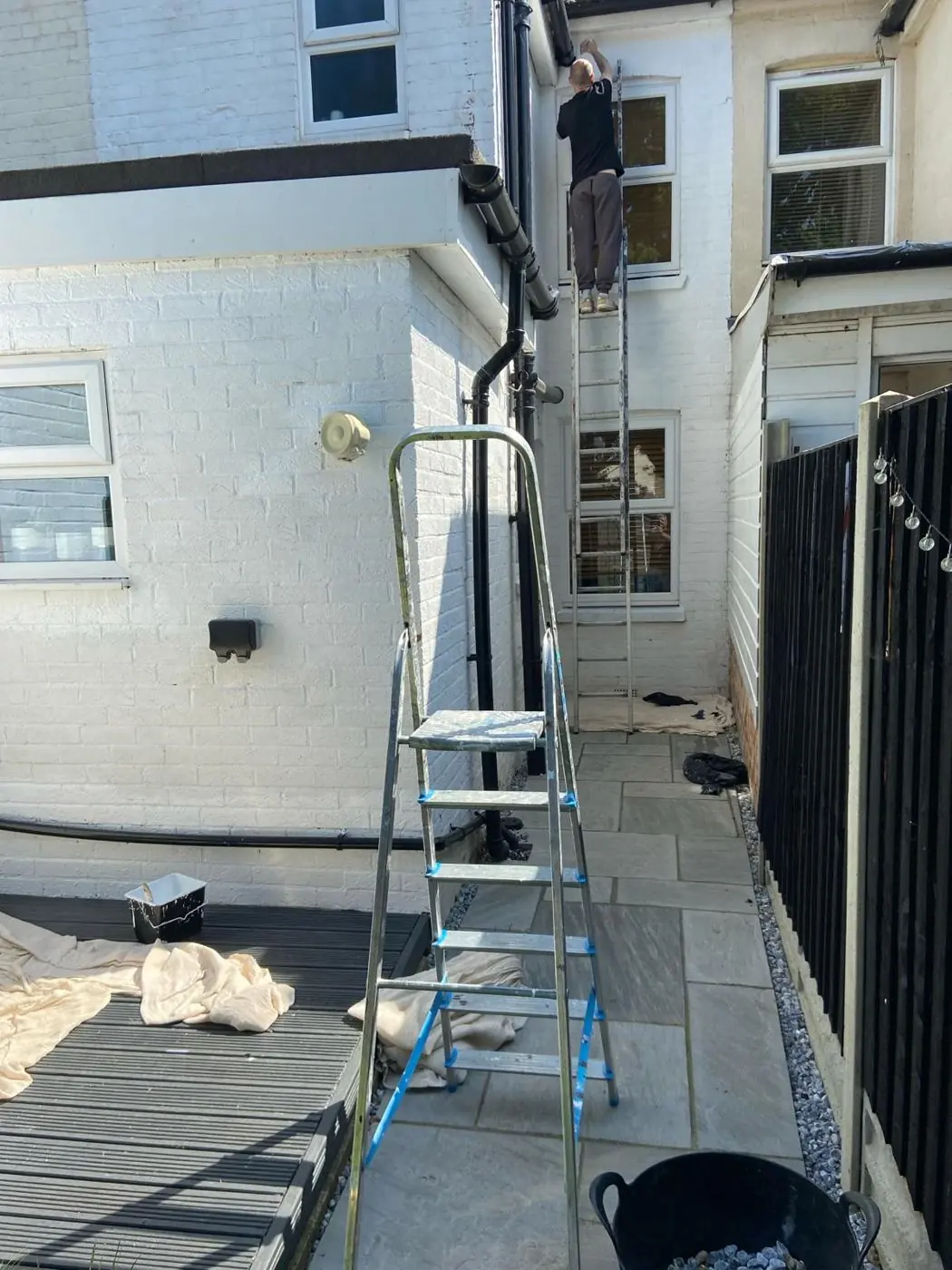
Rear extension with brickwork painted white, decorator up a ladder and dust sheets down mid-job

We paint render, painted brick and stacks in Spratton, NN6, about 6.5 miles north of Northampton town centre. In a village built largely of bare ironstone and lias, Dean's first job is often telling owners which walls should stay uncoated, then using breathable finishes on the ones that are already painted.

A village where most stone should stay bare

Masonry painting in Spratton starts with a question most render jobs never ask: should this wall be painted at all? The historic core is built from coursed ironstone rubble and squared lias limestone, with ashlar dressings on the better houses and sandstone and lias ashlar on Georgian houses such as Northbank House. These stones are soft and porous. They take in rain and give it back out through the face. A modern acrylic masonry paint stops that drying, so moisture sits behind the coating, the face of the stone breaks down and the paint blisters off with it.

So on bare stone we usually advise leaving it as it is. That costs the owner nothing, and on a listed house it also avoids an alteration that would need listed building consent. Green staining or dirt on stone is a cleaning question, not a painting one, and a gentle wash by a specialist is kinder to soft lias than any coating. We would rather lose a job than put a film on stone that has managed without one since the 1600s.

Where masonry painting does belong
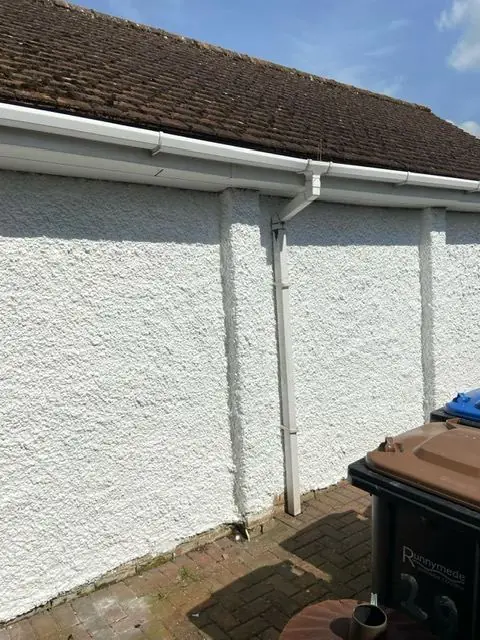
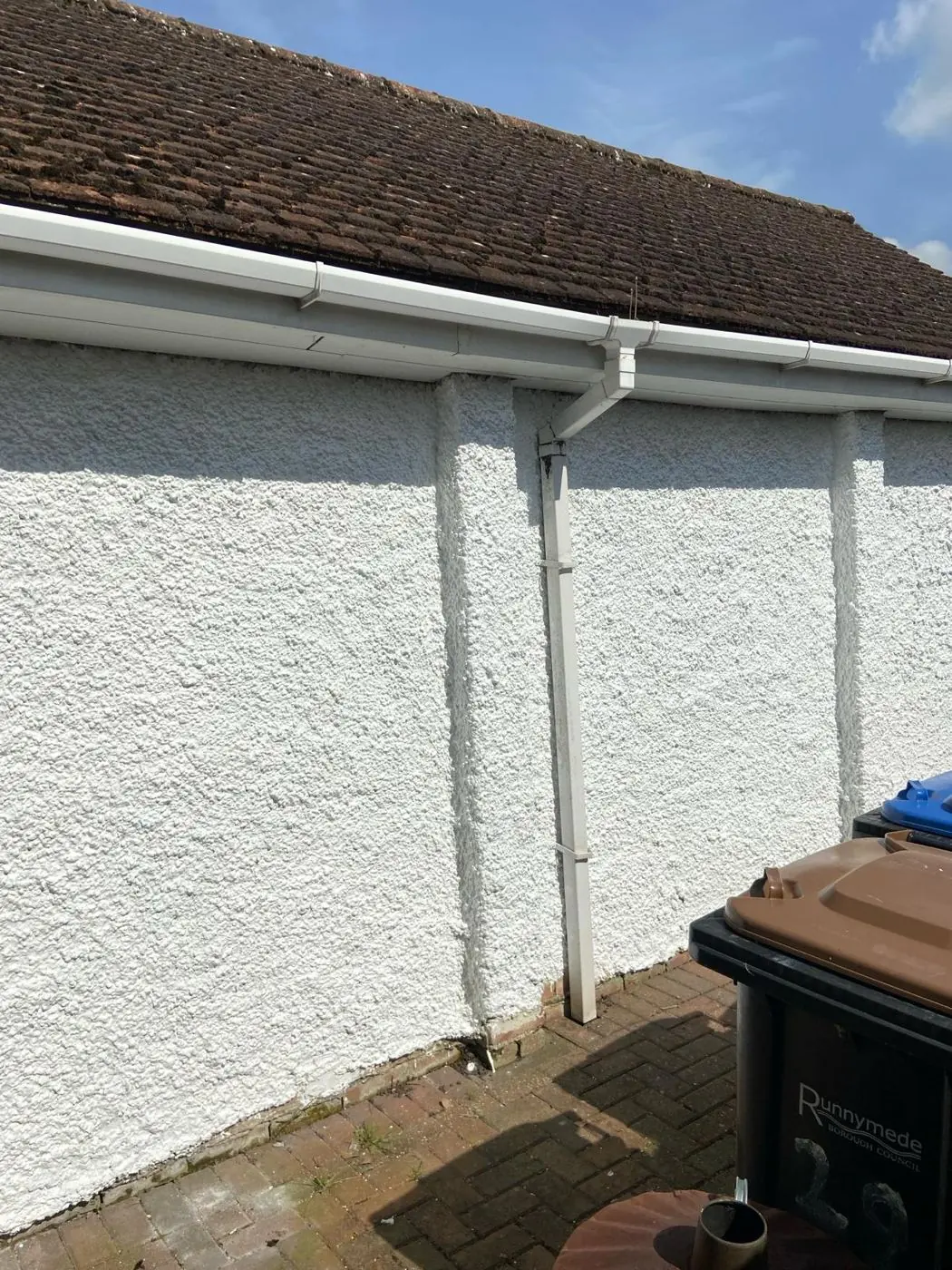
Long pebbledash wall repainted bright white beneath white guttering and a tiled roof

There are still walls in Spratton that need a coating. Typical examples include:

  • Chimney stacks or walls that were rendered at a later date, usually to cover poor stone or patched repairs.
  • Brickwork that has already been painted, where stripping it is not practical and the coating needs renewing.
  • Rendered extensions, garages and outbuildings added behind older houses.

On these surfaces we use breathable masonry finishes, such as mineral (silicate) paints or limewash where the base suits them, not a sealing acrylic. Where a wall already has a modern masonry paint on it, we look at whether it is sound and how damp the wall is before deciding whether to overcoat or cut back. The general preparation steps for render (algae wash, stabiliser, crack filling) are set out on our main render and masonry painting page.

Cement repairs and the 7 Manor Road example

The listing for 7 Manor Road, an 18th century ironstone cottage with a thatched gabled roof, records a gable repaired in cement. It is a good illustration of a wider problem in old villages. Hard cement render and cement pointing do not move or breathe like the soft stone around them, so water collects at the joint between the two and the stone takes the damage.

A decorator cannot cure that with paint, and putting another impermeable layer on top makes it worse. When we see cement repairs on soft stone, we tell the owner, suggest they speak to a lime specialist about the pointing or render, and paint only what sensibly can be painted in the meantime.

Red brick: Holly House and the chequered Manor House
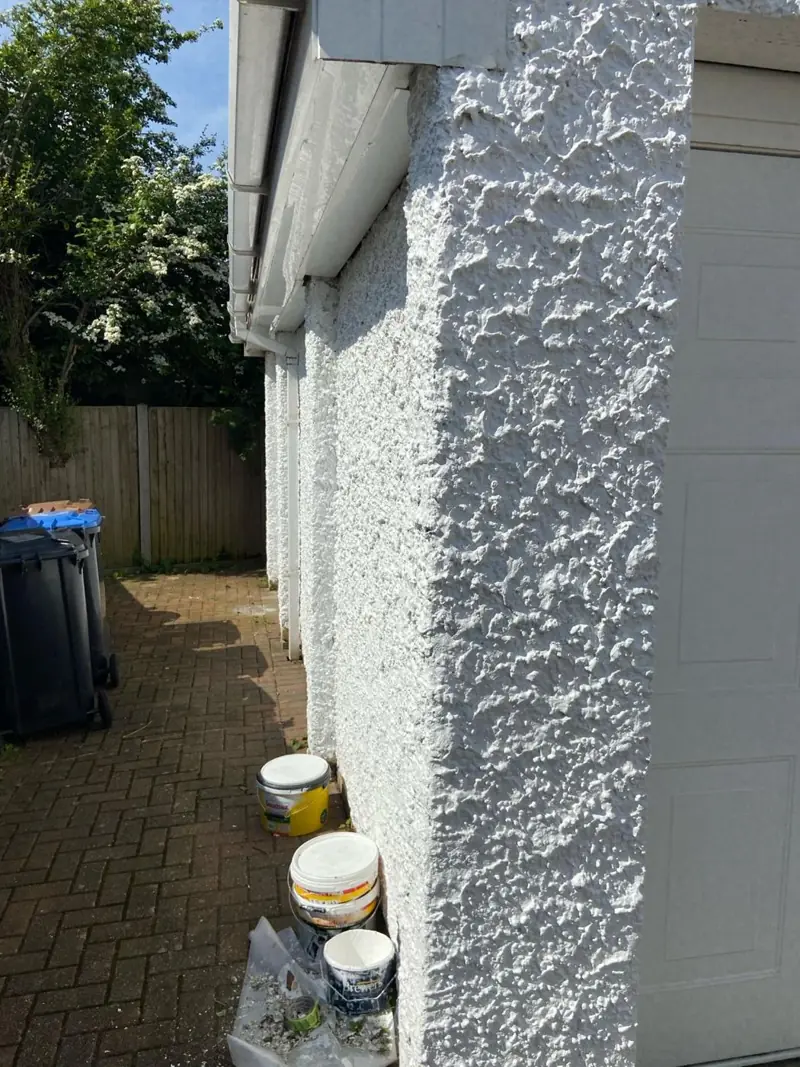
Close-up of heavy roughcast render on a corner painted white, paint tubs at its base

Spratton also has brick. Holly House, dating from the early 1800s, is a tall red brick building of three floors, and The Manor House on Church Road uses chequered red and burnt brick. Patterned brickwork like that is the design, and painting over it would wipe it out. Where brick in the village has already been painted, it needs a breathable masonry finish and tall access, since a three-storey elevation means a tower or scaffold.

Wall in SprattonOur usual advice
Bare ironstone or lias rubbleLeave uncoated
Later render on stacks or wallsBreathable mineral or lime-based finish
Cement-repaired stone gableFlag to owner, no extra sealing coats
Previously painted brickBreathable masonry paint, tower access

Our guide to painting render and roughcast covers coatings in more depth, and the Spratton village page sums up the other work we cover there.

Last updated by Dean, DH Painter & Decorator.
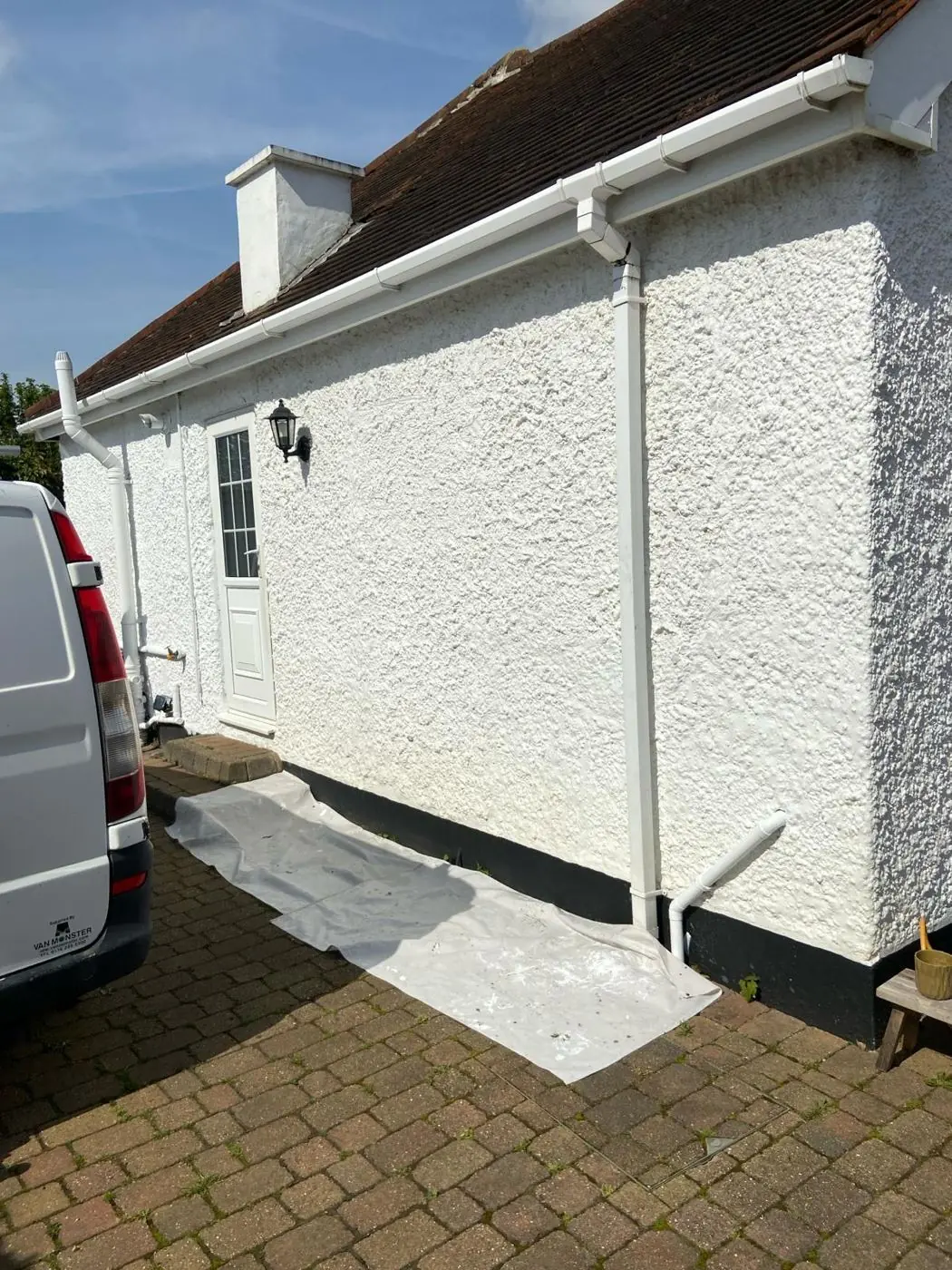
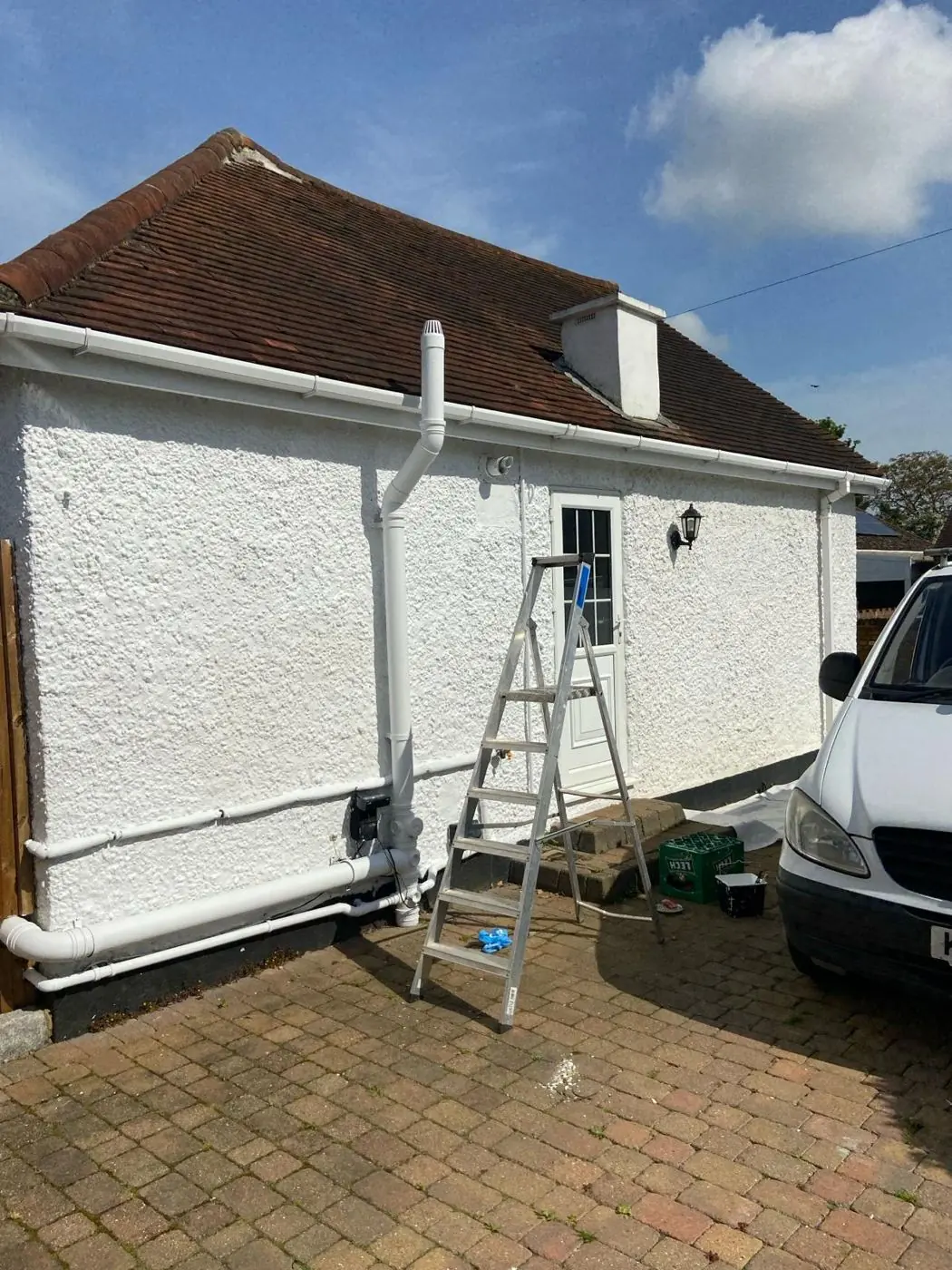
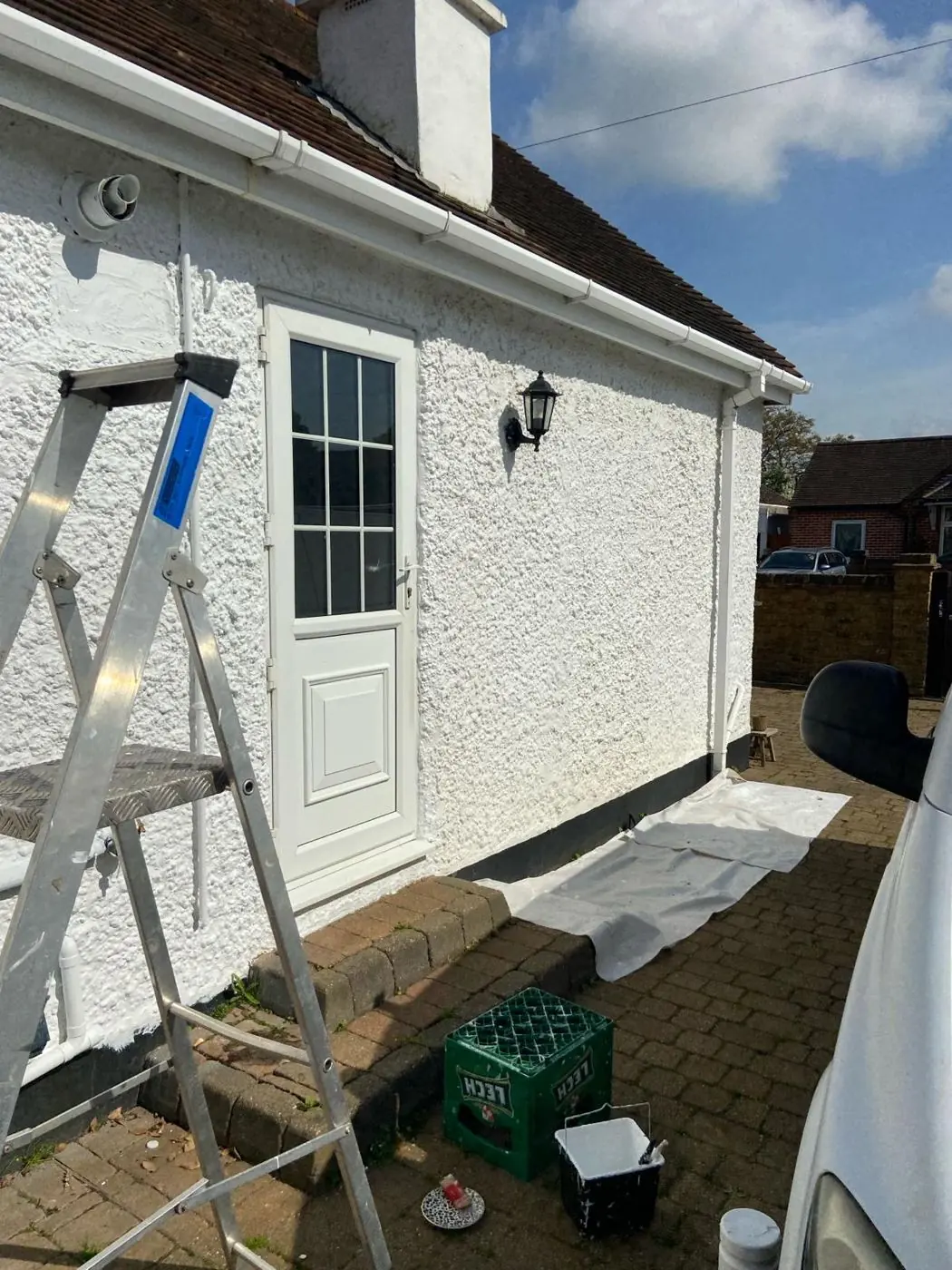
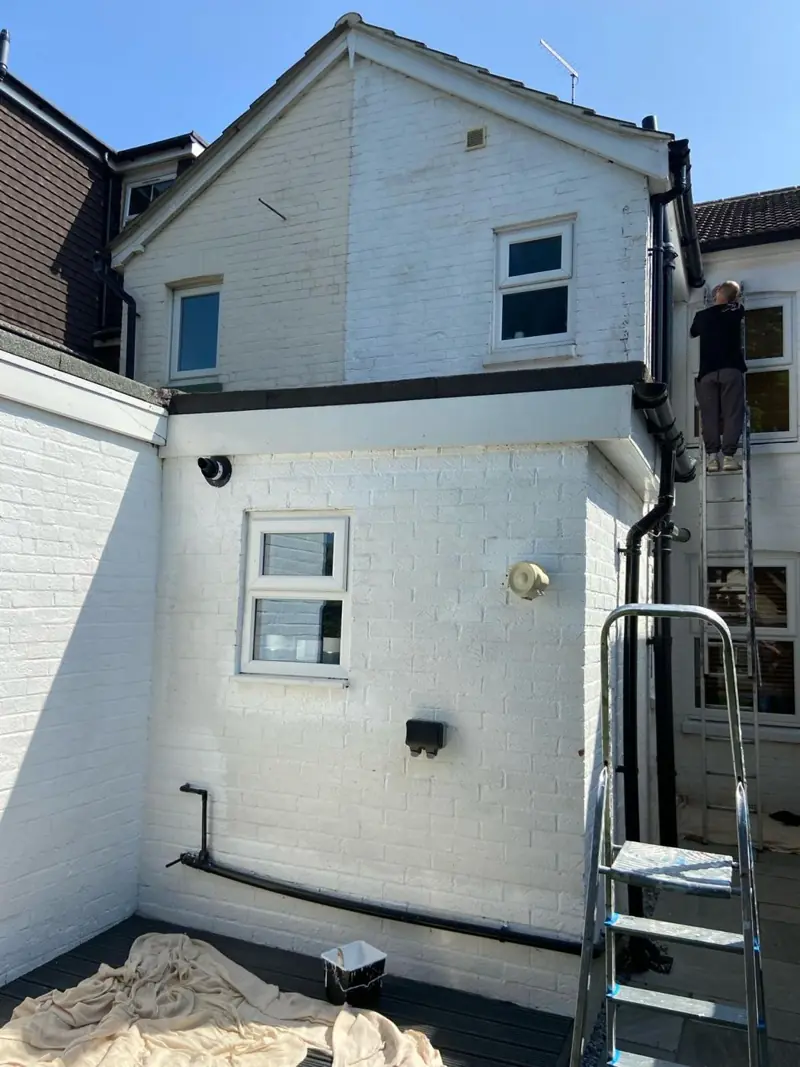
Bungalow side elevation in fresh white masonry paint with a black plinth, dust sheet down Bungalow side elevation in fresh white masonry paint, wheelie bins alongside Gable end half done, grey brick on one side, fresh white masonry paint on the other Bungalow side wall in roughcast render repainted white, stepladder still in place Bungalow side door surrounded by white render being repainted, ladder and dust sheet mid-job Narrow side return with white-painted brickwork, decorator on a ladder at the upper windows

Render & masonry painting in Spratton: your questions answered

Can't see your question? Call us on 07539 779 036 and we'll happily talk it through.

My Spratton house is ironstone. Will masonry paint protect it?

Generally no. Ironstone is soft and needs to dry out through its face. Ordinary masonry paint slows that down, so water stays in the stone and the coating flakes off taking the surface with it. Bare ironstone is usually better left alone, and we will say so rather than sell you a coating it does not need.

What paint goes on old render in the conservation area?

We use breathable finishes, such as silicate mineral paints or limewash where the background suits them, on later render around Spratton. Colours matter too, because rendered walls show among the ironstone and lias, so soft stone and off-white tones normally sit better in the conservation area than bright modern shades.

There is cement on my old stone gable. Can you paint over it?

We can paint the cement itself if it is sound, but we will not add sealing coatings to the soft stone around it. Cement repairs on old stone, like the gable recorded at 7 Manor Road, tend to trap water at the junction. We will point it out and suggest you talk to a lime specialist.

How is the painted brickwork of a three-storey Church Road house reached?

A three-storey house such as Holly House needs a scaffold tower or scaffold, not a ladder, for its upper brickwork and windows. We plan access as part of the survey and include it in the written quote, so there are no surprises once the work begins.

What customers say about Dean

Most of our work comes from recommendations and returning customers. These are real reviews from customers after the job was finished, in their own words.

More customer reviews

After completing my gates I was then assured Dean was more than competent to repaint the inside of my property from top to bottom. It’s a large 4 bedroom house and was done to a very high standard. Once again I would highly recommend him.

Customer review Gates, then a full four-bedroom interior

I contacted Dean to get the outside of the house painted; the house is all roughcast render. He has done a fantastic job; the house is looking brand new. The same he did for our garage, painted our bedrooms x2, did extra jobs for us like skirtings and door frames, and painted even our gates. I could not recommend him enough; he is attentive, smiling, always on time, and nothing too much; I am so happy with what Dean has done; he went above and beyond. I have recommended him to all my friends and family.

Read full review
Customer review Roughcast render, garage, bedrooms and gates

Dean did a great job for a good price i'd be very happy to recommend him always on time polite and friendly.

Customer review Painting and decorating

Start your project

Get a free painting and decorating quote

Tell us a little about the job and we'll arrange a visit to look at it properly. Quotes and advice are always free, with no obligation.

What happens next

  1. We get back to you to arrange a convenient time to visit.
  2. Free visit. We look at the job and talk through colours, finishes and any repairs.
  3. Written quote. A clear price covering preparation, materials and the finish we agreed.

Request a free quote

Please enter your name.

Please check your email address.

Please enter a valid phone number.

Prefer to talk? Call 07539 779 036.

Call 07539 779 036Call nowFree quote