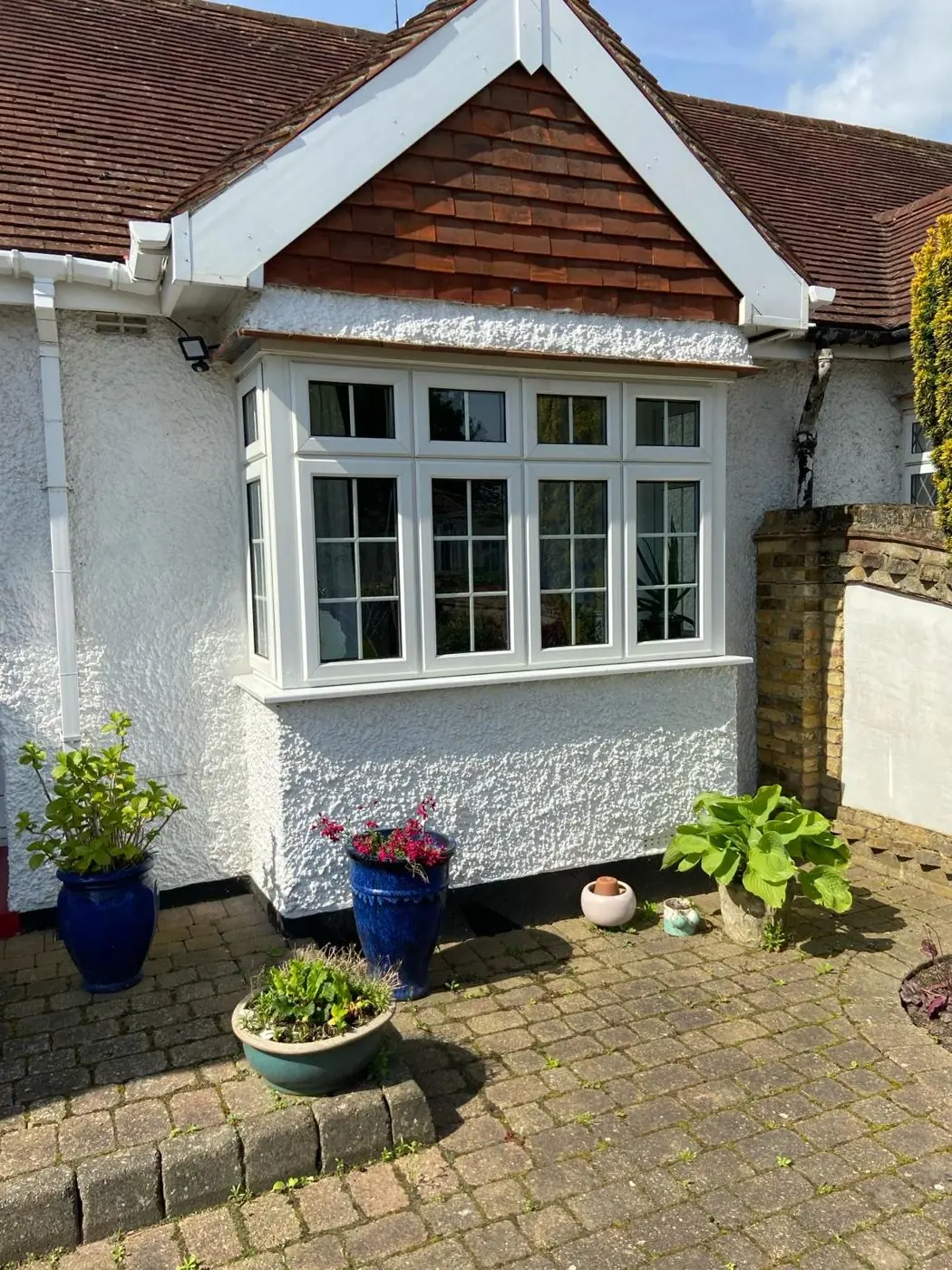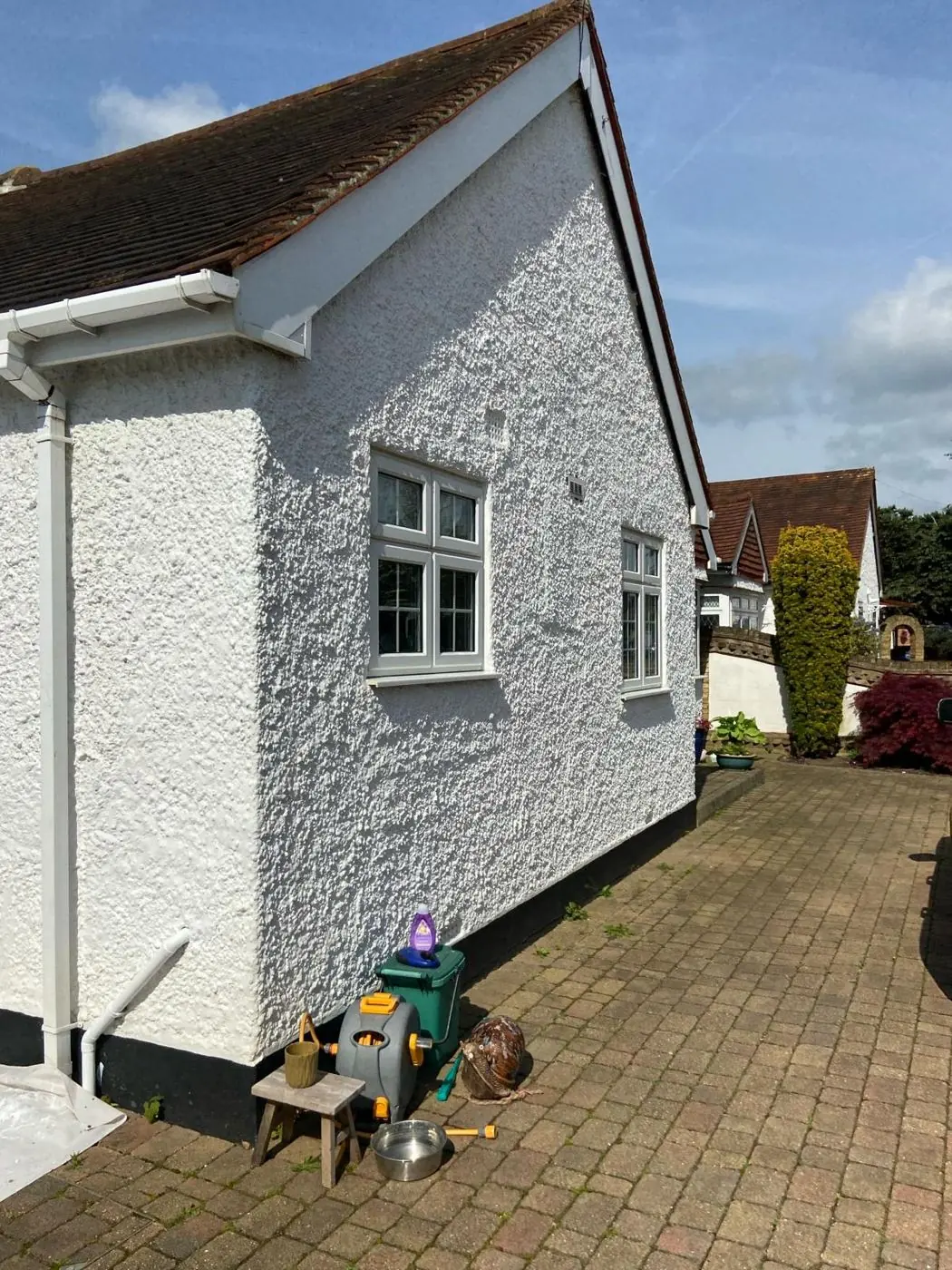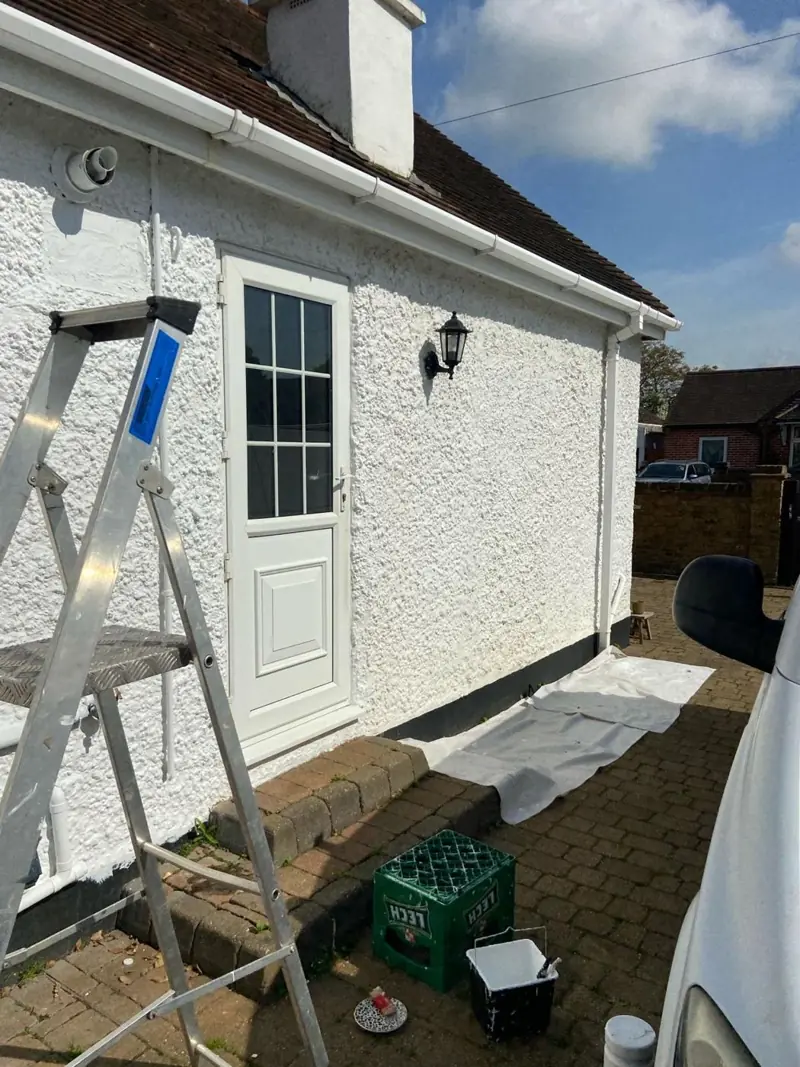
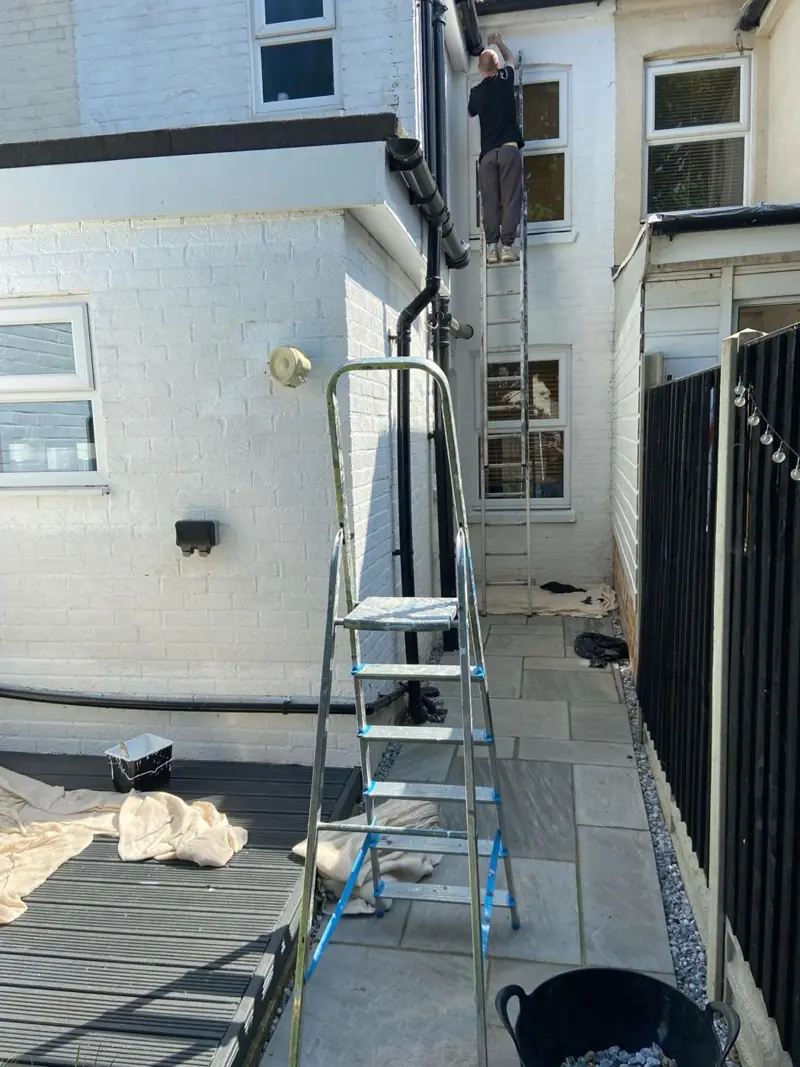
We paint render and masonry in Walgrave, about 7.9 miles north-east of Northampton, mainly on rendered or already-painted 20th-century houses. On historic lias and limestone walls we only work on stone that is already limewashed or coated, using breathable mineral or lime-based finishes. Quotes are free.
Should this wall be painted? Start with what it is made of
Most of Walgrave’s historic buildings are walled in coursed lias, a local limestone, with smarter limestone ashlar on houses such as Walgrave House on the High Street and Walgrave Hall Farmhouse on Hannington Road. Nearly all of that stone is bare, and it is meant to stay that way. A survey visit for masonry painting here therefore begins by sorting walls into three groups:
| Wall type | Where it applies | What we recommend |
|---|---|---|
| Bare lias or ashlar | Most pre-1900 houses, chapel and farm buildings | Leave unpainted; on a listed building coating it would need consent |
| Stone already limewashed or coated | Individual older buildings where a finish is already present | Renew with limewash or a breathable mineral paint, never a plastic-based masonry paint |
| Render or painted brick | 20th-century houses where walls are rendered or painted | Repair, stabilise and recoat with a suitable masonry paint |
We would rather tell you a wall needs nothing than coat something that will be harmed by it. Sometimes the useful job on a stone house is not paint at all but clearing a blocked gutter or lowering soil banked against the wall, and we will say so when we see it.
Why acrylic paint and lias do not mix
Lias is a soft, porous stone. It takes up rain and then lets it out again as the weather dries. A modern acrylic masonry paint forms a skin that slows that drying, so damp collects behind the coating, freezes in winter and pushes the face of the stone and the paint off together. On a Walgrave cottage that shows up as blistering low on the wall and flaking around window openings.
Where an old wall is already coated, we test what is on it, scrape back loose material and recoat with limewash or a silicate-type mineral paint that lets moisture through. Limewash goes on in several thin coats and dries to a soft, chalky finish that suits the brown stone around it. If an existing modern coating is trapping moisture, we explain the options for removing it rather than simply adding another layer.
Rendered houses on the later estates
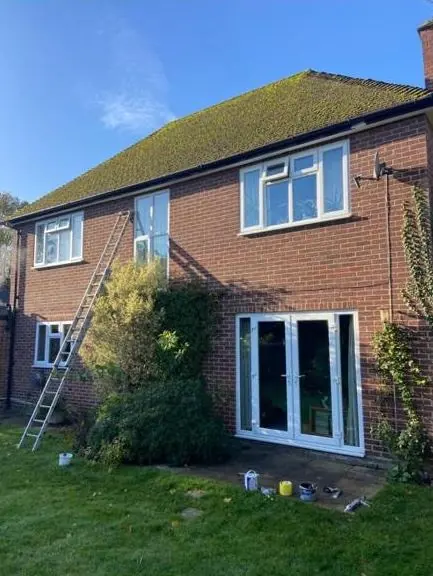
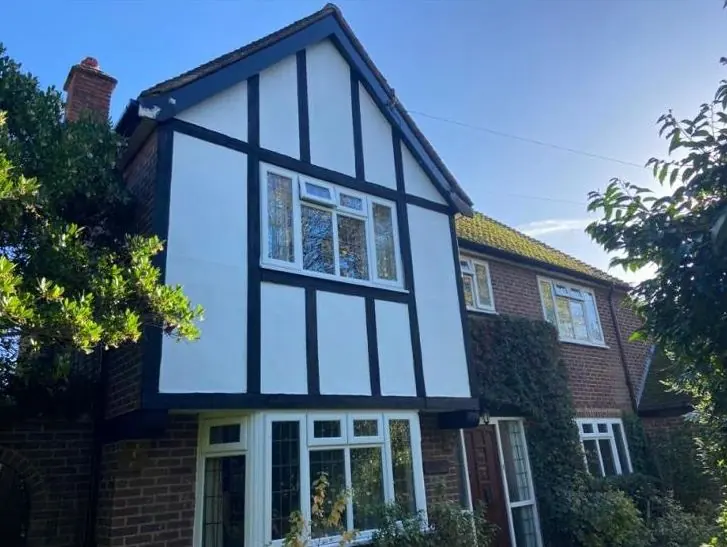
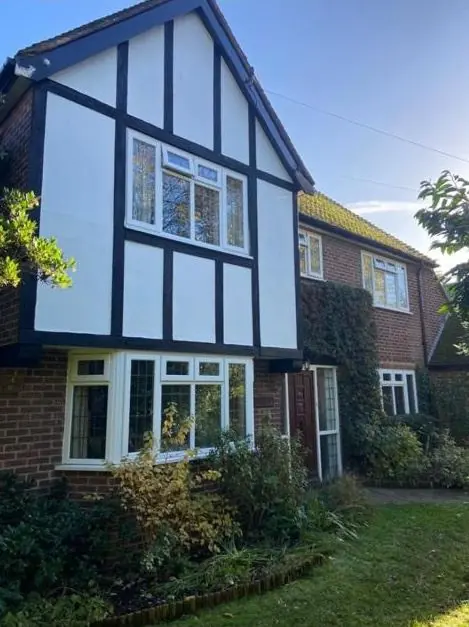
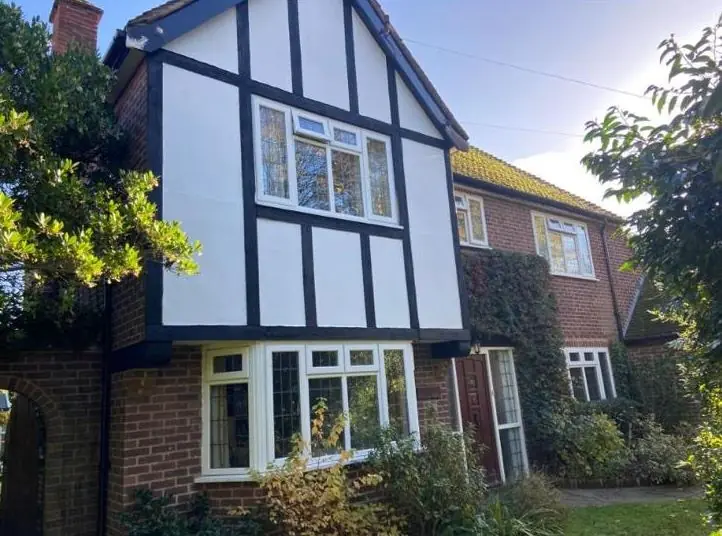
The newer half of the village is a different proposition. Its inter-war, post-war and late-century houses, from the oldest homes on Jubilee Drive through to the closes built in the 1980s and 1990s, are not described in the listing records or parish history we rely on, so nobody should assume how any of them were finished. We look at each one. Where a house has rendered panels, a painted brick plinth or pebbledash, standard masonry work applies: hairline cracks raked and filled, loose areas cut out and patched, algae treated with a biocide wash, a stabilising primer on chalky surfaces, then two coats of masonry paint.
Our guide to painting render and roughcast covers the surface preparation step by step, and the main render and masonry painting page explains products and finishes.
Drying time, shade and the farmland around the village
Masonry finishes need a dry wall and a dry spell after application, and limewash especially dislikes frost or strong sun in its first days. Walgrave’s open farmland setting and its mature trees bring two problems: leaf drop and pollen on wet coatings, and shaded north walls that stay damp well into spring. We plan masonry work for the settled part of the year and book it as consecutive full days, bringing scaffold towers or ladders and all materials out from Northampton in one go. You can see the other services we cover locally on the Walgrave area page.
Last updated by Dean, DH Painter & Decorator.