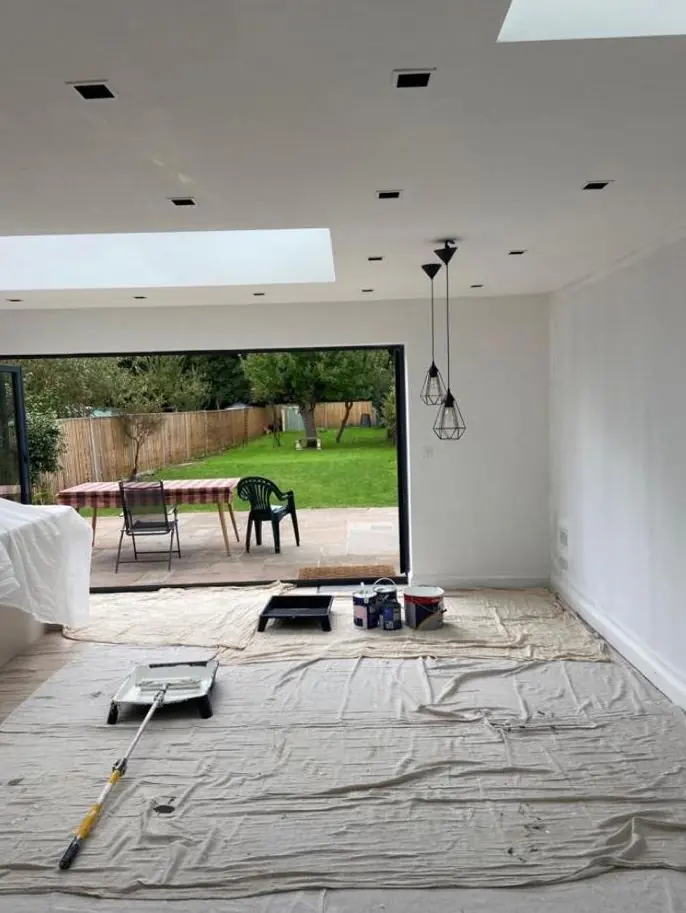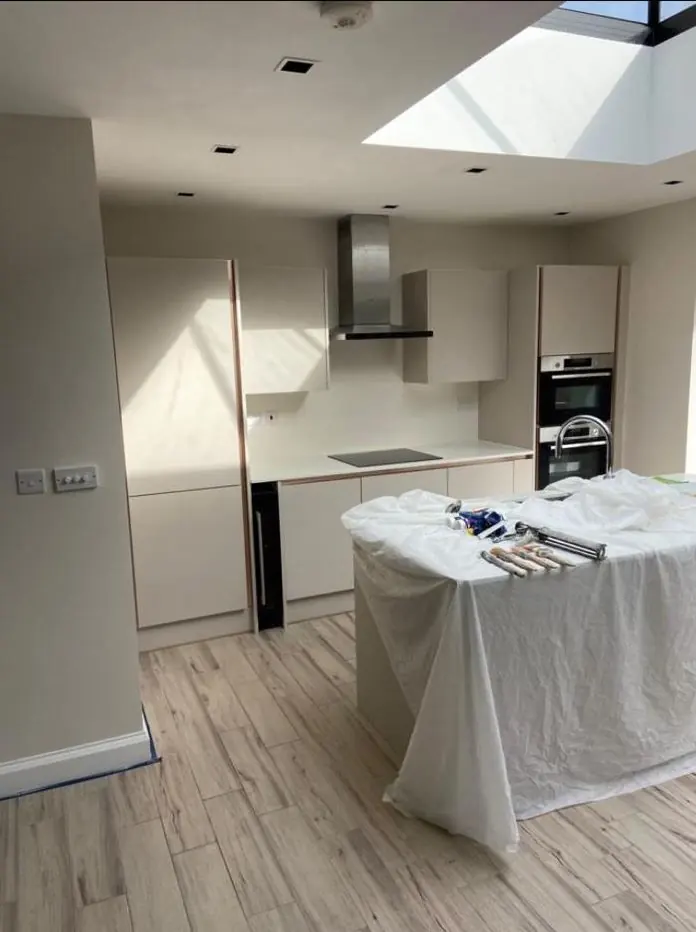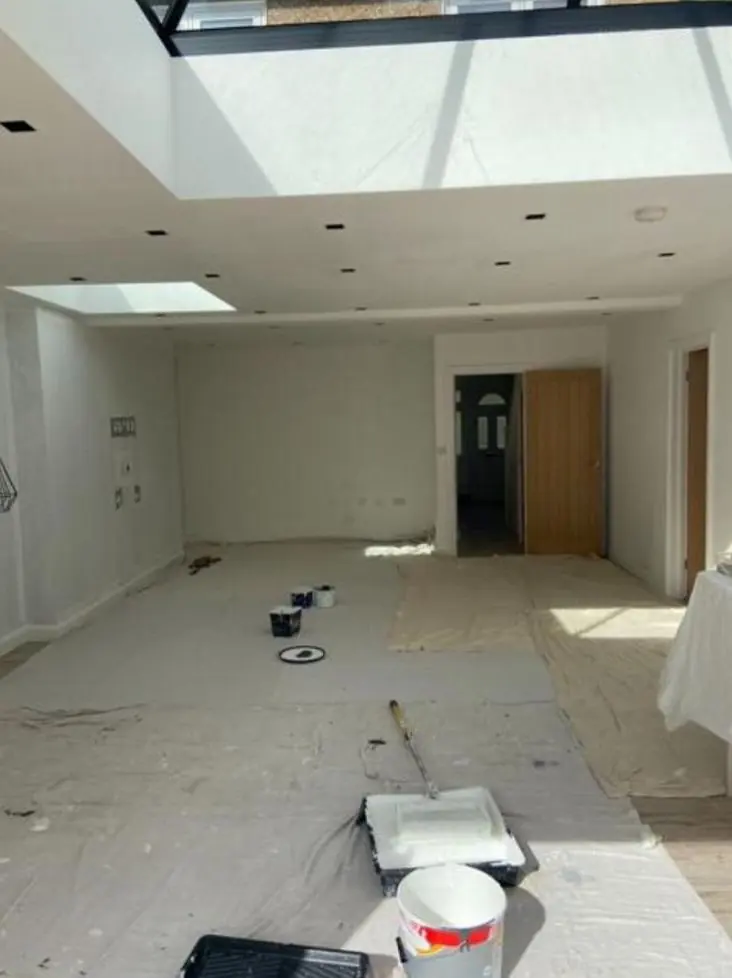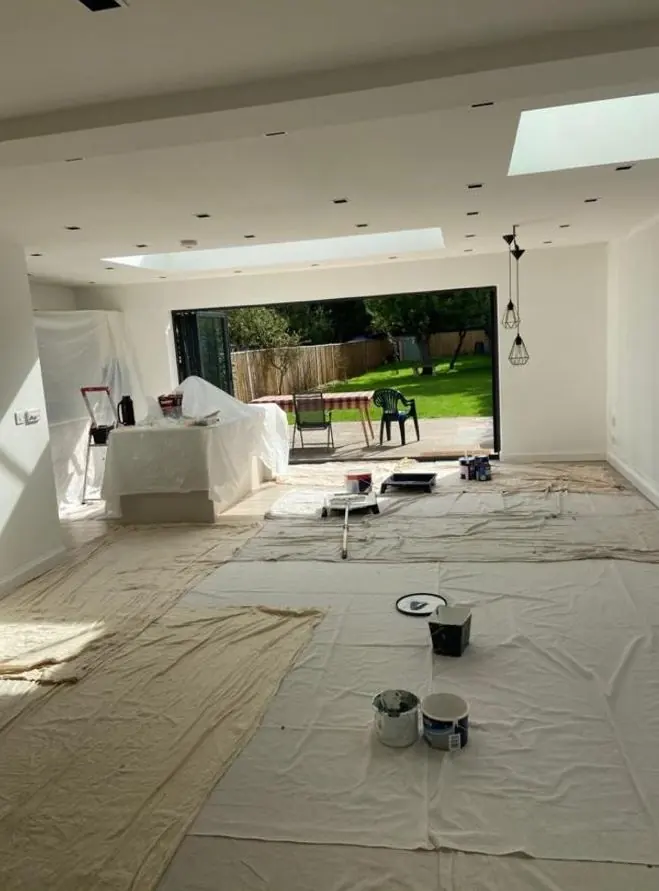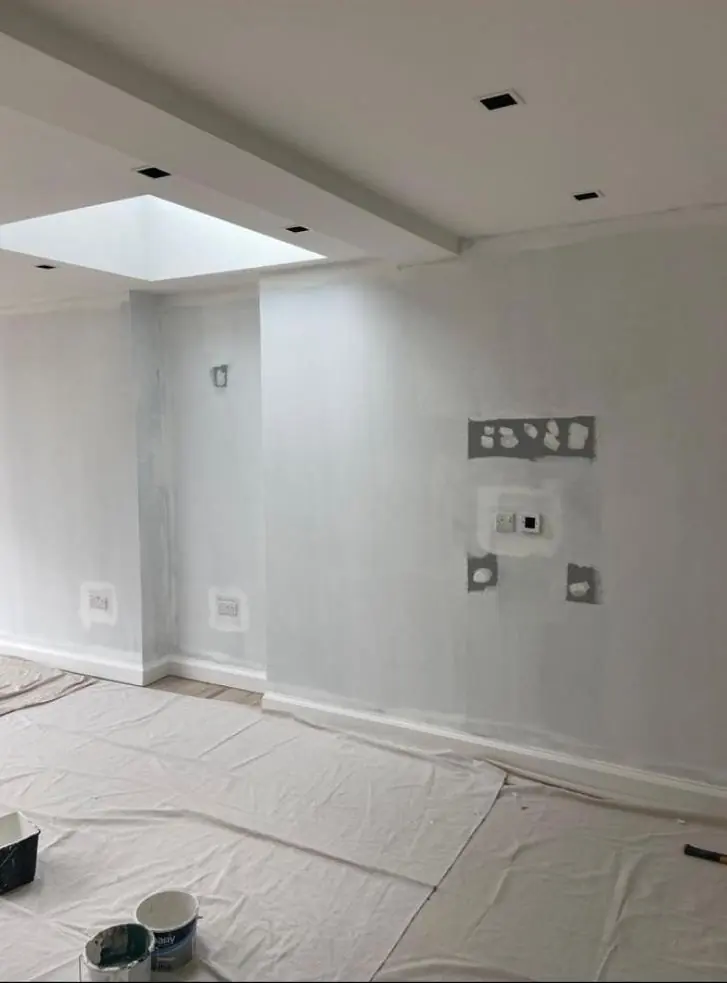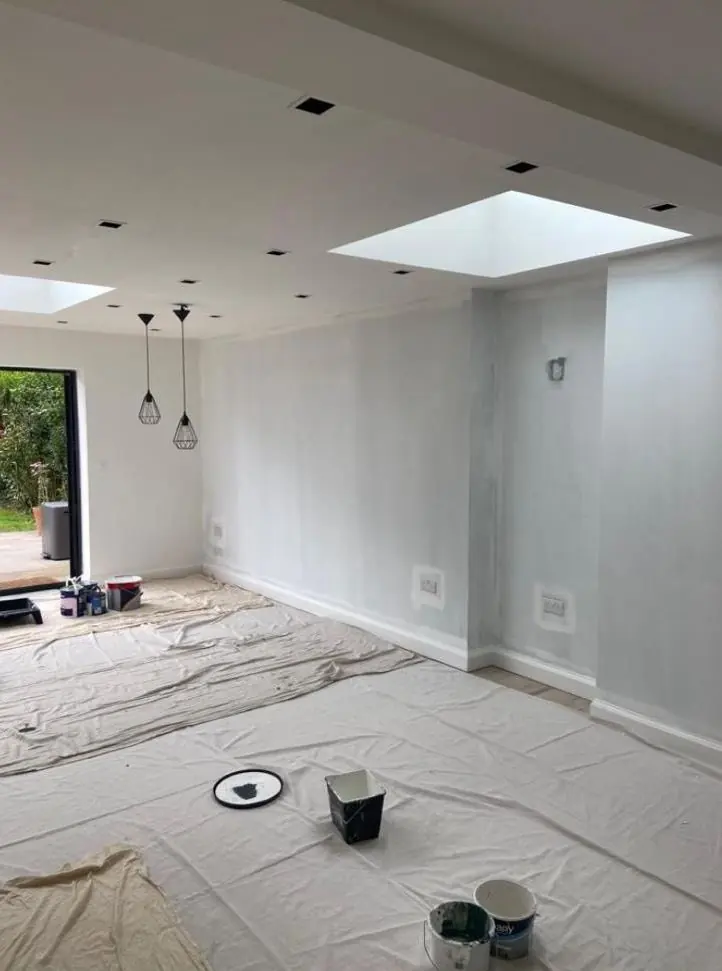
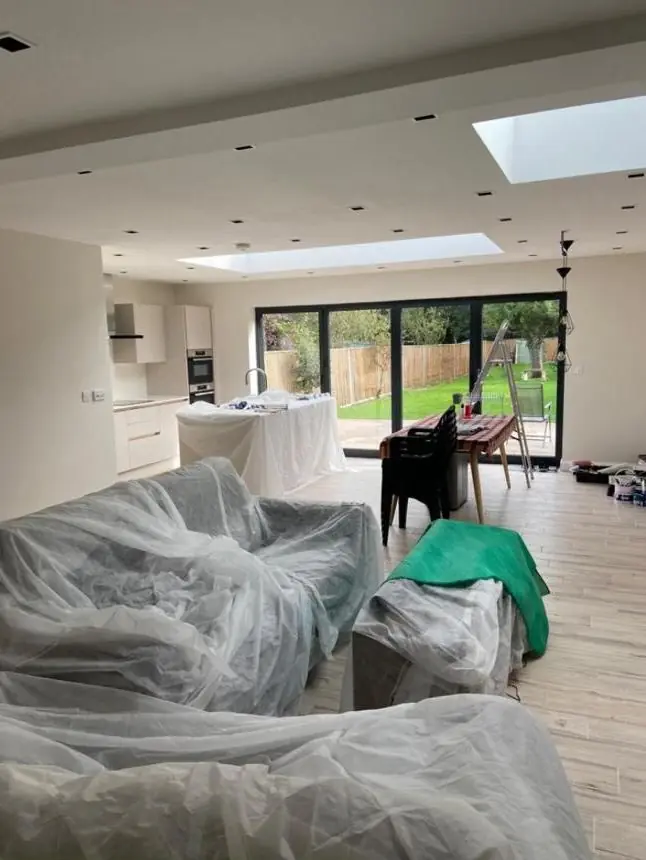
Dean takes on commercial painting in Cogenhoe, 4.6 miles east of Northampton town centre. Business premises here are small: a pub, a village shop, a joinery workshop, halls, a sports and social club, a school and a caravan park, so each job is planned around how that building is used.
What commercial work means in a village of this size
Cogenhoe has no business park or parade of shops. The 2015 conservation area appraisal names two commercial premises on Church Street, the Royal Oak pub and Hollowell Joinery. Beyond those, the village has a Londis shop, its church rooms, a sports and social club, Cogenhoe and Whiston Village Hall, the primary school and a caravan park at the end of Mill Lane by the mill. That list covers most non-domestic buildings a painter is likely to work on here.
Each of these buildings stays in use while it is decorated. A shop has stock and customers, a hall has bookings, and a club has members coming and going. We agree working hours and the order of rooms with whoever runs the building, so one area is closed at a time and the rest carries on.
Premises on Church Street inside the conservation area
Church Street is the spine of the Cogenhoe Conservation Area, a linear street of 17th and 18th century limestone cottages and farmhouses. Any business frontage there sits among listed and unlisted historic houses, and the appraisal is sensitive about colours, signage and the loss of traditional joinery. For a commercial frontage on this street, that means:
- Keeping bare limestone and ironstone dressings unpainted, and masking them carefully when doing the joinery next to them.
- Repairing and repainting timber doors and windows in a microporous system instead of replacing them.
- Choosing colours that sit with limestone, ironstone and red brick, and checking with the council first if the building is listed.
- Planning ladder positions around the overhead telegraph wires and poles that run along the street.
Painted signage boards and fascia joinery for a shop or pub are covered in more detail on our shopfront painting page.
Halls, clubs and the school
Cogenhoe and Whiston Village Hall on York Avenue serves a joint parish of two villages, so its rooms see mixed use from morning to night. For a hall like that we suggest hard-wearing, scrubbable finishes on walls and durable satin on doors, frames and skirtings, which get knocked by chairs and tables. Where a building has kitchens or toilets, we use moisture and mould-resistant products in those rooms.
For Cogenhoe Primary School, the timing of the work is often the main issue. We work with the school or committee to fit decorating into holiday periods and use low-odour, water-based paints so rooms can be used again soon after.
The church rooms and the sports and social club bring their own priorities. If a wall in the church rooms turns out to be solid stone with a traditional plaster finish, as in many of the village’s older buildings, we check whether it needs a breathable paint before choosing a product. A social club bar and changing areas take spilled drinks, damp kit and scuffs from boots, so we focus on wipeable walls and tough paint on door edges and frames.
Down by the mill and the river
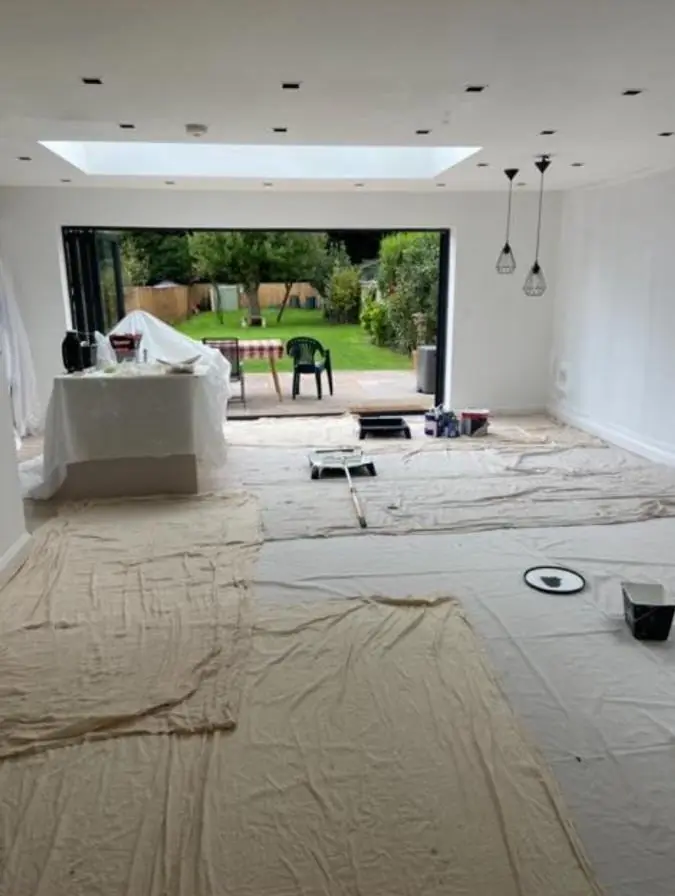
The caravan park sits on the low ground near Cogenhoe Mill, reached as Mill Lane narrows into a private road. That ground is prone to flooding in heavy rain, so walls there can hold more moisture and need more preparation. We check moisture before painting and choose coatings that can cope with it, instead of sealing damp walls under paint that will blister. Higher up, buildings on the exposed hillside lose exterior paint faster on north and west-facing walls, and we build that into the maintenance plan.
Our wider approach to commercial jobs, from method statements to keeping a site open, is on the main commercial painting page. For more about the village itself, see the Cogenhoe area page.
Last updated by Dean, DH Painter & Decorator.