DH Painter & Decorator hangs wallpaper in Cogenhoe, about 4.6 miles east of Northampton town centre. Dean lines and papers the uneven solid walls of the village's older limestone cottages, the hallways and front rooms of the Victorian houses on Station Road, and rooms in the newer estate homes.
Rubble stone walls behind the plaster
The cottages along Church Street and upper Mill Lane were built in the 17th and 18th centuries from local limestone laid as coursed rubble. Plaster on walls like that follows the stone, so it bows, leans and dips. Wallpaper shows every one of those movements, and a pattern hung straight onto it will drift out of line within a couple of lengths.
Our answer in these rooms is nearly always lining paper first. Hung horizontally, it bridges small hollows and fine cracks, evens out patchy suction from old repairs, and gives the finish paper something consistent to grip. Where the old plaster is soft or crumbling, we consolidate it before lining rather than paper over a problem. Old repairs in these cottages are often a patchwork of lime and later gypsum, each drawing paste at a different rate, which is another reason a lining layer pays off before any expensive paper goes up. Solid walls also need to breathe, so we lean towards papers and pastes that let some moisture through rather than heavy vinyls, which can trap damp against a cold outside wall.
Picking a pattern the walls will forgive
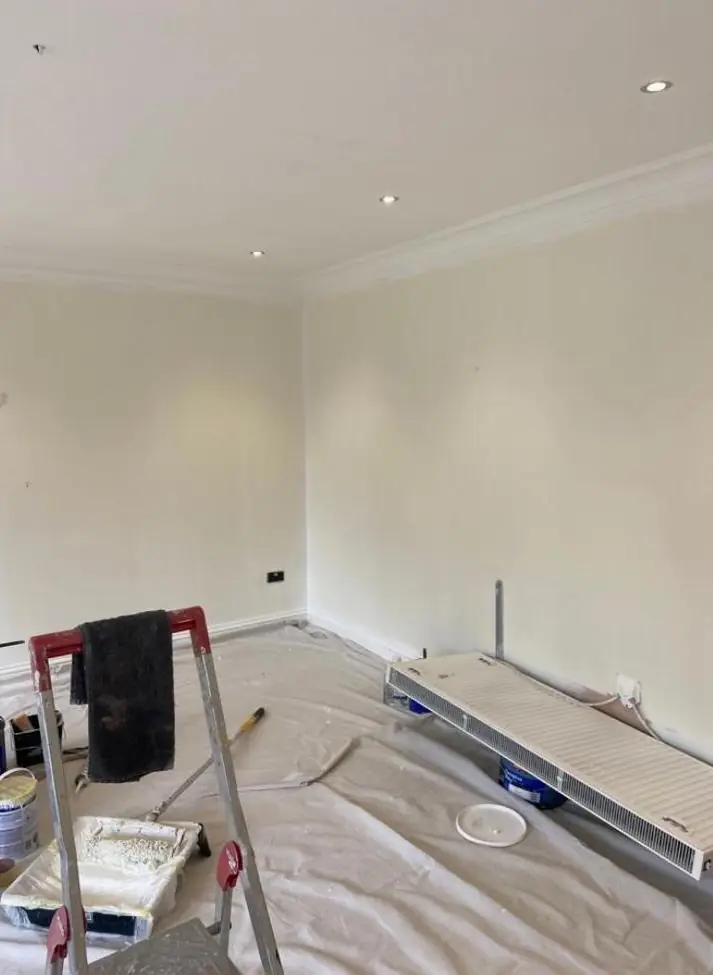
Even lined, a stone cottage wall will not be perfectly plumb, and the ceiling line rarely runs level. This matters more for some designs than others, and it is worth talking through before you order rolls.
| House type in the village | Typical wall | Papers that tend to sit well |
|---|---|---|
| Limestone cottage, Church Street or Mill Lane | Solid, uneven, lime plaster | Small all-over or loose floral designs that hide a wandering line |
| Victorian Mann house, Station Road | Tall, flatter, often several old layers | Period stripes, damasks or a dado-height split |
| Later estate home, York Avenue area | Regular modern plaster | Almost anything, including bold geometrics and large repeats |
Strong vertical stripes and big geometric repeats are the risky choice in the older cottages, because they draw the eye straight to any wall that is not true. If you have your heart set on one, Dean will show you where it will struggle before a roll is cut. Chimney breasts and deep window reveals in thick stone walls also eat into a pattern, so order a roll or two more than the basic room measurement suggests.
Hallways and front rooms in the shoe-era houses
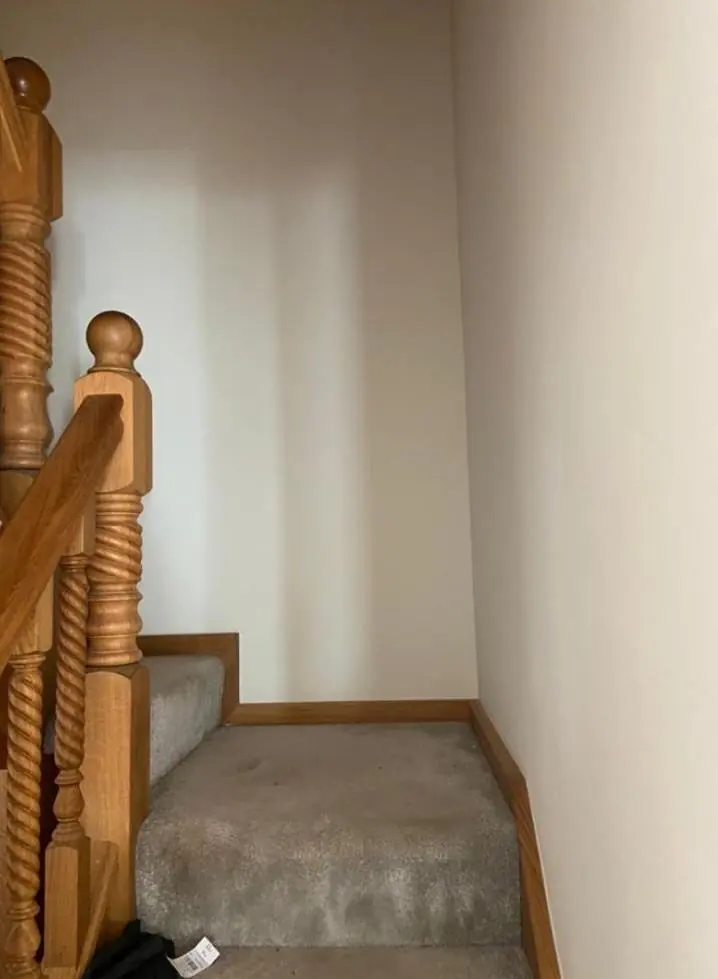
Gladstone Terrace, Rocklands and Nene View on Station Road were built by the Mann family, who began making footwear in the village in 1887. These two and three storey houses have the kind of hallways and front rooms where period papers look at home. Their stairwells are tall, and some rise to an attic level, so long drops need a safe working platform and careful planning of where the pattern lands at the head of the stairs. Stripping usually comes first: in houses of this age, old papers have often been painted over, sometimes several times, and the plaster beneath can be loose in places once they come off.
Arranging the work
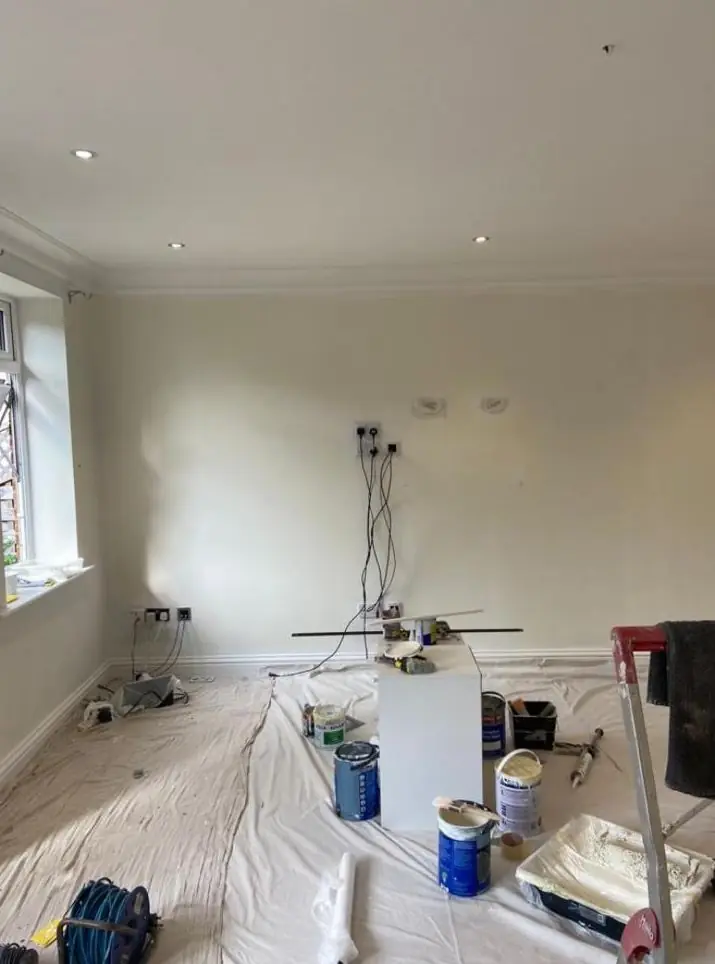
Parking is tight on Church Street and Station Road, and many cottages open directly onto the pavement, so we agree van space and a dry spot for pasting before the first day. A paste table needs a fair run of floor, which in a small cottage often means using the next room. Our full process, from stripping to the final trim, is on the wallpaper hanging in Northampton page. For other work in the village see the Cogenhoe area page, and for budgeting read our painter and decorator cost guide.
Last updated by Dean, DH Painter & Decorator.